Sakamoto Days
An ongoing shonen manga series by Yuto Suzuki following a legendary retired hitman running a convenience store who must protect his family when his dangerous past catches up with him.
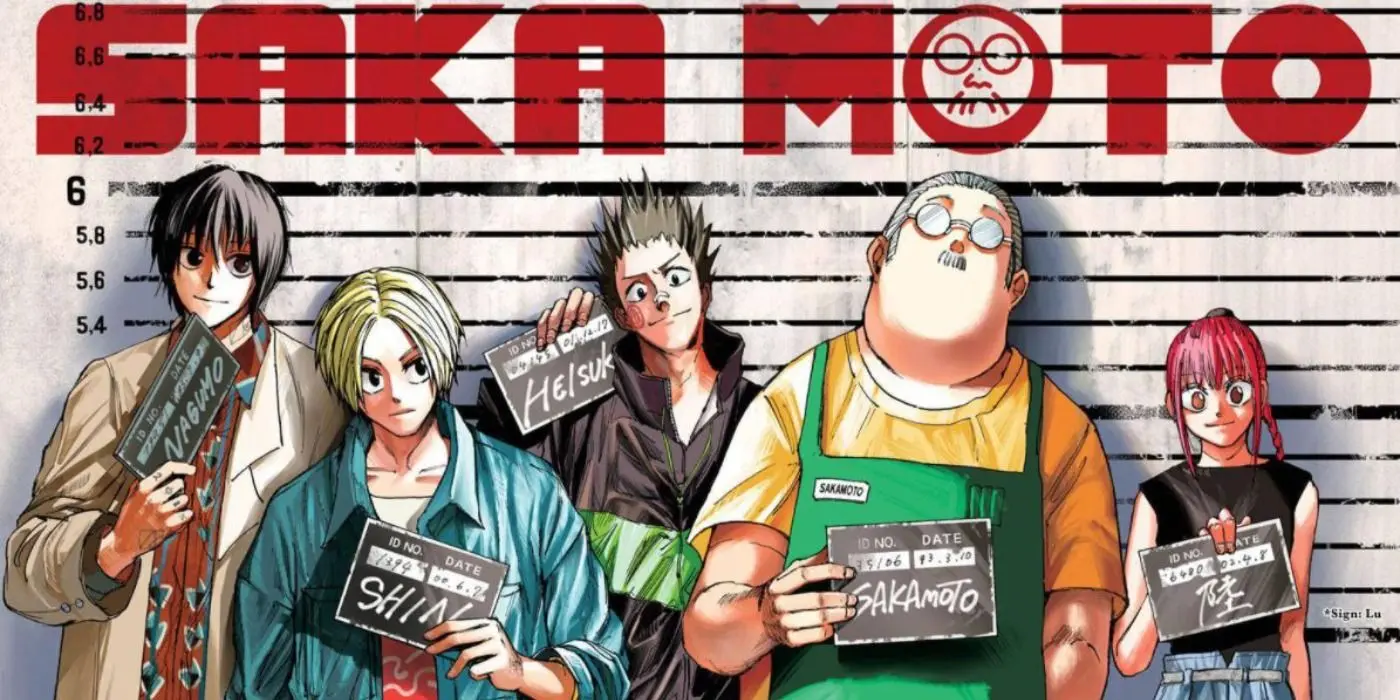
All Sakamoto Days Story Arcs in Order
| # | Arc |
|---|---|
| 1 | Introduction Arc |
| 2 | Order Arc |
| 3 | Assassination Arc |
| 4 | JCC Arc |
| 5 | Death Row Arc |
| 6 | Current Arc |
The World’s Greatest Hitman — Now Running a Convenience Store
Sakamoto Days opens with a premise so deceptively simple it sounds like a punchline: the greatest assassin who ever lived is now overweight, mildly clumsy, and genuinely happy stocking shelves in a suburban convenience store. Taro Sakamoto was a ghost story whispered across the global criminal underworld — a man who could eliminate any target, anywhere, under any circumstances. He retired cold turkey after falling in love with Aoi, a woman who saw him not as a legend but as a person worth knowing. They married. He gained weight. He had a daughter named Hana. And for a while, it worked.
The problem is that legends don’t expire. Former colleagues, ambitious newcomers, and criminal organizations keep finding Sakamoto’s store — and finding, to their considerable surprise, that the fat man behind the counter can still end a fight in three seconds flat. Yuto Suzuki launched the series in Weekly Shonen Jump in 2020 and has since made it one of the magazine’s most reliably inventive properties. By 2025 it had a JC Staff anime adaptation and over 20 collected volumes, with no signs of slowing down.
Premise and World
The assassination underworld of Sakamoto Days is organized, professional, and bureaucratic in ways that make it darkly funny. There are competing factions — the JAA (Japan Assassination Arts), the mysterious Order — with their own hierarchies, codes of conduct, and internal politics. Sakamoto once sat at the very apex of this world. His retirement is treated by that world the way a major corporation might treat a top executive going off-grid: with confusion, suspicion, and eventually, aggression.
Into this setup Suzuki injects the mundane textures of suburban Japanese daily life: product deliveries, customer complaints, school runs, family dinners. The genius is how thoroughly the two worlds refuse to separate. Assassins show up to kill Sakamoto and end up arguing with him about store inventory. Combat choreography happens in vegetable aisles and parking lots. The comedy and the tension reinforce each other because the stakes are always personal: every fight is ultimately about whether Hana gets to grow up with her father around.
Main Characters
Taro Sakamoto
Sakamoto is one of shonen manga’s great protagonist inversions. He is not young, not hungry for glory, and not interested in proving anything. He is a middle-aged man who visibly loves his wife, adores his daughter, and would genuinely prefer to spend the day helping a customer find a specific brand of instant noodles over performing any feat of legendary violence. Yet when violence is forced on him, the response is instant and complete — a flicker of cold precision behind soft eyes that reminds every attacker exactly why this man’s codename was the last thing so many people ever heard.
What makes Sakamoto function as a protagonist is the consistency of his motivation. He doesn’t fight to satisfy some inner warrior code. He fights because Aoi is in the next room and Hana is at school and those things are worth any cost. His refusal to enjoy violence — even when deploying it with almost supernatural efficiency — gives the series moral weight that pure action comedies often lack. His gradual acceptance that he cannot protect his family alone, that he needs Shin and others to form something like a team, represents his actual character arc: learning that isolation is not the same as safety.
Shin and the Supporting Cast
Shin Asakura arrives as a telepath sent to neutralize Sakamoto and ends up becoming his closest associate, part apprentice and part surrogate son. His ability to read minds gives him tactical value while simultaneously making ordinary social interaction exhausting — he knows too much about what people around him actually feel. Watching him slowly learn to be around people without that knowledge becoming a burden is one of the series’ quieter pleasures.
Lu Xiaotang brings a different energy: disciplined, serious, and carrying her own complicated relationship with the assassination world. Osaragi, the staff member whose fighting style involves a collapsible baton, completes a group that reads less like a team of killers and more like a genuinely strange extended family. Aoi herself is no passive figure — she knows exactly who she married, and her intelligence and emotional steadiness are what make the whole enterprise possible.
Story and Themes
The series’ central question is whether a person can genuinely choose peace when their entire history argues against it. Sakamoto has made the choice. He wears it in his changed body, in his apron, in the care with which he handles customers. But the world around him keeps demanding the old Sakamoto — the one who was defined entirely by his capacity for violence. Each arc escalates the scale of that demand, from individual pursuers to organized syndicates to full conspiracies targeting everyone he cares about.
Suzuki handles the comedy-drama balance with unusual skill. The humor is often absurdist — a deadly confrontation derailed by a store promotion, a fight sequence soundtracked by completely mundane ambient noise — but it never cheapens the genuine stakes. When characters are hurt or threatened, it lands. When Sakamoto has a quiet moment with Hana, it earns its warmth. The tonal control is what separates Sakamoto Days from action comedies that are merely loud.
Family as armor and liability runs through everything. Sakamoto’s love for Aoi and Hana is the one thing that cannot be negotiated away, and villains who understand this use it against him. The series is honest about that vulnerability: being genuinely attached to other people makes you easier to hurt. It argues that this is still worth it — that Sakamoto’s life has meaning precisely because those attachments exist.
Why This Manga Matters
Sakamoto Days arrived at a moment when the shonen action genre was dominated by power-escalation narratives where protagonists become progressively more superhuman. Suzuki’s series sidesteps that entirely. The ceiling on Sakamoto’s abilities was set on page one — he was already the best there was. The drama isn’t about becoming stronger; it’s about whether strength of the martial kind has any relationship to the life he actually wants to live.
The series also takes the “found family” structure seriously in a way that distinguishes it from its peers. The convenience store becomes a genuine community: people with violent pasts choosing, daily, to do something ordinary instead. That choice is never presented as final or safe, but it is presented as real. Sakamoto Days suggests that the most radical thing a person capable of great violence can do is decide, over and over, not to.
Publication History
Sakamoto Days began serialization in Weekly Shonen Jump on December 3, 2020. Yuto Suzuki previously worked as an assistant on Hirohiko Araki’s JoJolion and published a short series, Witch Watch, before Sakamoto Days. The series has been collected into 20+ volumes by Shueisha under the Jump Comics imprint and has seen consistent top-10 placement in Jump’s reader surveys since its first year. A 25-episode first season anime from JC Staff premiered in January 2025, covering the early arcs with high production values and voice performances that were broadly praised.
Related Series
Readers who enjoy Sakamoto Days may find common ground with Rurouni Kenshin (another ex-killer trying to stay retired), Spy x Family (domestic comedy wrapped around covert violence), Jujutsu Kaisen (fluid shonen action with genuine tonal range), and One Punch Man (a premise built on a protagonist who has already solved the power question and is left wondering what else there is).
Frequently Asked Questions
Is Sakamoto Days finished?
No, Sakamoto Days is ongoing. The series began serialization in December 2020 and continues with new chapters appearing in Weekly Shonen Jump. As of 2026, the story is still developing, with new arcs regularly expanding Sakamoto’s challenges and the scope of his threats. More volumes are in active publication.
How many volumes does Sakamoto Days have?
The series has 20+ volumes collected and published by Shueisha. New volumes are released regularly as the serialization continues. Both English translations through VIZ Media and Spanish editions are available and updated to match the latest chapters. Omnibus and standard editions are both available for purchase.
Is there an anime adaptation?
Yes, Sakamoto Days received an anime adaptation from JC Staff that premiered in January 2025. The first season contains 25 episodes and covers the early arcs of the series with high production values. The anime’s action choreography and voice performances were broadly praised by fans and critics, making it an excellent complement to the manga.
What age rating is Sakamoto Days?
The series is rated 13+ (Teen). It contains action violence in combat scenes, but the violence is not excessively graphic. The story focuses on humor, character development, and family dynamics alongside the action. There is minimal sexual content and no strong language, making it appropriate for teens and older readers.
Where can I buy Sakamoto Days?
The complete manga volumes to date are available through major retailers including Amazon (donidhernande-20 for English). Spanish editions are available through Amazon.es (donidhernande-21). Both physical volumes and digital editions through Kindle are in stock. Many libraries carry the series as it continues to be a popular title in Jump’s ongoing catalog.
Publication and Adaptations
Sakamoto Days was launched by Yuto Suzuki in Weekly Shōnen Jump in November 2020 and is currently serialized across 19+ tankōbon volumes by Shueisha as of 2026. The series is published in English by Viz Media (verified Vol. 1 ASIN 1974728943), in Spanish by Norma Editorial, in French by Glénat, and in Italian by Star Comics, with translations into more than fifteen languages worldwide. The series passed 5 million tankōbon copies in cumulative circulation by 2024 — a strong number for a Jump newcomer competing against established heavyweight serializations.
The TMS Entertainment anime adaptation premiered in January 2025 with Season 1 (cour 1: 11 episodes) and continued with cour 2 in July 2025. The adaptation is widely considered one of the highest-budget Jump newcomer anime productions of the mid-2020s, with the action choreography directed by sequence specialists previously associated with Jujutsu Kaisen and Demon Slayer. Season 2 was confirmed in October 2025 with production planned for 2026.
The franchise has also expanded into video games (Bandai Namco announced a Sakamoto Days fighting game in development for PS5 in 2025), official guidebooks documenting the elaborate gun-fu choreography, and a steady merchandise catalog focused on protagonist Tarō Sakamoto, his apprentice Shin, and the assassin guild ecosystem the series develops.
Cultural Impact and Legacy
Sakamoto Days became one of the breakout post-2020 Weekly Shōnen Jump launches, joining Kagurabachi and Akane-banashi as the new generation of Jump action serializations that emerged after Demon Slayer’s commercial peak. Its specific contribution to the medium was the demonstration that the action-comedy hybrid — historically a difficult balance to sustain in serialized form — could carry a major Weekly Shōnen Jump slot when anchored by a uniquely distinctive protagonist concept.
Tarō Sakamoto, a legendary assassin who retired to run a convenience store after marrying for love and gaining significant weight, is one of the most distinctive shōnen protagonists of the 2020s. His refusal to kill (a vow he made to his wife) combined with his absolute combat capability creates the central comedic and tactical engine: every confrontation requires Sakamoto to neutralize lethal opposition without lethal force. The result is action choreography unusual for its category — gun-fu sequences where the protagonist’s primary challenge is preserving his enemies’ lives.
For new readers approaching Sakamoto Days in 2026, the recommended starting point is the manga from volume 1 in tankōbon order. The series is structurally well-paced for new readers — early arcs establish the assassin guild ecosystem and Sakamoto’s family situation efficiently, and the JCC (Japan Cleaner Confederation) and Slur arcs that drive the post-volume-10 narrative reward sustained reading. The TMS anime adaptation is also widely considered an excellent entry point for visual readers.
Frequently Asked Questions
Is Sakamoto Days finished?
No. Sakamoto Days is ongoing in 2026. The series has been serialized continuously in Weekly Shōnen Jump since November 2020 and shows no signs of conclusion. New chapters publish weekly.
How many volumes does Sakamoto Days have?
The manga has 19+ tankōbon volumes as of 2026 with new releases every 2-3 months.
Is there an anime adaptation?
Yes. The TMS Entertainment anime adaptation premiered in January 2025. Season 1 covered 22 episodes across two cours (January-March and July-September 2025). Season 2 was confirmed for 2026 production.
Where can I buy Sakamoto Days manga?
The manga is published in English by Viz Media (Vol. 1 ASIN 1974728943), in Spanish by Norma Editorial, in French by Glénat, and in Italian by Star Comics. Print and digital editions are widely available through Amazon and major retailers.
Sakamoto Days Arc Guides
Introduction Arc
Taro Sakamoto's peaceful life running a convenience store is disrupted when his past as a legendary hitman is revealed, forcing him to protect his family.
Chapters 1-10Order Arc
Sakamoto faces organized crime syndicates and special assassins hired to eliminate him, while his son Shiro discovers secrets about his father's past.
Chapters 11-30Assassination Arc
A coordinated assassination attempt brings together multiple parties seeking revenge or profit, culminating in intense battles that test Sakamoto's abilities to their limits.
Chapters 31-55JCC Arc
A mysterious organization called the JCC emerges as a greater threat, employing Sakamoto to work for them while manipulating his family to ensure his compliance.
Chapters 56-80Death Row Arc
Sakamoto's past catches up with him as several dangerous criminals he put away emerge, seeking death row inmates and creating a web of convergence.
Chapters 81-120Current Arc
Sakamoto faces new threats while continuing to evolve, with the series exploring deeper aspects of his character and what his future holds.
Chapters 121+Anime Adaptation
Full guideSakamoto Days Merchandise
Read manga free with Amazon Prime
30-day free trial: free shipping, Prime Reading, Kindle, Prime Video and more.
Affiliate link. 30-day free trial for new members. Then $14.99/month — cancel anytime.
FAQ: Sakamoto Days
You May Also Like
All manga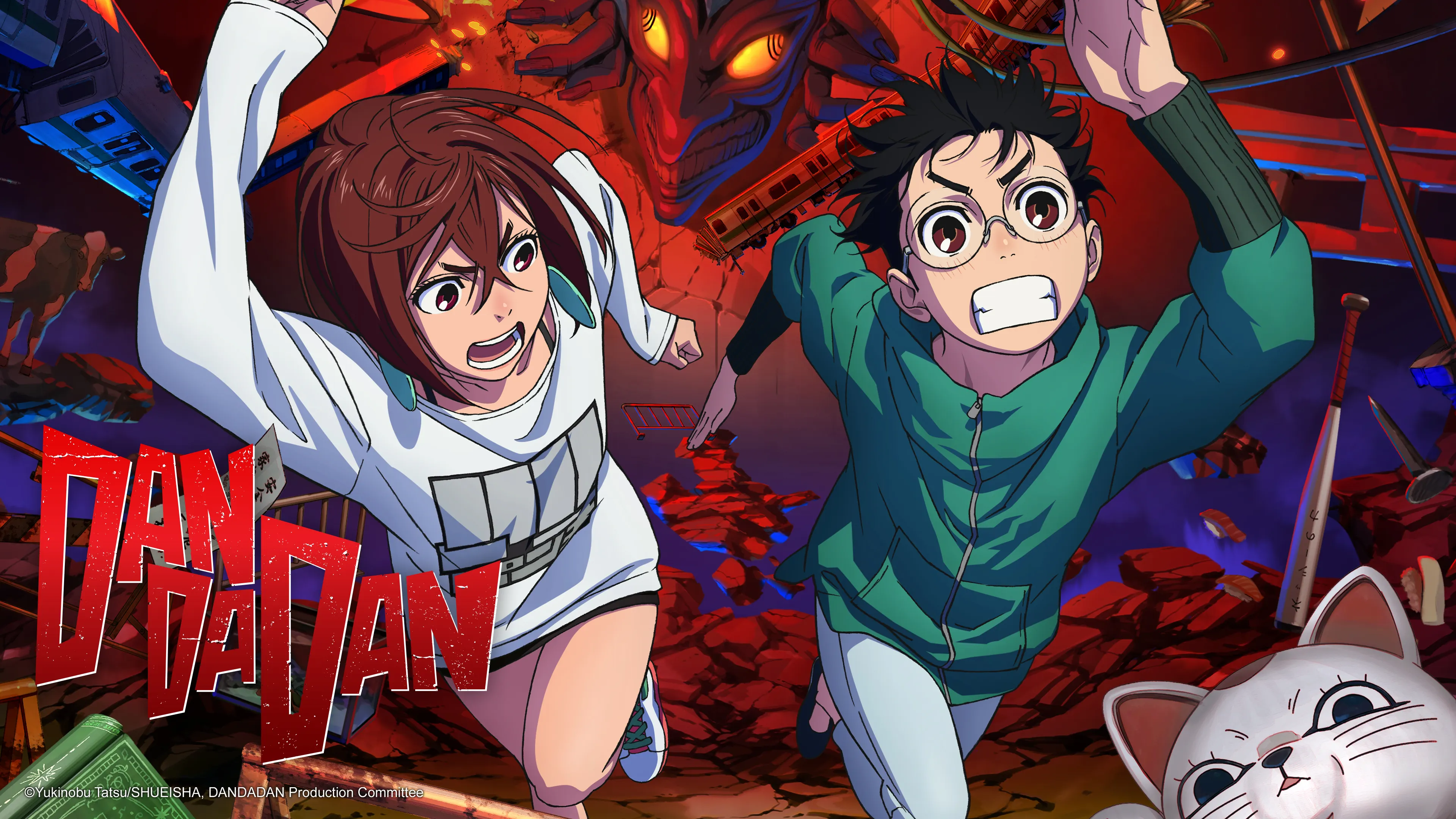
Dandadan
A contemporary shonen manga blending action, comedy, and supernatural mystery as two unlikely partners investigate paranormal phenomena.
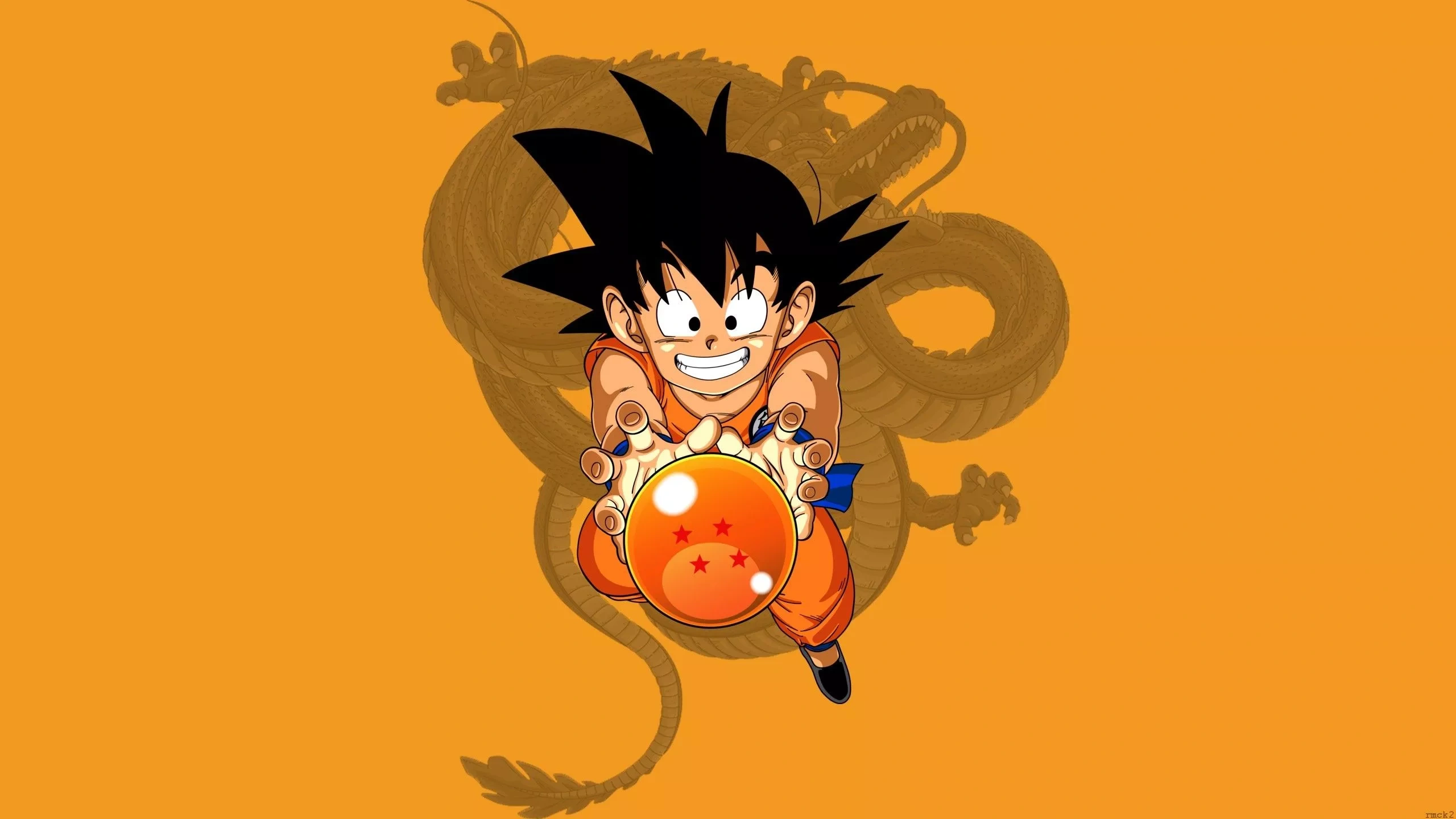
Dragon Ball
Follow Goku's incredible journey from a martial arts novice to Earth's mightiest defender in this action-packed adventure series.
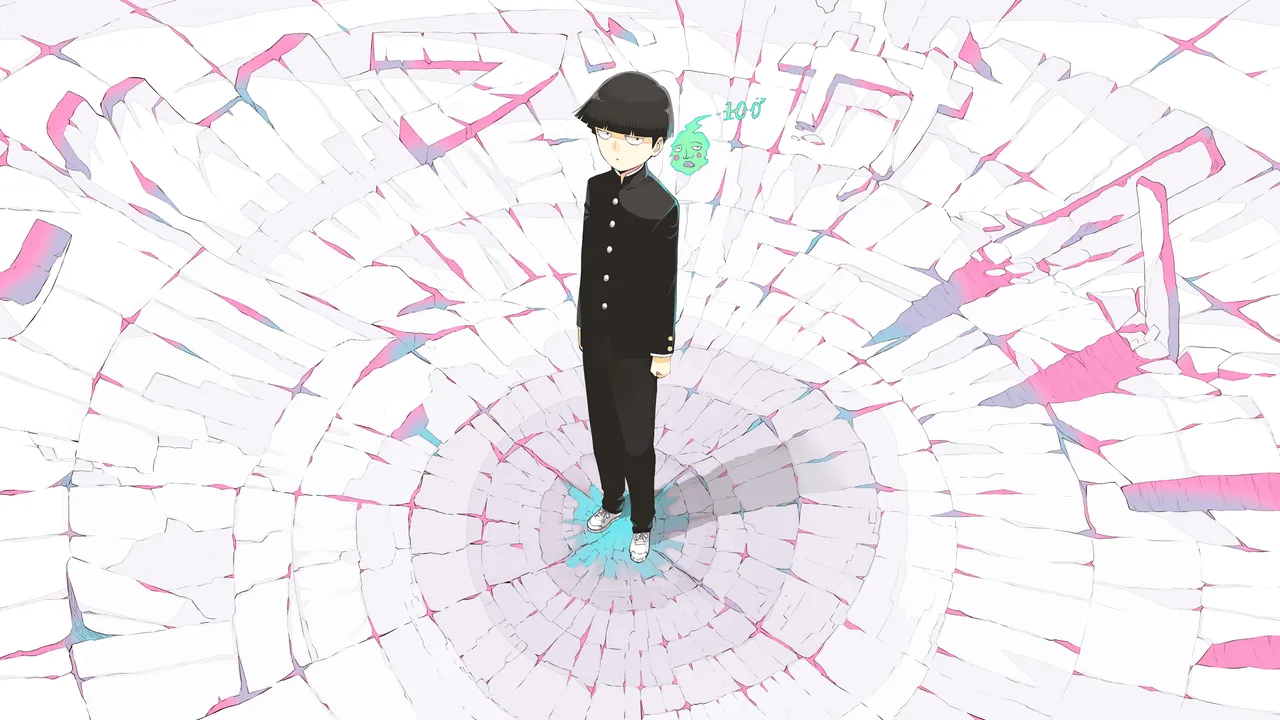
Mob Psycho 100
Mob Psycho 100 is ONE's supernatural comedy about a quiet middle schooler with overwhelming psychic powers who would rather grow as a person than fight. Across 16 volumes it blends absurd humor, explosive action and a sincere coming-of-age message.
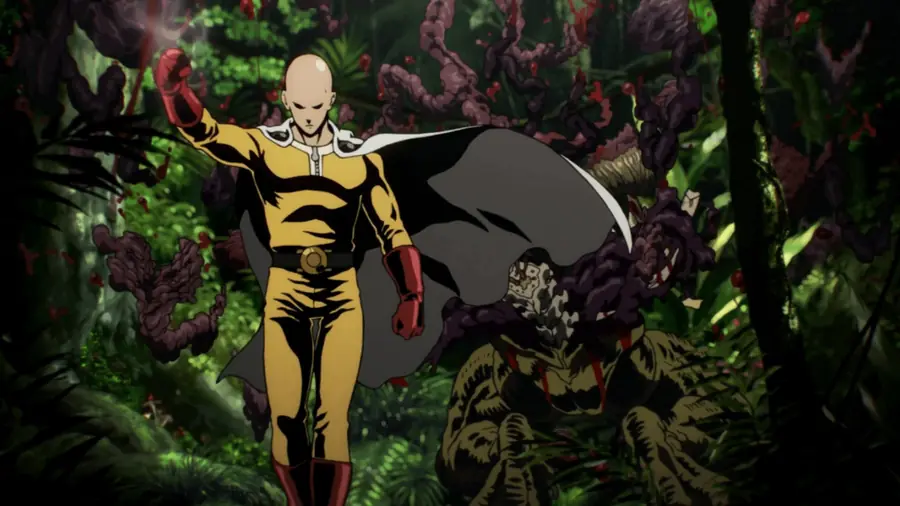
One Punch Man
Saitama, a bald-headed hero, can defeat any opponent with a single punch, yet struggles with existential boredom from invincibility.
Related Articles
All articles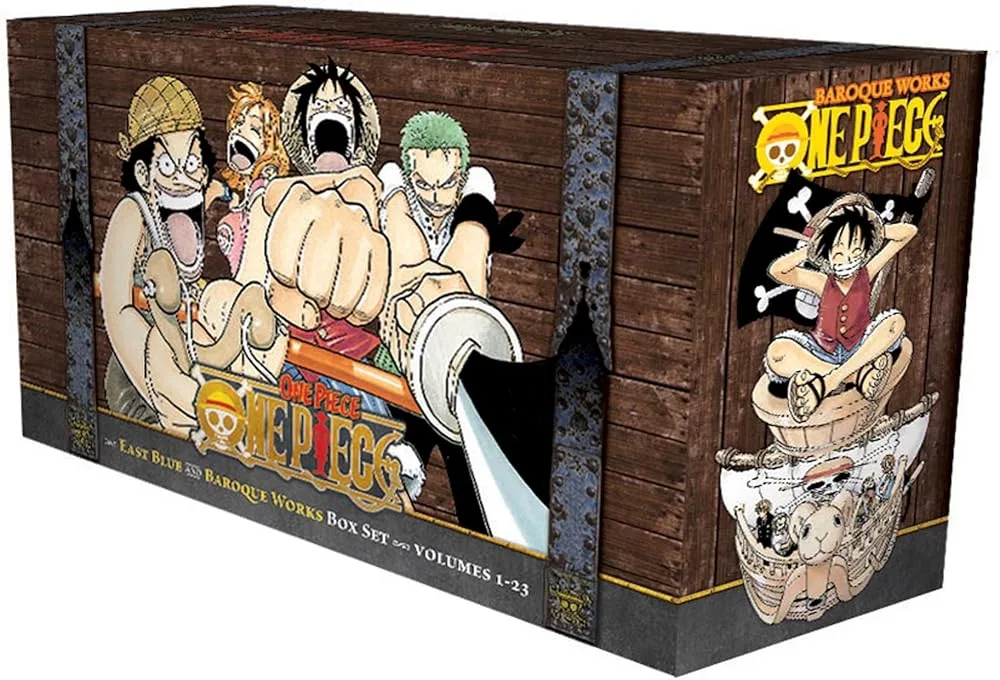
Top 15 Best Action Manga of All Time (2026)
The best action manga ever made, ranked. Explosive battles, legendary fights, and adrenaline-fueled epics — plus the box sets worth collecting.
Top 16 Best Shonen Manga of All Time (2026)
The best shonen manga ever made, ranked. Legendary battle epics, underdog heroes, and the series that defined the genre — plus the box sets worth owning.

Best Manga by Genre: The Ultimate 2026 Reading Guide (Shonen, Shojo, Seinen, Josei)
Comprehensive manga genre guide featuring best series by demographic and genre. From action shonen to mature josei, find your next read organized by taste and preference.