Spy × Family
A masterful blend of comedy, action, and slice-of-life storytelling following a spy, assassin, and psychic girl who form a fake family while concealing their true identities from each other.
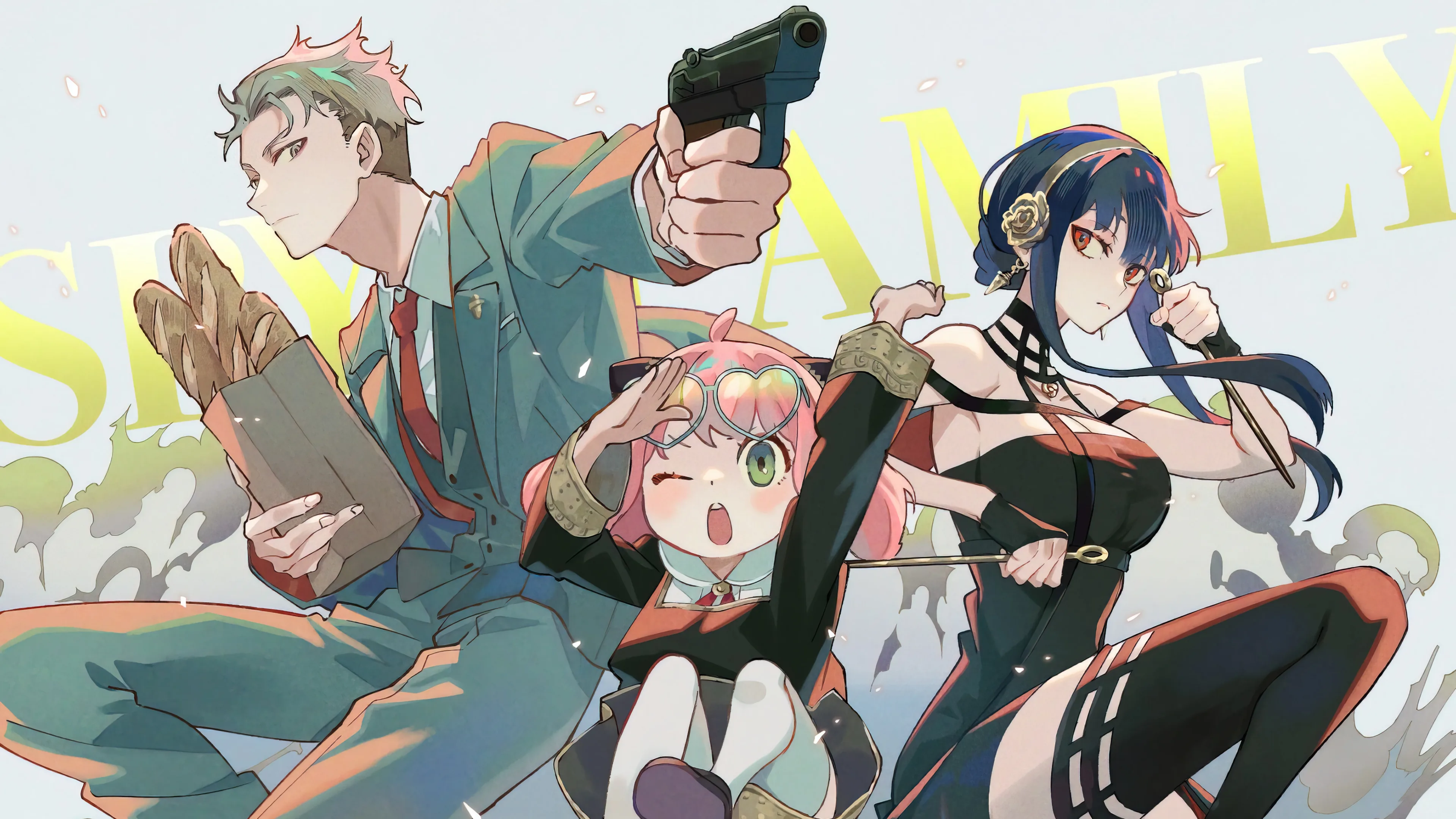
All Spy × Family Story Arcs in Order
Overview
Spy × Family emerged as a phenomenon in contemporary shonen manga, achieving remarkable success through its masterful synthesis of distinct tonal registers: espionage thriller, absurdist comedy, action spectacle, and domestic slice-of-life narrative. Serialized in Weekly Shonen Jump beginning in 2019, Spy × Family represents a distinctive approach to shonen storytelling that prioritizes character charm and humor alongside action sequences and genuine emotional stakes.
The series’ central premise—a secret agent, professional assassin, and telepathic psychic who form a fake family while concealing their true identities from each other—creates infinite comedic and dramatic potential through the constant tension between maintaining appearances and revealing secrets. The narrative thrives on dramatic irony: readers understand the full situation while individual characters remain partially ignorant, generating humor through characters’ misunderstandings and the inevitable complications that arise from layers of deception among people who care about each other.
What distinguishes Spy × Family from typical action shonen is its commitment to comedy as equally weighted narrative element alongside action and emotion. The series demonstrates that shonen manga need not prioritize power progression or world-threatening stakes over interpersonal humor and character-driven comedic situations. The humor emerges authentically from character personalities and situational complications rather than relying on slapstick or joke structures external to narrative logic.
Tatsuya Endo’s character design and visual storytelling elevate comedic moments through expressive facial expressions, dynamic panel composition, and creative page layouts that maximize comedic timing through visual medium. The series treats comedy with same technical sophistication that action sequences receive, creating visual comedy that operates purely through illustrated expression and body language rather than relying on dialogue alone.
The series’ global success transcends typical shonen anime audience demographics. Spy × Family’s appeal extends to readers typically uninterested in traditional action manga, attracted instead by its humor, character charm, and the warm core of genuine affection underlying the chaos. The series demonstrates that shonen storytelling can achieve unprecedented demographic breadth through tonal balance and character-driven humor.
Story and Themes
The Forger Household Formation: Deception as Foundation
Spy × Family’s narrative begins with an impossible assignment: a skilled spy codenamed “Twilight” must form a family, enroll a child in a prestigious school, and gather intelligence on a political target within a strict deadline. The family structure serves purely instrumental purpose—a disguise enabling access to social circles ordinarily unavailable to intelligence operatives. Every element of the planned family exists to serve operational goals.
Twilight’s recruitment of “Yor Briar” as fake wife introduces the series’ central irony: Yor is a highly skilled assassin, though Twilight remains completely ignorant of her profession. Yor accepts the arrangement without disclosing her true occupation, understanding that revealing her assassin status would disqualify her as suitable wife for normal civilian. Her casual willingness to join Twilight’s scheme without verification speaks volumes regarding her pragmatic acceptance of deception as life element.
The introduction of “Anya Forger” as the child completing the family creates the final layer of complexity. Anya possesses legitimate psychic abilities allowing her to read minds, meaning she immediately understands the entire situation: her “parents” are both engaged in dangerous professions and married purely for convenience. Yet Anya perceives something her parents lack—that the family, despite its deceptive foundation, contains genuine potential for authentic connection.
The early narrative establishes the brilliant central premise: three individuals with distinct reasons for maintaining the family structure while harboring secrets from each other. The dramatic irony emerges from Twilight and Yor maintaining operational secrecy while Anya possesses complete information and must prevent them from discovering each other’s true nature. Her role inverts typical secret-keeper dynamics; rather than characters protecting Anya from dangers, she protects them from each other through strategic intelligence management.
Domestic Complications and Genuine Connection
As the Forger household operates, the intended temporary arrangement develops unexpected emotional depth. Twilight’s professional detachment gradually yields to genuine affection for Yor and Anya. His observations of how Anya adapts to school, Yor’s sincere attempts at domestic responsibility despite her assassin conditioning, and their peculiar attempts at family bonding activate his suppressed capacity for human connection. The series suggests that Twilight’s spy training includes emotional compartmentalization that genuine family relationships gradually break down.
Yor’s parallel emotional development involves recognition that her violent profession separated her from ordinary human experience. Her initial shame regarding her assassin identity gradually transforms through recognition that Twilight and Anya accept her as person rather than mere occupation. The possibility of genuine family life, initially presented as elaborate fiction, becomes emotionally real despite remaining operationally deceptive.
The narrative explores how families form through accumulated moments of genuine connection rather than official declarations or genetic bonds. The Forgers become functional family not because paperwork legitimized their relationship but because they genuinely care about each other’s wellbeing and actively support each other’s growth. The series suggests that love and family operate through accumulated choices and consistent care rather than genetic or legal formalities.
Anya’s role as household psychic and secret-keeper generates both comedy and emotional stakes. Her efforts to prevent her parents from discovering each other while maintaining family stability create situations where she must actively manage her parents’ behavior. The inversion of typical family dynamics—where child protects parents rather than inverse—proves simultaneously humorous and touching. Anya’s determination to preserve her family despite its contradictions demonstrates her emotional investment in relationships that initially seemed purely instrumental.
Mission Complications and Higher Stakes
As the narrative progresses beyond domestic comedy, larger plot elements emerge. Twilight’s original mission involves gathering intelligence on the Desmond family, whose patriarch Donovan Desmond constitutes a strategic threat to peace between two fictional nations. The mission’s political stakes gradually become relevant, though the series maintains focus on the family’s wellbeing rather than allowing geopolitical concerns to dominate narrative attention.
The introduction of competing intelligence agencies, enemy operatives, and genuine threats to the Forgers’ stability escalates stakes while maintaining the series’ fundamental character-driven approach. Action sequences emerge not from abstract geopolitical competition but from threats to the family’s established relationships. Readers invest in combat encounters because they threaten characters they care about rather than responding to abstract political stakes.
Yor’s professional obligations create situations where her assassin work threatens the family’s stability. The series explores the moral complications of her profession—her victims constitute real people with their own lives and relationships—while avoiding simplistic moralizing regarding right and wrong. The narrative acknowledges that Yor’s profession involves genuine moral compromise while refusing to reduce her characterization to occupational summary.
The revelation of dangerous enemies targeting Anya for her psychic abilities escalates the stakes toward existential threat. The series balances this genuine danger against the domestic comfort the Forgers have established, creating tension between action movie stakes and family comedy tone. The central question becomes whether the genuine affection binding the family can survive confrontation with threats that operating purely on mission logic would require sacrificing.
Institutional Pressures and Social Advancement
A significant narrative thread involves Anya’s enrollment at Eden Academy, an elite school serving as gateway to aristocratic networks and political power. Her initial academic failures, resulting from genuine difficulty with challenging material rather than lack of intelligence, create comedic situations while establishing school as important location. The academy provides structure enabling exploration of Anya’s social development and relationships beyond her immediate family.
The introduction of Damian Desmond—Donovan Desmond’s son and Anya’s school rival—creates secondary character relationship generating both comedy and emotional development. Damian’s gradual recognition of Anya’s worth, despite their initial antagonism, suggests that genuine connection transcends social hierarchies and political divisions. The series hints that the next generation might achieve peace through personal relationships what previous generations failed to accomplish through diplomatic negotiation.
The institutional pressures surrounding the academy, including its role in shaping future political leaders and its emphasis on class hierarchy, explore how social structures enforce separation between individuals while romantic and familial relationships create unexpected bridges across class boundaries. The series suggests that genuine human connection operates on different logic than institutional hierarchies.
Anya’s school experiences, while comedically rendered, address genuine adolescent concerns regarding academic pressure, social acceptance, and finding one’s place within hierarchical systems. Her determination to maintain good grades to keep her family together, despite her genuine academic struggle, creates emotional authenticity alongside humor. The series treats childhood concerns with respect while maintaining comedic presentation.
Main Characters
Loid Forger (Twilight)
Twilight represents the spy archetype deconstructed and reconstructed through emotional vulnerability. His initial characterization emphasizes cold professionalism and emotional detachment refined through years of espionage training. His ability to adopt personas, maintain cover, and manipulate others constitutes professional mastery. Yet the Forger family forces confrontation with suppressed emotional capacity and genuine human needs that spy training taught him to ignore.
Twilight’s character development involves gradual recognition that professional success means nothing compared to family relationships. His careful observation of Anya’s struggles and Yor’s authentic attempts at domestic normalcy activate protective instincts that transcend operational concerns. The series suggests that love operates through vulnerability and acceptance of emotional stakes in ways that professional detachment cannot replicate.
His comedic moments emerge from applying spy tradecraft to domestic situations—treating family conflicts with strategic analysis, approaching school meetings with disguise planning, and maintaining operational security around household details. The humor derives from mismatch between professional sophistication and domestic simplicity, creating situations where his greatest skills prove irrelevant while emotional authenticity determines success.
Yor Briar
Yor’s characterization subverts expectations regarding assassins and female characters. She possesses genuine combat competence and professional skill equal to any action protagonist. Her professional identity encompasses lethal capability and experience with moral compromises that typical domestic character archetypes never confront. Yet the series refuses to reduce her to occupational summary or limit her characterization to action sequences.
Yor’s emotional development involves recognition that her profession, while genuine aspect of her identity, does not define her completely. Her authentic desire for normal family life, her attempts at cooking and housekeeping despite culinary disasters, and her genuine affection for Anya and Twilight constitute equally valid aspects of her personhood. The series suggests that humans contain multitudes—simultaneously professional, personal, capable, vulnerable.
Her comedy derives from similar incongruity as Twilight’s: applying lethal professional skills to domestic situations where such expertise proves irrelevant. Her tendency toward violence when solving household problems, her unconscious use of professional killing techniques in inappropriate contexts, and her confusion regarding normal social conventions create humor grounded in character authenticity. The humor never demeans her; instead, it celebrates her attempt to fit into domestic normalcy despite her exotic background.
Her relationship with Twilight generates humor and emotional stakes simultaneously. Her professional status remains secret to him, creating situations where she unconsciously nearly reveals assassin identity. Her emotional investment in the family relationship, which remained instrumental in origin, demonstrates genuine capacity for love despite her isolated profession. The series treats her with respect while celebrating the comedy inherent in her situation.
Anya Forger
Anya’s psychic abilities and precocious intelligence position her as household perspective and moral center. Her capacity to read minds grants her complete information while isolating her from sharing that knowledge. The series explores loneliness inherent in possessing secrets others cannot understand while being unable to articulate those secrets without exposing her abilities.
Anya’s characterization transcends typical child character archetypes. She possesses agency regarding her parents’ fates, making active decisions regarding information management rather than remaining passive. Her determination to maintain family stability, despite understanding their operational contradictions, suggests emotional sophistication and genuine familial commitment. Her choice to preserve the family rather than expose the deceptions demonstrates priorities transcending personal advantage.
Her school experiences, while comedically rendered, address genuine childhood concerns. Her academic struggle despite intelligence, her desire for peer acceptance, and her attempts to navigate social hierarchies provide emotional authenticity grounding her characterization. The series respects her perspective while maintaining comedic presentation of her precocious observations and unusual coping strategies.
The comedy surrounding Anya derives from her unusual maturity combined with childhood impulses—she possesses adult understanding while responding emotionally as child. Her thoughts, revealed through the narrative, demonstrate perspective gap between her intellectual understanding and her emotional development. The series treats her with affection while celebrating the inevitable complications of her unusual situation.
Supporting Characters
Spy × Family features exceptional supporting cast enriching the central family narrative. Franky Franklin, Twilight’s handler and occasional ally, provides external perspective on the family’s operations while harboring his own emotional investments in their success. His gruff affection for the Forgers, masked through professional demeanor, creates warmth underlying their operational relationship.
Damian Desmond represents next-generation possibility regarding peace and reconciliation. His gradual humanization through relationship with Anya suggests that genuine connection can transcend political opposition. His character journey from arrogant aristocrat toward person capable of authentic friendship explores how individuals transcend inherited biases through personal relationship.
Becky Blackbell, Anya’s wealthy friend from prominent family, provides perspective on aristocratic social structures while demonstrating that wealth does not preclude genuine friendship or emotional authenticity. Her unapologetic affection for Anya, despite their socioeconomic differences, suggests that genuine connection operates independently from class hierarchies.
Art Style
Tatsuya Endo’s artwork demonstrates exceptional versatility across tonal registers. Action sequences feature dynamic choreography with clear impact visualization and strategic positioning that enables reader understanding of combat flow. Endo’s backgrounds provide adequate environmental context without overwhelming character clarity—a balance many manga artists struggle maintaining. His linework remains consistent and readable across varied scenarios.
The comedic visual presentation constitutes Endo’s greatest artistic achievement. Expressive facial animation—conveying emotions through subtle features and exaggerated expressions—drives much of the humor. Page layouts optimize comedic timing through panel composition and positioning that guides reader attention toward punchlines. The series demonstrates that sequential art comedy requires same technical sophistication as action choreography.
Character design emphasizes readability and personality expression. The central trio—Twilight’s composed profile, Yor’s soft features contrasting with lethal capability, and Anya’s expressive face—remain immediately recognizable while allowing variation in expression and positioning. Supporting characters receive distinctive designs clearly communicating their role and personality. The color schemes in illustrations enhance emotional tone appropriately.
Environmental design creates sense of place while maintaining focus on character interaction. School settings, home interiors, and public spaces feel lived-in and realistic without excessive detail. The visual presentation balances simplicity enabling clear communication with sophistication avoiding sterile minimalism. Endo’s artistic approach prioritizes clarity and emotional communication over technical spectacle.
Legacy and Impact
Spy × Family’s cultural impact extends beyond typical manga achievement into broader entertainment industry influence. The series’ massive commercial success challenged the assumption that shonen manga required escalating power systems or world-threatening stakes for commercial viability. The phenomenon demonstrated that character-driven narratives emphasizing humor and relationships could achieve unprecedented popularity and critical appreciation.
The series influenced how publishers approached character-focused narratives within action-oriented genres. Spy × Family’s emphasis on genuine character relationships, comedic grounding, and emotional authenticity became aspirational models for subsequent series attempting similar tonal balance. The influence prompted reassessment of what constitutes commercially viable shonen content, expanding beyond traditional power fantasy frameworks.
The anime adaptation’s exceptional quality, produced by studio CloverWorks, brought the manga to wider audiences and demonstrated successful translation of visual comedy from sequential art to animation medium. The anime’s faithful adaptation and critical acclaim confirmed that the manga’s success derived from fundamental narrative and character quality rather than manga medium specificity.
Spy × Family’s international success rivaled or exceeded domestic Japanese reception, establishing the series as genuinely global phenomenon rather than regionally specific success. The series’ themes regarding found family, genuine connection transcending circumstances, and hope regarding peace and reconciliation resonated across cultural contexts. The universal emotional authenticity underlying the comedy and action enabled global appreciation despite series’ distinctly Japanese narrative sensibilities.
The series’ treatment of female characters—particularly Yor as skilled professional, competent operator, and full character rather than supporting role—influenced broader discussions regarding representation within shonen manga. Yor’s characterization as capable agent with her own professional identity and ethical complexity challenged typical female character archetypes, establishing new possibilities for character development within action-oriented narratives.
Where to Read
Spy × Family is available through multiple publishers globally. Viz Media publishes the English translation in both individual volumes and deluxe collected editions. Digital versions are available through ComiXology, Kindle, and specialized manga platforms, enabling immediate access without physical acquisition. The ongoing serialization means new volumes continue publication regularly.
Libraries worldwide carry Spy × Family collections, making the series accessible to readers unable to purchase copies. The series’ mainstream popularity ensures broad availability through standard retailers and specialized manga distributors. The excellent anime adaptation, available through platforms including Netflix and Crunchyroll, provides alternative experience alongside manga reading.
Readers should note that while the anime adaptation maintains high quality and faithfulness to source material, the manga provides additional character interiority and humor that animation cannot fully capture. Experiencing both mediums enables fuller appreciation of Endo’s artistic and narrative choices.
Why You Should Read Spy × Family
Spy × Family deserves recognition as contemporary masterpiece demonstrating that shonen manga can achieve critical and commercial success through character charm and humor rather than relying on power progression or world-building complexity. The series’ masterful tonal balance—seamlessly transitioning between action spectacle, absurdist comedy, and genuine emotional moments—creates narrative experience satisfying across multiple reading contexts.
The character development, particularly the Forger family’s gradual transformation from instrumental arrangement into genuine relationship, demonstrates narrative sophistication and emotional authenticity worthy of literary acclaim. The series treats character relationships with respect while maintaining comedic presentation. Readers invest in the family’s success not through identification with power fantasy protagonist but through recognition of genuine affection and commitment binding them.
Tatsuya Endo’s artwork elevates visual storytelling through expressive character design and comedic panel composition that demonstrates sequential art mastery. The series shows that technical virtuosity in artwork serves character and emotional communication rather than mere spectacle. Endo’s ability to convey comedy, action, and emotion through illustration alone establishes him as contemporary master of manga visual language.
The series’ treatment of serious themes—institutional power structures, political conflict, generational change, found family—alongside comedic presentation creates intellectual substance enriching entertainment value. The narrative suggests that genuine peace emerges through personal relationships and recognition of shared humanity rather than institutional negotiation alone. These thematic layers appeal to readers seeking substance alongside entertainment.
Spy × Family’s emotional core—the possibility that genuine family bonds can develop despite deceptive origins, that love transcends circumstantial arrangement, and that human connection constitutes life’s most meaningful achievement—resonates profoundly. The series celebrates the beauty inherent in imperfect people attempting to build genuine life together despite complications. This humanistic message, expressed through entertaining narrative, creates enduring emotional impact.
For contemporary readers, Spy × Family provides rare example of manga achieving both critical acclaim and massive commercial success through uncompromising commitment to character authenticity and genuine humor. The series demonstrates that shonen manga can appeal to demographics traditionally considered outside action manga’s audience while maintaining appeal for traditional shonen readers. The unprecedented breadth of Spy × Family’s audience appeal establishes it as genuinely transformative work regarding genre possibilities.
Most importantly, Spy × Family remains profoundly entertaining. The comedy delights through character authenticity and creative comedic situations; the action sequences thrill through clear choreography and genuine stakes; the character relationships generate emotional investment transcending typical entertainment consumption. Whether experiencing Spy × Family for entertainment, artistic appreciation, thematic engagement, or all three simultaneously, the series delivers a complete package that justifies its position as one of contemporary manga’s greatest achievements.
The series’ ongoing status provides opportunity to follow Jinwoo’s family as they navigate new complications and relationship developments. Each new volume builds on established character relationships while introducing fresh scenarios exploring the central premise’s infinite comedic and dramatic possibilities. Readers who begin Spy × Family can expect sustained entertainment alongside continued character development and emotional growth.
Related reading: Explore Tatsuya Endo’s biography for insights into his distinctive artistic approach and narrative philosophy. Compare Spy × Family’s approach to found family with Fullmetal Alchemist, which similarly emphasizes character relationships and emotional authenticity within action narratives, and My Hero Academia for contrasting approaches to character-driven shonen storytelling emphasizing different thematic concerns.
Story Arcs
arcs:
-
slug: eden-academy-entrance name: Eden Academy Entrance Arc summary: Loid Forger recruits Yor Briar as his fake wife, and together they recruit the psychic child Anya to complete their family cover. Anya enrolls at the prestigious Eden Academy to fulfill Operation Strix’s requirements, with the family navigating the entrance examination and Anya’s initial struggles with academics and social integration at the elite school. detailedSummary: |- The Eden Academy Entrance Arc establishes the foundational premise of Spy × Family. Loid, a highly trained WISE intelligence operative codenamed “Twilight,” receives Operation Strix: an assignment to form a family, enroll a child in Eden Academy, and gather intelligence on Donovan Desmond, a political figure threatening international peace. This mission operates entirely within professional parameters—the family exists purely as instrumental cover for intelligence operations, with every element calculated to serve strategic goals.
Loid’s recruitment of Yor as his fake wife introduces immediate irony. Unknown to Loid, Yor works as a professional assassin under the alias “Thorn Princess,” though she accepts Loid’s marriage proposal without hesitation or skepticism. Her willingness to participate in an elaborate deception, combined with her unconscious reveals of her lethal profession, creates comedic tension as readers understand her secrets while Loid remains oblivious. The addition of Anya, a young orphan child with genuine psychic abilities, completes the family structure. Anya’s telepathic powers grant her immediate understanding of her parents’ true nature: a spy and an assassin living under complete operational deception. Her recognition that the family, despite its deceptive foundation, contains potential for genuine emotional connection drives her motivation to maintain the family structure.
Anya’s enrollment at Eden Academy forces the family into greater social integration. The academy entrance examination creates immediate comedy as the family navigates formal evaluation processes. Anya’s natural intelligence warring with her academic struggle, combined with her desperation to pass the examination to keep her family together, generates emotional authenticity beneath comedic situations. The successful enrollment establishes Eden Academy as a primary setting for subsequent narrative development, introducing secondary characters including Becky Blackbell, Anya’s wealthy friend, and Damian Desmond, the rival whose father represents Operation Strix’s actual intelligence target. The arc concludes with the family successfully established, their cover intact, and operational parameters set for subsequent developments.
-
slug: midterm-exam name: Midterm Exam Arc summary: Anya studies desperately to improve her academic performance and achieve the Stella Star, a prestigious award. Twilight’s preparation methods clash with Yor’s unconventional approaches, while family bonds deepen through their collective effort. The arc explores the pressure of institutional achievement and family members discovering unexpected strengths. detailedSummary: |- The Midterm Exam Arc focuses on Anya’s academic progress and the family’s collaborative efforts to support her success. Having enrolled at Eden Academy, Anya faces immediate pressure regarding her grades. Her initial poor academic performance threatens two critical objectives: maintaining her social position at the prestigious school and preserving the family unit she has grown to treasure. The arc emphasizes that Anya’s motivation to excel derives not from personal academic ambition but from determination to keep her family together by meeting their social requirements.
The examination preparation process becomes comedy and character development vehicle. Loid applies espionage tradecraft to Anya’s education, attempting to approach learning with strategic analysis and systematic information management. His methodical approaches clash comically with Yor’s unconventional parenting instincts, which frequently involve physical punishment as motivation—reflecting her background as a trained killer unfamiliar with normal child-rearing practices. Anya’s simultaneous exposure to her parents’ conflicting teaching styles creates situations where she must navigate between them, occasionally reading their minds to understand their intentions. The family’s collaborative effort toward a shared goal demonstrates gradual transformation from instrumental arrangement to genuine emotional connection.
The Stella Star award, which appears in multiple entries on Anya’s school record, becomes a symbol of her desire for achievement and social recognition. Her determination to obtain it, despite her genuine academic struggle and initial learning difficulties, creates emotional stakes alongside comedy. The arc concludes with Anya’s improvement and growing confidence, establishing her academic endeavors as ongoing narrative thread. The examination period also develops secondary school relationships, particularly Anya’s friendship with Becky Blackbell and her complicated dynamic with Damian Desmond, who gradually recognizes her genuine character beneath his initial antagonism.
-
slug: cruise-ship name: Cruise Ship Arc summary: The Forger family boards a cruise ship for Operation Strix intelligence gathering. While Loid conducts espionage operations, Yor confronts assassins pursuing the same target. The arc balances action sequences with family bonding moments as the three family members pursue their distinct objectives while simultaneously enjoying vacation experiences together. detailedSummary: |- The Cruise Ship Arc represents escalating stakes as Operation Strix moves beyond domestic surveillance into active intelligence operations. Loid receives intelligence that a significant political target will be aboard a cruise ship, providing operational opportunity. He arranges for the family to embark on the voyage, disguising the mission as genuine family vacation while positioning himself for intelligence collection. This arc demonstrates how Loid maintains cover identity of devoted family man while simultaneously engaging in dangerous espionage activities, creating constant tension between operational objectives and domestic responsibilities.
Yor’s parallel storyline introduces competing complications. Unknown to Loid and Anya, Yor’s assassin contacts assign her a target also aboard the ship. The convergence of Loid’s espionage assignment and Yor’s assassination contract creates genuine dramatic stakes. Multiple assassination attempts occur on the vessel, forcing Yor to repeatedly leave the family to engage targets while maintaining cover regarding her mysterious “bathroom visits.” Her injuries from combat encounters require explanation to her increasingly suspicious family members. The arc showcases Yor’s professional competence and lethal capability while simultaneously depicting her growing reluctance to abandon her family for professional obligations. Her internal conflict between professional commitment and family loyalty becomes increasingly central to her characterization.
The cruise ship setting provides backdrop for genuine family bonding. Anya observes both parents’ secret activities through her telepathic awareness, creating comedy as she witnesses their dangerous operations while they believe themselves unobserved. Family activities including swimming, dining, and entertainment occur simultaneously with covert operations, allowing moments of authentic connection to contrast with action sequences. Bond, the Forgers’ psychic dog also aboard the ship, provides additional comedic perspective and occasions for family interaction. The arc concludes with the operation’s partial success, with Loid obtaining significant intelligence while Yor completes her assassination contract. The experience simultaneously advances Operation Strix and deepens the family’s genuine emotional bonds despite—or perhaps because of—the complications created by their secret professions.
-
slug: great-pretender-spy-wars name: Great Pretender Arc (Spy Wars) summary: WISE intelligence agency confronts competing spy organization SSS (Ostanian Secret Security Service) in escalating conflict. Yuri Briar’s involvement with SSS directly opposes Loid’s WISE objectives, creating tension as Yuri grows increasingly suspicious of his mysterious sister Yor. The arc explores institutional conflicts alongside personal relationships and loyalty tests. detailedSummary: |- The Great Pretender Arc elevates narrative stakes by introducing institutional conflict between competing intelligence organizations. WISE, the western intelligence agency employing Twilight, faces escalating opposition from SSS, the Ostanian Secret Security Service. This government agency operates as repressive internal security apparatus, with Yuri Briar working as dedicated officer. The arc explores genuine ideological conflict between organizations with fundamentally different objectives: WISE seeks to maintain international peace through intelligence operations, while SSS represents authoritarian state security prioritizing regime stability through oppressive control.
Yuri’s characterization creates central emotional complication. As Yor’s younger brother, he loves his sister deeply but maintains allegiance to SSS that places him in opposition to her interests. His growing suspicion regarding Yor’s mysterious activities, her injuries, and her connection to Twilight creates dramatic irony. Yuri obsesses over discovering Loid’s true nature, becoming increasingly convinced that Twilight represents a threat to his sister. His investigations bring him dangerously close to exposing the family’s secrets, creating genuine peril. The arc explores how institutional loyalty and personal relationships can conflict irreconcilably, forcing characters to choose between organizational obligations and familial commitment.
The broader spy conflict between WISE and SSS manifests in escalating incidents affecting the Forger household. Loid finds his operations increasingly compromised by SSS interference. Simultaneous assassination attempts target the family, forcing Yor to engage in increasingly violent defensive actions. Anya’s telepathic awareness of these threats creates psychological stress as she attempts to protect her parents from exposure while remaining aware of genuine danger. The arc demonstrates that Operation Strix, initially presented as relatively safe intelligence operation, faces genuine risk from competing intelligence agencies pursuing their own objectives. Bond’s precognitive abilities provide early warnings of danger, allowing the family moments to prepare for threats.
Resolution of this arc requires mutual recognition among the three Forger family members regarding each other’s true natures. While they maintain cover regarding their original meeting, they gradually accept that their bonds extend beyond operational convenience into genuine family commitment. Yuri’s involvement adds complication as his obsession with protecting Yor leads him toward discoveries he may not survive if pursued. The arc concludes with operation status maintained through the family’s collective determination to preserve their household despite external threats and internal complications.
-
slug: insidious-assassin name: Insidious Assassin Arc summary: Dangerous enemies specifically target Anya for her psychic abilities, escalating threats from abstract intelligence operations to direct personal danger. The arc focuses on the family’s protective instincts and collective determination to preserve Anya’s safety despite overwhelming odds and professional complications. detailedSummary: |- The Insidious Assassin Arc introduces enemies who specifically target Anya rather than pursuing Loid’s or Yor’s professional interests. The revelation that her psychic abilities are known to dangerous organizations transforms her status from innocent child benefiting from family protection into valuable asset being hunted. This development fundamentally alters Operation Strix’s parameters—Loid’s professional mission now overlaps with personal protective obligations as he recognizes his assigned family member requires genuine safeguarding beyond operational concerns.
Multiple assassination attempts target Anya directly. These threats originate from organizations seeking to capture her psychic powers for their own purposes. Intelligence suggests that Anya’s abilities represent strategic value to organizations opposed to both WISE and Ostanian government interests. The arc escalates from domestic comedy toward genuine action-adventure as professional assassins attempt coordinated operations against the family. Yor’s professional competence becomes essential as she engages enemies attempting to infiltrate their home. Loid must apply his espionage training toward defensive operations rather than offensive intelligence gathering. Anya’s psychic abilities provide survival advantage, allowing her to anticipate attacks and coordinate defensive responses, but the psychological toll of constant threat accumulates over the arc.
The family’s response demonstrates genuine emotional commitment surpassing any operational calculus. Loid, who entered the family arrangement with explicit emotional detachment, demonstrates willingness to sacrifice professional objectives to protect Anya’s safety. Yor, whose assassination profession involves killing others methodically, redirects her lethal capability toward protecting her family member from similar threats. Anya, despite her psychic awareness of her parents’ original deception, expresses determination to remain with her family despite awareness of the danger her presence creates. The arc suggests that family bonds, once formed through genuine emotional investment, supersede professional considerations and survival calculations.
Resolution requires the family to publicly acknowledge their collective commitment while maintaining sufficient operational cover to continue existing within society. Antagonistic organizations are defeated or deterred through combination of Loid’s strategic planning, Yor’s combat prowess, and Anya’s psychic coordination. The conclusion establishes the family’s genuine commitment to mutual protection, with Operation Strix transforming from cover arrangement into emotional reality requiring identical protective consideration as biological families.
Main Characters
characters:
-
slug: loid-forger-twilight name: Loid Forger (Twilight) role: protagonist description: |- Loid Forger, known by the codename Twilight, is the protagonist of Spy x Family and is widely regarded within the story as Westalis greatest spy. Working for the intelligence agency WISE, he is a master of disguise, deduction, and improvisation, able to assume countless identities and adapt instantly under pressure. To carry out Operation Strix, he assembles a fake family, posing as a kind psychiatrist named Loid Forger so he can enroll a child at the prestigious Eden Academy and reach his political target. Coolly analytical and endlessly prepared, Loid treats every situation as a mission to be solved. The series uses him to explore themes of identity, sacrifice, and the meaning of family, as the line between his cover persona and his real self grows increasingly blurred over time.
The Forger family forces confrontation with suppressed emotional capacity. His observations of Anya’s determination to excel academically despite her struggle activate protective instincts that transcend professional concern. Yor’s authentic attempts at domestic responsibility, combined with her unconscious near-revelations of her assassin identity, create moments where Loid recognizes her as individual rather than strategic asset. His gradual acknowledgment that the family’s wellbeing matters more to him than operational success represents profound character development. He maintains professional cover regarding his emotional attachment, refusing to explicitly acknowledge his transformation while simultaneously making decisions prioritizing family protection over intelligence objectives.
Loid’s position as patriarch creates specific characterization opportunities. He attempts to be responsible guardian despite his profession and genuine parental inexperience. His espionage training frequently proves irrelevant to domestic challenges—he cannot solve family problems through deception and strategic manipulation. His awkwardness navigating normal parental situations creates comedy while building emotional authenticity. By series progression, readers recognize that Loid’s emotional investment in his family equals or exceeds his professional commitment to Operation Strix.
appearsIn:
- eden-academy-entrance
- midterm-exam
- cruise-ship
- great-pretender-spy-wars
- insidious-assassin
groups:
- wise-intelligence
- forger-family
bio: |- Orphaned and traumatized by war as a child, Loid grew up determined to build a world where children would never cry, a conviction that drives his espionage career. Tasked with Operation Strix, he recruits the orphan Anya as his daughter and the city hall clerk Yor as his wife, intending the arrangement to be purely temporary and operational. As the story unfolds, he balances dangerous covert missions against the unfamiliar demands of parenting and married life. Though he insists that emotional attachment compromises a spy, his actions increasingly betray genuine care, as he repeatedly protects Yor and Anya at personal risk. His arc traces a slow thaw, moving from a man who views his family as tools toward someone quietly unwilling to lose the home he never planned to keep.
His initial approach to family formation operated with mechanical efficiency. He identified Yor Briar through background investigation and proposed marriage based on practical evaluation of her suitability as fake spouse. He recruited Anya from orphanage selection, evaluating her based on Eden Academy enrollment requirements. The arrangement appeared temporarily instrumental—Loid expected the family structure would be dissolved upon operation completion or Anya’s aging out of Eden Academy.
As the narrative progressed, Loid’s emotional barriers gradually eroded through accumulated experiences. Anya’s genuine affection despite her psychic awareness of his deception, Yor’s sincere attempts at domestic normalcy despite her profession, and small moments of authentic family connection activated emotional capacity that decades of intelligence training had suppressed. His journey culminates in recognition that family bonds constitute life’s most meaningful achievement, surpassing professional success or intelligence operational victories.
-
slug: yor-forger-thorn-princess name: Yor Forger (Thorn Princess) role: deuteragonist description: |- Yor Forger, who operates under the codename Thorn Princess, is one of the protagonists of Spy x Family and a deadly professional assassin working for an underground guild. By day she appears as a mild, somewhat awkward clerk at Berlint City Hall, while by night she carries out contract killings with extraordinary speed and lethal precision. To deflect suspicion about her unmarried status and her clandestine work, she agrees to a marriage of convenience with Loid, unaware that he is a spy just as he is unaware she is an assassin. Kind, earnest, and socially shy despite her fearsome combat skills, Yor anchors much of the comedy and warmth of the story. Her character explores themes of duality, belonging, and the quiet hope that a fabricated family might offer her the genuine connection she has long lacked.
Yor’s characterization subverts female character archetypes through refusal to compromise her professional identity for domestic role. She maintains assassin work throughout the series despite her family responsibilities, treating her two lives as simultaneously valid. Her culinary disasters create comedy while demonstrating genuine effort to master normal domestic skills despite her lethal professional background. Her inability to recognize normal social conventions, resulting from her isolated profession, generates humor grounded in character authenticity. She treats her family with authentic care while occasionally suggesting lethal solutions to minor problems—not from malice but from professional conditioning.
Her emotional development involves gradual recognition that her profession, while genuine aspect of her identity, does not define her completely. She begins series resentful of familial connections, viewing them as burdensome constraints. Over narrative progression, she recognizes that family relationships provide meaning and belonging previously absent from her isolated profession. Her genuine affection for Loid and Anya develops organically through accumulated experiences and meaningful interactions, creating character arc where instrumental arrangement transforms into emotional reality.
appearsIn:
- eden-academy-entrance
- midterm-exam
- cruise-ship
- great-pretender-spy-wars
- insidious-assassin
groups:
- assassins-underground
- forger-family
bio: |- Raised alongside her younger brother Yuri after losing their parents young, Yor took up assassination work partly to support him, and her sense of duty defines her. Entering the Forger arrangement to maintain her cover, she initially treats it as practical camouflage for her real profession. Over time, however, she grows sincerely attached to Anya and finds herself caring for Loid, struggling to keep her killings hidden while embracing the role of wife and mother. Her arc centers on reconciling her capacity for violence with her deep gentleness, and on learning that compassion and lethality can coexist within her. Through small domestic victories and shared danger, Yor discovers that the family she joined for appearances has become something she genuinely does not want to give up.
Her unconscious violence, manifesting in her tendency toward lethal solutions for minor problems, suggests assassination work constituted her primary life experience. She lacks normal social reference points available to those with conventional upbringing and education. Her ignorance of basic social conventions creates frequent misunderstandings and awkward interactions with normal civilians. Yet her professional skill remains unquestionable—opponents facing her in combat rarely survive encounters.
Meeting Loid and accepting marriage proposal occurred without skepticism or extended consideration, suggesting her eagerness for escape from isolated profession and entry into normal life. Her attempts at housekeeping, cooking, and parenting despite consistent failure demonstrate genuine commitment to family responsibilities. Her gradual realization that her family accepts her despite her complicated background and dangerous profession provides emotional foundation for her character development. She concludes the series as woman successfully integrating her assassin identity with authentic family role, embodying possibility that people contain multiple facets and professional occupation need not determine emotional capacity.
-
slug: anya-forger name: Anya Forger role: protagonist description: |- Anya Forger is the adopted daughter at the heart of Spy x Family and a young girl with secret telepathic powers, the product of a mysterious experiment that left her able to read the minds of those around her. Adopted by Loid to fulfill his mission, she alone knows that her father is a spy and her mother is an assassin, a secret she delightedly keeps to herself. Bright, mischievous, and endearingly clumsy with schoolwork, Anya uses her mind reading less for advantage than to nudge her parents toward genuine affection. She provides much of the series humor through her exaggerated reactions and catchphrases, while serving as its emotional core. Her character explores themes of found family, childhood longing, and the way an unexpected child can transform a relationship built on deception into something real.
Anya’s role inverts typical family dynamics. Rather than parents protecting child from dangerous knowledge, Anya protects her parents from each other by managing information flow and preventing mutual discovery. She consciously manipulates situations to prevent her parents’ true professions from being exposed, demonstrating agency regarding her family’s fate. She actively chooses to preserve the family arrangement rather than expose their deceptions, making deliberate choice to support family stability. This inversion creates both comedic situations and genuine emotional poignancy.
Her characterization transcends typical child character archetypes through combination of precocious intelligence with authentic childhood impulses. She possesses intellectual understanding of complex situations while responding emotionally as actual child. This gap between her intellectual comprehension and emotional development creates consistent character tension. Her school experiences address genuine childhood concerns—academic struggle, peer acceptance, navigating hierarchies—grounding her characterization in authentic emotional response despite her unusual abilities.
appearsIn:
- eden-academy-entrance
- midterm-exam
- cruise-ship
- great-pretender-spy-wars
- insidious-assassin
groups:
- forger-family
- eden-academy-students
bio: |- Having drifted through a series of orphanages and foster placements because of her unsettling abilities, Anya seizes the chance to join the Forger household, craving the stable family she has never had. Knowing the truth about both parents, she works quietly behind the scenes to keep the family together, often acting on overheard thoughts she is too young to fully understand. At Eden Academy she pursues Stella stars to support Loids mission and forms a tense, evolving rivalry and friendship with Damian Desmond. Her journey is one of belonging, as she proves that her presence, rather than complicating the mission, is what gives the artificial family its heart. Through her efforts and affection, the Forgers gradually become a true family in everything but origin.
Her telepathic powers initially seemed to be presented as extraordinary asset. Over narrative progression, however, her abilities become source of genuine distress. Reading her parents’ thoughts forces her to confront complex realities—her parents’ original lack of emotional connection, their individual secrets, and the operational deception underlying her family formation. Rather than rejecting them upon understanding their deception, she chooses to maintain family structure despite awareness of its compromised foundation. This choice demonstrates genuine love transcending circumstance.
Her academic journey parallels her emotional development. Initial struggle with Eden Academy classes, resulting from genuine intellectual gaps rather than lack of ability, mirrors her attempts to navigate complex family dynamics. Her desperate determination to obtain Stella Star grades, motivated not by personal ambition but by need to maintain family stability, demonstrates her prioritization of family wellbeing over personal achievement. Her gradual academic improvement and growing confidence develop alongside her emotional integration into her family, suggesting that her success derives equally from emotional security and intellectual capability.
-
slug: yuri-briar name: Yuri Briar role: supporting description: |- Yuri Briar is a supporting character in Spy x Family and the younger brother of Yor Forger. Outwardly a polite junior diplomat, he secretly serves as an officer of the State Security Service, Ostanias feared secret police, hunting spies and dissidents with ruthless dedication. Yuri is fiercely, almost obsessively devoted to his sister, having been raised and supported by her after their parents death, and he reacts with comic jealousy to her marriage with Loid. Beneath his sometimes unsettling fixation lies real competence and a sincere wish for Yors happiness. His dual role injects constant dramatic irony into the story, since he unknowingly shares a dinner table with the very spy he is sworn to capture. His character explores loyalty, the dangers of unhealthy attachment, and the irony of opposed loyalties within one family.
Yuri’s obsession with protecting Yor generates comedy and pathos simultaneously. His adolescent-seeming devotion to his sister borders on romantic intensity, creating awkward situations when she establishes her family. His jealousy regarding Loid, combined with his suspicions about Twilight’s true nature, drives his investigation. Yet his genuine concern for Yor’s welfare creates moments of authentic emotional connection. His willingness to risk his career investigating Operation Strix demonstrates his prioritization of family protection over professional advancement, though he remains largely oblivious to Yor’s assassination profession.
His position as SSS officer provides access to intelligence resources enabling his investigation, yet simultaneously obligates him toward institutional loyalty that opposes WISE objectives. His internal conflict between professional duty and familial commitment remains unresolved through much of the series, creating ongoing dramatic tension. He represents institutional power attempting to comprehend situations escaping normal organizational understanding.
appearsIn:
- great-pretender-spy-wars
- insidious-assassin
groups:
- sss-secret-police
bio: |- Yuri worked hard to repay the sister who sacrificed so much to raise him, eventually rising within the secret police while keeping his true occupation hidden from Yor, just as she hides her own. His storyline largely plays out through comedic tension, as his suspicion of Loid and his exaggerated devotion to Yor repeatedly threaten to expose secrets on all sides. Though his arc shows little fundamental change, he gradually, if grudgingly, comes to tolerate his brother in law and to accept that Yor has built a life of her own. He embodies the complications of family love taken to extremes, and the series uses him both for humor and to dramatize how zealous duty and possessive affection can place a person dangerously close to the truths he most wants to protect his sister from.
His relationship with Yor shifted upon her marriage to Loid. Previously, she was isolated figure whose profession kept her separate from normal social structures. Now she has established household and family, requiring her to navigate normal society while maintaining her assassination work. Yuri’s investigation into her new husband becomes protecting mechanism gone awry—he attempts to safeguard her from perceived threat while remaining ignorant of her true profession and genuine choice to maintain both her family and her career.
His character arc involves gradual recognition that his sister contains complexity he cannot control or fully protect her from. His obsessive investigation occasionally approaches discovering truths he may be unprepared to process. His genuine care for Yor, combined with professional obligation to SSS, creates ongoing internal conflict that defines his characterization. His eventual acceptance of Yor’s autonomy and her right to maintain her own secrets represents maturation and recognition of adult boundaries within familial relationships.
-
slug: franky-franklin name: Franky Franklin role: supporting description: |- Franky Franklin is a recurring supporting character in Spy x Family who serves as Loids informant and gadget supplier. Running a tobacco shop as a front, Franky maintains an extensive web of underworld contacts and provides intelligence, forged documents, surveillance equipment, and getaway support whenever Operation Strix demands it. Talkative, comic, and perpetually unlucky in love, he offers much of the series lighthearted relief while remaining genuinely competent at his clandestine trade. Though he often complains about the risks Loid drags him into, his loyalty is unwavering. His character highlights the unseen support network behind every spy operation and explores themes of friendship across social boundaries, showing that someone living on the margins of legality can still be a dependable and warmhearted ally to those he chooses to trust.
Franky’s emotional investment in Operation Strix evolves from professional concern to personal interest in the Forger family’s success and happiness. He provides gadgets and intelligence support while simultaneously expressing genuine affection for Loid, Yor, and Anya. His gruff exterior masks underlying warmth and sincere hope that Loid’s forced family situation might provide him with genuine human connection. His characterization suggests that intelligence agencies employ humans capable of genuine emotional response despite their professional training and operational concerns.
appearsIn:
- eden-academy-entrance
- great-pretender-spy-wars
- insidious-assassin
groups:
- wise-intelligence
bio: |- Franky has built a long working relationship with Loid, valued by WISE as a reliable freelance informant despite his unglamorous cover and frequent grumbling. As the story progresses, his connection to the Forgers deepens beyond mere transactions, and he becomes an affectionate, if awkward, uncle figure to Anya, occasionally babysitting and joining family outings. His own subplots often revolve around his hapless romantic pursuits and his longing for recognition and acceptance. Across the series he repeatedly proves indispensable in moments of crisis, supplying the timely information or equipment that turns a mission around. His arc gently underscores the idea that genuine bonds can form across very different walks of life, and that even a self interested information broker can come to care sincerely for the people he serves.
His continued provision of gadgets and intelligence support extends beyond formal operational requirements, suggesting he actively invests in Operation Strix’s success beyond his official duties. His emotional investment in Loid’s personal happiness indicates that professional relationships, while originating in institutional context, can develop into genuine friendships transcending organizational boundaries. His character demonstrates that even intelligence professionals retain capacity for authentic emotional connection and genuine personal care.
-
slug: becky-blackbell name: Becky Blackbell role: supporting description: |- Becky Blackbell, Anya’s closest friend at Eden Academy, comes from prominently wealthy and socially prestigious family. Her initial introduction as Anya’s new friend creates opportunities for exploring class hierarchies and institutional power structures. Yet Becky’s genuine affection for Anya transcends socioeconomic differences, demonstrating authentic connection developing across class boundaries. Her precocious sophistication regarding wealth and social status contrasts with Anya’s more innocent perspective, creating dynamic between experienced aristocrat and newer wealth connections.
Becky’s character development involves recognition that genuine friendship operates independently from socioeconomic status or class position. Her unapologetic affection for Anya, despite their significant socioeconomic differences, creates moments of touching sincerity beneath her generally sophisticated exterior. Her occasional vulnerability and genuine emotional honesty beneath her poised surface reveal authentic person beneath aristocratic presentation. She represents possibility that institutional hierarchies, while powerful, cannot entirely prevent genuine human connection.
appearsIn:
- eden-academy-entrance
- midterm-exam
groups:
- eden-academy-students
bio: |- Becky Blackbell is daughter of prominent arms dealer family, positioning her within wealthy elite that forms Eden Academy’s primary student body. Her early life provided every material advantage and social opportunity available within her nation’s class structures. Her education emphasizes proper etiquette, social awareness, and recognition of class hierarchies—she understands her position within institutional power structures from early age. Her family’s commercial success provides substantial financial resources enabling her comfortable lifestyle.
Her friendship with Anya represents deviation from her typical social circle. Rather than maintaining exclusive relationships within her class bracket, she develops genuine affection for Anya despite knowing nothing of her family background or socioeconomic position. Her willingness to cross class boundaries through friendship demonstrates personal values transcending institutional hierarchies she was educated to respect. Her character arc involves recognizing that authentic connection matters more than social positioning or class alignment. She becomes reliable friend and emotional support for Anya throughout her Eden Academy experiences.
-
slug: damian-desmond name: Damian Desmond role: antagonist description: |- Damian Desmond is a supporting character in Spy x Family and the second son of Loids political target, Donovan Desmond. A first year student at Eden Academy, he is initially proud, sharp tongued, and eager to prove himself worthy of his cold and distant father. He becomes a central figure in Anyas school life, first as a rival after a clash on her first day and gradually as the object of her efforts to befriend the Desmond family for the sake of the mission. Despite his haughty exterior, Damian is intelligent, insecure, and starved for parental approval. His character explores themes of childhood pressure, the longing for acceptance, and the way genuine connection can begin to soften antagonism, complicated by the hidden political conflict that secretly entangles his family with Anyas.
Damian’s arc explores how personal relationships can transcend political opposition and institutional hierarchies. His tsundere characterization—publicly maintaining antagonism while privately developing affection—creates comedy and emotional depth simultaneously. His internal conflict between parental expectations to maintain class consciousness and his genuine recognition of Anya’s worth drives his character development. His eventual authentic respect and friendship with Anya suggests next-generation possibility for peace transcending previous generations’ political divisions.
appearsIn:
- eden-academy-entrance
- midterm-exam
- insidious-assassin
groups:
- desmond-family
- eden-academy-students
bio: |- Living in the shadow of his powerful, emotionally absent father and overshadowed by his elder brother, Damian craves recognition and channels that need into academic and social ambition at Eden Academy. His relationship with Anya evolves from open hostility into a flustered, reluctant fondness that he struggles to admit even to himself, providing some of the series most charming comedy. As he interacts with Anya and his small circle of friends, glimpses of vulnerability and decency emerge from beneath his arrogance. Unaware of Loids true purpose, he becomes an unwitting bridge toward the Desmond patriarch at the center of Operation Strix. His arc suggests that warmth and friendship can take root even across the political divide that secretly separates his household from the Forgers, hinting at change in a child shaped by neglect.
His encounters with Anya initially trigger his defensive class consciousness. She represents student with no apparent family prominence or social position, making her unworthy of attention from Damian’s perspective. His dismissive attitude reflects institutional values he was educated to maintain. Over time, however, his daily interactions with Anya force him to recognize her beyond class-based categorization. Her genuine determination, her authentic affection for her friends, and her refusal to be intimidated by his family position gradually crack his aristocratic facade. His eventual recognition of her value represents his personal growth and evolution beyond institutional constraints.
-
slug: bond-forger name: Bond Forger role: supporting description: |- Bond Forger is the large white dog adopted into the Forger household in Spy x Family and a beloved supporting member of the family. Once a test subject in a secret experiment, Bond possesses the ability to foresee the future in flashes of vision, a power Anya can perceive thanks to her telepathy. Gentle, loyal, and surprisingly expressive, he quickly becomes Anyas devoted companion and an unlikely asset to Loids missions, since his precognition can warn the family of approaching danger. Named by Anya after a character from her favorite spy cartoon, Bond rounds out the found family at the center of the story. His character explores themes of chosen family and belonging, showing that connection and loyalty can extend across species and that even an experiment subject can find a true home.
Bond’s perspective provides unique narrative angles, showing family situations from non-human consciousness. His emotional attachment to family members, demonstrated through protective behaviors and genuine distress when separated from them, establishes him as fully realized family member rather than simple pet. His integration into family dynamics creates moments of touching sincerity alongside practical security function. His development from abandoned dog into valued family member parallels the human family members’ transformation from instrumental arrangement into genuine emotional unit.
appearsIn:
- eden-academy-entrance
- cruise-ship
- insidious-assassin
groups:
- forger-family
bio: |- Bred and conditioned in a clandestine program that granted him foresight, Bond was caught up in a terrorist plot before fate, and Anyas insistence, brought him into the Forger home. Initially wary, he soon bonds deeply with Anya, who understands his precognitive visions and helps the family act on his warnings, allowing him to play a quiet but meaningful role in averting disaster. Over time he grows attached to all the Forgers, offering comfort, comic moments, and steadfast protectiveness. His arc mirrors the larger theme of the series, as another being assembled into the family by circumstance comes to belong there by genuine affection. Through Bond, Spy x Family reaffirms that its makeshift household, human and canine alike, has become a real family bound not by origin but by care.
Bond’s precognitive visions allow him to anticipate threats and guide family members toward safety. His warnings have repeatedly prevented casualties and enabled family survival through dangerous situations. His emotional intelligence, demonstrated through his recognition of family members’ emotional states and his attempts to provide comfort, reveals consciousness and emotional capacity exceeding typical dog behavior. His development arc involves transformation from solitary survivor into integrated family member, with his psychic abilities becoming asset supporting family rather than curse creating isolation.
-
slug: handler name: Handler role: supporting description: |- The Handler represents WISE’s institutional authority and direct supervisor to Loid’s operations. While primarily appearing in operational briefing contexts, the Handler demonstrates understanding of Operation Strix’s genuine challenges and the complications arising from family formation. The Handler’s professionalism maintains distance from Loid’s personal situation while simultaneously indicating awareness that Loid’s emotional investment in his family has created operational complications and personal motivations complicating pure professional obligations.
appearsIn:
- eden-academy-entrance
- great-pretender-spy-wars
groups:
- wise-intelligence
bio: |- The Handler operates as administrative interface between WISE hierarchy and field operative Loid. Their relationship maintains professional distance while suggesting mutual respect and understanding accumulated through years of operational partnership. The Handler’s assignment of Operation Strix to Loid demonstrates confidence in his capabilities despite the mission’s extraordinary difficulty. The Handler’s continued support throughout unexpected complications and personal developments indicates genuine institutional backing for the operation’s continuation despite its increasing complexity.
-
slug: donovan-desmond name: Donovan Desmond role: villain description: |- Donovan Desmond is the principal antagonist of Spy x Family and the central target of Operation Strix. As the reclusive chairman of the National Unity Party in Ostania, he wields enormous political influence and is believed to be plotting actions that could shatter the fragile peace between Ostania and Westalis. Almost never appearing in public, he is a shadowy, inscrutable figure whose true intentions remain deliberately obscure, which is precisely why WISE assigns Loid to monitor him through their childrens school. Cold, detached, and difficult to read, Donovan embodies the looming geopolitical threat that gives the series its underlying stakes. His character explores themes of power, secrecy, and the way the grand machinery of politics casts a long shadow over the ordinary families caught, knowingly or not, within its reach.
appearsIn:
- eden-academy-entrance
- insidious-assassin
groups:
- desmond-family
- ostanian-government
bio: |- Donovans rare appearances are designed to gather intelligence, since direct contact is nearly impossible and WISE must reach him indirectly by befriending his son Damian at Eden Academy. He develops chiefly through implication and a handful of charged encounters rather than extensive exposition, with his motives kept tantalizingly vague to sustain the series central tension. In the few moments he shares the page with the Forgers, he reveals an unsettling perceptiveness and an emotional distance that even extends to his own children. His presence raises questions about whether war can be averted and about the moral cost of the espionage waged in peaces name. As the ultimate objective of Loids mission, he remains the quiet gravitational center around which the entire plot of Spy x Family turns.
Groups
groups:
-
slug: wise-intelligence name: WISE Intelligence Agency type: organization description: |- WISE represents the Western intelligence agency employing Twilight and operating as primary institutional framework for Operation Strix. The organization’s charter involves maintaining international peace through intelligence gathering and strategic interventions preventing large-scale political conflicts. WISE’s philosophy emphasizes strategic thinking and pragmatic approaches to international security, occasionally requiring morally questionable operations to prevent larger catastrophes. The agency demonstrates genuine concern for peace and stability while simultaneously employing methods that would violate international law if publicly revealed.
WISE’s upper leadership assigned Operation Strix as highest priority intelligence operation, indicating their assessment that Donovan Desmond represents existential threat requiring extraordinary measures. The agency’s provision of resources, including specialized gadgets through Franky Franklin and intelligence support enabling Loid’s operational success, demonstrates institutional commitment to the mission’s completion. Yet WISE’s approach to the operation remains sufficiently deniable that the organization can deny involvement if the operation’s exposure becomes politically problematic.
WISE’s organizational structure includes field operatives like Loid, administrative handlers coordinating operations, and intelligence analysts evaluating collected information. The agency maintains confidentiality regarding its operations while simultaneously expecting operatives to sacrifice personal considerations for institutional objectives. The tension between WISE’s legitimate security concerns and its sometimes questionable operational methods provides ongoing thematic concern throughout the series.
-
slug: sss-secret-police name: SSS (State Security Service) type: organization description: |- SSS operates as Ostanian government’s internal security apparatus, with focus on maintaining state control through surveillance, investigation, and oppression of dissent. The organization represents authoritarian approach to domestic security, prioritizing regime stability over individual freedoms or civil liberties. Yuri Briar’s work within SSS positions him as agent of state authority, though his personal values and familial loyalties often conflict with institutional obligations.
SSS’s opposition to WISE creates central conflict driving the Great Pretender Arc. The organizations pursue fundamentally different objectives—WISE seeks international peace through strategic intervention, while SSS seeks regime stability through domestic control and external military power. This institutional conflict manifests in escalating incidents threatening Operation Strix and the Forger family’s stability. SSS’s discovery of WISE operations within Ostanian territory would represent security failure requiring investigation and response.
SSS’s organizational culture emphasizes loyalty to state, with individual agent considerations secondary to institutional goals. The organization employs extensive surveillance networks and interrogation capabilities enabling sophisticated domestic control. SSS represents institutional power operating through repressive state security mechanisms, providing counterpoint to WISE’s more strategic intelligence approach.
-
slug: forger-family name: Forger Family type: family description: |- The Forger Family, originating as instrument for Operation Strix, transforms throughout the series into genuine family unit bonded through authentic emotional connection. The family consists of Loid (father), Yor (mother), Anya (daughter), and Bond (psychic dog), with each member possessing distinct professional or supernatural abilities while simultaneously developing authentic familial bonds. The family functions both as operational cover enabling individual careers and as genuine emotional unit providing meaningful connection transcending professional utility.
The Forger household operates as primary setting for domestic comedy and emotional development. Their shared apartment becomes stage for family activities ranging from meal preparation to entertainment to education. The family’s collective responses to threats and challenges demonstrate their genuine commitment to each other’s wellbeing extending beyond original operational parameters. Their transformation from convenient arrangement into functioning family unit provides series’ emotional core.
The family’s unique structure—consisting of three individuals whose original meeting circumstances were entirely deceptive—creates permanent irony underlying their authentic emotional connections. They cannot entirely escape their foundational deception while simultaneously unable to deny the reality of bonds they have developed. Their success as family depends on accepting their complicated origins while valuing their current genuine connection. The family represents possibility that authentic relationships can develop despite compromised foundations.
-
slug: eden-academy-students name: Eden Academy Student Body type: organization description: |- Eden Academy’s student body consists primarily of children from wealthy and prominent families preparing for leadership positions within Ostanian society. The school’s emphasis on class hierarchy, academic achievement, and social positioning creates institutional structure reflecting broader societal power distributions. Anya’s enrollment and integration into this community provides opportunities for exploring how institutional hierarchies affect individual relationships. Anya’s genuine character and authentic affection prove capable of transcending class-based social organization.
The student body includes both characters maintaining institutional class consciousness (like Damian’s initial antagonism based on class differences) and those capable of transcending social positioning through genuine personal connection (like Becky’s cross-class friendship with Anya). The school setting provides ongoing locations for developing secondary character relationships and exploring themes of institutional power and personal connection. The academy represents structured society with rules and hierarchies that individual relationships operate within and occasionally transcend.
Eden Academy provides institutional framework enabling Anya’s character development and social integration. Her school experiences address universal adolescent concerns regarding academic achievement, peer acceptance, and social positioning within institutional hierarchies. Her genuine character and determination gradually earn her social position transcending her uncertain family background and socioeconomic positioning.
Frequently Asked Questions
Is Spy×Family finished?
Spy×Family is still ongoing as of 2026, with the story continuing to develop new plot threads and character arcs. Author Tatsuya Endo regularly publishes new chapters, so fans can expect more content from the series in the coming years.
How many volumes does Spy×Family have?
Spy×Family has 14+ volumes published so far, with new volumes continuing to release as the manga is still in active serialization. Readers can collect the series through major book retailers and digital platforms.
Is there an anime adaptation of Spy×Family?
Yes, Spy×Family has two seasons of anime produced by WIT Studio and CloverWorks that aired in 2022 and 2023. Additionally, there is a feature film called “Spy×Family Code: White” that continues the story and is available for viewing.
What age is Spy×Family appropriate for?
Spy×Family is rated for all ages and is family-friendly, featuring comedy, action, and heartwarming moments with minimal violence. The series is specifically designed to appeal to both children and adults, making it an excellent choice for families to watch or read together.
Where can I buy Spy×Family manga?
You can purchase Spy×Family manga volumes through Amazon and other major book retailers, both in physical and digital formats. The English translation is widely available and reasonably priced, making it easy to start building your collection.
Spy × Family Arc Guides
Introduction Arc
Westalian spy Twilight receives Operation Strix, builds a fake family by recruiting assassin Yor and adopting telepathic orphan Anya, and prepares to enroll her at Eden Academy to reach Donovan Desmond.
Eden Academy Arc
The Forgers prepare for and pass Eden Academy's demanding admissions interview, impressing examiner Henry Henderson, and Anya begins school life where she clashes with and befriends classmate Damian Desmond.
Secret Police Arc
Yor's younger brother Yuri visits and reveals himself as a member of Ostania's feared Secret Police, forcing Loid to confront his suspicions while the couple struggles to prove their marriage is real.
Stella Star Arc
Anya sets out to earn Stella Stars and become an Imperial Scholar, and after rescuing a drowning boy at a hospital she earns her first commendation, sparking her wish to obtain a pet dog.
Doggy Crisis Arc
A trip to adopt a dog collides with a terrorist plot to assassinate a Westalian minister, and Anya, aided by a precognitive dog she names Bond, races to stop a bombing and save Loid.
Campbelldon Tennis Arc
Twilight teams with fellow WISE agent Nightfall to enter an underground tennis tournament, posing as a married couple to win a painting linked to the dangerous Zacharis Dossier before Ostania can.
Cruise Adventure Arc
Yor is hired to protect a mafia heiress and her son aboard the Princess Lorelei from a swarm of assassins, while Loid and Anya coincidentally board the same cruise, pushing Yor to question her assassin life.
Loid's Past Arc
As Operation Strix continues, Twilight reflects on the dark origins that turned him into a spy, while side stories follow Bond's guard-dog training, Becky's crush on Loid, and Fiona covering his missions.
Bus Hijacking Arc
Eden's first graders are taken hostage when terrorists from the Red Circus hijack their museum buses, leaving Anya, Damian, Becky, and classmate Bill to survive while WISE scrambles to respond.
Eden Scandal Arc
A forged article accuses Professor Henry Henderson of selling exam answers, and as evidence mounts, students rally to clear his name while the SSS uncovers a deeper conspiracy of corruption at Eden.
Anime Adaptation
Full guideSpy × Family Merchandise
Read manga free with Amazon Prime
30-day free trial: free shipping, Prime Reading, Kindle, Prime Video and more.
Affiliate link. 30-day free trial for new members. Then $14.99/month — cancel anytime.
FAQ: Spy × Family
You May Also Like
All manga
Dandadan
A contemporary shonen manga blending action, comedy, and supernatural mystery as two unlikely partners investigate paranormal phenomena.

Dragon Ball
Follow Goku's incredible journey from a martial arts novice to Earth's mightiest defender in this action-packed adventure series.
Mob Psycho 100
Mob Psycho 100 is ONE's supernatural comedy about a quiet middle schooler with overwhelming psychic powers who would rather grow as a person than fight. Across 16 volumes it blends absurd humor, explosive action and a sincere coming-of-age message.
One Punch Man
Saitama, a bald-headed hero, can defeat any opponent with a single punch, yet struggles with existential boredom from invincibility.
Related Articles
All articles
Top 15 Best Action Manga of All Time (2026)
The best action manga ever made, ranked. Explosive battles, legendary fights, and adrenaline-fueled epics — plus the box sets worth collecting.
Top 16 Best Shonen Manga of All Time (2026)
The best shonen manga ever made, ranked. Legendary battle epics, underdog heroes, and the series that defined the genre — plus the box sets worth owning.

Best Manga by Genre: The Ultimate 2026 Reading Guide (Shonen, Shojo, Seinen, Josei)
Comprehensive manga genre guide featuring best series by demographic and genre. From action shonen to mature josei, find your next read organized by taste and preference.