Rurouni Kenshin
A landmark historical action manga following a reformed assassin seeking redemption in Meiji-era Japan.
All Rurouni Kenshin Story Arcs in Order
| # | Arc |
|---|---|
| 1 | Tokyo Arc |
| 2 | Kyoto Arc |
| 3 | Jinchuu Arc |
| 4 | Shimabara Arc |
| 5 | Hokkaido Arc |
Redemption Written in Steel
Rurouni Kenshin is the manga that proved action storytelling and moral philosophy are not merely compatible — they are, at their best, inseparable. Created by Nobuhiro Watsuki and serialized in Weekly Shonen Jump from 1994 to 1999, the series follows a wandering swordsman in Meiji-era Japan who has vowed never to kill again. It ran to 28 collected volumes and was published by Shueisha; its English edition from Viz Media became one of the cornerstones of manga’s expansion in Western markets. A sequel series, Rurouni Kenshin: The Restoration, and a new continuation began serialization in 2017 in Jump Square, underscoring the franchise’s enduring vitality.
With a rating of 8.7/10, Rurouni Kenshin stands among the highest-rated manga ever produced — a distinction earned not through spectacle alone but through the consistent depth of its characterization and the seriousness with which it treats its central question: can a man who has killed be forgiven, and can he forgive himself? The anime adaptation achieved legendary status among 1990s and early 2000s enthusiasts in both Japan and the West, and the live-action film series beginning in 2012 demonstrated that the franchise’s emotional core translates powerfully to new media and new generations.
The World and Premise
The story takes place in 1878 — a Japan in the middle of rapid, disorienting modernization. The samurai class has been dissolved, Western clothing and technology are arriving in waves, and the men who fought for the Meiji Restoration now find their swords both useless and obsolete. Into this period of transition walks Himura Kenshin, formerly known as “Battousai the Manslayer,” an assassin whose extraordinary skill during the Bakumatsu contributed to the revolutionary victory but left him carrying the weight of uncountable deaths.
The historical setting is more than backdrop. Watsuki uses the Meiji period’s specific tensions — between tradition and modernization, between the ideal of a peaceful new Japan and the violence that made it possible — to frame Kenshin’s personal crisis with genuine thematic weight. Characters on all sides of the political and philosophical spectrum serve as arguments in an ongoing debate about accountability, progress, and whether ideals survive contact with historical reality. The reverse-blade sword Kenshin carries — a weapon designed to strike without killing — is simultaneously a practical restriction, a symbol of his vow, and an emblem of his ambivalence about the world he helped create.
Main Characters
Himura Kenshin
Kenshin is one of manga’s most carefully constructed protagonists. His distinctive appearance — violet eyes, a cross-shaped scar on his left cheek, red hair worn loose — signals the contradiction at his core: a man who looks gentle enough to be harmless, and who chose that gentleness deliberately as penance for extraordinary violence. He speaks in an archaic, formal register that reads as both courtly and slightly removed from ordinary life, and the series uses this verbal quirk to communicate his difficulty fully inhabiting the present.
His vow of non-killing is not presented as a solved problem but as a daily discipline. The series asks repeatedly whether Kenshin’s commitment to his reverse-blade sword represents genuine growth or a form of self-punishment that keeps him from engaging fully with the people around him. His gradual opening — toward Kaoru, toward Sanosuke, toward the found family that assembles at the Kamiya dojo — constitutes the true arc of the series, more important than any of the combat victories. When the killer instinct of “Battousai” re-emerges under extreme pressure, it reads not as power fantasy but as a failure Kenshin must account for.
Kaoru Kamiya
Kaoru is the emotional center and moral anchor of the series, and her function is more substantial than typical love-interest designations suggest. She is a kenjutsu instructor maintaining her late father’s dojo against considerable pressure, and she possesses enough pride and stubbornness to initially challenge Kenshin rather than simply admire him. Her gradual acceptance of his past — and her insistence that he deserves a future — drives the series’ central emotional argument. Kaoru represents not naivety about violence but a deliberate choice to define people by their present commitment rather than their past actions.
Sanosuke Sagara
Sanosuke begins as a street brawler hired to fight Kenshin and stays to become his most loyal companion. His backstory — orphaned after his unit, the Sekiho Army, was falsely branded traitors and massacred by the very government they supported — gives him a personal grievance against Meiji idealism that sharpens the series’ political themes. He is the series’ most reliable source of humor, but the comedy never softens the genuine anger and grief underneath. His friendship with Kenshin is earned, not given.
Makoto Shishio
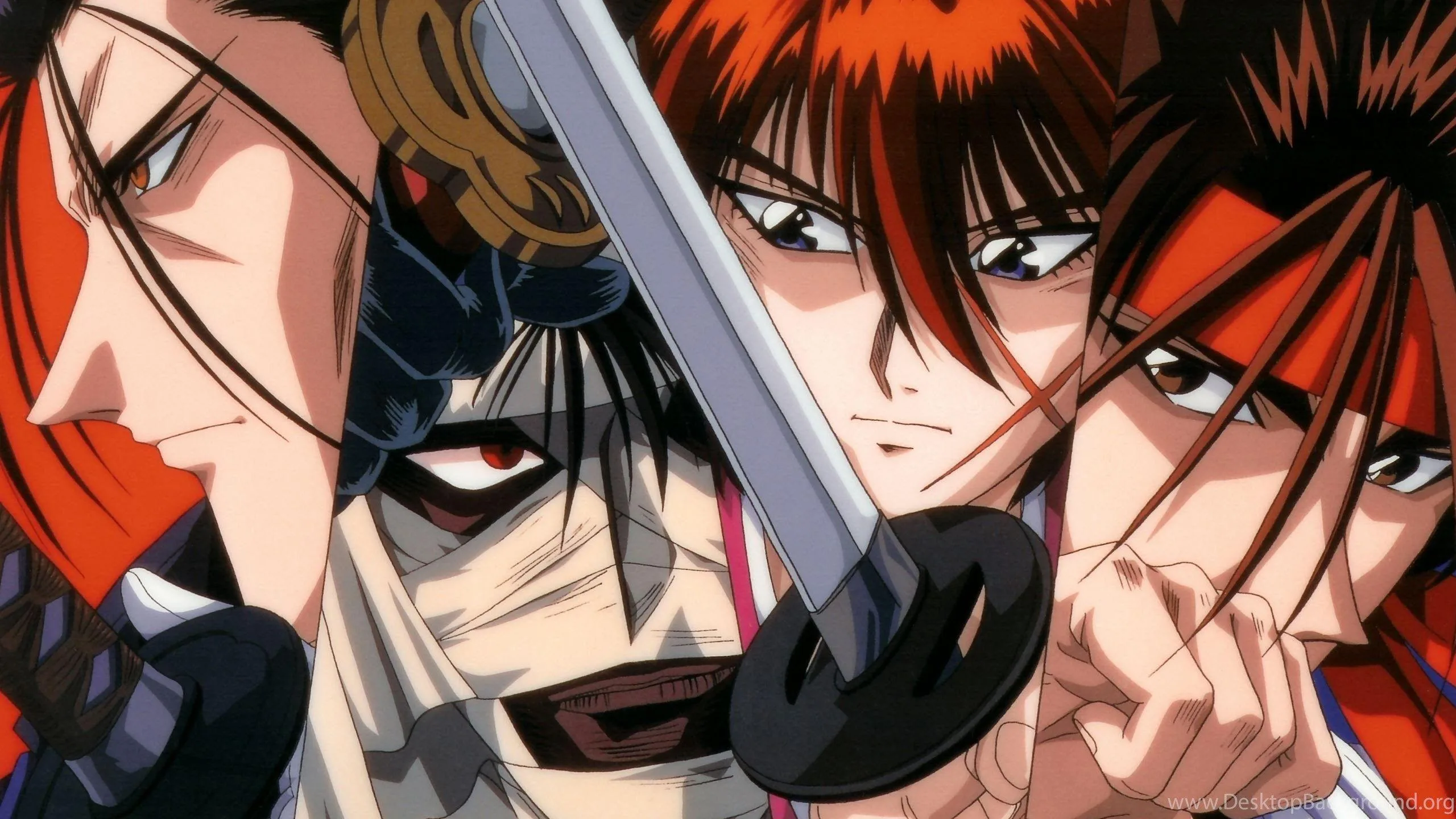
Shishio is the series’ central antagonist and one of shonen manga’s finest villains. A former government assassin who was burned alive and left for dead when he became inconvenient, Shishio rebuilt himself through iron willpower and survival. Wrapped in bandages to contain the wounds that never healed, commanding a private army of fanatical followers, Shishio represents the Meiji government’s guilty conscience made flesh: the violence it perpetrated and buried. His philosophy — that the strong eat the weak and Japan’s weakness will destroy it — is genuinely argued, not simply monstrous, and his confrontation with Kenshin in the Kyoto Arc is one of the great climactic battles in manga history.
Story Arcs and Narrative Development
The original series divides into three major movements. The Tokyo Arc serves as introduction: Kenshin arrives at the Kamiya dojo, gradually assembles his found family, and faces a series of encounters that establish his character and the series’ tonal register — action, comedy, and genuine emotional weight balanced throughout. These chapters develop the ensemble with unusual care, ensuring that readers care about the supporting cast before the narrative’s stakes escalate.
The Kyoto Arc is where Rurouni Kenshin reaches its full power. Tasked by the government to stop Shishio’s planned coup, Kenshin must leave his new home, train beyond his current limits, and confront the possibility that his vow of non-killing may be incompatible with protecting those he loves. The arc introduces Hiko Seijuro, Kenshin’s master, whose teaching scenes provide both the series’ most technically interesting martial arts content and some of its sharpest character exchanges. The final confrontation in Kyoto is a battle not just between combatants but between philosophies of violence, survival, and responsibility.
Themes
The series’ thematic core is redemption — not as a single dramatic moment of forgiveness but as a sustained daily practice. Kenshin does not earn absolution in a climactic fight. He earns it through consistent presence, through carrying wood and cooking meals and protecting people who never knew what he once was. The series argues that the measure of redemption is not the spectacular act of atonement but the quality of the ordinary life built after.
The tension between history and personal identity runs throughout. Many characters in Rurouni Kenshin are defined by what the Meiji Restoration made them or took from them, and the series explores what it means to live in the aftermath of historical upheaval — how individuals carry the weight of events larger than themselves, and whether they are permitted to choose identities that diverge from what those events seemed to demand of them. This question resonates far beyond the specific historical setting.
Why Read This
Rurouni Kenshin repays reading at multiple levels simultaneously. As pure action manga, the sword combat is technically informed, strategically compelling, and kinetically staged — Watsuki’s fight choreography rewards close attention. As character study, Kenshin’s arc is one of the most honestly rendered redemption narratives in the medium. As historical fiction, the Meiji setting is used with genuine intelligence, and readers interested in Japanese history will find real content alongside the drama.
The manga’s tonal balance is also exceptional. Comedic scenes involving Kenshin’s exaggerated domestic incompetence, Sanosuke’s bluster, and Kaoru’s exasperation provide genuine relief that makes the serious moments land harder by contrast. The series trusts the reader to hold both registers without needing to signal when it is being funny and when it is being earnest, and this trust creates an unusually comfortable reading relationship across 28 volumes.
Publication and Adaptations
Rurouni Kenshin was serialized in Weekly Shonen Jump (Shueisha) from 1994 to 1999 and collected into 28 volumes. Viz Media published the English-language edition. A 94-episode anime adaptation ran from 1996 to 1998, with an OVA series (Tsuiokuhen / Trust & Betrayal) widely considered among the finest in the medium. A revival manga began in Jump Square in 2017. A live-action film series beginning in 2012 achieved major commercial success and critical respect across five films through 2021.
Related Series
Readers drawn to Rurouni Kenshin’s combination of historical setting and redemption theme should explore Vagabond, Takehiko Inoue’s fictionalized account of Miyamoto Musashi, which pushes even further into psychological interiority. Vinland Saga covers similar thematic ground — a warrior seeking peace after violence — in a Viking setting. For action manga from the same shonen era, Dragon Ball and Bleach offer useful comparison points for how the genre evolved around and after Watsuki’s influence.
Frequently Asked Questions
Is Rurouni Kenshin finished?
The original series ended in 1999 after 28 volumes. However, Nobuhiro Watsuki revisited the characters with the Hokkaido Arc, which began serialization in 2017 and continues to the present. So the classic story is complete, but new content is still being released.
How many volumes does Rurouni Kenshin have?
The original series has 28 volumes, collected in multiple formats including omnibus editions. The ongoing Hokkaido Arc has been published in additional volumes. Complete collections are widely available through major publishers in English and Spanish.
Is there an anime adaptation?
Yes, there are multiple anime versions. The original 1996-1998 series has 95 episodes. Several OVA projects exist, including the well-regarded Trust and Betrayal. Most recently, Liden Films created a new anime adaptation that began in 2023, offering a modern take on the classic story.
What age rating is Rurouni Kenshin?
The series is generally rated 13+ (Teen). It contains action violence with sword combat, but the violence is not gratuitously graphic. There is minimal sexual content and strong language is limited. It’s appropriate for older children and all teens, though younger readers should check parental guidance.
Where can I buy Rurouni Kenshin?
The complete manga is available through major retailers including Amazon (donidhernande-20 tag for affiliate links). Both individual volumes and omnibus collections are in stock. Digital editions are available through Kindle and other platforms. Most libraries carry the series as well.
Publication and Adaptations
Nobuhiro Watsuki launched Rurouni Kenshin in Shueisha’s Weekly Shōnen Jump in issue 19 of 1994 (cover-dated April 12), concluding the original run with chapter 255 in November 1999. The series collected into 28 tankōbon volumes between September 1994 and December 1999, with subsequent rerelease formats including a 22-volume kanzenban edition (2006-2007) featuring revised artwork, expanded color pages, and bonus chapters. Worldwide circulation surpassed 72 million copies as of 2024. The series has been licensed in over 30 territories, with Viz Media handling English releases through both standard volumes and the 9-volume 3-in-1 omnibus collection.
Watsuki returned to the property in 2012 with Rurouni Kenshin: Restoration, a two-volume retelling timed to the live-action film releases. He launched the more substantial Rurouni Kenshin: Hokkaidō Arc in 2017 in Jump Square magazine, continuing the story years after the original ending and reaching nine volumes by mid-2025 despite a hiatus following Watsuki’s 2017 child pornography possession arrest and brief return to publishing in 2018. Audiences and critics have noted the controversy surrounding the author when discussing recent material, with some retailers and libraries declining to stock new volumes.
The franchise’s animation history began with the Studio Gallop and Studio Deen 1996-1998 anime adaptation totaling 95 episodes across three seasons, broadly faithful to the manga through the Kyoto arc but introducing original filler for later episodes. The 1999 OVA Trust & Betrayal (4 episodes, Studio Deen) is considered among the greatest anime productions of the 1990s, adapting Kenshin’s origin story with painterly aesthetics. The Reflection OVA (2001) provided an alternate ending. The 2012 theatrical anime film Shin Kyoto-Hen offered abbreviated retelling of the Kyoto arc. Most significantly, Liden Films produced a complete reboot in 2023-2024, totaling 48 episodes across two seasons that adapted the manga from beginning through the Jinchū arc with modernized animation and faithful pacing.
The live-action film series produced by Warner Bros. Japan stars Takeru Satoh as Kenshin and spans five films released between 2012 and 2021: Rurouni Kenshin (2012), Kyoto Inferno (2014), The Legend Ends (2014), The Final (2021), and The Beginning (2021). The series collectively grossed over $185 million in Japan alone, becoming one of the most commercially successful Japanese live-action film franchises of the 2010s. The 2014 two-film adaptation of the Kyoto arc generated particularly strong critical acclaim, with director Keishi Ōtomo’s choreography drawing comparisons to Hong Kong action cinema.
Cultural Impact and Legacy
Rurouni Kenshin pioneered the late-Bakumatsu/early-Meiji period setting that subsequent series like Gintama, Golden Kamuy, and Blue Eye Samurai have explored. Watsuki’s character designs influenced an entire generation of mangaka including Eiichiro Oda (One Piece), Hiroyuki Takei (Shaman King), and Yusuke Murata (Eyeshield 21, One-Punch Man), all of whom served as Watsuki’s assistants during the original Kenshin run before launching their own careers. This direct mentorship lineage is unusual in manga history and contributes to Watsuki’s enduring influence on shōnen visual style.
The series elevated public interest in Japan’s Meiji Restoration period among international audiences, with English translations of Bakumatsu-era history books spiking notably in late-1990s sales tracked by Japanese tourism boards. The Hokkaidō Arc brought renewed attention to Hokkaidō’s historical significance during Japan’s modernization. Live-action film tourism has driven visits to the Kyoto and Aizu film locations, with several historical sites featuring Rurouni Kenshin marketing.
Frequently Asked Questions
Where should I start with Rurouni Kenshin? Read the original 28-volume manga first. Then watch the Trust & Betrayal OVA for the most artistically accomplished adaptation of Kenshin’s backstory. The 2023 Liden Films anime offers the most complete and faithful animation of the entire main story.
Is the Hokkaidō Arc canonical? Yes. Watsuki authors the sequel manga at Shueisha, and it continues directly from the original ending. However, public reception has been complicated by the controversy surrounding Watsuki’s 2017 arrest.
How does the 2023 anime compare to the 1996 version? The 2023 Liden Films reboot offers more faithful pacing, modernized animation, and adapts the entire main story without filler. The 1996 version has historical significance and the legendary Trust & Betrayal OVA but contains substantial filler in later episodes.
Are the live-action films worth watching? Yes. The five-film series received broad critical acclaim for its choreography (designed by veteran action director Kenji Tanigaki), strong performances led by Takeru Satoh, and faithful adaptation of major story arcs. The Final (2021) covers the Jinchū arc.
How many volumes total exist? The original series contains 28 volumes (1994-1999). The Hokkaidō Arc continues with 9 additional volumes through mid-2025. Restoration adds 2 standalone volumes. Total franchise body of work: approximately 39 volumes.
Rurouni Kenshin Arc Guides
Tokyo Arc
Kenshin arrives in Tokyo and establishes a peaceful life as a wanderer while defending Kaoru's dojo and meeting the foundational members of his circle.
Chapters 1-62Kyoto Arc
Makoto Shishio, a powerful warlord Kenshin believed dead, plans a government overthrow. Kenshin must confront his most dangerous enemy and his own past to prevent catastrophe.
Chapters 63-191Jinchuu Arc
Enishi Yukishiro, seeking revenge for his sister's death, confronts Kenshin with his deepest guilt regarding his past love Tomoe.
Chapters 192-220Shimabara Arc
The final historical conflict involves Christian rebels and political intrigue in the Shimabara region as Kenshin navigates his evolving role in society.
Chapters 221-239Hokkaido Arc
In this sequel arc, Kenshin faces new threats in Hokkaido involving his son Kenji and confronts threats to his peaceful existence from his distant past.
Chapters 240-262Rurouni Kenshin Merchandise
Read manga free with Amazon Prime
30-day free trial: free shipping, Prime Reading, Kindle, Prime Video and more.
Affiliate link. 30-day free trial for new members. Then $14.99/month — cancel anytime.
FAQ: Rurouni Kenshin
You May Also Like
All manga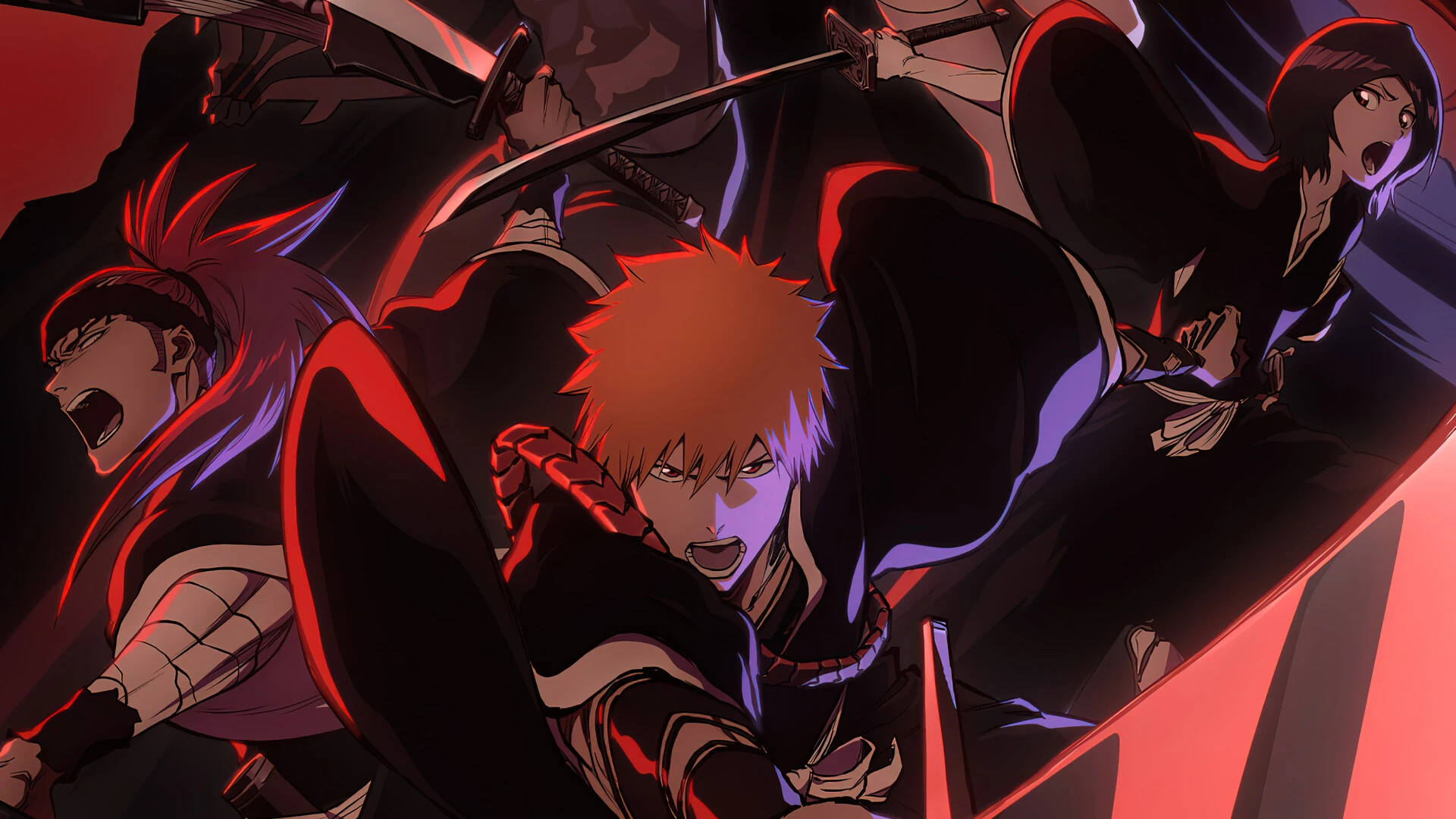
Bleach
The story of Ichigo Kurosaki, a teenager who gains the powers of a Soul Reaper — a death personification — and uses them to protect the living and the dead from evil spirits called Hollows, while uncovering a vast conspiracy that threatens both the human world and the afterlife.
Claymore
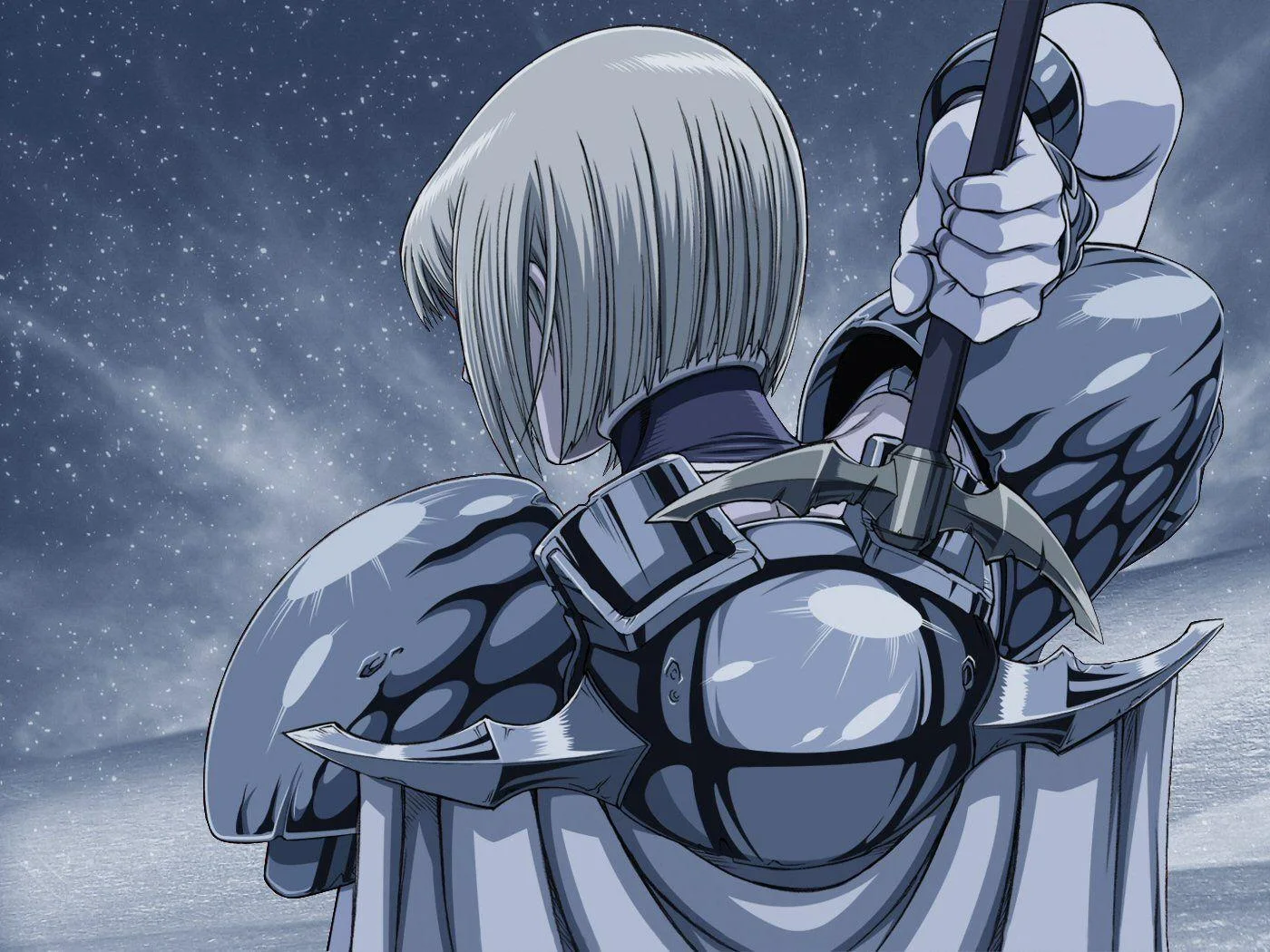
A dark fantasy action manga featuring female warriors with monster-killing claymores fighting demonic creatures.
Dandadan
A contemporary shonen manga blending action, comedy, and supernatural mystery as two unlikely partners investigate paranormal phenomena.
Demon Slayer: Kimetsu no Yaiba
A completed shonen series following a boy's journey to save his sister after a demon attack destroys his family
Related Articles
All articles
Top 15 Best Action Manga of All Time (2026)
The best action manga ever made, ranked. Explosive battles, legendary fights, and adrenaline-fueled epics — plus the box sets worth collecting.
Top 16 Best Shonen Manga of All Time (2026)
The best shonen manga ever made, ranked. Legendary battle epics, underdog heroes, and the series that defined the genre — plus the box sets worth owning.
Best Manga by Genre: The Ultimate 2026 Reading Guide (Shonen, Shojo, Seinen, Josei)
Comprehensive manga genre guide featuring best series by demographic and genre. From action shonen to mature josei, find your next read organized by taste and preference.