Berserk Manga
A dark and brutal medieval fantasy following Guts on his journey of revenge, featuring complex characters and stunning artwork.

Start Berserk: Volume 1
The recommended place to begin the series
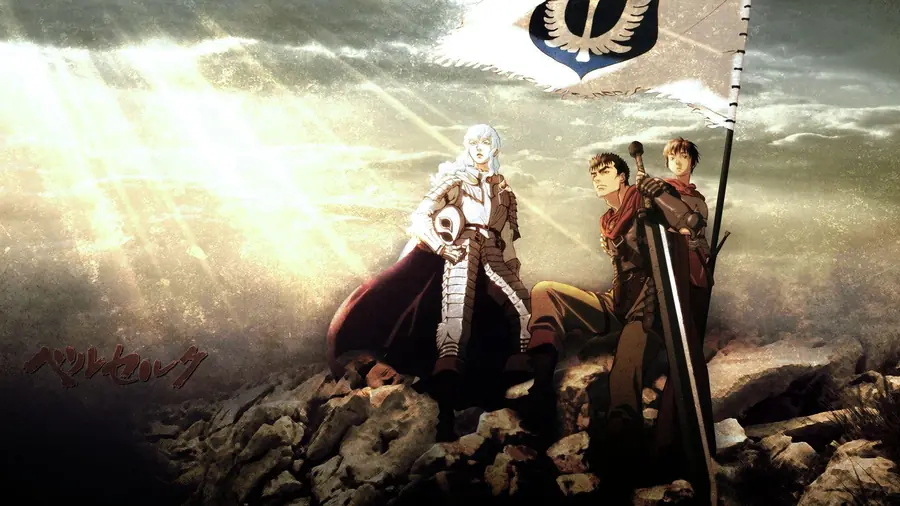
All Berserk Story Arcs in Order
| # | Arc |
|---|---|
| 1 | Black Swordsman Arc |
| 2 | Golden Age Arc |
| 3 | Lost Children Arc |
| 4 | Conviction Arc |
| 5 | Falcon of the Millennium Empire Arc |
| 6 | Fantasia Arc |
Berserk: The Dark Fantasy That Redefined the Genre
Few works in the history of manga have achieved what Kentaro Miura accomplished with Berserk. Since its debut in 1989, this dark fantasy epic has stood apart from everything else in the medium — not by being darker for the sake of shock, but by earning every moment of its horror through meticulous, deeply human storytelling. Berserk is the rare series that makes you care profoundly about its characters before it breaks them, and in doing so it transforms the act of reading into something closer to grief. To call it influential is an understatement: virtually every serious dark fantasy work in manga, anime, and video games that came after it carries Berserk’s fingerprints somewhere in its DNA.
Kentaro Miura spent over three decades building this world, often at the cost of years-long hiatuses that frustrated and devoted readers in equal measure. The patience required to read Berserk is real — but it is also the point. The series demands investment because it delivers on that investment in ways that feel genuinely transformative. When Berserk lands an emotional blow, it lands because you have lived with these characters long enough to feel their losses as your own. That is not a trick of craft. It is the result of a creator who refused to cut corners on human complexity, even when the subject matter was demons, apostles, and the end of the world.
The World and Its Darkness
Berserk unfolds in a world that resembles medieval Europe in its architecture, its hierarchies, and its grinding cruelty — but filtered through a mythological imagination that feels entirely Miura’s own. The continent is ruled by human powers that are themselves corrupt, armies that prey on peasants, and an inquisition that burns innocents with religious conviction. Into this already brutal landscape, supernatural evil operates not as an invading force from outside but as something that grows from within human desire itself. The Apostles — the series’ primary monsters — are former humans who sacrificed everything they loved in exchange for power. The God Hand, the five supreme supernatural entities, do not conquer the world through force. They shape it through causality itself, nudging history toward outcomes that serve their purposes.
This cosmology matters because it transforms Berserk’s horror from external threat to philosophical terror. The darkest thing in Berserk’s world is not any monster — it is the willingness of human beings to make the Sacrifice, to trade love and loyalty for power or a dream. Griffith’s arc is so devastating precisely because the series makes you understand, with terrible clarity, how someone could arrive at that choice. The world of Berserk does not judge its characters from outside. It places them in circumstances of such extremity that their choices feel inevitable even when they are monstrous. That moral seriousness — the refusal to simplify evil — is what separates Berserk from the genre it helped create.
Main Characters
Guts, the Black Swordsman
Guts is one of fiction’s most thoroughly constructed protagonists. Born from the corpse of his hanged mother under a tree on a battlefield, he was raised by a mercenary who mistreated and eventually sold him as a child. His childhood was a succession of violence, survival, and betrayal that should have destroyed any capacity for human connection — and for much of the early series, it seems to have done exactly that. The Guts introduced in the Black Swordsman Arc is a man reduced to pure function: a weapon pointed at supernatural evil, carrying a sword too large to be called a sword, his mechanical arm concealing a cannon, the Brand of Sacrifice on his neck bleeding whenever demons draw near.
What makes Guts extraordinary is what the Golden Age Arc reveals: that beneath the armored exterior is a man who wanted, desperately, to belong somewhere. His years with the Band of the Hawk showed him that belonging was possible, that comradeship and purpose were real — and the Eclipse took all of it. The Guts of the post-Eclipse chapters is not simply a man seeking revenge. He is a survivor of trauma so total that survival itself becomes a form of resistance against the forces that tried to erase him. His gradual accumulation of companions in the Conviction and Millennium Falcon arcs — Isidro, Farnese, Schierke, Serpico — represents not a softening but a recovery: the slow, painful relearning of what it means to care about other people when caring has only ever meant loss.
Griffith, the White Falcon
Griffith is manga’s most compelling villain because the series refuses to make him simply a villain. He is introduced as a vision of human potential at its most luminous — charismatic, brilliant, beautiful, with a dream so pure and burning that people surrender their lives to serve it. His ability to inspire absolute loyalty is not manipulation alone. It is genuine magnetism, the product of a person who truly believes in what he is reaching for and communicates that belief with the force of his entire being. The Band of the Hawk follows Griffith not because they are deceived but because he makes them feel that their lives have meaning within his orbit.
What Griffith’s arc exposes is the price of a dream that has no room for other people except as instruments. His relationship with Guts — the one person he could not simply use, whose presence created in Griffith something uncomfortably close to dependency — becomes the fault line along which everything breaks. When Guts leaves the Band of the Hawk to find his own dream, Griffith’s composure collapses, leading to the catastrophic choices that end in his imprisonment and torture. The Griffith who emerges from that year of suffering is not the same being who went in. The Eclipse is not a sudden betrayal but the logical conclusion of a man for whom other people’s reality had always been secondary to his own dream. His transformation into Femto, and later into the reborn Griffith, raises questions the series never fully resolves: Is he still the same being? Does what was done to him during his imprisonment explain, even partly, what he becomes?
Casca, the Warrior Woman
Casca occupies a unique and heartbreaking place in Berserk’s narrative. She is the only member of the original Band of the Hawk inner circle who survives the Eclipse in a form that permits ongoing story — and her survival comes at the cost of her mind. The trauma she suffers during the Eclipse renders her childlike, unable to form coherent speech or complex thought, dependent entirely on those around her. For a character who was, before that event, a formidable warrior and the Band’s most capable field commander, this transformation is devastating to witness.
Her slow recovery across the Conviction, Millennium Falcon, and Fantasia arcs becomes one of Berserk’s most quietly compelling storylines. Guts’ relationship with Casca — complicated by guilt, love, and the horror of what happened — is tested repeatedly as he must choose between protecting her and pursuing his vengeance against Griffith. The question of whether Casca can ever fully return, and what that return would mean for everyone around her, becomes one of the series’ central emotional questions. Her character demonstrates that Berserk’s darkness is not gratuitous but purposeful: trauma has weight, and the series insists on depicting that weight honestly.
Puck and Schierke
Puck, the elf who attaches himself to Guts in the earliest chapters, serves a function that becomes clearer as the series progresses. He is a witness to Guts’ humanity at its most suppressed — the creature who refuses to let Guts disappear entirely into the machine of violence he is trying to become. His comedic interjections and genuine affection for the people around him provide necessary tonal relief, but they are also thematically essential. In a series defined by darkness, Puck’s persistent optimism is not naivety — it is resistance.
Schierke, the young witch who joins Guts’ traveling party during the Conviction Arc, adds a dimension to the narrative that the earlier arcs could not access: the metaphysical architecture of Berserk’s world, the Astral realm, the nature of magic, and the spirits that inhabit the world alongside humanity. Her presence deepens both the world-building and the character dynamics, and her mentorship from Flora provides the series with one of its most moving portraits of genuine intellectual inheritance. Schierke also serves as the mechanism through which Guts can enter the Berserker Armor without losing himself entirely — her ability to reach him in the mental space where he battles his own beast makes her, in a very real sense, the thing that keeps him human.
Story Arcs: From Tragedy to Survival
The structure of Berserk is one of its most audacious achievements. The Black Swordsman Arc opens the series in medias res, introducing a Guts already marked by the Brand of Sacrifice and already years into his war against the apostles. It is deliberately disorienting — readers are dropped into the middle of a story whose full significance they cannot yet grasp. Only when the Golden Age Arc begins does the series reveal what made Guts the figure we met in those opening chapters. This structural decision means that when the Eclipse arrives, readers experience it not just as horror but as the explanation for everything: the sword, the arm, the Brand, the rage.
The Golden Age Arc is considered by many readers the greatest single arc in manga history, and the argument is difficult to refute. Over the course of hundreds of chapters, Miura builds something genuinely precious — a band of characters whose relationships feel earned, whose love for each other is demonstrated through years of shared struggle and sacrifice. The friendship between Guts and Griffith is drawn with such care that it feels real in a way that fictional relationships rarely achieve. The warmth of that arc, the almost nostalgic beauty of the Band at its height, is not incidental to the Eclipse. It is the Eclipse’s weapon. The horror of that ceremony is proportional to what was lost, and what was lost was years of painstakingly constructed human connection.
The post-Eclipse arcs — Black Swordsman, Lost Children, Conviction, Millennium Falcon, Fantasia — represent Guts’ long journey from pure revenge to something closer to purpose. Each arc adds layers to the world, introduces characters who join his traveling party, and gradually rebuilds what the Eclipse destroyed: the possibility of human connection. The Conviction Arc in particular, with its exploration of religious fanaticism through the character of the inquisitor Mozgus, demonstrates that Berserk’s horror was never only supernatural. Human beings, Miura insists throughout, are fully capable of generating their own eclipse.
Themes That Cut Deep
Berserk’s central thematic question is whether free will is possible in a world governed by causality — whether a being like the God Hand can arrange history such that human choices are effectively determined in advance. Guts’ entire existence is framed as a challenge to this question. The God Hand declare that he is outside the flow of causality, that his survival and continued defiance constitute an anomaly in their plan. His rage against fate is not simply personal; it is philosophical. He is the argument, made in blood and steel, that human will can assert itself against the forces that shape it.
The relationship between darkness and what makes us human is explored through virtually every significant character in the series. The Apostles are humans who chose power over love, and the series never lets us forget that they were once people with their own stories. The God Hand themselves were once human — Griffith’s transformation into Femto, witnessed in real time, makes the abstract cosmic horror concrete and personal. Against this backdrop, the things Guts fights to protect — Casca’s life, the safety of his companions, the possibility of a future that does not belong to Griffith — take on a significance that transcends plot. They are evidence that something human survives even at the edge of total darkness. The question Berserk asks, and which it takes thousands of pages to address, is whether that something is enough.
The Art and Its Legacy
Kentaro Miura’s artwork in Berserk represents one of the most sustained achievements in the history of comic art. His backgrounds — the ruined cathedrals, the sprawling battlefields, the impossible geometries of the Astral realm — are executed with a level of detail that borders on architectural draftsmanship. His creature designs, particularly for the higher-tier apostles and the members of the God Hand, are unlike anything else in the medium: baroque, biologically impossible, genuinely unsettling in the way that the best horror imagery should be. But it is his human characters that demonstrate the deepest skill. Guts’ face in the aftermath of the Eclipse, Griffith’s expression at the moment of his choice, Casca’s stillness in the years of her broken state — these are images that have been burned into the memories of hundreds of thousands of readers because they are drawn with the precision of someone who understood exactly what emotional information he was conveying.
Berserk’s influence on subsequent dark fantasy is so pervasive that it has become difficult to trace fully. FromSoftware’s Souls series — Dark Souls, Bloodborne, Elden Ring — draws directly and acknowledged from Berserk’s aesthetic vocabulary, from Guts’ Dragon Slayer to the general atmosphere of ruined grandeur and cosmic horror. Countless manga creators have cited Berserk as a formative influence. The series established that manga could operate at the level of serious literary and artistic ambition, that the medium was not limited by its commercial origins, that it could sustain the kind of long-form emotional investment more commonly associated with the novel. That legacy, already secure before Miura’s death, is now his permanent contribution to the art form.
Publication History
Berserk debuted in the pages of Young Animal magazine in August 1989, where it would continue until the present day — albeit with the long, sometimes years-spanning hiatuses that became both a source of frustration and a testament to Miura’s perfectionism. The series was never rushed; Miura drew every panel with a degree of care that made rapid serialization impossible, and he was willing to take the time required to get a chapter right even when that meant waiting years between releases. Over thirty-two years of serialization, the manga accumulated 41 volumes, each one a dense, carefully considered contribution to one of the most ambitious narrative projects in the history of the medium.
Kentaro Miura passed away on May 6, 2021, at the age of 54, from an acute aortic dissection. The announcement of his death stunned the manga world and prompted an outpouring of grief from creators and readers across every country where Berserk had found an audience. He left the series unfinished, though in the final years he had been accelerating the pace of releases. Following his death, his closest friend and fellow manga creator Kouji Mori — who had been told the complete story of Berserk’s intended ending by Miura himself — took on the responsibility of completing the series alongside Miura’s studio, Young Animal Comics. The continuation, which began in 2022, carries the explicit intention of honoring Miura’s vision for the ending he described to Mori. Whether that ending will fully satisfy the decades of accumulated expectation is a question that cannot be answered in advance, but the commitment to completing the story rather than leaving it unfinished is a gift to every reader who has followed Guts across four decades of darkness.
The God Hand and the Architecture of Evil
The God Hand are five former humans who underwent the Eclipse ceremony themselves, becoming supreme supernatural entities that exist in the space between the physical and astral realms. Each of them was once a person with their own history, their own dreams, their own reasons for making the Sacrifice. Femto — Griffith’s form within the God Hand — is the newest member and the most personally significant to Guts. Void, the oldest and most powerful, appears to serve as a kind of metaphysical judge, the entity who pronounces the sacrificial ceremony’s completion. Conrad and Ubik manifest as black comedy in a world of genuine horror — figures whose sardonic cruelty makes them more disturbing than straightforward malevolence. Slan, who embodies ecstasy in destruction, occupies a particularly unsettling role in the cosmology.
What makes the God Hand more than simply a group of powerful antagonists is the series’ persistent suggestion that they are not the ultimate architects of the world’s evil — they are themselves instruments of something larger, the Idea of Evil, a manifestation of humanity’s collective desire for meaning in suffering. This implies that the God Hand’s manipulation of human fate is not an external imposition but the externalization of human psychology: the universe operates according to causality because human beings, at their deepest level, need their suffering to mean something. Berserk is thus, at its most philosophical, a story about whether that need can be resisted — whether a human being can refuse the consolation of meaning and survive anyway, not because fate has ordained it but because they will it against all reasonable expectation.
The Band of the Hawk: What Was Lost
To understand why the Eclipse is so devastating, a reader must understand what the Band of the Hawk actually was during the Golden Age. It was not merely a mercenary company. Under Griffith’s leadership, the Band was something closer to a family for people who had never had one. Pippin, Judeau, Corkus, Rickert — these are not background characters whose deaths register as abstractions. They are people the reader has accompanied through years of battles, setbacks, small victories, and moments of genuine warmth.
Judeau in particular — the Band’s most insightful member, the one who understood both Guts and Casca better than they understood themselves — represents everything the Eclipse destroys. His death during the ceremony is one of the most painful in the series not because of its violence but because of what it says: that genuine goodness, genuine perception, genuine care are no protection against the world’s darkest forces. Rickert’s survival gives the series a thread of continuity with the Golden Age that persists into the later arcs, and his eventual confrontation with Griffith — a slap and a defiant refusal of the new Griffith’s authority — stands as one of Berserk’s most quietly powerful moments.
The Berserker Armor and Its Cost
The Berserker Armor that Guts acquires in the later arcs is one of Berserk’s most powerful pieces of symbolic writing rendered in visual form. The armor eliminates pain and forces the body to keep fighting regardless of injury, which sounds like an advantage until the implications become clear: it suppresses the body’s self-protective signals, allowing Guts to fight through damage that would be fatal precisely because the body stops trying to prevent that damage. Wearing it is a method of borrowing from a debt that comes due in increments — each use costs Guts something that cannot be fully recovered.
The armor is also inhabited by the spirit of a previous berserker who was consumed by his own beast, and when Guts enters it he must battle not only his physical opponents but the manifestation of his own rage and grief — a wolf-beast that represents everything he has refused to process, everything he has survived by not feeling. Schierke’s role as the anchor who calls him back from that internal battle is not peripheral to the story. It is the story, at its most essential: the question of whether a person can carry this much darkness and still return to themselves.
Adaptations and Other Media
The 1997 Golden Age anime series — running for twenty-five episodes and covering from Guts’ childhood through the Eclipse — remains the most beloved adaptation, despite its compressed ending and the budget limitations that occasionally strain its animation. Its version of the Golden Age is executed with genuine feeling for the source material, and its treatment of the Eclipse, while necessarily abbreviated compared to the manga, communicates the essential horror. The series ends without resolution precisely because the story had not resolved — a choice that left a generation of viewers haunted and seeking the manga.
The 2012-2013 film trilogy covers similar ground with higher production values but mixed results, particularly in its use of CGI that frequently clashes with the organic hand-drawn aesthetic that makes the manga’s art so effective. The 2016-2017 anime series attempted to continue the story past the Eclipse and was received with disappointment by fans who found its visual style inadequate to the material. All of these adaptations have the effect of directing audiences toward the manga itself, which remains the only version of Berserk that fully delivers on the series’ potential.
Reading Berserk: Where to Start and What to Expect
New readers should begin with Volume 1 and proceed chronologically, resisting any temptation to skip the Black Swordsman Arc. That opening arc is deliberately jarring — it introduces a world and a protagonist with almost no context. The disorientation is intentional. Miura wants readers to experience Guts as a mystery before revealing the explanation, because the explanation is the Golden Age, and the Golden Age only works if you have already seen what it produced. Readers who begin with the Golden Age — as some advice suggests, since it is the series’ most immediately accessible section — miss the structural logic of the entire narrative.
Berserk rewards patience in other ways as well. The series’ pace is, by design, not consistent with weekly manga reading habits. Chapters are dense, panels require time to absorb, and the story moves at the speed its complexity demands rather than at the speed of publication pressure. Reading Berserk in collected volumes rather than chapter by chapter is the most common recommendation among long-term fans, and it is good advice: the series’ arcs are designed as units, and reading them as units allows their cumulative emotional weight to register properly. Content warnings apply genuinely: Berserk contains graphic violence, sexual violence, and sustained psychological horror. These elements are handled with narrative seriousness, but readers should be aware of them before beginning.
The Question of Completion
The most common question new readers ask about Berserk is some version of: is it worth starting a series that is not finished? The answer, for most readers who have encountered Berserk, is emphatically yes. The series is not incomplete in the way that abandoned projects are incomplete. It has a clear narrative structure, a beginning, a middle, and — in the chapters that Kouji Mori is completing — an approaching end. The vast majority of the story has been told. What remains uncertain is whether the final resolution will match what Miura envisioned in full, but the journey itself — hundreds of chapters spanning decades of Kentaro Miura’s artistic life — is complete enough to justify every hour invested in it.
Berserk is, in the end, not a story about whether darkness can be overcome. It is a story about whether a human being can survive it and remain human. That question has been answered, across thousands of pages and thirty-plus years of serialization, in a way that feels definitive regardless of what the final chapter says. Guts has survived. He has recovered something of himself. The people around him are alive. Whatever the cosmic resolution turns out to be, that survival is real, and Miura earned every moment of it.
Fantasia and the Current Arc
The Fantasia Arc — the arc Berserk was in when Miura passed — represents the series’ most ambitious world-building. Following the Millennium Falcon Arc’s conclusion, the physical world and the Astral realm have merged, creating a transformed world where supernatural beings and mythological creatures exist openly alongside humanity. Griffith rules a new kingdom, Falconia, which genuinely protects its human inhabitants from the chaos of the merged world — a fact the series refuses to treat as simply irrelevant to the moral calculus of his betrayal. Guts and his traveling party have made their way to Elfhelm, seeking a cure for Casca’s condition.
The arc’s events — including Casca’s recovery and the full implications of what was done to her — represent some of the most recent and significant story developments in the manga. Miura was accelerating the pace of releases in his final years, and the chapters produced before his death suggest a narrative moving purposefully toward its conclusion. Kouji Mori’s continuation has worked from the knowledge Miura shared, and the chapters released since 2022 have been received by the fanbase as faithful to the spirit and direction of the work Miura left.
Miura’s Legacy and What Berserk Proved
Kentaro Miura proved, over thirty-two years of Berserk, several things that were not previously obvious about manga as a medium. He proved that a serialized comic could sustain genuine literary ambition across decades without losing coherence. He proved that seinen manga could achieve the kind of philosophical depth and emotional complexity more often associated with literary fiction. He proved that horror and beauty are not opposites but depend on each other — that the most terrifying images in Berserk derive their power partly from the beauty they exist alongside. And he proved that an audience would wait — would wait years, would read slowly, would invest deeply — for work that treated their intelligence and emotional capacity with the respect his work always did.
Those proofs are now permanent. Every subsequent manga creator working in dark fantasy, every writer willing to let consequences fall where they fall, every artist who draws backgrounds with the same care as foregrounds — they are working in a space that Miura helped define. Berserk is not merely a great manga. It is one of the works that expanded what manga is understood to be capable of.
Related Series
Readers who find themselves drawn to Berserk’s combination of visceral action, deeply human characters, and unflinching exploration of darkness often respond strongly to Vinland Saga, which applies similar seriousness to historical Viking material and shares Berserk’s preoccupation with the relationship between violence and identity. For those drawn specifically to the supernatural combat and elaborate power systems, Jujutsu Kaisen offers the most technically accomplished action sequences in contemporary shonen manga, executed with a character-driven emotional intelligence that elevates it well above the genre average.
Frequently Asked Questions
Is Berserk finished?
No, Berserk remains ongoing, though with a complex publication history. Original author Kentaro Miura passed away in 2021, and the series was subsequently continued by studio Gaga and writer Kouji Mori. New chapters resumed serialization in 2022 and continue to this day, though updates remain irregular and follow Miura’s detailed artistic standards.
How many volumes does Berserk have?
Berserk currently comprises approximately 42 volumes, with new volumes continuing to be released as the series progresses. The series has been running since 1989, making it one of the longest-running manga ever created. New volumes are released sporadically due to the complexity of the artwork and the series’ ongoing nature.
Is there an anime adaptation?
Yes, Berserk has received multiple anime adaptations, though none cover the complete story. The 1997 anime series features 25 episodes of exceptional quality and covers the Golden Age Arc. More recently, CGI anime films were released in 2016-2017 covering subsequent story arcs, though fan reception was mixed due to the animation style.
Is Berserk appropriate for younger readers?
Absolutely not. Berserk is strictly for mature audiences only (18+) and contains extremely graphic violence, sexual content, disturbing body horror, and deeply traumatic imagery. The series is uncompromising in its depiction of human cruelty, warfare, and psychological trauma. It is among the most intense manga ever created and should only be read by adults who can handle extremely dark material.
Where can I buy Berserk manga?
Berserk manga volumes are available through multiple retailers, though be aware that not all volumes may be in print at all times. Amazon carries the English translation volumes at competitive prices—you can find them here. Physical copies are also available at select bookstores and through libraries. Digital editions are available through platforms like Kindle and ComiXology for readers preferring digital format.
Berserk Arc Guides
Black Swordsman Arc
The Black Swordsman Arc introduces readers to the world of Berserk at its most brutal and unfiltered, presenting Guts — the Black Swordsman — as a figure defined entirely by rage and violence before the reader understands why. The arc is deliberately disorienting: we meet a man of extraordinary physicality and barely contained fury, carrying a sword too large to be called a sword, with a mechanical arm concealing a cannon, hunting beings of supernatural horror across a world where the supernatural is very real and very malicious. The narrative environment of the Black Swordsman Arc is medieval Europe filtered through Kentaro Miura's darkest imagination — villages crushed under the power of nobles who have made demonic pacts, peasants ground between the mundane cruelty of poverty and war and the extraordinary cruelty of creatures that should not exist. Guts moves through this world not as a hero but as a force of nature, killing not to protect or liberate but because killing is what remains to him. The arc's primary antagonist is the Count, a nobleman who made a sacrifice to the Godhand — the series' supreme supernatural authority — and transformed into a monster while destroying his family in the process. The confrontation between Guts and the Count culminates in the first appearance of the God Hand and the first whisper of the name Griffith — a name that the reader initially cannot place, but whose weight on Guts becomes the central mystery. Berserk's Black Swordsman Arc is not comfortable reading; it is an immersion in concentrated darkness designed to make everything that follows — including the extraordinary light of the Golden Age — hit with maximum emotional force.
Chapters 1-8Golden Age Arc
The Golden Age Arc is one of the greatest extended flashback sequences in the history of manga — a story of brotherhood, ambition, love, and catastrophic betrayal that reframes everything established in the Black Swordsman Arc and transforms Guts from a mystery into a tragedy. Beginning years before the Black Swordsman's present, the arc introduces Guts as a mercenary child soldier raised in war, who is hired by and then joins the Band of the Hawk, the most formidable mercenary company in the kingdom of Midland. The Band of the Hawk is led by Griffith — a man of almost supernatural charisma, tactical genius, and obsessive ambition — who has a dream so vast it consumes everything and everyone around it. The Band fights its way through Midland's wars against the neighboring kingdom of Tudor, accumulating victories that earn them the attention of the king and the enmity of the nobility. At the center of this band of brothers is the relationship between Guts and Griffith — two men who recognize something essential in each other, who push each other toward greatness, whose bond becomes the most important relationship either has known. And at the edges of this relationship stands Casca, the only female member of the Band's elite, who loves Griffith with the devotion of someone for whom he represents the entire horizon. The arc builds for hundreds of chapters before the Eclipse — the apocalyptic ceremony in which Griffith sacrifices the entire Band to the God Hand to achieve his dream of his own kingdom. The horror of the Eclipse, and what it does to everyone who survives it, is the scar that the rest of Berserk — across thousands of pages — struggles to address. The Golden Age Arc is not merely a great manga arc; it is one of the most devastating narratives in any medium.
Chapters 9-94Lost Children Arc
After abandoning the Band of the Hawk's survivors to pursue his solitary vendetta, Guts encounters Jill, a village girl, and discovers Rosine — a girl transformed into an Apostle by the supernatural horrors of the world. Rosine has used a Beherit to escape childhood suffering, creating a colony of pseudo-apostle elf creatures from lost children to forge an eternal paradise where pain cannot reach them. Guts is drawn into the elf colony, confronting the horrifying reality that the creatures he must fight were once innocent children. The arc explores themes of childhood trauma, the psychological escape from unbearable suffering, and the moral cost of Guts' singular obsession with revenge when innocent lives intersect with the supernatural world's cruelty.
Chapters 79-94Conviction Arc
The Conviction Arc is the point at which Berserk transforms from a revenge narrative into a theological horror epic, expanding the scope of Guts' struggle from personal vendetta to confrontation with institutional evil. Guts hunts an escaped demonic child through a crumbling kingdom while Casca, lost and traumatized, is captured by a fanatical religious order that interprets her Brand of Sacrifice as proof of demonic possession. The arc explores how human cruelty and religious zealotry operate on a scale that individual monsters cannot match, introducing Farnese and Serpico of the Holy Iron Chain Knights and revealing inquisitor Mozgus as the arc's embodiment of orchestrated cruelty. The horror culminates in the Tower of Conviction where Griffith is reborn as Femto, the fifth member of the God Hand.
Chapters 95-176Falcon of the Millennium Empire Arc
The Millennium Empire Arc is Berserk's most expansive political and military narrative, chronicling Griffith's rise to godlike power as Femto in human form and his establishment of a new Band of the Hawk composed of fanatical Apostles. Reborn following the Eclipse, Griffith arrives in Midland at the precise moment of its greatest vulnerability, when the eastern Kushan Empire invades and threatens total annihilation. Through a combination of supernatural power, tactical genius, and the irresistible appeal of hope, Griffith systematically positions himself as the kingdom's savior, conquering through victory rather than tyranny. While Griffith ascends to unprecedented power, Guts assembles an unlikely group of companions — Isidro the thief, Serpico and Farnese from the Holy See, the young witch Schierke, and the catatonic Casca — and begins the perilous journey toward Elfhelm in search of a cure for Casca's shattered mind.
Chapters 177-307Fantasia Arc
The Fantasia Arc is the final major arc of Berserk as Kentaro Miura left it before his death in 2021, representing the series' most wonder-filled and transformative narrative territory. Following the dimensional rift that merged the physical and astral planes, the world of Berserk has fundamentally changed: fantastical creatures and magical beings now openly coexist with humans, creating a world simultaneously more beautiful and more dangerous than what came before. Guts and his companions undertake a perilous sea voyage toward Elfhelm, the legendary sanctuary where the cure for Casca's shattered mind is said to reside. The journey is a meditation on hope, healing, and the possibility of redemption even in a world being reshaped by Griffith's ambitions and the God Hand's influence.
Chapters 308-364Anime Adaptation
Full guideBerserk Merchandise
Read manga free with Amazon Prime
30-day free trial: free shipping, Prime Reading, Kindle, Prime Video and more.
Affiliate link. 30-day free trial for new members. Then $14.99/month — cancel anytime.
FAQ: Berserk
You May Also Like
All manga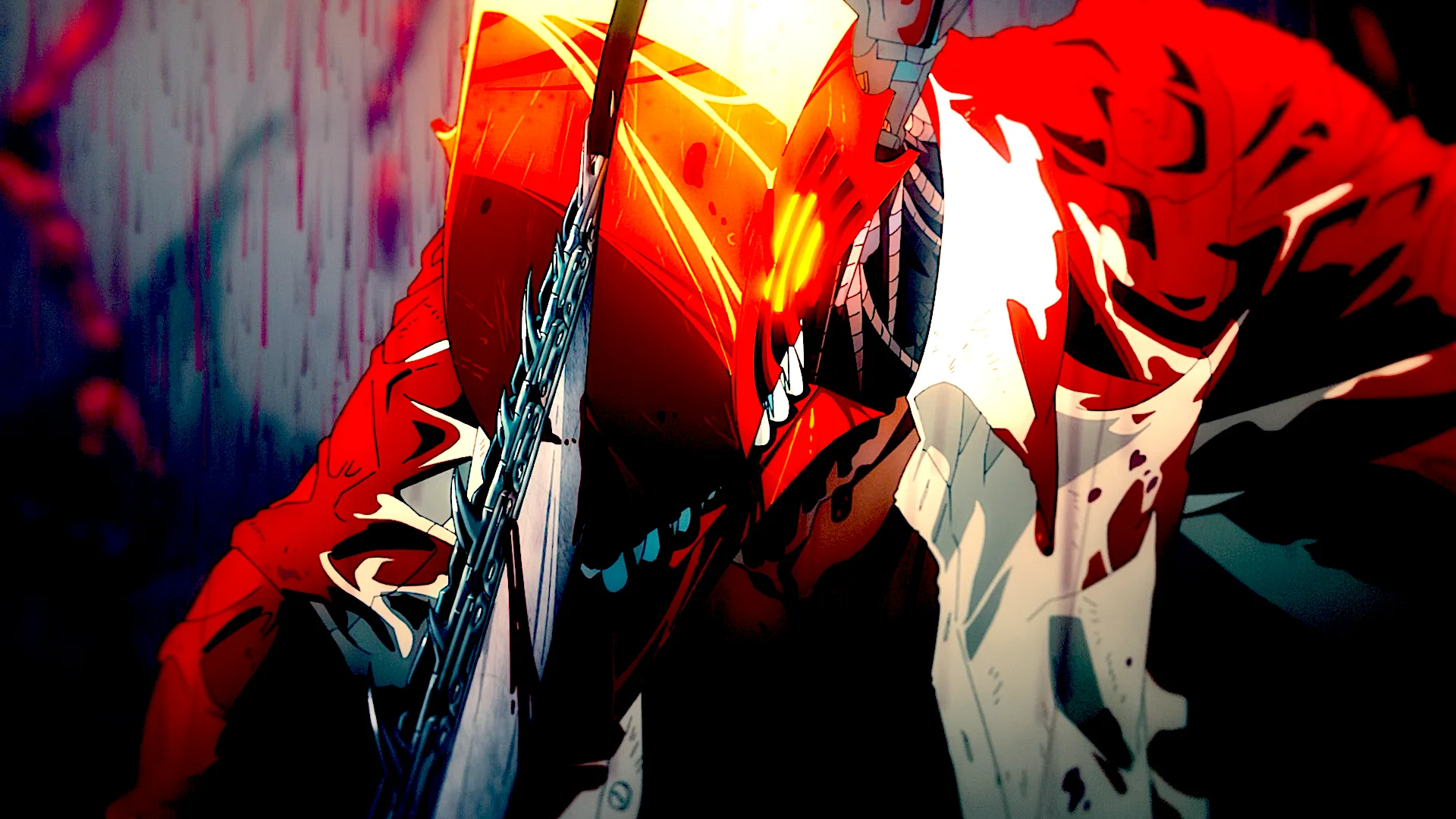
Chainsaw Man
Denji, a poverty-stricken boy who merges with his devil dog Pochita to become the Chainsaw Man, is recruited by the government's Public Safety Devil Hunter division. His desperate desire for a normal life — food, love, warmth — collides with increasingly apocalyptic devil threats.
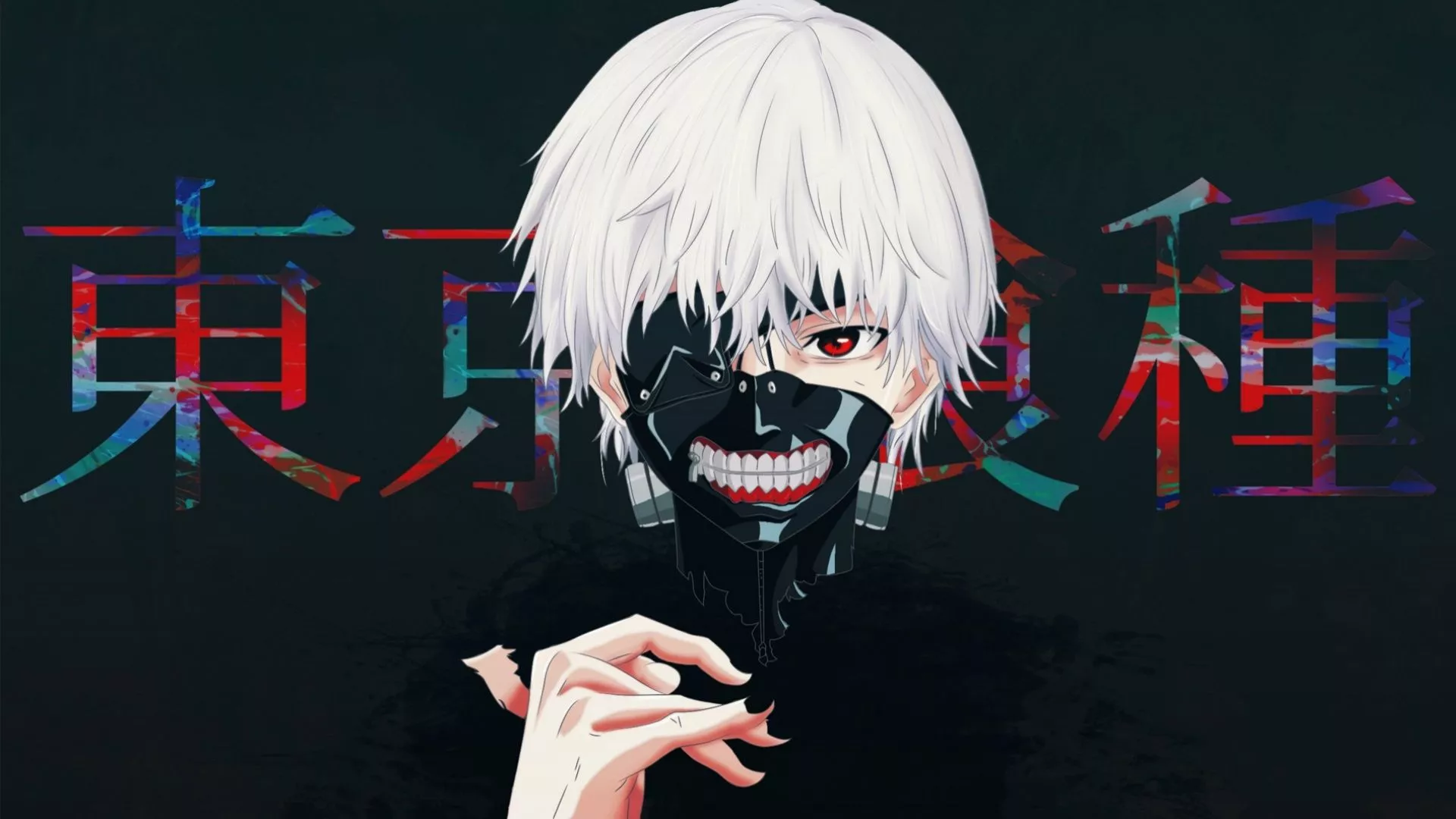
Tokyo Ghoul
A completed seinen series exploring the conflict between ghouls and humans in a dark Tokyo where ghouls feed on human flesh
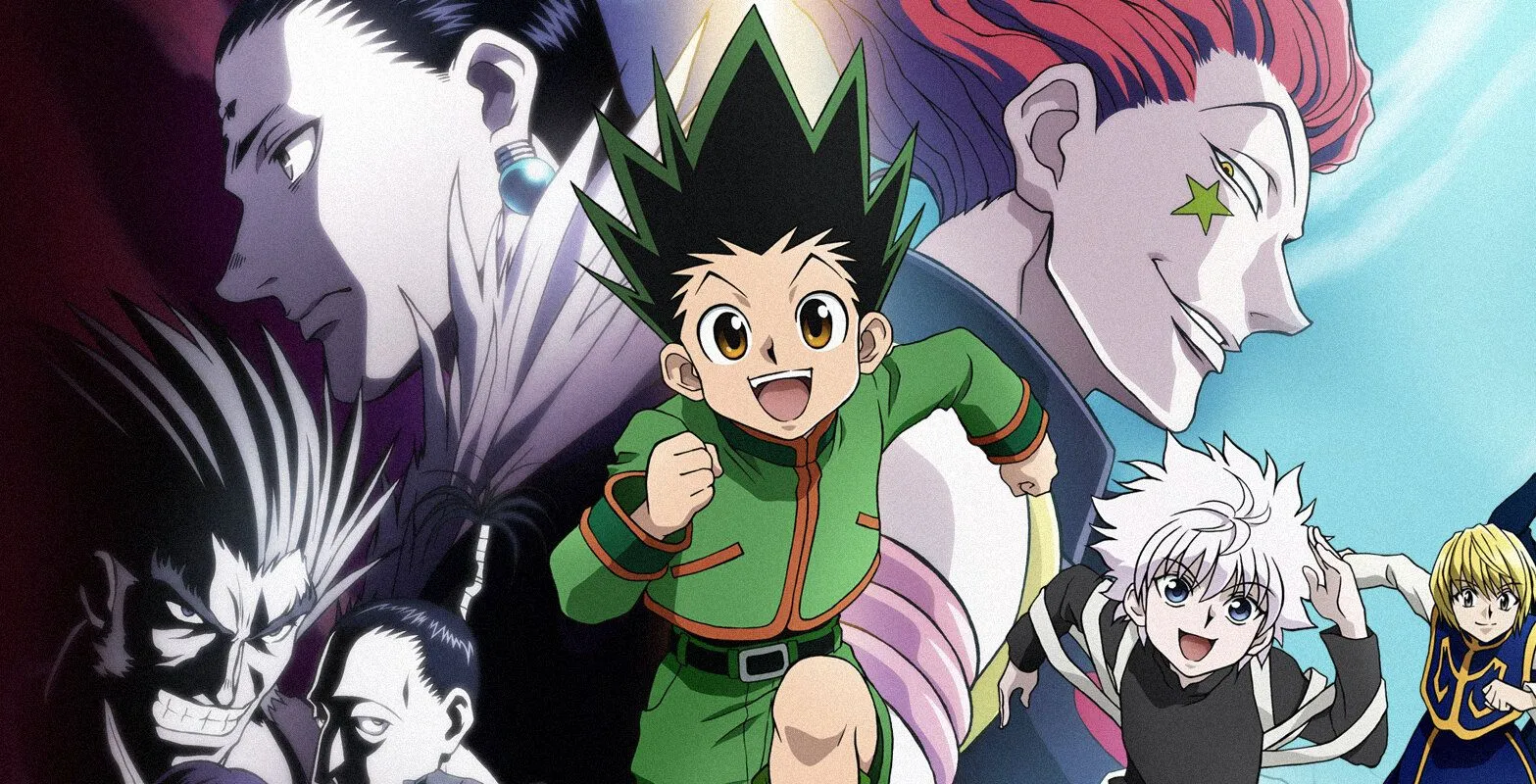
Hunter x Hunter
Twelve-year-old Gon Freecss sets out to become a Hunter — an elite licensed professional — in order to find his father Ging, the world's greatest Hunter. His journey through the gruelling Hunter Exam and beyond exposes a world far darker and more complex than he imagined.
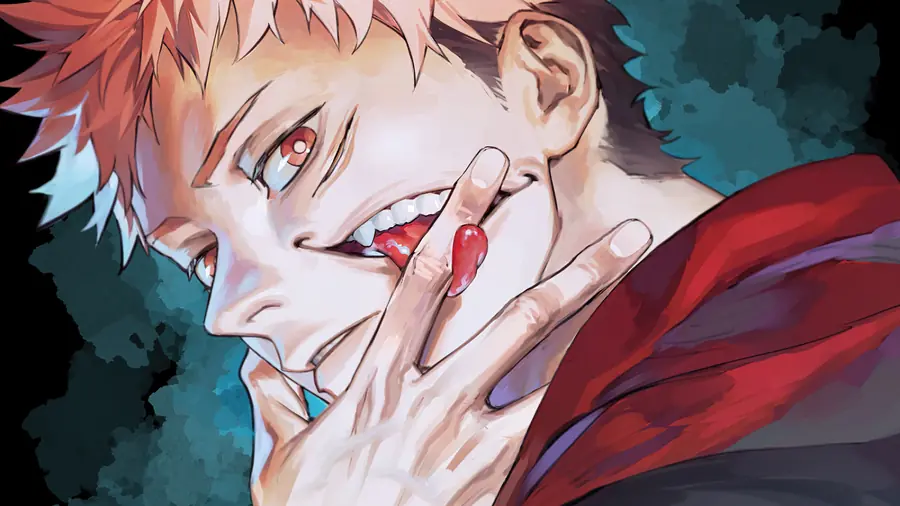
Jujutsu Kaisen
The dark shonen series where high schooler Yuji Itadori becomes the vessel for the most powerful cursed spirit, Sukuna, and must collect all twenty of his fingers before being executed — forcing him to fight in a world of sorcerers, curses, and institutional corruption.
Related Articles
All articles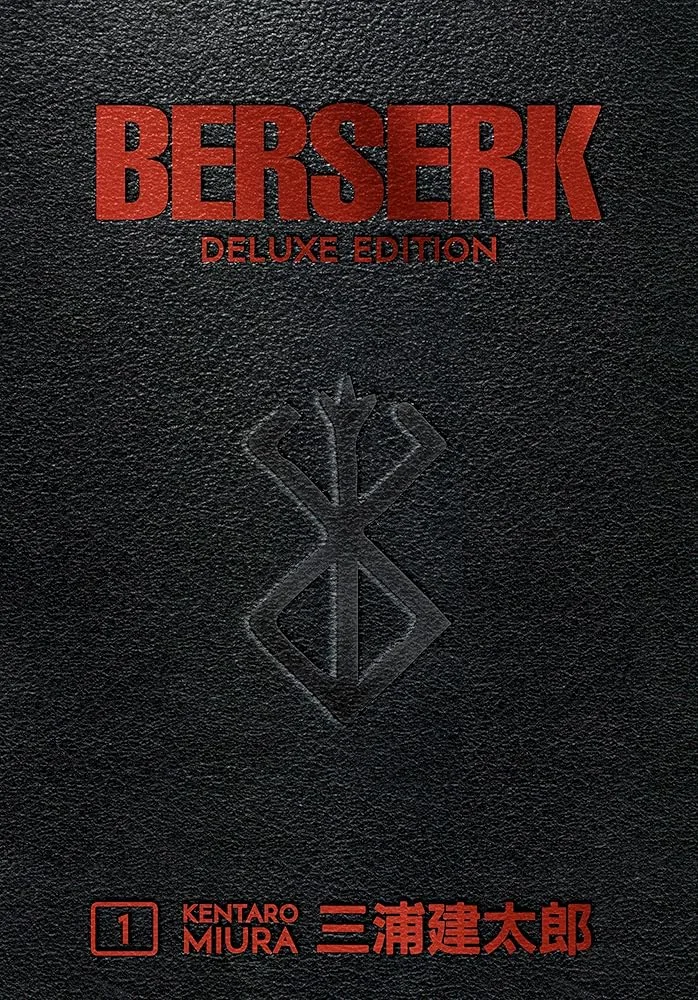
Berserk Deluxe Edition Guide 2026: Reading Order & Which to Buy
The complete Berserk Deluxe Edition guide for 2026. What the deluxe hardcovers include, how they compare to standard volumes, and where to start collecting.
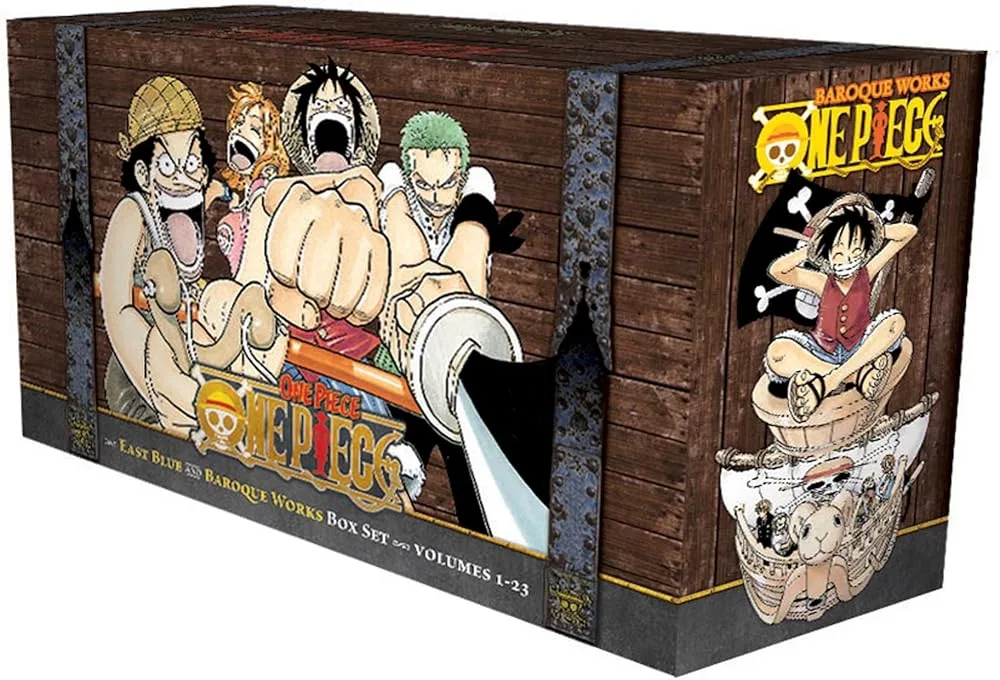
Top 15 Best Action Manga of All Time (2026)
The best action manga ever made, ranked. Explosive battles, legendary fights, and adrenaline-fueled epics — plus the box sets worth collecting.
Top 15 Best Dark Fantasy Manga of All Time (2026)
The best dark fantasy manga ever made, ranked. Brutal worlds, morally grey heroes, and demonic horror — plus where to buy the definitive editions.