Detective Conan (Case Closed)
A long-running mystery and detective manga following the high-school detective Shinichi Kudo, who is shrunk into the body of a child by a mysterious organization and continues to solve cases under the pseudonym Conan Edogawa while hunting his attackers.

All Detective Conan (Case Closed) Story Arcs in Order
Overview
Detective Conan — known as Case Closed in its English-language release for trademark reasons — is the long-running mystery and detective manga that has stood as one of the structural pillars of Shogakukan’s serialization catalog since 1994. Created by Gosho Aoyama and serialized continuously in Weekly Shōnen Sunday for over thirty years, the series follows Shinichi Kudo, a high-school detective whose deductive skills have made him a national celebrity in Japan, after he is poisoned by the Black Organization with the experimental drug APTX 4869 — and instead of dying, he wakes shrunk into the body of a six-year-old child.
The series is structured around a sustained dual rhythm: case-of-the-week criminal investigations that resolve within one to four chapters, and a long-running plot tracking Conan’s hunt for the Black Organization that has unfolded gradually across the entire 105+ volume serialization. The 2024 release of The Million-Dollar Pentagram — the franchise’s 27th theatrical film and one of the highest-grossing Japanese animated films of the year — has confirmed Detective Conan’s standing as one of the most commercially successful long-running media properties in modern Japanese entertainment.
What Is Detective Conan About?
The premise is rendered with deliberate economy in the opening chapter. Shinichi Kudo, a seventeen-year-old detective whose case-solving has already attracted national fame, attends Tropical Land amusement park with his childhood friend Ran Mouri. After solving an on-site murder during the visit, he wanders away from Ran and witnesses two men in black coats — figures who will eventually become known as Gin and Vodka of the Black Organization — conducting an illegal blackmail transaction.
Gin knocks Shinichi unconscious and forces an experimental drug down his throat, designed to leave no trace in the corpse. The drug’s effect is unprecedented: instead of killing him, it shrinks Shinichi’s body to that of a six-year-old child while preserving his adult mind. On the advice of his neighbor Professor Agasa, Shinichi conceals his survival from the Organization, adopts the pseudonym Conan Edogawa (after Arthur Conan Doyle and Edogawa Rampo), and moves into the household of Ran’s father — the bumbling private detective Kogoro Mouri.
What follows across more than 105 tankōbon volumes is the gradual development of Conan’s case-solving career — sustained through Professor Agasa’s gadgets including the dart-watch, the voice-modulating bow tie, and the supercharged Power-Enhancing Shoes — alongside the slow unfolding of the Black Organization plot through the introduction of Ai Haibara (the chemist who developed the drug, also shrunken in escape from the Organization), the FBI taskforce led by Shuichi Akai, the Public Security Bureau’s Zero division operative Rei Furuya, and the gradual revelation of the Organization’s leadership culminating in the recent identification of Anokata.
Reading Order
The manga can be read straightforwardly in tankōbon order across 105+ volumes. The case-of-the-week structure means most chapters are self-contained and readers can follow the major Organization plot threads without committing to every standalone case if they prefer to skim — but the long-running character development rewards full reading, and several of the apparently standalone cases in the early arcs turn out in the late series to have been carefully seeded clues for the post-volume-90 revelations.
For readers approaching the series for the first time, the structural transitions between major arcs offer natural entry and pause points. The Detective Boys formation arc (volumes 3-9), the introduction of Ai Haibara (volumes 9-26), the FBI taskforce arrival (volumes 41+), the Mystery Train arc (volumes 78-79), the Scarlet Arc (volumes 84-85), and the recent Rum and Anokata arcs (volumes 95+) each mark structural transitions in the long-running plot. Readers with limited time should prioritize the Organization-related arcs, which advance the series’ central mystery, while the case-of-the-week arcs can be read selectively.
The anime adaptation, currently at 1100+ episodes broadcast continuously since 1996, follows the manga closely with occasional anime-original cases interspersed. The 27 theatrical films are largely standalone adventures that can be watched in any order, though the post-2010 films have increasingly featured plot elements connected to the Organization arc.
What Makes Detective Conan Important
Detective Conan is one of the most commercially successful long-running media properties in modern Japanese entertainment, with over 270 million tankōbon copies in cumulative circulation, 1100+ anime episodes, 27 theatrical films, and a continuous presence in Weekly Shōnen Sunday since 1994. Its commercial scale is matched only by One Piece and Doraemon among modern Japanese serializations, and its consistent presence at the top of annual film box-office rankings since 2017 has confirmed its standing as one of the rare manga properties whose cross-format reach has continued to grow rather than decline across thirty years.
Its specific contribution to the medium is the demonstration that the mystery and detective genre — a category that the Japanese manga tradition had historically struggled to sustain at major commercial scale — can support a weekly serialization at the highest possible level when the case-of-the-week structure is combined with a long-running plot of genuine narrative ambition. The series has become a structural model for the modern mystery serialization in Japan, and its influence on series ranging from Death Note to The Promised Neverland has been direct and acknowledged.
The series has also been one of the most influential modern works in shaping the international audience for Japanese mystery fiction. The TMS Entertainment anime adaptation, the recent theatrical film series, and the international print release of the manga (in English by Viz Media as Case Closed, in Spanish by Planeta Cómic, in French by Kana, and in Italian by Star Comics) have together created a sustained international presence for a genre that had previously been considered difficult to translate.
Why This Manga Stands Out
Beyond its commercial position, the manga rewards close reading on its own terms. Aoyama’s puzzle construction is unusually rigorous for the genre — most cases are constructed with sufficient information for a careful reader to deduce the perpetrator before Conan’s reveal, and the series’ commitment to the fair-play mystery tradition (where every clue is presented to the reader on the page) has been one of its most consistently praised technical accomplishments. The recurring trick categories — locked-room mysteries, alibi-construction puzzles, dying-message decryption, code-breaking — have been developed across hundreds of cases without significant repetition.
The series’ handling of the long-running plot is also unusually careful. Aoyama’s decision to withhold Anokata’s identity for over twenty-five years of serialization while continuously developing the Organization plot around the figure’s implied presence is one of the most ambitious narrative deferrals in long-running manga, and the eventual reveal in the post-volume-95 arcs has been received as one of the great structural payoffs in the modern medium. The careful seeding of clues across decades — emails issued under pseudonyms, organizational decisions traced back to a single coordinating intelligence, the gradual elimination of candidates — gave the eventual reveal genuine accumulated weight.
Aoyama’s character development is the third quality that distinguishes the series. The relationships among the recurring cast — Shinichi and Ran, Conan and the Detective Boys, Conan and Haibara, Heiji Hattori and Kazuha Toyama, Kogoro and Eri Mouri, the FBI agents and the PSB operatives — have been developed across thirty years with sustained emotional commitment. The series’ decision to defer rather than abandon its romantic subplots, and to develop minor recurring characters with the same care as the principal cast, has given the long serialization the kind of character continuity that few weekly manga have achieved at this scale.
Publication and Adaptations
Detective Conan has been serialized in Weekly Shōnen Sunday since January 1994 and is currently published in 105+ tankōbon volumes by Shogakukan. The series passed 270 million copies in cumulative circulation in 2024 and continues to release new volumes approximately quarterly. The manga has been translated into multiple languages including English (Viz Media as Case Closed), Spanish (Planeta Cómic), French (Kana), Italian (Star Comics), German (Egmont Manga), and many others.
The TMS Entertainment anime adaptation began in January 1996 and has now produced over 1100 episodes broadcast continuously without interruption — making it one of the longest continuously broadcast anime series in television history. The 27 theatrical films released since 1997 have collectively grossed over 200 billion yen at the Japanese box office, and the post-2017 entries have consistently set new franchise box-office records. The 2024 film The Million-Dollar Pentagram became one of the highest-grossing Japanese animated films of the year, and the 2025 entry The Vermillion Prophecy continued the modern series’ record of consecutive box-office records.
The franchise has also developed extensive spin-off material including the Magic Kaito parent manga, the Zero’s Tea Time spinoff focused on Rei Furuya, the Wild Police Story spinoff, the Detective Conan: Special anime episodes, and a continuous video game release schedule. The 2018 release of the live-action series Detective Conan Drama Special and the recent international Netflix release of the anime have continued the franchise’s expansion into new formats.
Related Series
Readers drawn to Detective Conan’s combination of fair-play mystery construction and long-running plot will find immediate companions in Death Note, whose treatment of intellectual confrontation between detective and criminal belongs to a related tradition, and in Monster, whose long-running mystery plot and careful clue-seeding share Aoyama’s structural commitments. For readers more interested in the case-of-the-week structure, Hyouka and the various adaptations of Edogawa Rampo’s classic mystery fiction offer the closest tonal parallels. Among Aoyama’s own work, Magic Kaito is the parallel manga whose Kaito Kid material crosses over directly with Detective Conan, and Yaiba is his earlier shōnen work that established many of the structural and visual signatures the later series refined.
Frequently Asked Questions
Is Detective Conan finished?
Detective Conan is ongoing in 2026. The series has been serialized continuously in Weekly Shōnen Sunday since January 1994 and is currently in the post-Rum arcs of the closing Black Organization plot. Aoyama has indicated in interviews that the series will eventually reach a definitive conclusion built around the Organization’s defeat and Shinichi’s permanent return to his original body, but the manga remains in active serialization.
How many volumes does Detective Conan have?
The manga has 105+ tankōbon volumes as of 2026 and is one of the best-selling manga in Japanese publishing history with over 270 million copies in cumulative circulation. New volumes are released approximately quarterly.
Is there an anime adaptation?
Yes. The TMS Entertainment anime adaptation began in January 1996 and has produced over 1100 episodes broadcast continuously without interruption — making it one of the longest continuously broadcast anime series in television history. The franchise has also released 27 theatrical films, the most recent being The Vermillion Prophecy (2025).
What age rating is Detective Conan?
Detective Conan is a shōnen manga rated for general teen audiences. The series features regular criminal violence including murders depicted on-page, but the visual treatment is restrained and the focus on puzzle solving rather than gore keeps the material accessible to younger readers. It sits comfortably in the same age band as Death Note and Hunter x Hunter.
Why is Detective Conan called Case Closed in English?
The English-language release adopted the title Case Closed for trademark reasons — the original Detective Conan title conflicted with existing Conan trademarks held by Conan Properties International. The Viz Media print and digital release uses Case Closed throughout, while the international anime release on Crunchyroll has used both titles depending on the market.
Where can I buy Detective Conan manga?
The manga is published in English by Viz Media as Case Closed, in Spanish by Planeta Cómic, in French by Kana, in Italian by Star Comics, and in German by Egmont Manga. Print and digital editions are widely available through Amazon and other major retailers. The TMS anime is available internationally through Crunchyroll and selected Netflix markets.
Detective Conan (Case Closed) edition comparison
All available editions on Amazon. Prices and availability may vary.
| Edition | Format | Volumes | Buy |
|---|---|---|---|
Case Closed Vol. 1Start here | Paperback | 1 | Check price |
Detective Conan Pack 1-3 Edicion EspecialBest value | Box Set | 1-3 | Check price |
Case Closed Vol. 1
Paperback · 1
Detective Conan Pack 1-3 Edicion Especial
Box Set · 1-3
Affiliate links. As Amazon Associates we earn from qualifying purchases at no extra cost to you.
Detective Conan (Case Closed) Arc Guides
Shinichi's Transformation & Conan's Debut Arc
Shinichi Kudo, a high-school detective famous across Japan, is poisoned by two figures in black after witnessing an illegal transaction at Tropical Land — and instead of dying, he wakes shrunk into the body of a six-year-old child.
Chapters 1-20Detective Boys & Tеiitan Elementary Cases
Conan is enrolled at Teitan Elementary, where he meets the four classmates who form the Detective Boys, and the series settles into its signature mixture of self-contained criminal cases and slowly developing relationships among the recurring cast.
Chapters 21-86Ai Haibara & the Black Organization Thread
Shiho Miyano — the chemist who developed APTX 4869 — escapes from the Black Organization, takes the same drug to evade capture, and arrives at the Kudo household as Ai Haibara, becoming the first ally who knows Conan's true identity and the catalyst for the long-running Organization plot.
Chapters 87-258Kid the Phantom Thief & Crossover Arcs
The international gentleman thief Kaito Kid — protagonist of Aoyama's parallel manga Magic Kaito — appears across multiple Detective Conan arcs as both Conan's most consistent rival and the only opponent whose intelligence matches his own.
Chapters interspersedFBI Agents & International Intelligence Arcs
The introduction of FBI agents Shuichi Akai, Jodie Starling, and James Black — and later the CIA agent Hidemi Hondou — escalates the Black Organization plot from a domestic Japanese investigation to an international intelligence operation.
Chapters 425-currentThe Scarlet Arc — Akai Family Revealed
A condensed multi-volume sequence revealing the long-concealed family relationships among Shuichi Akai, Shukichi Haneda, and Masumi Sera — three figures whose individual arcs converge in one of the series' most carefully staged revelation sequences.
Chapters 894-906Rum Arc & Anokata's Identity
The hunt for Rum, the Organization's second-in-command, culminates in the eventual revelation of Anokata — the Organization's leader whose identity Aoyama had withheld since the series' first chapter — and reframes the entire long-running plot around its closing movement.
Chapters 1007-currentAnime Adaptation
Full guideMovies
All moviesDetective Conan: The Time-Bombed Skyscraper
1997 · TMS Entertainment · 95 minDetective Conan: The Fourteenth Target
1998 · TMS Entertainment · 99 minDetective Conan: Countdown to Heaven
2001 · TMS Entertainment · 100 minDetective Conan: The Million-Dollar Pentagram
2024 · TMS Entertainment · 110 minDetective Conan: The Vermillion Prophecy
2025 · TMS Entertainment · 110 minDetective Conan (Case Closed) Merchandise
Read manga free with Amazon Prime
30-day free trial: free shipping, Prime Reading, Kindle, Prime Video and more.
Affiliate link. 30-day free trial for new members. Then $14.99/month — cancel anytime.
FAQ: Detective Conan (Case Closed)
You May Also Like
All manga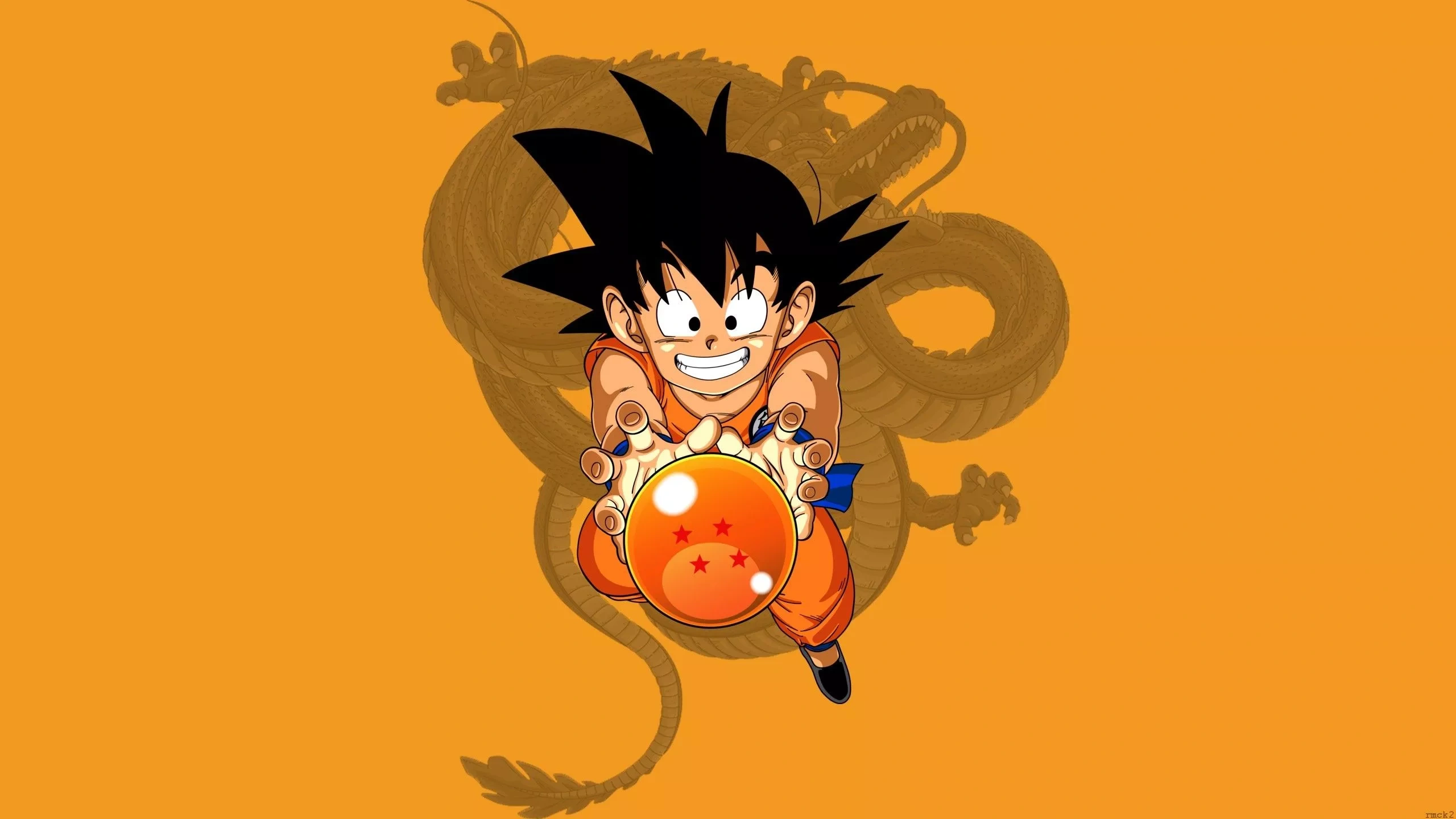
Dragon Ball
Follow Goku's incredible journey from a martial arts novice to Earth's mightiest defender in this action-packed adventure series.

Toriko
A completed shonen adventure manga by Mitsutoshi Shimabukuro about Toriko, a Gourmet Hunter searching for legendary ingredients to complete his dream Full Course Menu alongside his chef partner Komatsu, in a world where cuisine and combat are inseparable.
Black Clover
An ongoing shonen fantasy magic manga following Asta, a young man without magic power in a world where magic dominates, as he pursues his dream of becoming the Wizard King through determination and friendship
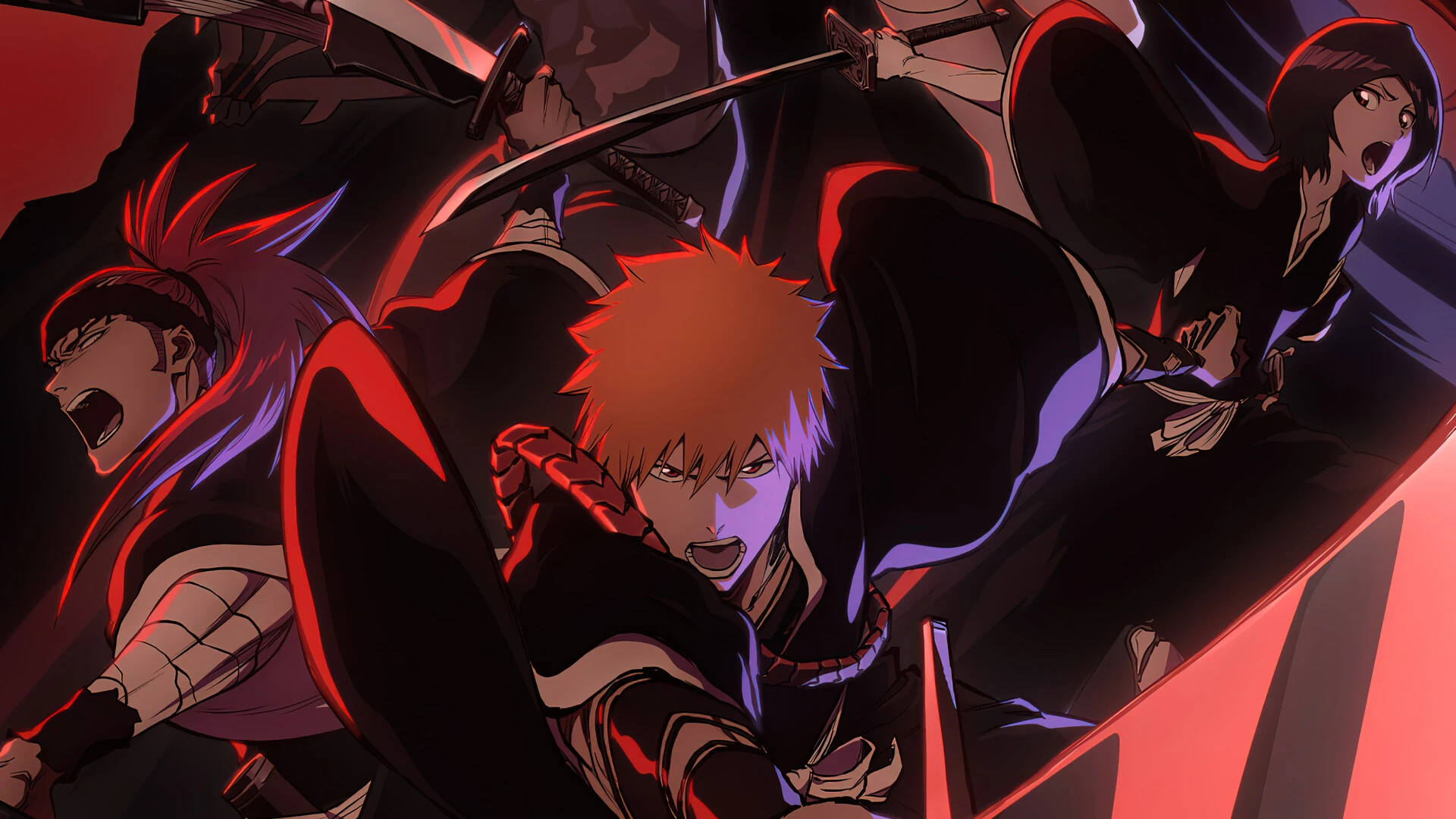
Bleach
The story of Ichigo Kurosaki, a teenager who gains the powers of a Soul Reaper — a death personification — and uses them to protect the living and the dead from evil spirits called Hollows, while uncovering a vast conspiracy that threatens both the human world and the afterlife.
Related Articles
All articles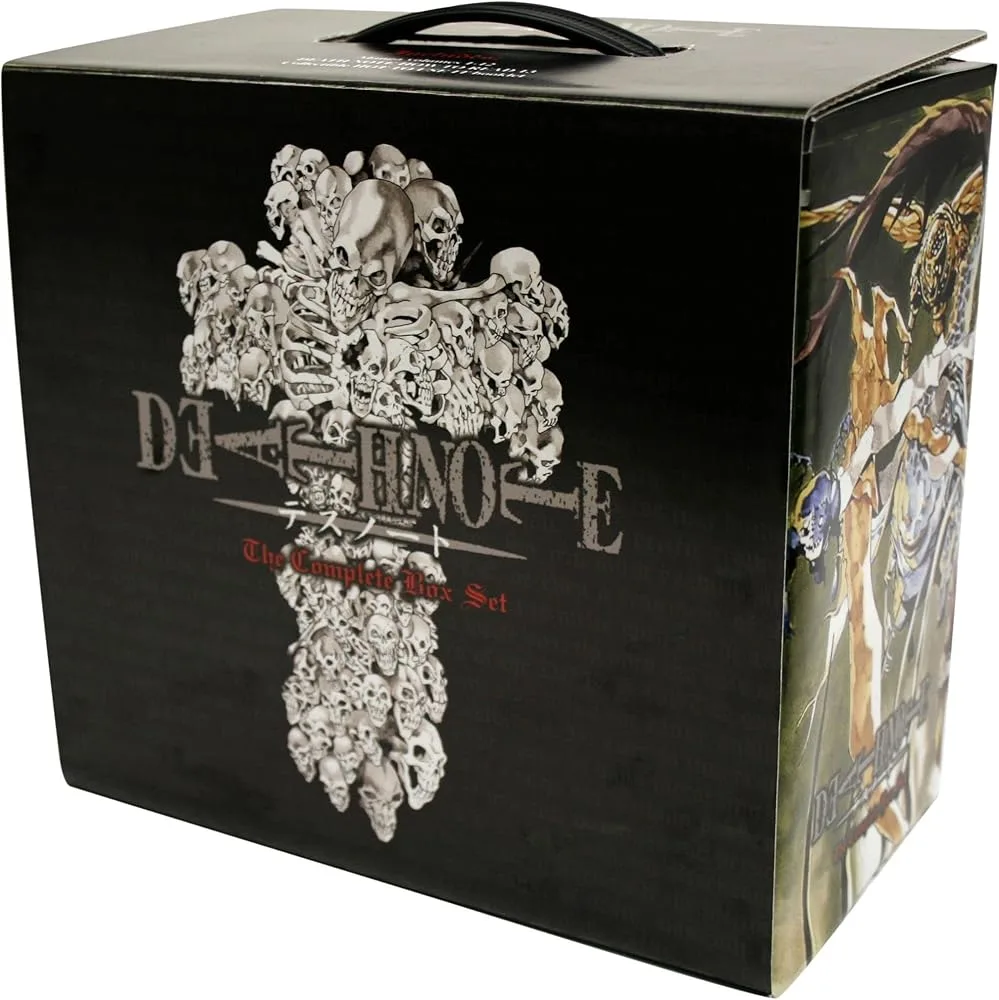
Top 14 Best Mystery Manga of All Time (2026)
The best mystery manga ever made, ranked. Gripping detective stories, psychological thrillers, and mind-bending whodunits — plus the editions worth owning.

Top 16 Best Shonen Manga of All Time (2026)
The best shonen manga ever made, ranked. Legendary battle epics, underdog heroes, and the series that defined the genre — plus the box sets worth owning.

Best Manga by Genre: The Ultimate 2026 Reading Guide (Shonen, Shojo, Seinen, Josei)
Comprehensive manga genre guide featuring best series by demographic and genre. From action shonen to mature josei, find your next read organized by taste and preference.