Toriko
A completed shonen adventure manga by Mitsutoshi Shimabukuro about Toriko, a Gourmet Hunter searching for legendary ingredients to complete his dream Full Course Menu alongside his chef partner Komatsu, in a world where cuisine and combat are inseparable.
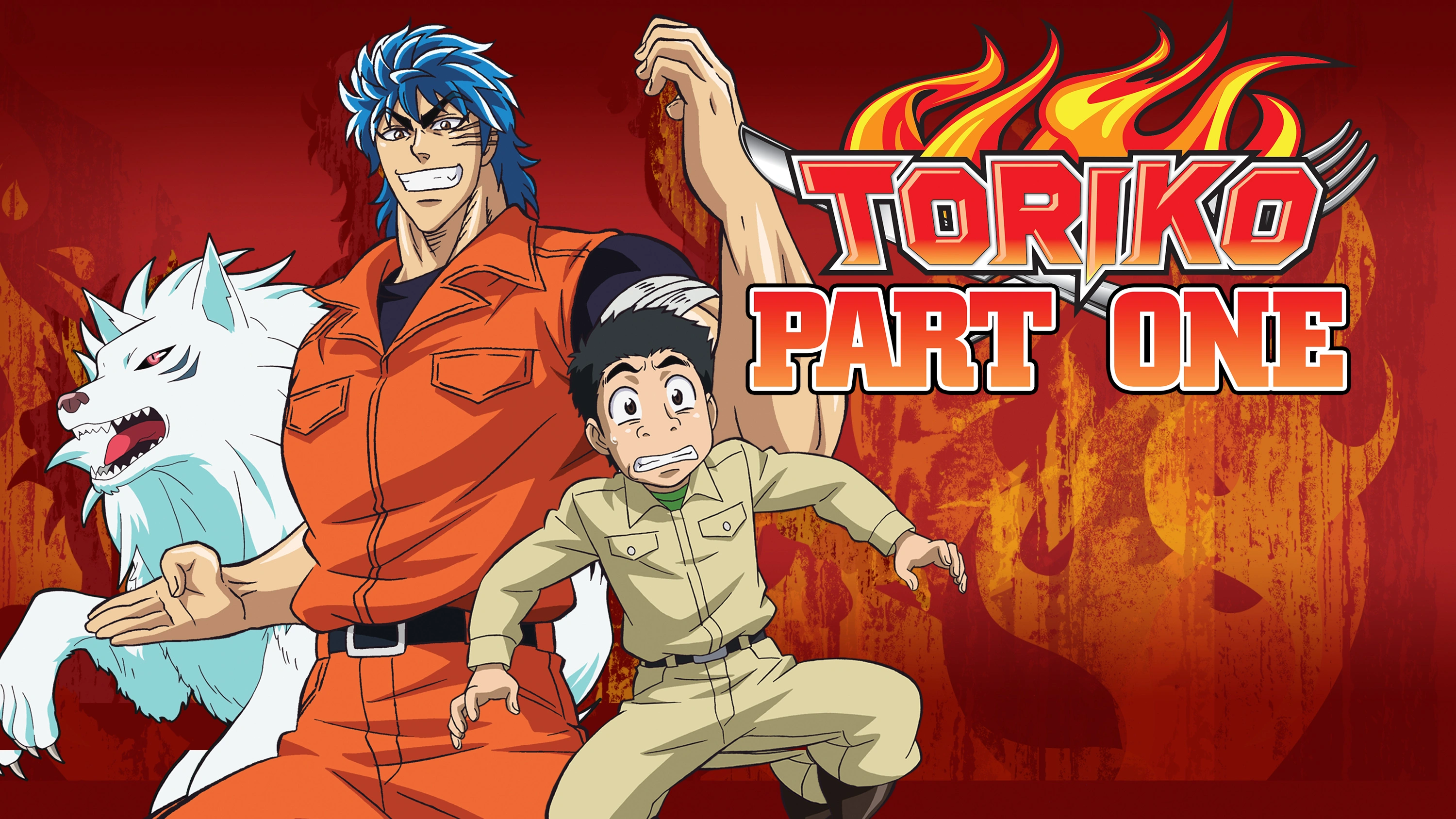
All Toriko Story Arcs in Order
| # | Arc |
|---|---|
| 1 | Introduction Arc |
| 2 | Regal Mammoth Arc |
| 3 | Puffer Whale Arc |
| 4 | Century Soup Arc |
| 5 | Four Beasts Arc |
| 6 | Cooking Festival Arc |
| 7 | Billion Bird Arc |
| 8 | Pair Arc |
| 9 | God Arc |
Overview
Toriko stands as Mitsutoshi Shimabukuro’s masterwork, blending adventure, action, and philosophical depth into manga experience that transcends typical shounen conventions. The series centers on deceptively simple concept—Gourmet Hunter Toriko’s quest to assemble perfect Full Course Menu—but explores this premise through increasingly complex examinations of hunger, ambition, power, and human connection.
The manga’s genius lies in transforming ingredient hunting into vehicle for character development and thematic exploration. Each story arc escalates stakes while simultaneously deepening emotional relationships between characters. Toriko’s journey from self-interested hunter to enlightened leader willing to sacrifice personal ambitions for community protection provides character arc of remarkable depth and satisfying progression.
Gourmet World and Ingredient System
Toriko’s world operates under sophisticated ingredient economy and ranking system. Ingredients receive Capture Levels ranging from 1 (ordinary) to hundreds (legendary), indicating both danger in acquiring ingredient and rarity determining its value. This system creates natural escalation: as Toriko grows stronger and more ambitious, he pursues progressively more dangerous ingredients, requiring innovations in technique and strategy.
The Gourmet World extends beyond inhabited territories into hostile wilderness regions where apex predators guard rare ingredients. Jungles teem with creatures of impossible size and power. Deserts harbor creatures evolved for extremes. Ocean depths contain predators that dwarf conventional understanding of marine life. This environment design serves dual purpose: showcasing spectacular action sequences while emphasizing that ingredient hunting requires courage, intelligence, and respect for natural world.
The ingredient ranking system mirrors progression of protagonist through narrative. Early arcs feature Capture Level 30-50 ingredients requiring basic combat ability and resourcefulness. By final arcs, Toriko pursues ingredients at Capture Levels exceeding 1000, requiring mastery of techniques that transcend normal understanding of power. This natural scaling allows series to maintain freshness throughout 43 volumes while keeping power escalation logical within established framework.
Main Characters
Toriko possesses the qualities of ideal protagonist: passionate, capable, genuine, and fundamentally good-hearted despite occasional rash decision-making. His enthusiasm for ingredients borders on obsessive, creating comedy through exaggerated reactions to culinary experiences. Simultaneously, Toriko demonstrates capacity for genuine emotional vulnerability, particularly in relationships with Komatsu and Four Heavenly Kings.
Komatsu serves as thematic counterweight to Toriko’s warrior persona. Where Toriko solves problems through strength and combat innovation, Komatsu solves them through intuition, analysis, and emotional wisdom. Their partnership succeeds precisely because both characters possess genuine respect for each other’s domains: Toriko recognizes he cannot succeed as ingredient hunter without Komatsu’s culinary expertise; Komatsu recognizes he cannot survive dangerous ingredient locations without Toriko’s protection. This mutual dependency creates relationship that avoids hierarchical dynamics plaguing many shounen partnerships.
The Four Heavenly Kings—Zebra, Coco, Sunny, and Toriko—represent pinnacle of character group development in manga. Each character possesses distinct personality, fighting style, and philosophical approach, yet they bond through mutual respect and shared understanding of friendship’s importance. Their interactions combine humor with genuine emotional weight. They support each other without losing competitive edge, forming brotherhood that feels earned through shared sacrifice rather than imposed by plot necessity.
Story Arcs
Toriko’s narrative structure employs classic arc-based progression while maintaining thematic coherence across all nine major story arcs. Early arcs (Introduction through Puffer Whale) establish world, character relationships, and ingredient hunting mechanics. Mid-arcs (Century Soup through Billion Bird) escalate scope from personal ambition to world-threatening catastrophe, introducing antagonistic forces and forcing moral complexity. Final arcs (Pair through God) prioritize emotional relationships and philosophical resolution over action sequences alone.
The introduction arc efficiently establishes core dynamic: Toriko’s combat prowess combined with Komatsu’s culinary intuition creates unstoppable partnership. Subsequent arcs add layers of complexity—competitive hunters, criminal organizations, world-threatening creatures—while maintaining focus on Toriko’s personal growth and changing relationships with companions.
By mid-series, Toriko realizes that physical strength alone proves insufficient. The Four Beasts arc forces this realization through catastrophic circumstances requiring cooperation with former rivals. Toriko’s acceptance of Gourmet Cells—transforming parasitic infection into source of power—metaphorically represents his acceptance of interdependence and commitment to personal evolution beyond individual ambition.
Later arcs emphasize emotional relationships with deliberate intensity. The Pair arc examines Toriko and Komatsu’s partnership through romantic and philosophical lens, acknowledging their bond transcends professional convenience. The God arc brings all established themes to culmination, revealing that Toriko’s ultimate hunger concerns not ingredients but connection with companions who complete him.
Anime Adaptation
The anime adaptation spans two seasons and a series of films, bringing Toriko’s world to vibrant animation. The anime captures essence of manga while making necessary adjustments for animated medium. Action sequences benefit from animation’s fluidity, making combat choreography more impactful than static manga panels alone could achieve. Character voices add depth to personality—Toriko’s voice acting particularly excels at conveying genuine enthusiasm and emotional vulnerability.
The anime follows manga closely through first season and most of second season before diverging for original ending. This decision proved controversial among manga fans but allowed anime to provide complete narrative closure while manga continued publication. Fans seeking most complete experience should read both manga and watch anime, as each provides distinct perspective on events and character development.
Where to Read
Toriko manga is available through legitimate digital and physical channels. Official English translation published by Viz Media provides accurate localization maintaining Shimabukuro’s tonal intentions. Digital platforms including Amazon Kindle, ComiXology, and official Shonen Jump app provide convenient access to individual chapters and complete volume collections.
For optimal experience, reading complete manga from beginning to end provides most satisfying narrative arc. However, anime adaptation provides valid alternative approach, particularly for readers preferring visual storytelling or seeking time-efficient experience with quality-guaranteed adaptation.
Related Manga
Readers enjoying Toriko should explore other works by Mitsutoshi Shimabukuro, whose distinctive style and thematic interests appear across his bibliography. Similarly, manga featuring food-focused narratives, adventure-centric plots, and character-driven storytelling will appeal to Toriko enthusiasts.
Food Wars! shares Toriko’s interest in culinary competition and ingredient appreciation, though emphasizing cooking competition over hunting adventure. One Piece offers comparable adventure narrative with similar emphasis on found family and personal growth through adventure. Hunter x Hunter provides comparable character development focused on protagonist’s journey and meaningful relationships with companions.
Frequently Asked Questions
What is Full Course Menu? Full Course Menu represents Toriko’s ultimate culinary aspiration—a personal collection of ingredients chosen to represent his perfect meal. Each ingredient serves specific course role (appetizer, soup, fish, meat, etc.), with completion representing achievement of personal dream. Philosophically, Full Course Menu serves as metaphor for self-discovery and personal fulfillment.
What are Gourmet Cells? Gourmet Cells are parasitic organisms granting superhuman enhancement to infected individuals. Rather than viewing infection as curse, characters embrace evolution, using enhanced capabilities to pursue increasingly difficult goals. The cells drive perpetual hunger, creating internal conflict between hunger and satiation central to series’ thematic core.
Is Toriko complete? Yes, Toriko manga concluded at chapter 319 across 43 volumes. The series received complete ending resolving major plot threads and Toriko’s character arc. Anime concluded with original ending that provides closure, though it diverges from manga’s later chapters.
How long does it take to read? Reading complete Toriko manga requires approximately 40-50 hours depending on reading speed. The 43-volume collection rewards committed reading with increasingly complex narrative and deepening character relationships. Most readers complete series within 2-3 months of regular reading.
Why should I read Toriko? Toriko offers rare combination of spectacular action sequences, genuine character development, and thematic depth examining hunger, ambition, and human connection. The partnership between Toriko and Komatsu provides emotional core elevating series beyond typical shounen fare. Shimabukuro’s consistent tonal control—b
Publication and Adaptations
Toriko was serialized in Weekly Shōnen Jump from May 2008 to November 2016 across 396 chapters and 43 tankōbon volumes. Created by Mitsutoshi Shimabukuro — best known for his earlier work Seikimatsu Leader Den Takeshi! — the series became one of the most distinctive Weekly Shōnen Jump titles of its era through its unusual fusion of monster-hunting shōnen action with elaborate culinary worldbuilding. The series passed 30 million tankōbon copies in cumulative circulation by its conclusion and remains in print through Shueisha’s catalog.
The Toei Animation anime adaptation aired from April 2011 to March 2014 across 147 episodes, with the broadcast covering the manga through the Gourmet World arc. The anime is particularly notable for its three crossover specials with One Piece and Dragon Ball — productions that brought together Toriko, Luffy, and Goku in single-episode adventures and represent some of the most ambitious shōnen anime crossovers of the 2010s. The series has not received a continuation past 2014, which leaves the final manga arcs (volumes 35-43) without anime adaptation.
The franchise has continued to expand modestly across formats including the Toriko: Gourmet Battle video game (Bandai Namco, 2013), multiple guidebooks documenting the elaborate ingredient catalog the manga developed, and an extensive merchandise line built around the IGO (International Gourmet Organization) ranking system. The manga is published in English by Viz Media in 33 volumes (the English release stopped before the manga’s conclusion), in Spanish by Glénat, and in French by Kazé Manga.
Cultural Impact and Legacy
Toriko’s lasting contribution to the shōnen catalog is its proof that an action manga could build its entire power system around food rather than martial arts or supernatural ability. The series treats ingredients as equivalent to legendary weapons — each one has a Capture Level rating, a documented habitat, specific preparation requirements, and consequences for the cook who masters it. This worldbuilding was unusually rigorous for shōnen and helped establish the cooking-as-combat subgenre that later titles including Food Wars and Sweetness & Lightning would develop further.
The series’ relationship with Mitsutoshi Shimabukuro is also worth noting. After Shimabukuro’s earlier Seikimatsu Leader Den Takeshi! won the Shogakukan Manga Award in 2001, his career stalled in the mid-2000s following personal legal troubles. Toriko represented his commercial comeback, and the series’ eight-year successful run in Weekly Shōnen Jump rehabilitated his standing within the magazine. The series’ conclusion in 2016 left Shimabukuro free to pursue subsequent projects, though his post-Toriko work has been less commercially visible.
For readers interested in the broader shōnen ecosystem of the 2010s, Toriko sits in an unusual position — commercially successful enough to sustain a 147-episode anime and three major crossovers but never quite achieving the cultural footprint of contemporaneous Jump heavyweights like Naruto and Bleach. Reading the series today, the imaginative ingredient catalog and the ambitious Gourmet World arcs remain genuinely distinctive, and the manga rewards readers willing to commit to its 43-volume run.
Frequently Asked Questions
Is Toriko finished?
Yes. Toriko concluded in November 2016 across 396 chapters and 43 tankōbon volumes. The series is structurally complete and Shimabukuro has not announced any continuation.
How many volumes does Toriko have?
The manga has 43 tankōbon volumes. The English release through Viz Media stopped at 33 volumes; readers wanting the complete series in English need to track the post-volume-33 chapters through other channels.
Is there an anime adaptation?
Yes. The Toei Animation anime ran for 147 episodes from 2011 to 2014. Three crossover specials with One Piece and Dragon Ball were produced during the broadcast. The anime never adapted the final manga arcs (volumes 35-43).
Where can I buy Toriko manga?
The manga is published in English by Viz Media (33 volumes — partial), in Spanish by Glénat, and in French by Kazé Manga. Print and digital editions are widely available through Amazon and major retailers.
Publication and Adaptations
Mitsutoshi Shimabukuro launched Toriko in Shueisha’s Weekly Shōnen Jump in issue 24 of 2008 (cover-dated May 19), concluding the series with chapter 396 on November 14, 2016 after eight and a half years of weekly publication. The compiled tankōbon edition reached 43 standard volumes between September 2008 and February 2017. Worldwide circulation surpassed 27 million copies, and the series was widely promoted as a successor to Shimabukuro’s earlier Seikimatsu Leader Den Takeshi! work. Viz Media holds the English license and released volumes 1 through 33 in standard format before discontinuing the line in 2018, leaving the final ten volumes officially untranslated for English print readers. The license remains active for digital distribution through Shōnen Jump’s app.
The Toei Animation anime adaptation premiered on Fuji TV on April 3, 2011 and ran 147 episodes through March 2014. The series notably featured multiple crossover episodes with One Piece (sharing the Toei stable) and Dragon Ball Z, including the One Piece × Toriko Special (April 2011) that boosted Toriko’s launch viewership. Three theatrical anime films released during the manga’s run: Toriko 3D: Kaimaku Gourmet Adventure!! (2011), Toriko: Bishokushin no Special Menu (2013, the most ambitious of the three), and Toriko & One Piece & Dragon Ball Z Super Collaboration Special! (2013). The anime ended several years before the manga’s conclusion, leaving the final arcs without animation. Funimation handled English dubbing for early episodes before discontinuing.
The franchise expanded into video games with Bandai Namco’s Toriko: Gourmet Survival (PSP, 2010), Gourmet Battle (3DS, 2011), and several mobile titles. Crossover appearances in Jump Force (2019) and various anniversary releases have kept the franchise visible to new audiences. Toriko character cards and merchandise remain present in Bandai’s regular release schedule despite the manga’s 2016 conclusion. Light novel and supplementary cookbook releases tied to the food-themed premise generated additional publishing revenue during the series’ peak years.
Cultural Impact and Legacy
Toriko occupies a distinctive position in 2010s shōnen as one of the most ambitious genre hybrid attempts of its era, combining battle shōnen conventions with extensive culinary worldbuilding. The series drew thoughtful attention to food culture, with Shimabukuro consulting professional chefs and food scientists to ground its fantastical cuisine in plausible culinary principles. The manga’s depiction of cooking as serious craft requiring genuine skill influenced subsequent food-themed manga including Food Wars: Shokugeki no Soma (2012-2019), which Shimabukuro has indirectly acknowledged in interviews.
The series’ commercial peak coincided with One Piece’s mid-run, and Shimabukuro maintained a productive working relationship with Eiichiro Oda that produced multiple official crossover events. These crossovers represent rare official multimedia collaboration between two major Weekly Shōnen Jump titles by different authors, becoming a template for subsequent Jump anniversary celebrations. Despite the official manga’s conclusion in 2016, Toriko has maintained a dedicated international fanbase active in fan communities, conventions, and cosplay circles, with Toriko characters remaining recognizable iconography among 2010s shōnen fans.
Frequently Asked Questions
Did Toriko really end in 2016? Yes. Chapter 396 published November 14, 2016 in Weekly Shōnen Jump, concluding the main story across 396 chapters and 43 volumes spanning eight and a half years.
Why is the English manga incomplete? Viz Media discontinued the print release after volume 33 in 2018, citing commercial considerations. Volumes 34-43 remain officially untranslated for English print readers, though digital availability through Shōnen Jump app provides some access.
Are the One Piece crossovers canonical? The crossover episodes and films are non-canonical to either Toriko’s or One Piece’s main story but are official Toei productions overseen by both authors. They represent one of the rare official collaborative events between major Weekly Shōnen Jump franchises.
What is the recommended viewing order? Start with the manga from volume 1, or the 2011 anime from episode 1. Both follow the same starting point. The crossover specials can be watched in chronological order alongside main episodes when they reference shared events.
Where can I read Toriko legally? Viz Media’s Shōnen Jump app provides digital access to all 43 volumes through their subscription service. Physical print volumes 1-33 remain available through major retailers, but volumes 34-43 are out of print in English.
Toriko Arc Guides
Introduction Arc
Toriko meets Komatsu and begins his quest for the legendary Full Course Menu.
Chapters 1-10Regal Mammoth Arc
Toriko and Komatsu hunt for the Regal Mammoth, their first major Full Course ingredient.
Chapters 11-25Puffer Whale Arc
Toriko pursues the lethal Puffer Whale, a highly dangerous ingredient with deadly toxins.
Chapters 26-45Century Soup Arc
The hunt for legendary Century Soup—a thousand-year-old broth representing incredible culinary achievement.
Chapters 46-75Four Beasts Arc
Toriko faces the catastrophic Four Beasts—destructive creatures threatening all life in the Gourmet World.
Chapters 76-105Cooking Festival Arc
Toriko competes in International Cooking Festival, a global competition of elite chefs and hunters.
Chapters 106-150Billion Bird Arc
Toriko hunts the Billion Bird, an ingredient of legendary value and danger.
Chapters 151-180Pair Arc
Toriko and Komatsu face personal challenges while pursuing legendary Pair ingredient.
Chapters 181-220God Arc
Toriko pursues the ultimate ingredient—GOD—representing culmination of his journey and series conclusion.
Chapters 221-319Toriko Merchandise
Read manga free with Amazon Prime
30-day free trial: free shipping, Prime Reading, Kindle, Prime Video and more.
Affiliate link. 30-day free trial for new members. Then $14.99/month — cancel anytime.
FAQ: Toriko
You May Also Like
All manga
Dragon Ball
Follow Goku's incredible journey from a martial arts novice to Earth's mightiest defender in this action-packed adventure series.
Fairy Tail
Join Natsu and the Fairy Tail guild as they embark on magical adventures, forming unbreakable bonds while protecting their world.
One Piece
The story of Monkey D. Luffy, a young man who gains rubber powers from eating a Devil Fruit and sets out to find the legendary treasure One Piece and become King of the Pirates.
Saint Seiya
A mythological shonen action manga following five young Bronze Saints — warriors clad in constellation-themed Cloths — who fight to protect the reincarnation of the goddess Athena.
Related Articles
All articles
Top 15 Best Action Manga of All Time (2026)
The best action manga ever made, ranked. Explosive battles, legendary fights, and adrenaline-fueled epics — plus the box sets worth collecting.
Top 15 Best Dark Fantasy Manga of All Time (2026)
The best dark fantasy manga ever made, ranked. Brutal worlds, morally grey heroes, and demonic horror — plus where to buy the definitive editions.
Top 18 Best Fantasy Manga of All Time
The best fantasy manga ever made, from dark epics to isekai adventures. Magic systems, world-building, and unforgettable journeys ranked.