Monster
Dr. Kenzo Tenma pursues the boy he saved who has become a serial killer in this intense psychological thriller.
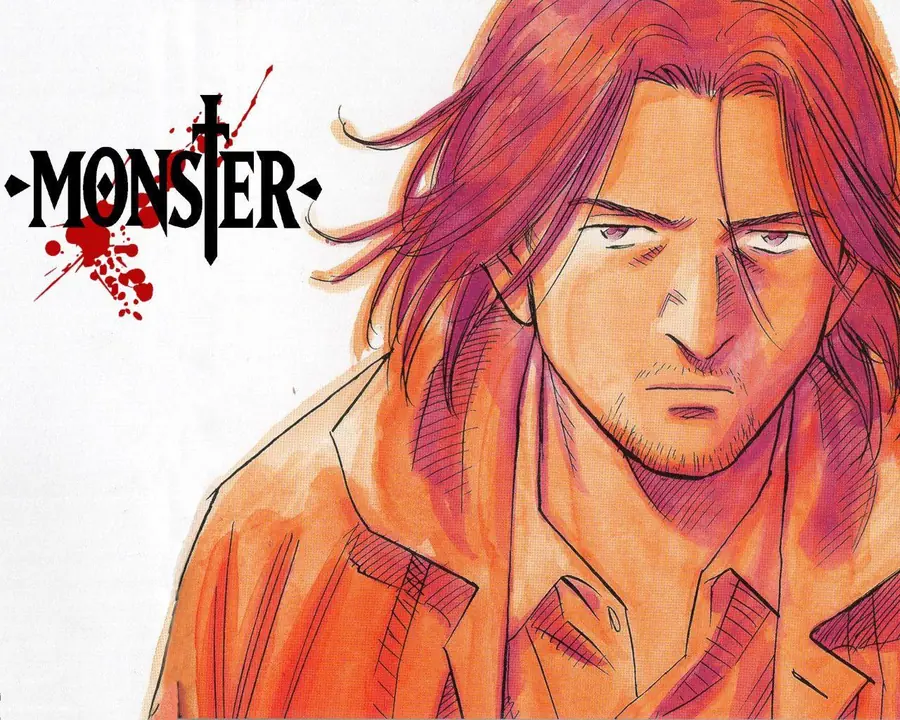
All Monster Story Arcs in Order
| # | Arc |
|---|---|
| 1 | Monster Awakens |
| 2 | Reunion in Düsseldorf |
| 3 | Vampire Ruins |
| 4 | Baby |
| 5 | Ruhenheim Finale |
The Thriller That Became a Masterpiece
Monster stands as psychological thriller manga’s finest achievement. Created by Naoki Urasawa, this series abandons spectacle entirely, relying instead on pure narrative tension, psychological complexity, and genuine exploration of moral ambiguity. The series proves manga can achieve literary sophistication through meticulous planning and character development.
The Central Conflict: Doctor and Monster
The narrative begins with a seemingly simple choice. Dr. Kenzo Tenma, a talented neurosurgeon, must choose between saving a famous politician or a young boy. Choosing the boy transforms Tenma’s life forever as he discovers years later that the child he saved has become a dangerous serial killer. The series explores whether Tenma’s initial mercy remains justified by devastating consequences.
Rather than simple thriller, Monster becomes philosophical exploration of responsibility, consequence, and whether redemption remains possible after profound moral corruption. The central question—whether saving a life automatically makes one responsible for that life’s actions—drives narrative tension throughout.
Naoki Urasawa’s Literary Masterwork
Monster stands apart from typical manga through sheer narrative ambition and execution. Created between 1998 and 2001, Naoki Urasawa’s masterpiece represents manga operating at literary heights rarely achieved in the medium. The series abandons action sequences and visual spectacle entirely, trusting that psychological tension and carefully constructed mystery carry sufficient weight. Urasawa’s approach proved manga could rival prose fiction in psychological sophistication while maintaining visual medium’s advantages.
The manga’s construction reflects meticulous planning. Urasawa structures Monster like European thriller literature, complete with multiple narrative threads, scattered clues, and revelations fundamentally altering reader understanding of earlier events. Unlike typical manga that serializes continuously and adjusts narrative as it progresses, Monster displays evidence of being fully plotted before serialization began. Foreshadowing operates seamlessly; details introduced casually in early volumes gain sinister significance through later revelation.
Compared to psychological manga like Geass or Death Note, Monster avoids supernatural elements entirely. The threat remains purely human—human psychology, human institutional structures, human cruelty. This grounding creates stakes that feel genuinely achievable rather than dependent upon fantastical mechanics. The series proves that genuine horror emerges not from monsters of mythology but from ordinary humans capable of extraordinary evil.
Story and Narrative Architecture: Consequence and Complicity
The central narrative involves Tenma’s hunt for Johan through post-reunification Germany, where Cold War residue and secret governmental operations create institutional contexts enabling serial murder. Rather than protagonist chasing obvious villain, Monster structures itself as layered mystery slowly unveiling Johan’s identity, origins, and the systems supporting his operations.
The Ruhenheim arc, the narrative’s foundation, reveals institutional programming designed to create perfect human beings. Johan emerges not as natural psychopath but as product of institutional conditioning—the series’ central tragedy. Nina, Johan’s twin sister saved alongside him, develops capacity for emotional connection and healing despite identical institutional trauma. Their divergent outcomes raise the profound question: what determines whether childhood trauma produces healing or predation? The series suggests individual psychology, available support systems, and personal choices determine response to trauma rather than trauma itself.
Tenma’s character arc becomes central to narrative meaning. Pursuing Johan, Tenma discovers complicity in broader systems—the institutions creating Johan, the governmental structures protecting him, the bystanders ignoring mounting evidence. The series suggests that stopping evil requires not merely confronting individual predators but dismantling systems enabling predation. Tenma’s personal journey involves accepting responsibility not only for saving Johan’s life but for the consequences of living within systems that created him.
The narrative embraces moral ambiguity consistently. Characters operate within reasonable justifications for problematic choices; evil emerges not from cartoon villainy but from ordinary people prioritizing institutional protection, personal safety, or professional advancement over confronting uncomfortable truths. Even antagonists possess comprehensible motivations; few characters act from pure malice. This approach creates psychological verisimilitude—readers recognize institutional dynamics from real-world experience.
Johan Liebert: The Perfect Monster
Johan emerges as perhaps manga’s most sophisticated villain. His power derives not from physical superiority but psychological manipulation and strategic brilliance. He remains consistently three steps ahead of pursuers, manipulating events such that his enemies destroy themselves or each other while he observes from safety. Unlike typical antagonists whose evil emerges from single traumatic moment or clear moral transgression, Johan represents corruption so fundamental that his humanity becomes questionable.
Urasawa constructs Johan’s characterization across the entire narrative. Early appearances show charming boy gradually revealed as psychopathic manipulator. Later revelations expose childhood institutional conditioning producing psychological mechanisms enabling him to function without genuine human emotion. Final confrontations force recognition that Johan may be beyond redemption—not because he chooses evil but because his psychological development arrested at stage incapable of human connection.
The series explores chilling question: if individual psychology proves sufficiently damaged, can rehabilitation remain possible? Johan’s demonstrated capacity for manipulation, his complete absence of empathy, his ability to inspire loyalty while caring nothing for followers suggests psychological states rendering normal morality inapplicable. Yet simultaneously, the series refuses to declare him irredeemable with absolute certainty—ambiguity persists regarding whether even Johan might have developed differently under different circumstances.
Characters and Institutional Corruption: The Web of Complicity
Dr. Tenma functions as moral center—idealistic physician believing in medicine’s humanitarian purpose. His choice to save Johan based on principle rather than social status costs him his career, his reputation, his relationship. Yet his choice proves his defining characteristic; despite devastating consequences, he accepts responsibility through continued pursuit. Tenma’s journey suggests genuine integrity requires willingness to accept personal cost for maintaining principles.
Nina Fortner represents redemption possibility. Saved alongside Johan, conditioned in same institution, she develops capacity for healing, human connection, and moral growth. Her recovery demonstrates that trauma response depends upon factors beyond trauma itself. Through genuine human relationships and emotional support, she reconnects with humanity despite institutionalization. Her arc suggests that even severe psychological damage proves potentially recoverable with proper support.
Inspector Lunge functions as partial antagonist pursuing Tenma for crimes he didn’t commit. Lunge’s character explores institutional loyalty—his dedication to investigative procedure and bureaucratic authority causes him to pursue wrong direction despite mounting evidence. His eventual recognition of truth comes painfully, revealing personal struggle between institutional loyalty and actual justice. Lunge represents institutional limitation: even well-intentioned officials become trapped by systems transcending individual agency.
The mysterious Red Army figure, Richard Braun, and numerous secondary characters create dense web of complicity. Some consciously cooperate with evil; others unknowingly serve institutional purposes. This multiplication of actors suggests that evil frequently functions not through individual malice but through distributed responsibility—everyone contributes slightly to larger systems enabling predation without anyone bearing full responsibility. The series suggests this diffusion of responsibility proves more dangerous than individual villainy because institutional structures prove harder to oppose than single antagonists.
Narrative Technique and Composition: Cinematic Manga
Urasawa’s visual style abandons typical manga aesthetics entirely. Rather than exaggerated expressions and dynamic panel layouts, Urasawa employs realistic character designs, often unglamorous, sometimes unattractive. His panel composition mirrors film direction—establishing shots, close-ups revealing psychological states, juxtapositions creating thematic resonance. Readers familiar with European cinema recognize Urasawa’s influences; his approach mirrors techniques from films like The Lives of Others or Memories of Murder.
The manga’s pacing creates psychological tension through carefully controlled information. Scenes linger across multiple pages, allowing tension to build through dialogue and gesture rather than action. Urasawa demonstrates that manga tension need not derive from combat or spectacle; psychological pressure created through dialogue, suppressed emotion, and ominous atmosphere proves equally compelling.
Monster’s use of silence and empty space distinguishes it from typical manga. Entire pages contain only minimal dialogue, relying instead upon visual composition to communicate psychological states. This approach forces readers to actively interpret panels rather than passively consuming information—genuine engagement emerges through intellectual participation.
The manga’s color in collected editions remains notably absent—the series maintains print black-and-white throughout. This artistic choice reinforces noir atmosphere appropriate to psychological thriller genre. The absence of color forces focus toward line work and composition, emphasizing technical skill.
Legacy and Cultural Impact: Literary Manga
Monster fundamentally altered manga’s perceived possibilities. Pre-Monster, manga’s reputation within literary circles remained limited; the medium supposedly excelled at action spectacle but lacked capacity for genuine psychological sophistication. Urasawa proved otherwise. The series gained recognition from readers unconcerned with typical manga genres; literature enthusiasts, crime thriller fans, and European media critics embraced Monster as legitimate art.
The manga’s influence extends beyond genre imitators. Contemporary manga creators reference Monster as touchstone for narrative sophistication and literary merit. The series established that manga audiences possessed sophistication enabling engagement with morally complex narratives lacking simple resolution.
The anime adaptation achieved distinction as one of the greatest anime ever produced. Madhouse’s 74-episode series adapted the entire manga faithfully, preserving narrative pacing and psychological tension. The anime maintains the manga’s literary approach, avoiding typical anime visual spectacle. Critical reception placed the anime alongside greatest anime achievements, validating Urasawa’s narrative through multiple media.
Readers encountering Monster should prepare for psychological intensity rather than action entertainment. The series demands active engagement and tolerance for ambiguity. Satisfaction emerges not from resolution but from profound exploration of moral questions unlikely receiving definitive answers.
Frequently Asked Questions
Is Monster complete?
Yes. Monster consists of 18 volumes covering the entire narrative from Tenma’s choice through final confrontation. The manga concluded with definitive ending reflecting years of careful plotting. Unlike ongoing series, Monster provides complete story arc accessible to readers seeking closure.
How many episodes does the anime have?
The Madhouse anime adaptation contains 74 episodes spanning two seasons (2004-2005). The anime adapts the complete manga, enabling viewers to experience the entire story through animation. The anime’s quality remains exceptionally high despite length; Madhouse’s production maintains consistent excellence throughout.
Is Monster really a psychological thriller or more action-oriented?
Monster is purely psychological thriller. The series contains minimal action sequences; narrative tension derives from psychological conflict, mystery, and moral dilemmas rather than combat. Readers expecting action spectacle may find the series slow, though readers appreciating psychological tension typically find it gripping.
What should I know before reading Monster?
Expect psychological intensity, moral ambiguity, and European setting. The series addresses institutional evil, childhood trauma, and genocide, requiring emotional readiness for disturbing content. The narrative unfolds slowly; patience enables appreciation of foreshadowing and careful plotting. Monster rewards active reading; passive consumption misses significant details and thematic resonance.
Where can I read Monster?
English translations are published by Viz Media in both single volumes and omnibus editions. The series is available through major retailers including Amazon, bookstores, and digital platforms. The complete anime streams on multiple platforms including Netflix in various regions. For manga reading, Viz’s official translation provides superior quality to scans.
Publication and Adaptations
Naoki Urasawa serialized Monster in Shogakukan’s Big Comic Original from December 1994 through December 2001, producing 162 chapters compiled into 18 standard tankōbon volumes published between June 1995 and December 2001. The series later received the prestigious 9-volume kanzenban “Perfect Edition” from Viz Media (2014-2016) and Shogakukan (2008-2009), featuring larger trim, revised translations, color pages, and bonus material. The series has surpassed 20 million copies in worldwide circulation, exceptional for an adult-targeted seinen work without an extended franchise. The Perfect Edition release in English-speaking markets coincided with renewed academic and critical interest in Urasawa’s work, particularly comparative analyses with his subsequent series 20th Century Boys, Pluto, and Billy Bat.
The Madhouse anime adaptation premiered on Nippon TV on April 7, 2004 and ran 74 episodes through September 2005, completing the entire manga’s content with exceptional pacing fidelity—an unusual achievement among adaptations of long-form works. Director Masayuki Kojima and series composition by Tatsuhiko Urahata produced what critics widely consider one of the most faithful manga adaptations ever animated. The dub by HBO Max premiered in October 2009, starring Liam O’Brien as Tenma. After multiple licensing transitions, the anime became available on Netflix in select regions starting 2020, dramatically expanding its international audience.
A live-action film adaptation has been in long development hell since HBO Max acquired rights in 2013. Guillermo del Toro was attached to direct an HBO television series adaptation in 2014 but the project ultimately stalled. As of 2025, no live-action adaptation has entered active production despite continued rumors. A Korean television drama adaptation was announced in 2023 but has not received production updates.
The series received the 46th Shogakukan Manga Award for general category in 2000 and the Tezuka Osamu Cultural Prize Grand Prize in 2005, two of manga’s highest honors. The 2005 award recognized Urasawa’s body of work but specifically cited Monster’s narrative achievement. Monster appeared on the New York Times graphic novels bestseller list multiple times during the Perfect Edition releases, becoming one of relatively few manga titles to achieve consistent western critical mainstream attention.
Cultural Impact and Legacy
Monster established Urasawa as the preeminent psychological thriller manga author and influenced an entire wave of post-2000 seinen titles emphasizing character study over action. Series like 20th Century Boys (Urasawa’s own follow-up), Death Note, Pluto, and Holland-Verde Real Account credit Monster’s narrative architecture as foundational. The series’ depiction of Cold War-era Eastern European institutional corruption, particularly Czech and German political contexts, brought rare manga attention to historical material outside Japan-centered subject matter.
Academic interest in Monster has been substantial. The series has been the subject of multiple master’s theses and academic papers analyzing its treatment of psychiatric ethics, postwar German identity, the Cold War’s psychological aftermath, and questions of free will versus environmental determinism. Several university courses on graphic narrative include Monster as required reading. The series has been cited in legal and philosophical discussions about culpability and identity formation, with Tenma’s central dilemma—was he right to save the child who became a killer?—frequently invoked in trolley-problem-style ethics discussions.
Frequently Asked Questions
Should I read the manga or watch the anime? Both are exceptional. The 74-episode anime is one of the most faithful manga adaptations ever produced, while the manga offers Urasawa’s superior artwork and pacing control. Newcomers to seinen manga often start with the anime, while manga enthusiasts prefer the source material.
Where can I read Monster officially? Viz Media’s 9-volume Perfect Edition (2014-2016) is the definitive English print release, featuring larger trim, revised translations, and bonus content. Both physical and digital editions are available through major retailers.
Is Monster connected to Urasawa’s other works? Monster shares thematic concerns with 20th Century Boys, Pluto, and Billy Bat but is not directly connected. All four works explore institutional corruption, traumatic childhood memory, and moral ambiguity.
Will there be a live-action adaptation? A Guillermo del Toro-directed HBO series was announced in 2013 but never entered active production. As of 2025, no Western live-action adaptation has been confirmed despite recurring rumors. Korean adaptation discussions emerged in 2023.
How long does it take to read Monster? The 18-volume manga totals approximately 5,000 pages and typically takes 25-35 hours to read at average pace. The anime totals approximately 30 hours of viewing across 74 episodes.
Monster Arc Guides
Monster Awakens
Introduction to Johan and Tenma's initial choice
Reunion in Düsseldorf
Tenma begins investigating Johan's true identity
Vampire Ruins
Mystery of Johan's origins emerges
Baby
Johan's past and psychological manipulation tactics revealed
Ruhenheim Finale
Final confrontation with Johan
Anime Adaptation
Full guideMonster Merchandise
Read manga free with Amazon Prime
30-day free trial: free shipping, Prime Reading, Kindle, Prime Video and more.
Affiliate link. 30-day free trial for new members. Then $14.99/month — cancel anytime.
FAQ: Monster
You May Also Like
All manga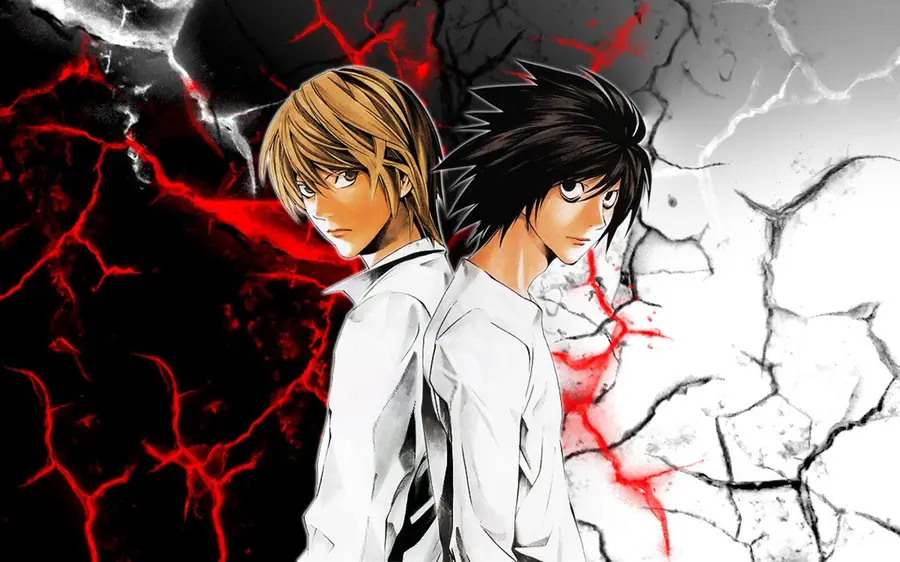
Death Note
A cat-and-mouse game between a genius teenager with a god-like notebook and a brilliant detective determined to stop him.

The Apothecary Diaries
An ongoing seinen mystery manga by Natsu Hyuuga and Nekokurage following Maomao, an apothecary's daughter, as she solves imperial court mysteries using her pharmaceutical expertise in a historical Chinese setting.

Oshi no Ko
A completed seinen drama-mystery manga by Aka Akasaka and Mengo Yokoyari following twin siblings reincarnated as the children of their favorite idol, who must uncover the mystery of their mother's murder.
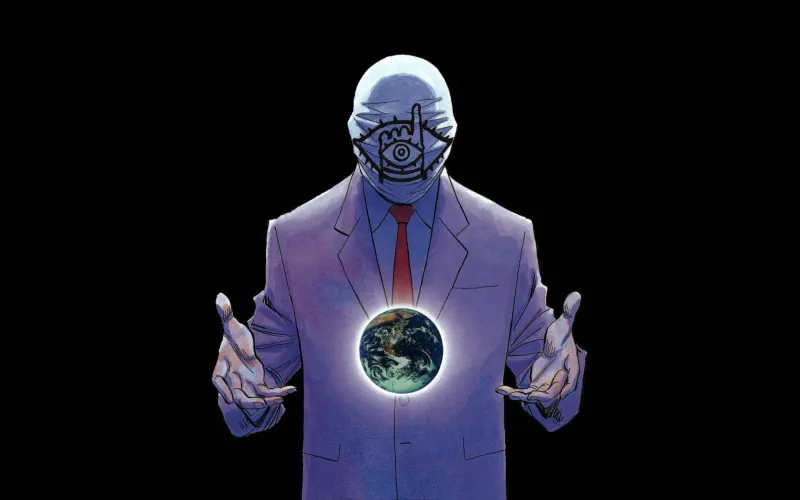
20th Century Boys
A sprawling mystery-thriller manga spanning decades, following childhood friends confronting a prophecy they created.
Related Articles
All articles
Top 14 Best Mystery Manga of All Time (2026)
The best mystery manga ever made, ranked. Gripping detective stories, psychological thrillers, and mind-bending whodunits — plus the editions worth owning.

Top 20 Best Horror Manga of All Time
Discover the scariest and most disturbing horror manga ever created. From psychological terrors to body horror classics.