Vagabond
A historically-inspired seinen manga depicting the philosophical journey of a legendary samurai across Japan's landscape.
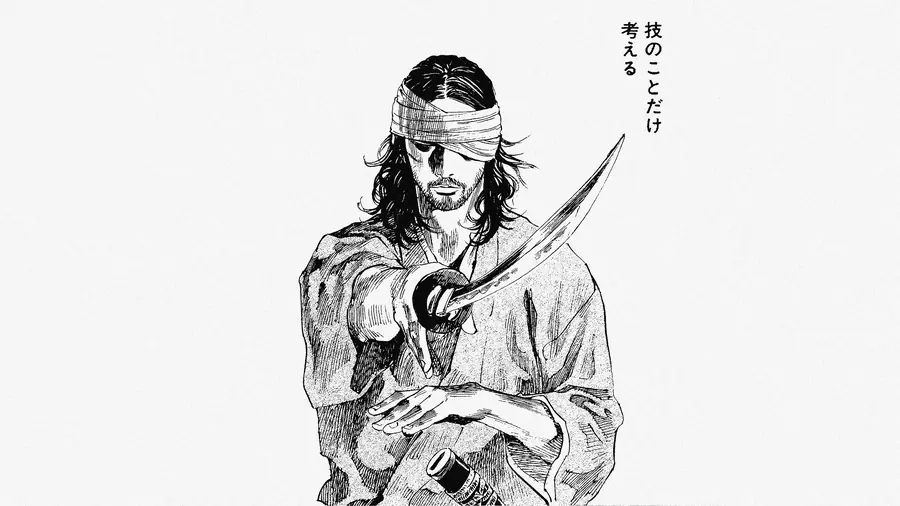
All Vagabond Story Arcs in Order
| # | Arc |
|---|---|
| 1 | The Path of the Sword |
| 2 | Yoshioka Duel |
| 3 | Encounter with Sasaki |
| 4 | The Earth Arc |
| 5 | Ganryu Island |
Invincible Under Heaven — The Cost of That Question
Miyamoto Musashi is one of the most famous figures in Japanese history: a swordsman who fought over sixty duels without a single defeat, a philosopher who committed his martial principles to paper in the Go Rin No Sho (The Book of Five Rings), a cultural ideal of disciplined mastery that the Japanese imagination has never stopped revisiting. Takehiko Inoue, already established as one of manga’s great cartoonists through the sports masterpiece Slam Dunk, chose this figure as the center of his next project — and in doing so produced something that most people who have read it consider the most beautifully drawn manga ever made.
Vagabond began serialization in Weekly Morning in 1998 and, as of 2026, sits in a prolonged hiatus that has lasted since 2015, its narrative incomplete at 37 volumes. That incompleteness does not diminish what exists. What exists is a work that uses the historical scaffolding of Eiji Yoshikawa’s 1935 novel Musashi as a departure point and then goes somewhere that neither the novel nor any previous treatment of this material had gone: deep into the interior of a man who has organized his entire self around the ability to kill, and who is slowly, painfully discovering what is left when that organizing principle starts to come apart.
Premise and World
The series opens not with the great Miyamoto Musashi but with Shinmen Takezo — a young man with enormous physical gifts, a violent temperament, and no particular philosophy beyond the desire to be the strongest. He survives the Battle of Sekigahara (1600), one of the most consequential battles in Japanese history, and escapes into the countryside a wanted man. Through a chain of events involving his childhood friend Matahachi, the Buddhist monk Takuan Soho, and various people he hurts along the way, Takezo is renamed Musashi and set on the road.
Early-seventeenth-century Japan is the series’ backdrop: a country recently unified after centuries of civil war, its samurai class suddenly without wars to fight and its social order reshaping itself around the Tokugawa political settlement. This context matters. The question Musashi is really asking — what does a man built for war do in a time that no longer requires him? — has historical as well as personal weight. The road sequences take him through real landscapes rendered by Inoue with extraordinary care: mountain passes, farming villages, temple precincts, the edges of great cities. Japan in this period has the texture of a world in transition, and the series captures that.
Main Characters
Miyamoto Musashi
Musashi begins the series as something close to a force of nature: enormous, violent, seemingly unkillable, with a genuine talent for swordsmanship that he has not yet had the philosophical development to understand. He wants to be the greatest swordsman who ever lived. He pursues this goal with the directness of someone who has not yet learned to question whether it is the right goal. The early volumes are genuinely thrilling partly because of how uncomplicated this is — a dangerous man meeting danger, winning, and moving on.
The transformation happens so gradually, across so many individual encounters, that it is almost impossible to point to the moment it begins. He meets Takuan, who sees something in him beyond the violence. He meets farmers who have never held a sword and whose lives are more fully realized than his. He meets Otsu, who loves him in ways he cannot accept or reciprocate because he has not yet developed the interiority for it. Each encounter deposits something in him that takes years to integrate. By the time the existing volumes end, the man who remains is still recognizably Musashi — still the greatest sword in Japan — but the relationship between who he is and what he can do has become something he is still working out.
Sasaki Kojiro
Inoue’s interpretation of Sasaki Kojiro — Musashi’s legendary rival, the man he famously killed at Ganryu Island in 1612 — is one of the most original choices in the series. Historical records suggest Kojiro was an accomplished swordsman; Inoue makes him deaf from birth, a natural genius with a blade who developed his art entirely through visual and physical intuition rather than formal instruction. He has never been taught; he simply sees how the sword wants to move and moves with it.
Kojiro’s storyline runs parallel to Musashi’s across many volumes: a man for whom swordsmanship is not a philosophical question but a joyful physical fact, who has never had to ask what the sword means because the sword has always been self-evidently what he is. The contrast with Musashi’s increasingly anguished self-examination is deliberate and profound. They are approaching the same destination from opposite directions, and the series’ unresolved status means readers do not yet know what happens when they meet.
Story and Themes
The question the series circles without ever quite landing on — which may be the point — is what mastery actually means. Musashi can defeat almost anyone he encounters. The skill is not in doubt. What the series keeps asking is whether that skill, pursued to its ultimate expression, contains anything beyond itself: whether “invincible under heaven” is a spiritual achievement or merely a description of combat record. Musashi keeps winning duels and keeps finding that the victories leave him unchanged in the ways he actually needs to change.
Buddhist philosophy enters the series through Takuan and through the landscapes themselves. The concept of mushin — “no-mind,” the state of action without the interference of conscious thought or ego — is both the technical ideal of advanced swordsmanship and a philosophical proposition about what it means to stop defending the self. The series suggests, carefully and without didacticism, that the path to genuine mastery runs through the dissolution of the need to be master — that Musashi will not arrive at what he is seeking until he stops seeking it in the way he has been.
Violence is rendered here with more weight than almost anywhere else in manga. Duels in Vagabond are slow, often wordless, and shot through with the understanding that someone is going to die and that the dying will be permanent. Inoue does not celebrate combat. He renders it with a gravity that makes each encounter feel like a decision rather than a spectacle.
Why This Manga Matters
Vagabond is regularly cited, in surveys of manga artists and in critical writing, as the most technically accomplished manga ever drawn. This is not a minority position. The work Inoue does with ink — the weight of a single brushstroke, the emptiness of a negative-space composition, the way a landscape can express a psychological state without a single word — represents a synthesis of traditional Japanese visual art and the expressive grammar of manga that has not been equaled. The volumes from the middle period onward, when Inoue’s style has fully evolved away from conventional manga toward something closer to ink painting, are simply extraordinary objects to hold and read.
Beyond the art, Vagabond is important because it established that the seinen manga format — adult-oriented, long-running, serialized in a weekly magazine — could sustain work of genuine literary and artistic ambition. Its influence on subsequent creators is enormous and largely acknowledged. For readers, it offers something rare: a work that asks serious questions, takes them seriously across hundreds of chapters, and never cheapens them for the sake of narrative momentum.
Publication History
Vagabond began serialization in Kodansha’s Weekly Morning magazine on September 3, 1998. It has been collected into 37 volumes, the most recent published in 2015. Inoue went on hiatus following the 37th volume and has not announced a return date; he has spoken publicly about uncertainty regarding how to conclude the story and about health and creative difficulties. The series has won multiple awards including the Kodansha Manga Award and the Tezuka Osamu Cultural Prize. It is published in English by VIZ Media. The hiatus is ongoing as of this writing (2026).
Related Series
Readers who have been moved by Vagabond often continue with Berserk (similarly ambitious, similarly unfinished, similarly concerned with what violence does to the person who wields it), Vinland Saga (a historical manga with a nearly identical philosophical arc about a warrior learning to question his own violence), Blade of the Immortal (Hiroaki Samura’s extraordinary work in the same period and genre), and Real (Inoue’s other ongoing series, which brings comparable emotional seriousness to the subject of disability and basketball).
Frequently Asked Questions
Is Vagabond finished?
No, Vagabond is on hiatus. The series began serialization in 1998 and went on indefinite hiatus in 2015 after 37 volumes. Creator Takehiko Inoue has stated uncertainty about how to conclude the story and has faced health concerns. There is no announced return date, though the possibility of resumption remains open.
How many volumes does Vagabond have?
The series contains 37 volumes, collected by Kodansha. These represent the complete narrative arc as it exists to date, though the story ends unresolved at the point where Musashi approaches his legendary final confrontation. All volumes are available in English through VIZ Media and in Spanish translation.
Is there an anime adaptation?
No, Vagabond does not have an anime adaptation despite its cultural prominence and critical acclaim. The series’ intricate ink artwork and long narrative spans would present unique challenges for animation. However, fans appreciate the manga’s visual artistry as incomparable and possibly superior to any animated version.
What age rating is Vagabond?
The series is rated 18+ (Mature). It contains explicit depictions of graphic violence, samurai combat, and blood. There is psychological and existential content dealing with trauma, death, and the weight of killing. It is unsuitable for audiences under 18 due to the intensity and graphicness of the violence.
Where can I buy Vagabond?
The complete 37-volume series is available through major retailers including Amazon (donidhernande-20 for English). Spanish editions are available through Amazon.es (donidhernande-21). Both individual volumes and premium omnibus editions are in stock. Many libraries carry the series, and digital editions are available for Kindle and other platforms.
Publication and Adaptations
Takehiko Inoue began Vagabond in Kodansha’s Weekly Morning magazine on September 3, 1998, adapting Eiji Yoshikawa’s celebrated 1935-1939 novel “Musashi” into manga form. The series produced 327 chapters across 37 tankōbon volumes between September 1999 and July 2014, when Inoue placed the series on indefinite hiatus that continues as of 2025. The most recent chapter (#327) published in May 2015. Despite the prolonged hiatus, total worldwide circulation has surpassed 82 million copies, and the series remains in print with consistent reprint demand. Viz Media holds the English license, releasing all 37 standard volumes plus a 12-volume VIZBIG omnibus edition collecting three volumes each in larger format with revised translations and bonus content.
Vagabond received the Kodansha Manga Award for general category in 2000 and the Tezuka Osamu Cultural Prize Grand Prize in 2002, the latter being one of manga’s most prestigious honors. Inoue’s earlier work Slam Dunk had already established his reputation, but Vagabond elevated him to the rank of manga’s most respected artists working in seinen. The series has never received an anime, film, or live-action adaptation despite numerous offers and rumors, with Inoue reportedly unwilling to license the property until he completes the manga. The 1954 Hiroshi Inagaki Samurai Trilogy films starring Toshiro Mifune adapt the same Yoshikawa source material and remain the definitive cinematic interpretation of Musashi.
Inoue’s working process for Vagabond is notoriously slow and meticulous. He frequently transitions between traditional pen-and-ink and brush-painted sumi-e illustration techniques, with later volumes featuring extensively brushed pages that approach fine art. The “Real” series (his ongoing wheelchair basketball manga also at Kodansha) and various exhibition projects have shared his time during the Vagabond hiatus. In multiple interviews between 2017 and 2023, Inoue has stated he intends to complete Vagabond but cannot commit to a return date, citing creative exhaustion and the need to solve narrative problems before resuming.
Cultural Impact and Legacy
Vagabond is widely cited among the greatest manga ever produced in any genre. Critics regularly include it in all-time top-ten lists alongside Berserk, 20th Century Boys, Akira, and Monster. The series has influenced subsequent samurai manga including Vinland Saga (Makoto Yukimura has cited Inoue as a primary influence), House of Five Leaves, and Blade of the Immortal’s later volumes. Inoue’s brush-painting techniques have been studied in art schools and reproduced in technique manuals.
The series elevated public awareness of Miyamoto Musashi’s life and “The Book of Five Rings” (Go Rin no Sho) text, with English-language sales of Musashi’s writings spiking notably during Vagabond’s peak serialization years. Multiple academic papers have analyzed Vagabond’s portrayal of Zen Buddhism, bushidō, and the historical sengoku-to-Edo transition period. The Kumamoto Prefectural Government commissioned Inoue for tourism campaigns highlighting Musashi-related historical sites in 2014. Original Vagabond artwork has sold at Sotheby’s Hong Kong auctions for over $40,000 per page, placing Inoue among the most commercially valuable manga artists in the secondary market.
Frequently Asked Questions
Will Vagabond ever be completed? Takehiko Inoue has repeatedly stated his intent to complete the series but has not committed to a return date. The manga has been on indefinite hiatus since May 2015 with no scheduled resumption as of 2025.
Is Vagabond historically accurate? Vagabond adapts Eiji Yoshikawa’s fictionalized 1935-1939 novel, which itself draws from Musashi’s real life with substantial dramatization. Major events (Yoshioka clan duel, Sasaki Kojirō duel at Ganryū Island) are historical, but specific dialogue and character relationships are creative interpretation.
How does Vagabond compare to Slam Dunk? Both are by Takehiko Inoue but differ dramatically in tone. Slam Dunk is energetic shōnen sports comedy-drama; Vagabond is meditative seinen historical drama with intense violence. They share Inoue’s exceptional character art and emotional depth.
Why hasn’t Vagabond received an anime? Inoue has reportedly declined adaptation offers, preferring to complete the manga first. The brush-painting style would also be expensive to translate to animation while preserving its distinctive aesthetic.
Where should I read Vagabond? The Viz Media VIZBIG omnibus edition is preferred for its larger trim size that better showcases Inoue’s artwork. Digital editions are available through Comixology and Kindle. The series is also available on Viz’s official Manga Plus app in select regions.
Vagabond Arc Guides
The Path of the Sword
Musashi begins his journey as a mercenary, establishing himself through martial prowess and dominance.
Yoshioka Duel
Musashi's confrontation with the Yoshioka School forces him to confront larger martial traditions.
Encounter with Sasaki
Musashi encounters Sasaki Kojirou, a technically superior opponent whose challenge forces philosophical reflection.
The Earth Arc
Musashi's journey takes him through landscapes that reflect his internal transformation and growing spiritual awareness.
Ganryu Island
The series progresses toward confrontation on Ganryu Island where philosophy and martial skill converge.
Vagabond Merchandise
Read manga free with Amazon Prime
30-day free trial: free shipping, Prime Reading, Kindle, Prime Video and more.
Affiliate link. 30-day free trial for new members. Then $14.99/month — cancel anytime.
FAQ: Vagabond
You May Also Like
All manga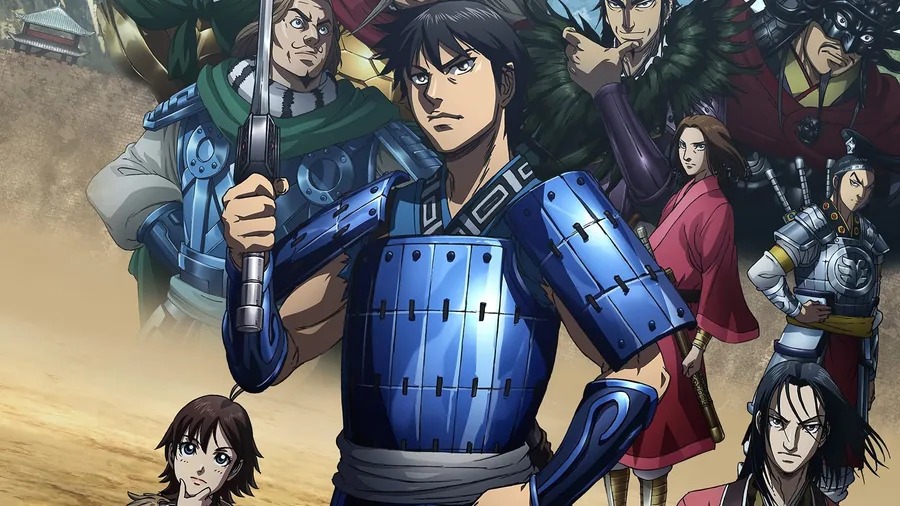
Kingdom
A historical war manga set in China's Warring States period, following the war orphan Shin as he rises through the army of the state of Qin while the young king Ying Zheng pursues his ambition to unify the seven kingdoms under one banner for the first time in history.
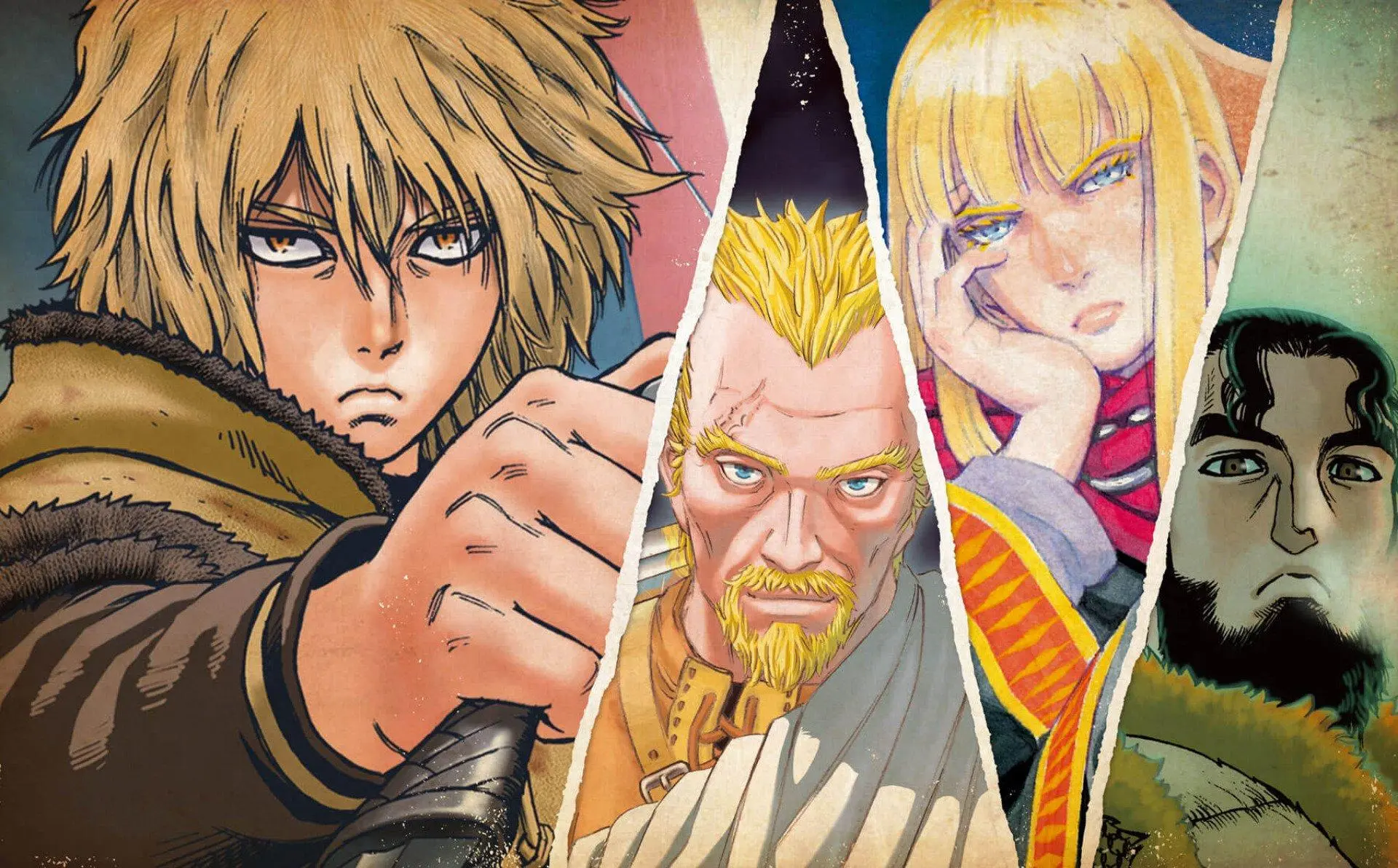
Vinland Saga
A completed seinen manga following a former Viking warrior's quest for redemption set during the Age of Vikings
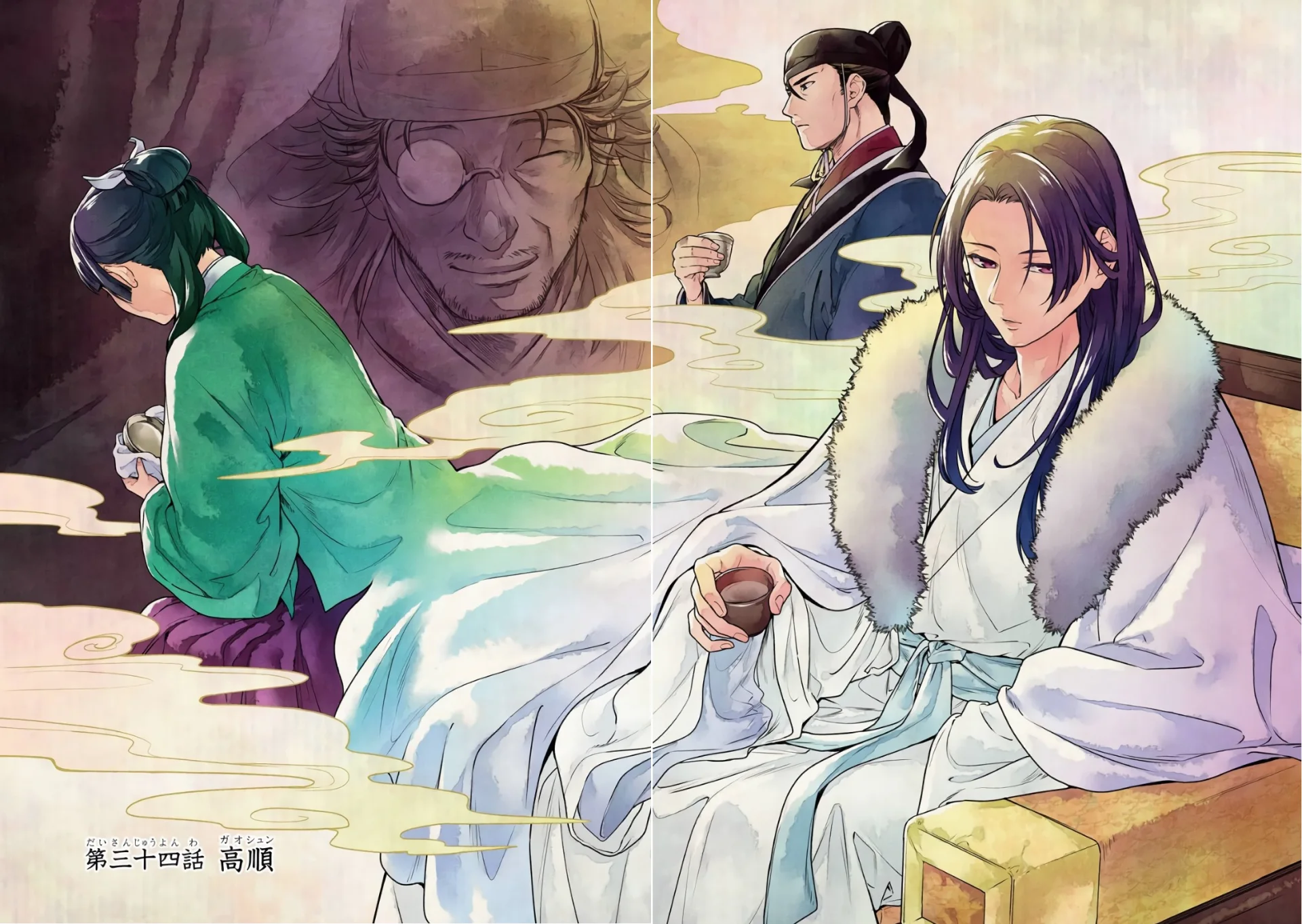
The Apothecary Diaries
An ongoing seinen mystery manga by Natsu Hyuuga and Nekokurage following Maomao, an apothecary's daughter, as she solves imperial court mysteries using her pharmaceutical expertise in a historical Chinese setting.
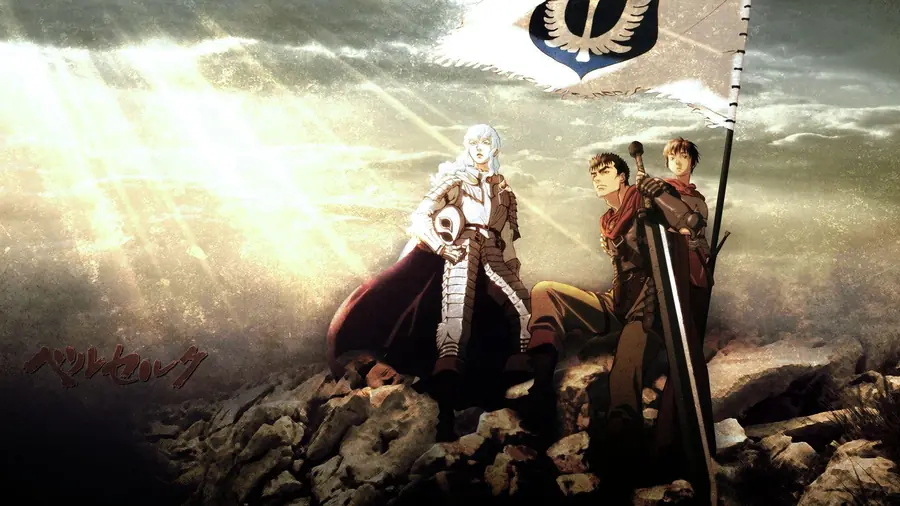
Berserk
A dark and brutal medieval fantasy following Guts on his journey of revenge, featuring complex characters and stunning artwork.
Related Articles
All articles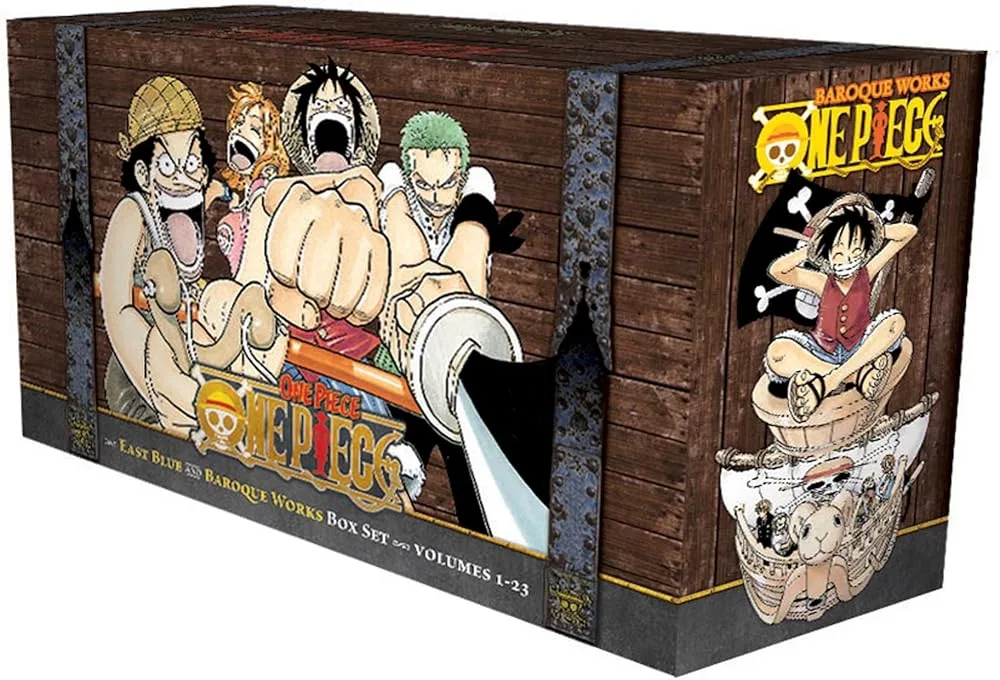
Top 15 Best Action Manga of All Time (2026)
The best action manga ever made, ranked. Explosive battles, legendary fights, and adrenaline-fueled epics — plus the box sets worth collecting.

Best Manga by Genre: The Ultimate 2026 Reading Guide (Shonen, Shojo, Seinen, Josei)
Comprehensive manga genre guide featuring best series by demographic and genre. From action shonen to mature josei, find your next read organized by taste and preference.
Top 20 Best Seinen Manga of All Time
Explore the greatest seinen manga crafted for adult audiences with mature themes, complex narratives, and artistic excellence.