Attack on Titan Manga
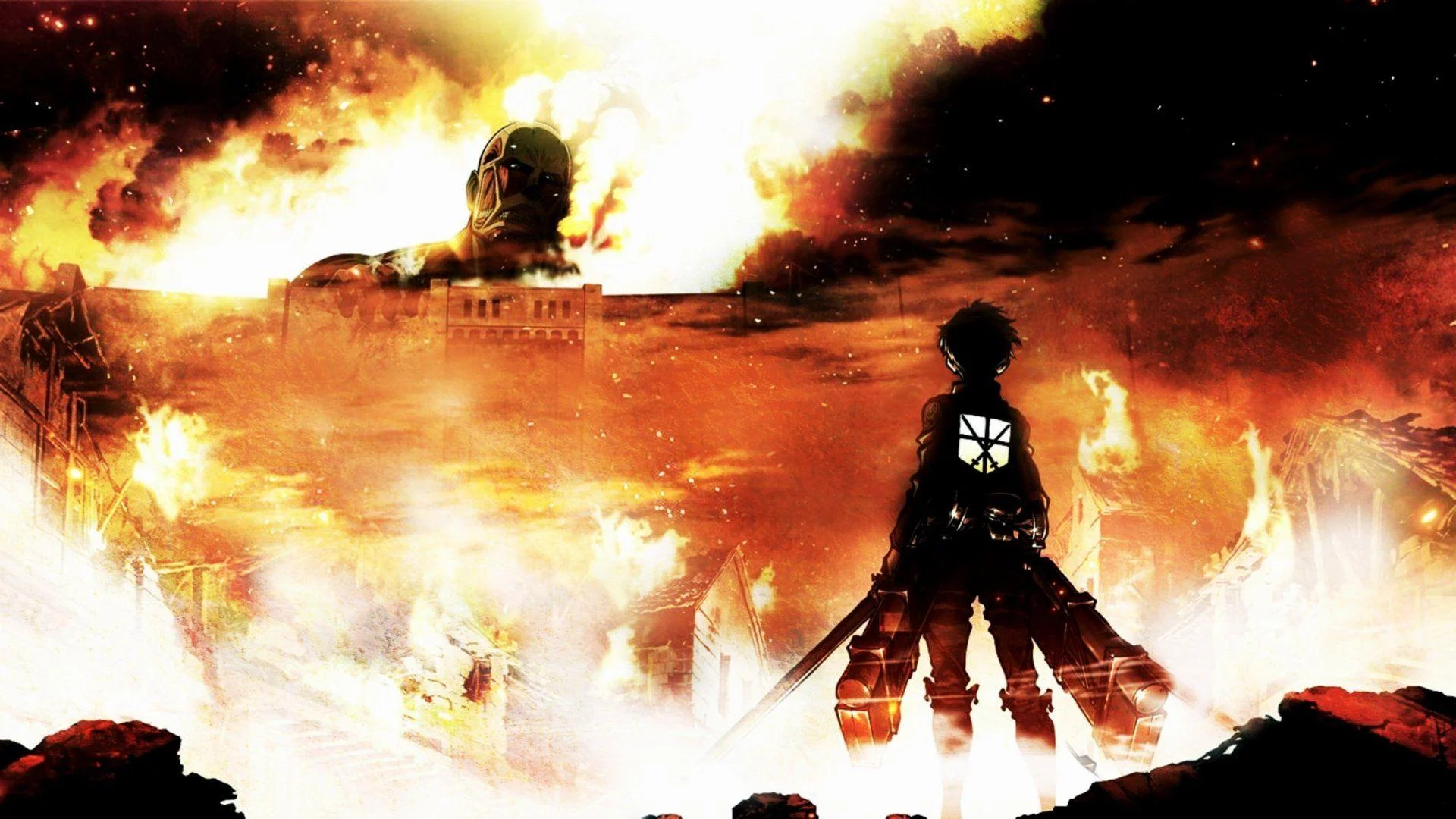
In a world where humanity cowers behind towering walls to survive the man-eating giants known as Titans, Eren Yeager vows revenge after watching his mother devoured. His journey from victim to soldier to world-changing radical reshapes everything he once fought to protect.

Start Attack on Titan: Volume 1
The recommended place to begin the series
All Attack on Titan Story Arcs in Order
| # | Arc |
|---|---|
| 1 | Fall of Shiganshina |
| 2 | Battle of Trost District |
| 3 | Female Titan |
| 4 | Clash of the Titans |
| 5 | Royal Government |
| 6 | Return to Shiganshina |
| 7 | Marley |
| 8 | War for Paradis |
Attack on Titan: The Manga That Redefined What the Medium Could Say
Attack on Titan — known in Japan as Shingeki no Kyojin — stands as one of the most influential and debated manga series of the 21st century. Created by Hajime Isayama, this dark fantasy epic began serialization in Bessatsu Shonen Magazine in 2009 and concluded in 2021, spanning 34 volumes and winning the Kodansha Manga Award in 2011. The series proved that manga could deliver sophisticated, adult-oriented narratives with the psychological depth of literary fiction while sustaining the visceral momentum of action genre storytelling. Few manga have generated the same sustained critical conversation both inside and outside Japan — and perhaps none has produced a more controversial and discussed protagonist arc.
The premise is deceptively simple and devastatingly effective: humanity has been driven to the brink of extinction by Titans, mysterious giant humanoid creatures that appeared over a century ago and prey on humans without apparent purpose. The surviving population retreated behind three concentric walls — Wall Maria, Wall Rose, and Wall Sina — which have protected the last remnants of civilization for 107 years. This claustrophobic setup creates an atmosphere of compressed dread that Isayama exploits masterfully. Everything within the walls feels provisional, borrowed, one catastrophe away from collapse. And then the catastrophe arrives.
The World and Premise
Inside the walls, a rigid class structure determines quality of life. The wealthiest citizens live closest to the innermost Wall Sina, farthest from Titan territory. The working poor are assigned to the districts along Wall Maria’s outer edge, where Titan attacks are most frequent and military service is almost mandatory for survival. This geography is also social commentary: those with the least power bear the most danger while those at the center make decisions from safety. The Survey Corps — the military branch that ventures beyond the walls to gather intelligence and fight Titans in open territory — operates with an abysmal survival rate that makes recruitment a near-suicidal proposition. Their existence is an act of collective desperation dressed up as military ambition.
What the narrative gradually reveals is that this entire arrangement is a lie, and the lie has been maintained deliberately for generations. The walls themselves are not fortifications of stone and mortar but the hardened bodies of colossal Titans, created and controlled by a power that predates the kingdom inside them. The government at the center has suppressed this knowledge along with the true history of the Eldian people: that the population inside the walls is ethnically Eldian, descendants of a people with the biological capacity to transform into Titans, and that outside the walls exists the militaristic nation of Marley, which has enslaved Eldians and weaponized their transformation ability for centuries of imperial expansion. The walls are not a refuge. They are a cage built to contain weapons. This escalating revelation — delivered across the series’ middle section with extraordinary pacing — transforms what begins as monster-survival horror into geopolitical tragedy.
Main Characters
Eren Yeager
Eren Yeager is the series’ central figure, but calling him a protagonist in the traditional sense becomes increasingly complicated as the narrative progresses. He begins the story as an angry, idealistic boy in Shiganshina District whose defining psychological event is watching Titans devour his mother Carla when Wall Maria falls. His response is simple, burning, and consuming: he wants to kill every Titan in existence, and he will pursue that goal with no consideration for his own survival. This kind of driven simplicity is familiar shonen territory, and Isayama leans into the familiarity long enough to build genuine reader investment before dismantling it entirely.
The story Isayama tells with Eren across 34 volumes is one of the most controversial in manga history. As the series progresses and Eren learns the truth about Titans, about Marley, about the nature of his own power as the Attack Titan and eventually the Founding Titan, his radicalization accelerates rather than moderating. He moves from traumatized child to soldier to something more difficult to name — a figure who has identified a cycle of violence and decided that ending it requires committing an act of violence so total it cannot be answered. His activation of the Rumbling, which sets millions of colossal Titans marching toward the entire non-Eldian world, makes him responsible for an attempted global genocide. Readers continue to debate whether Isayama intends this as tragedy, critique, or something more morally ambiguous than either label captures.
Mikasa Ackerman
Mikasa Ackerman is introduced as Eren’s devoted childhood companion, taken in by the Yeager family after her parents were murdered when she was nine. She grows into the most physically capable soldier of her generation, an ability the series eventually attributes to her Ackerman bloodline — a lineage of warriors engineered to protect the royal family whose potential unlocks under extreme emotional stress. Her devotion to Eren is frequently read as romantic love, though the series handles this with significant ambiguity; what seems clearer is that Eren represents the entirety of what home and belonging mean to her after the destruction of her original family.
Her arc across the series is one of gradual and painful individuation. Isayama is meticulous about showing that Mikasa’s attachment to Eren is not simply sentimentality but a coping mechanism built over years of grief and displacement. When Eren’s radicalization forces her to choose between her loyalty to him and her loyalty to the world, the series treats that choice with genuine moral seriousness. The final volume’s confrontation between them — and its aftermath — provides one of the most emotionally resonant conclusions in the series, whatever readers make of the broader ending.
Armin Arlelt
Armin Arlelt is the intellectual and moral center of the central trio. Physically weaker than Eren or Mikasa, he compensates through exceptional strategic intelligence and an emotional perceptiveness that repeatedly enables solutions that pure combat power cannot reach. His function within the group is to provide the reasoning that justifies Eren’s drive and Mikasa’s protection — but the series complicates this role considerably as Armin develops his own moral framework, which increasingly diverges from Eren’s.
His acquisition of the Colossal Titan power through consuming Bertholdt in one of the series’ most morally wrenching moments transforms him into a weapon of mass destruction while he remains psychologically the group’s conscience. The gap between what Armin represents — dialogue, diplomacy, the belief that understanding is possible — and what his power actually enables becomes one of the series’ central ironies. His final attempts to reach Eren, and the conversation that takes place in the Path dimension in the final chapters, represent the series’ fullest articulation of its argument about whether the cycle of violence can be broken from within.
Levi Ackerman
Captain Levi Ackerman occupies a unique position in the series as its most celebrated combat specialist, the figure whose presence in a battle genuinely shifts tactical calculations. His speed with three-dimensional maneuvering gear is presented as categorically beyond any other character’s, a superhuman gift rooted in his Ackerman heritage that he himself does not fully understand. But Isayama carefully ensures that Levi’s narrative function is not primarily tactical — it is moral. Levi has watched every person he was loyal to die, beginning with his formative years in the criminal underground of the capital’s slums and continuing through decades of Survey Corps service.
His relationship with Commander Erwin Smith — a loyalty grounded in Erwin’s willingness to sacrifice everything for the truth, including himself — gives Levi the closest thing to a personal purpose he possesses. When that purpose is stripped away by Erwin’s death and the subsequent discovery that everything Erwin died for still leads to catastrophe, Levi’s arc becomes one of the series’ most quietly devastating meditations on the cost of institutional loyalty and the devastation of outliving every framework that gave your suffering meaning.
Story Arcs
The series’ arc structure falls naturally into three acts. The first act — encompassing the Fall of Shiganshina, the Battle of Trost, the 57th Expedition, and the Female Titan and Clash of Titans arcs — operates primarily as horror-action storytelling with escalating mystery. Titans are incomprehensible threats, their origin unknown, their purpose unclear. The revelations that accumulate in this period — that certain humans can transform into Titans, that the armored and colossal Titans that destroyed Shiganshina were soldiers from outside — systematically convert the external monster narrative into a story about human conflict, betrayal, and the asymmetries of political violence. The Return to Shiganshina arc, which ends this first act with the discovery of Grisha Yeager’s basement journals, delivers the most sweeping single revelation sequence in the series: the world outside the walls is populated, technologically advanced, and deeply hostile.
The second act — the Marley arc and the buildup to the Rumbling — introduces the enemy’s perspective explicitly. The decision to spend chapters inside Marley, following Eldian warrior candidates like Gabi Braun and Falco Grice who have been indoctrinated to view Paradis Islanders as demons, is the series’ most formally ambitious storytelling choice. By the time Eren’s attack on the Marleyan festival explodes the narrative into open war, readers have sufficient context to recognize that neither side is cleanly heroic, and that the children on both sides have been shaped by histories they did not choose and cannot fully understand. This structural empathy for multiple perspectives while refusing to equate the perspectives morally is one of Isayama’s most significant achievements.
The third act — from the formation of the Alliance through the Rumbling to the final confrontation — is where the series generates the most disagreement. Eren’s full plan is revealed: he intends to destroy enough of the outside world to make the Eldian people impossible to threaten through retaliation, while simultaneously ensuring that the Survey Corps alliance will stop him and survive as heroes, protecting Eldia from future retaliation through their credibility. Whether this constitutes a coherent plan, a rationalization, or something in between has been debated extensively. What is not debatable is that the scale of violence it involves is staggering, and that the series neither celebrates nor cleanly condemns it. The ending asks whether the cycle of violence has been broken or merely paused — and refuses to answer definitively.
Themes and What Makes It Last
Attack on Titan’s central thematic preoccupation is freedom — specifically, the collision between freedom as a personal absolute and freedom as something that can only exist in relation to others. Eren’s insistence on an unconditional freedom that recognizes no obligation to anyone else is precisely what makes him a monster by the series’ end, but Isayama frames this as the logical extension of the ideology Eren began with, not a betrayal of it. The series asks whether freedom defined purely as liberation from external constraint is distinguishable from the will to dominate, and it refuses comfortable answers.
The series is equally invested in exploring how cycles of violence perpetuate themselves across generations. The Eldians are both historical victims of Marleyan oppression and historical perpetrators of the Titan wars that Marley’s propaganda uses to justify contemporary persecution. Marley’s soldiers genuinely believe they are protecting the world from Eldian demons, a belief built on real historical events selectively framed. Every act of violence generates its own justifying narrative, and each generation inherits both the trauma and the ideology without being given the full context that might allow them to choose differently. Breaking this cycle requires both power and the willingness to relinquish it — a combination the series suggests is almost impossibly rare.
Art Style and Visual Storytelling
Hajime Isayama’s art style has attracted as much discussion as his storytelling. Early chapters feature rough, dense linework that some readers found challenging, and Isayama was notably self-deprecating about his early draftsmanship in interviews. But the roughness serves the tone — the early walled-city world feels grimy and precarious in ways that cleaner linework might not convey. As the series progressed, Isayama’s technique improved substantially; by the Marley arc, his action sequences demonstrate genuine cinematic sophistication in spatial composition and physical momentum.
The design of Titans themselves is one of the series’ most distinctive and effective creative choices. Rather than making them visually imposing through traditional monster aesthetics, Isayama renders Titans with an uncanny, wrongly human quality. Their skin fits poorly, their faces carry expressions that mimic human emotions without achieving them, their proportions are wrong in ways that are difficult to specify but impossible to ignore. This visual quality reinforces the series’ eventual thematic reveal: Titans are not monsters but people, trapped in transformation by forces they did not choose, unable to communicate or act on will. Their horror is not alien but recognizably, tragically human.
Publication and Adaptations
Attack on Titan was serialized in Bessatsu Shonen Magazine from September 2009 to April 2021, collected into 34 volumes by Kodansha. The series won the Kodansha Manga Award in the shonen category in 2011 and went on to become one of the best-selling manga series of all time globally. Wit Studio produced the first three seasons of the anime adaptation beginning in 2013, creating what many viewers consider among the finest opening runs in contemporary anime. MAPPA took over for the fourth and final season, which aired from 2020 to 2023, adapting the Marley arc and the Rumbling with higher production values and a visual style that generated ongoing aesthetic debate among the fanbase.
The anime’s global streaming availability through Crunchyroll and Funimation turned Attack on Titan into a genuine mainstream cultural phenomenon, discussed in outlets far beyond anime journalism. The series has generated extensive licensed media including video games, a live-action film adaptation, light novel spinoffs, and the prequel manga series No Regrets focusing on Levi’s origin story. The conversation around the manga’s ending continues in fan communities worldwide — a testament to how deeply Isayama’s work provoked genuine engagement with its ideas rather than passive consumption.
Related Series
Readers drawn to Attack on Titan’s dark political complexity and willingness to interrogate heroism will find strong resonance in Vinland Saga, which traces a similarly agonized trajectory from violence to conscience across an epic historical canvas. For the mystery architecture and generational tragedy, Berserk offers the definitive long-form study of how trauma and circumstance can transform a person into something barely recognizable. And for a more recent series that carries forward the DNA of morally complex dark fantasy, Chainsaw Man deconstructs genre expectations with similar formal intelligence and refusal of easy comfort.
Frequently Asked Questions
Is Attack on Titan finished?
Yes, Attack on Titan is completely finished. The manga concluded in April 2021 after 34 volumes, providing a definitive ending that continues to be debated among fans for its moral ambiguity and thematic weight. The anime adaptation finished covering the full story in 2023 with the final season adaptations by MAPPA.
How many volumes does Attack on Titan have?
Attack on Titan spans 34 volumes total, collected from the original serialization in Bessatsu Shonen Magazine from 2009 to 2021. This complete collection contains the entire narrative arc from humanity’s struggle against Titans to the final confrontation and its controversial resolution.
Is there an anime adaptation of Attack on Titan?
Yes, Attack on Titan has a comprehensive anime adaptation. Wit Studio animated the first three seasons (2013-2019), creating what many consider one of the finest anime opening runs in contemporary television. MAPPA took over for the fourth and final season (2020-2023), adapting the Marley arc and concluding the series with elevated production values and detailed visual storytelling.
Is Attack on Titan appropriate for teenagers?
Attack on Titan carries a mature/16+ rating due to its intense violence, dark themes, and psychological complexity. While some older teenagers (16+) may engage with it, the series features graphic depictions of violence, existential themes about genocide and moral ambiguity, and disturbing imagery that may be challenging for younger viewers. Parental discretion is strongly recommended.
Where can I buy Attack on Titan manga?
Attack on Titan is widely available in print and digital formats through major retailers including Amazon, where you can find complete volumes or collected box sets. You can purchase the English manga series on Amazon at competitive prices, and the series is also available through most independent bookstores, comic shops, and digital platforms like Amazon’s Kindle store (Amazon tag: donidhernande-20).
Attack on Titan Arc Guides
Fall of Shiganshina
The Colossal and Armoured Titans breach Wall Maria in a catastrophic siege that shatters humanity's century-long peace. Eren Yeager witnesses his mother devoured by a Titan and swears a binding oath to exterminate every last Titan from existence. This arc establishes the series' central tragedy and sets Eren on a destructive path of vengeance.
Battle of Trost District
Titans overrun the district of Trost, creating chaos and casualties as the military proves inadequate to contain the breach. Eren awakens his extraordinary ability to transform into a Titan himself, shocking everyone and fundamentally changing humanity's military strategy against their immortal enemies. This revelation of Eren's power becomes the turning point that gives humanity hope.
Female Titan
The Survey Corps launches an ambitious expedition beyond the walls to gather intelligence and capture the mysterious Female Titan. The mission ends in catastrophe, with devastating losses culminating in the revelation that Annie Leonhart, a trusted fellow soldier, is the Female Titan. A brutal confrontation inside Trost demonstrates that enemies operate within humanity's own ranks.
Clash of the Titans
The Survey Corps retreats to Wall Rose after catastrophic losses, only to discover that the wall has been breached from within by Titans. This shocking revelation forces them into a desperate mystery: how did Titans penetrate the supposedly sealed wall interior? Ymir's past and the true origins of Titan powers begin to surface through cryptic revelations and recovered memories.
Royal Government
Historia Reiss is revealed as the legitimate heir to the throne, setting in motion political upheaval that culminates in the overthrow of humanity's corrupt military government. The Survey Corps seizes control of the military and the walls' strategic future. This arc emphasizes political intrigue and the reality that military concerns extend beyond simple combat.
Return to Shiganshina
The Survey Corps mounts a final mission to reclaim Shiganshina, seeking secrets hidden in Eren's basement that promise to reveal the full history of the world and the true nature of Titans. A devastating final battle against Reiner, Bertholdt, and the mysterious Colossal Titan culminates in revelations that fundamentally recontextualize everything preceding it.
Marley
Following a time-skip, the narrative shifts to the Marleyan empire, revealing the outside world's true nature and the systematic oppression of Eldians as weaponized Titan inheritors. Eren infiltrates Marley disguised as a soldier, executing a devastating surprise attack that reshapes international politics and leads directly toward global conflict.
War for Paradis
Eren activates the Rumbling, unleashing the Wall Titans and devastating global civilization in his quest to ensure Paradis Island's security. Former enemies unite against him in a desperate final battle that exacts catastrophic costs. The conflict reshapes the world order and leaves both victory and defeat profoundly compromised.
Attack on Titan Merchandise
Read manga free with Amazon Prime
30-day free trial: free shipping, Prime Reading, Kindle, Prime Video and more.
Affiliate link. 30-day free trial for new members. Then $14.99/month — cancel anytime.
FAQ: Attack on Titan
You May Also Like
All manga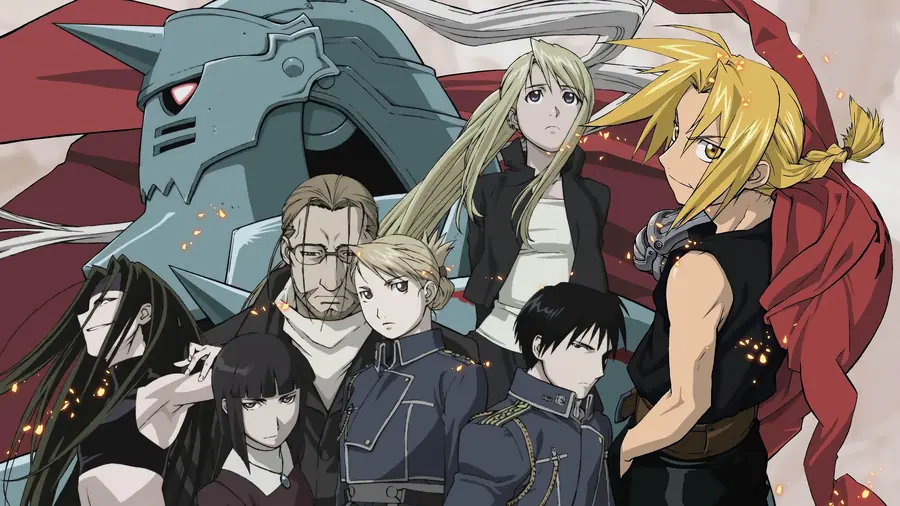
Fullmetal Alchemist
Brothers Edward and Alphonse Elric attempt human transmutation to resurrect their dead mother, paying a devastating price. Their quest for the Philosopher's Stone to restore their bodies unravels a vast conspiracy at the heart of the Amestrian state.
Berserk
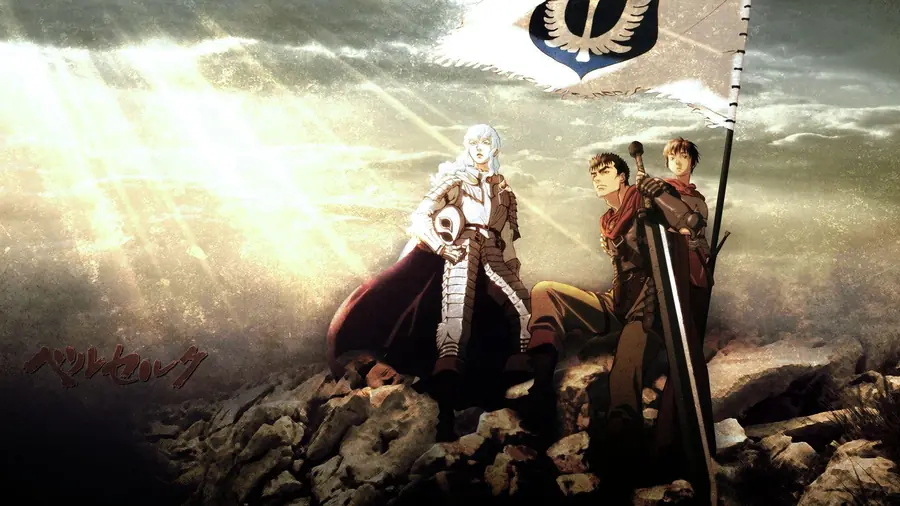
A dark and brutal medieval fantasy following Guts on his journey of revenge, featuring complex characters and stunning artwork.
Chainsaw Man
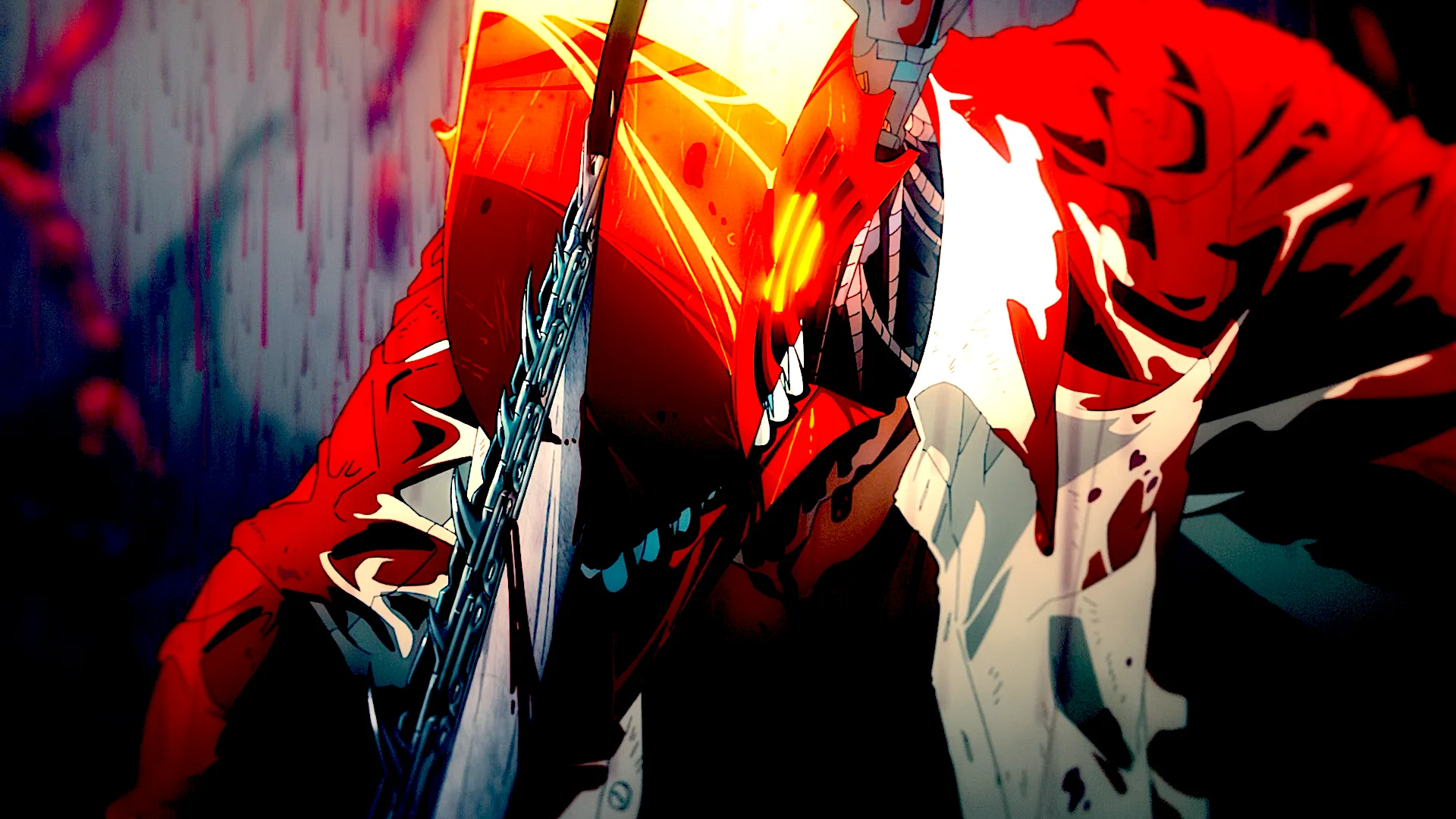
Denji, a poverty-stricken boy who merges with his devil dog Pochita to become the Chainsaw Man, is recruited by the government's Public Safety Devil Hunter division. His desperate desire for a normal life — food, love, warmth — collides with increasingly apocalyptic devil threats.
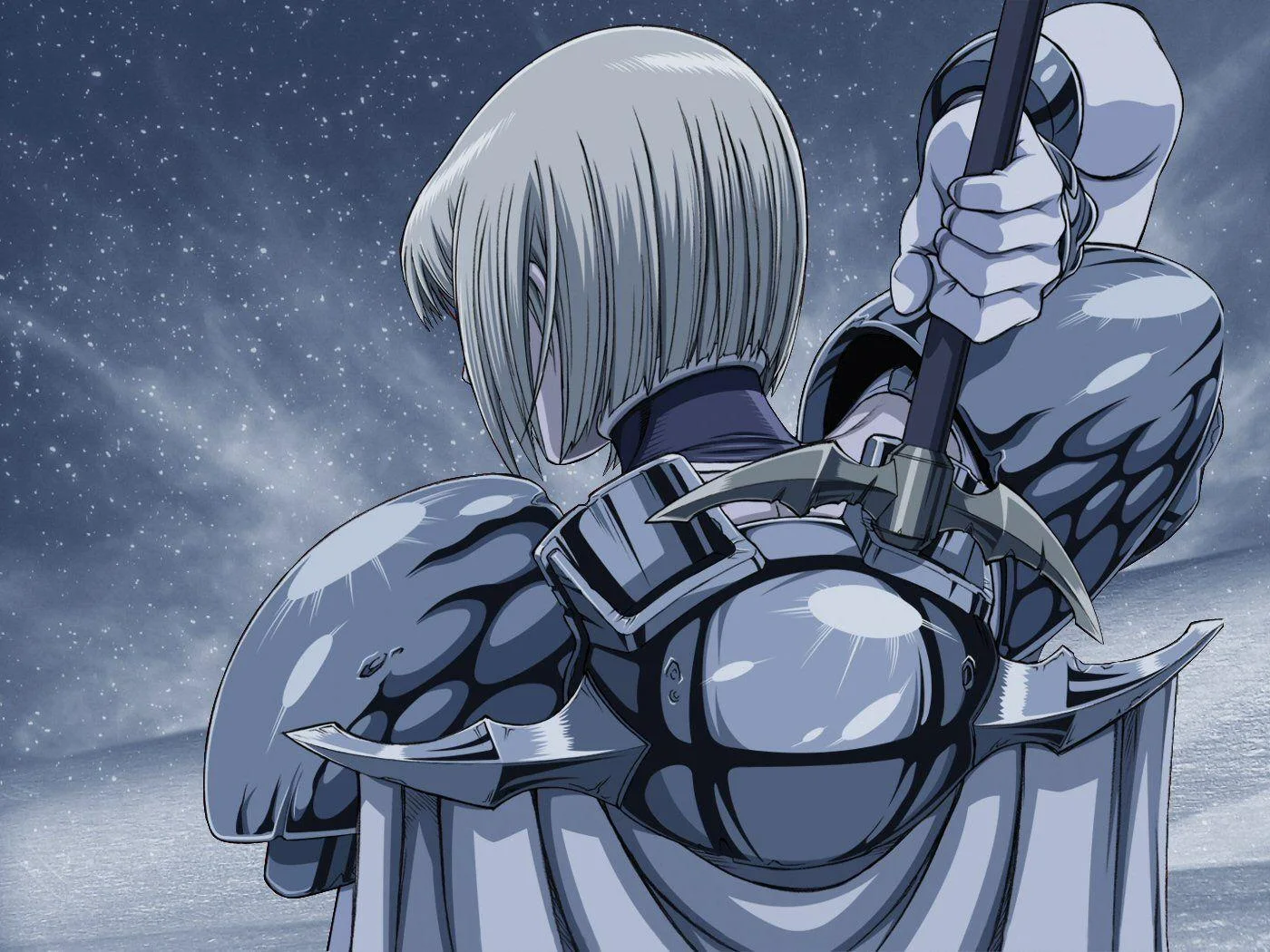
Claymore
A dark fantasy action manga featuring female warriors with monster-killing claymores fighting demonic creatures.
Related Articles
All articles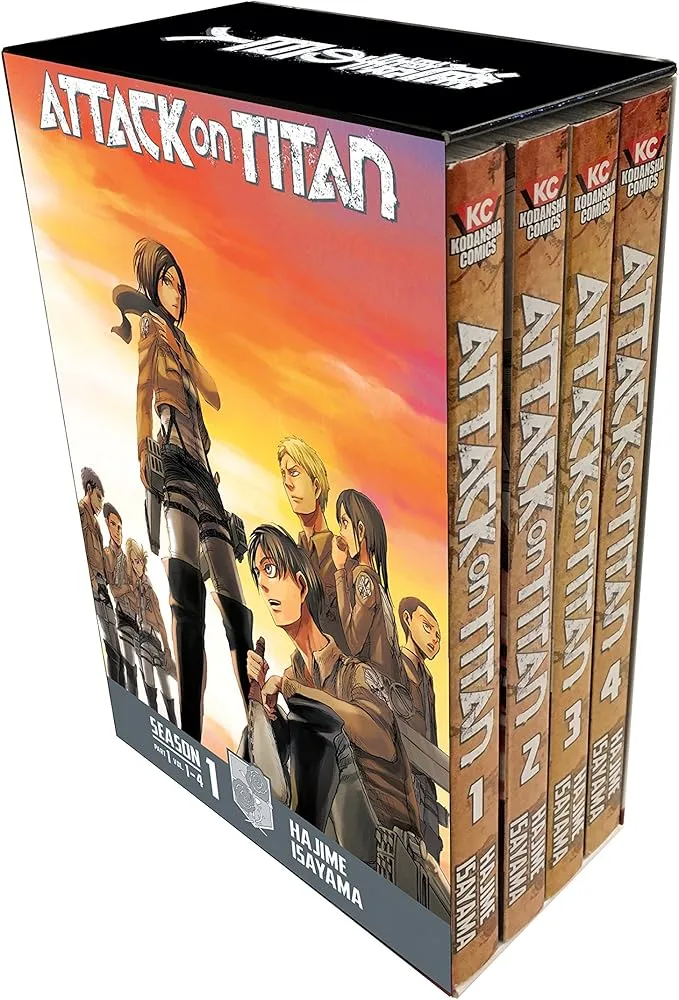
Attack on Titan Box Set Guide 2026: Which to Buy & Order
The complete Attack on Titan manga box set guide for 2026. Every official box set compared, which to buy first, and how to collect the full 34-volume saga.
Should You Read the Attack on Titan Manga After the Anime? (2026)
Finished the Attack on Titan anime? Here's whether the manga is worth reading, how the manga ending differs, and where to start and buy it.
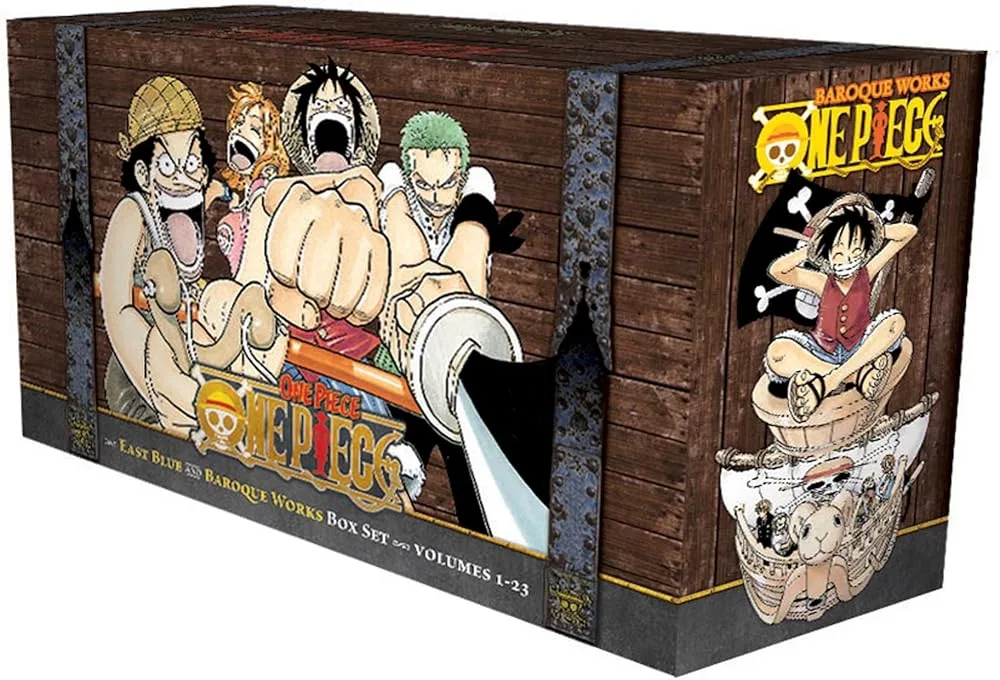
Top 15 Best Action Manga of All Time (2026)
The best action manga ever made, ranked. Explosive battles, legendary fights, and adrenaline-fueled epics — plus the box sets worth collecting.