Fullmetal Alchemist
Brothers Edward and Alphonse Elric attempt human transmutation to resurrect their dead mother, paying a devastating price. Their quest for the Philosopher's Stone to restore their bodies unravels a vast conspiracy at the heart of the Amestrian state.
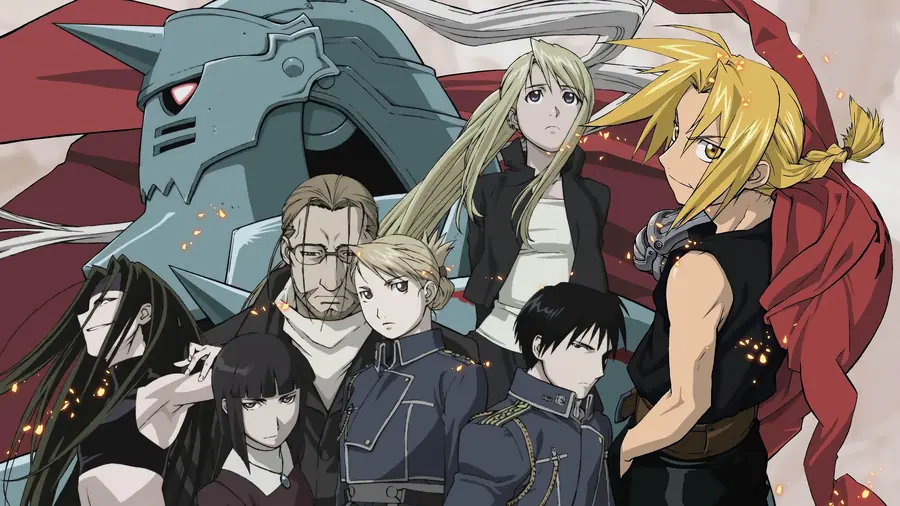
All Fullmetal Alchemist Story Arcs in Order
| # | Arc |
|---|---|
| 1 | Liore & Early Investigations |
| 2 | Laboratory 5 |
| 3 | Ishval & Military Revelations |
| 4 | Rush Valley & Resembool |
| 5 | Briggs & the North |
| 6 | The Promised Day |
A Masterpiece of Storytelling and Art
Fullmetal Alchemist stands as one of manga’s greatest achievements—a series that balances spectacular action with philosophical depth, character development with world-building, and humor with genuine darkness. Created by Hiromu Arakawa, this manga demonstrates that shonen action can achieve literary sophistication while maintaining entertainment value.
The Elric Brothers’ Tragic Quest
The narrative centers on brothers Edward and Alphonse Elric following a catastrophic mistake. Attempting to resurrect their deceased mother through alchemy, they trigger a transmutation circle claiming a terrible price—Edward loses an arm and leg, while Alphonse loses his entire body, his soul bound within an empty suit of armor. This opening tragedy establishes both the series’ central conflict and its thematic foundation: the consequences of human ambition, the bonds between brothers, and the question of whether redemption remains possible after profound failure.
Rather than quick resurrection, the brothers embark on years-long quest seeking the Philosopher’s Stone—a legendary object said to amplify alchemical abilities. However, their journey becomes increasingly complex as they discover political conspiracies, military machinations, and the dark secrets underlying their nation’s foundation.
Main Characters and Their Complex Relationships
Edward Elric - The Ambitious Scientist
Edward represents intellect divorced from wisdom. His drive to solve problems through alchemy created the original tragedy, yet his determination to fix his mistake demonstrates genuine care for his brother. Edward’s growth involves learning that knowledge without ethics becomes destructive, and that human connection matters beyond scientific achievement. His prosthetic limbs represent both his limitations and adaptability.
Alphonse Elric - The Soul in a Shell
Trapped in armor, Alphonse questions his own identity and existence. Despite losing physical form, he retains emotional depth and moral clarity exceeding Edward’s. Alphonse’s character explores what defines human identity—is consciousness sufficient for personhood, or does physical existence matter? His situation forces philosophical confrontation with fundamental questions about existence.
Colonel Roy Mustang - The Ambitious Soldier
Mustang seeks military promotion through capability demonstrations, willing to pursue goals through ethically questionable methods. His character arc involves recognizing how ambition without ethical grounding becomes tyranny. Watching Mustang’s transformation from pragmatic soldier to someone understanding moral limits creates compelling character development.
Riza Hawkeye - The Loyal Companion
Mustang’s lieutenant and close companion, Riza represents how loyalty can transcend blind obedience. Her character demonstrates that supporting others’ goals requires honest communication when those goals become destructive. Riza’s relationship with Mustang evolves from professional to genuinely personal.
Major Alex Louis Armstrong - The Gentle Giant
Despite his intimidating appearance and combat prowess, Armstrong represents kindness and genuine humanity. His enthusiastic appreciation for alchemy’s artistic elements contrasts with characters viewing it purely functionally. Armstrong demonstrates that strength and gentleness need not contradict.
Lust and Gluttony - The Homunculi
Artificial beings created through alchemy embody human flaws externalized. Lust represents desire without restraint, Gluttony represents consumption without satisfaction. These characters explore what aspects of human nature might metastasize into separate entities.
Father/Hohenheim - The Ultimate Antagonist
The series’ primary antagonist embodies the consequences of unchecked ambition and power. Father’s backstory reveals tragedy transformed into tyranny. Understanding Father’s motivation—while remaining morally opposed to his methods—creates villain complexity absent from simpler narratives.
Best Fullmetal Alchemist Arcs
The Early Quest Arc
The brothers’ initial search for the Philosopher’s Stone establishes the narrative’s foundation. This arc introduces supporting characters while establishing the series’ tonal balance between humor and darkness. The early mysteries sustain interest while character relationships develop.
The Military Conspiracy Arc
As the brothers ascend military ranks, they uncover conspiracies suggesting the Philosopher’s Stone quest involves larger conspiracies. This arc transforms the narrative from simple quest into political thriller, adding complexity while increasing stakes.
The Homunculi Revelation Arc
The discovery of artificial beings created to fulfill specific purposes darkens the narrative. The homunculi represent humanity’s flaws externalized—ambition, lust, pride, sloth, wrath, gluttony, and envy. This arc forces characters to confront how human flaws create external threats.
The Tragedy Arc
Featuring devastating character deaths and permanent consequences, this arc demonstrates that the series maintains genuine stakes. Characters cannot simply resurrect through convenient plot devices; losses accumulate with emotional weight. This arc represents the narrative’s darkest point before approaching conclusion.
The Final Confrontation Arc
The ultimate battle against Father and exploration of ultimate truth represents Fullmetal Alchemist’s culmination. Rather than providing easy answers, the conclusion affirms earned sacrifice and meaningful choices. The ending reflects the series’ philosophy—some knowledge comes at terrible cost.
Why Fullmetal Alchemist Achieves Masterpiece Status
Fullmetal Alchemist succeeds through meticulous planning and comprehensive world-building. Unlike series that escalate arbitrarily, Fullmetal Alchemist establishes rules and maintains consistency. Alchemy follows defined principles—equivalent exchange requiring something valuable for magical effects. This systematic approach creates believable magic system.
The series also excels at character development. Rather than static personalities, characters evolve throughout narratives based on experiences and relationships. Major characters receive meaningful arcs, while supporting cast development prevents secondary characters from feeling decorative.
The artwork by Hiromu Arakawa combines spectacular action sequences with detailed environments and expressive character work. Her panel composition guides reader attention effectively, while her character designs communicate personality without excessive exposition. The series demonstrates manga’s artistic potential.
The Philosophy of Fullmetal Alchemist
Fullmetal Alchemist engages serious philosophical questions—what constitutes human identity, whether knowledge justifies its acquisition cost, what responsibility accompanies power. The series references actual alchemical philosophy while creating original concepts. This intellectual engagement elevates the narrative beyond entertainment toward genuine philosophical exploration.
Related Philosophical Action Series
Readers enjoying Fullmetal Alchemist’s philosophical depth often appreciate Jujutsu Kaisen for similar intellectual engagement with supernatural conflict. Vinland Saga explores similar themes of revenge and redemption with historical depth.
Frequently Asked Questions
What is equivalent exchange in fullmetal alchemist? Equivalent exchange represents alchemy’s fundamental principle—to gain something, one must sacrifice something of equal value. This principle drives the narrative’s entire philosophy, establishing that nothing comes free and all choices carry consequences.
How does Edward’s character growth reflect his understanding of alchemy? Edward begins viewing alchemy as tool for achievement without considering human cost. His journey involves learning that knowledge requires wisdom and ethics. His growth reflects series’ broader message that intelligence alone insufficient for righteousness.
What makes the homunculi compelling antagonists? Rather than simple villains, homunculi represent human flaws personified. Understanding their creation and motivation while remaining morally opposed creates nuanced conflict. The homunculi force characters to confront how human weaknesses might manifest as external threats.
How does Fullmetal Alchemist handle the concept of sacrifice? Sacrifice recurs throughout the narrative—characters lose abilities, memories, or loved ones pursuing goals. The series demonstrates that sacrifice often required to address mistakes, and that meaningful gains require genuine loss. The philosophy balances hope with harsh realism.
What is the significance of Edward and Alphonse’s relationship? The brothers’ bond motivates the entire narrative. Their mutual dedication to restoration drives them forward despite obstacles. However, the series explores how relationships can motivate both growth and destructive obsession, forcing characters to question whether their quest justifies its costs.
How does Fullmetal Alchemist address the ethics of knowledge? The series consistently questions whether understanding justifies the methods of acquisition. Characters debate whether forbidden knowledge should remain unknown for society’s protection. The narrative suggests that some truths, once known, cannot be unknown, and wisdom requires accepting this reality.
What role does military structure play in the narrative? The military provides both structure and antagonism. Mustang’s military ambitions create moral conflict as he recognizes how institutions can corrupt individuals. The military represents organized power that requires ethical guidance to serve justice.
How does Fullmetal Alchemist compare to the anime adaptation? The 2003 anime differs significantly from manga, creating original story. The 2009 Fullmetal Alchemist: Brotherhood anime closely follows the manga. Both adaptations offer value, though manga provides the complete original vision.
What makes the series’ ending satisfying? The conclusion affirms earned sacrifice and meaningful choices. Rather than convenience, the ending respects the series’ philosophy that knowledge and power require genuine cost. The resolution feels earned through character development and accumulated consequences.
Should I read Fullmetal Alchemist or watch the anime? Both offer distinct experiences. The manga provides Hiromu Arakawa’s complete vision. The anime adaptations add voice acting and animation enhancing certain moments, though the 2003 anime creates original story. Many fans experience both.
The Legacy of Fullmetal Alchemist
Fullmetal Alchemist demonstrated that shonen manga could achieve literary sophistication while maintaining entertainment. The series influenced countless subsequent works through its proof that action and philosophy need not contradict, that character development can accompany spectacle, and that consequences matter.
For readers seeking narratives combining spectacular action with genuine philosophical engagement and character-driven storytelling, Fullmetal Alchemist remains one of manga’s greatest achievements—a series that argues beautifully that true strength comes not from power alone, but from wisdom, sacrifice, and unshakeable bonds between souls.
Cultural Impact and Legacy
Fullmetal Alchemist is one of the most internationally celebrated shōnen manga of the 2000s and the title that, more than any other property of its era, demonstrated that a major Weekly Shōnen Jump-style action manga could be carried by a female mangaka. Hiromu Arakawa’s authorship across the complete 108-chapter run remains one of the most-cited examples of structural completeness in modern shōnen — every plot thread planted in the early arcs is paid off by the conclusion in volume 27, with no extension into open-ended sequel territory.
The series passed 80 million tankōbon copies in cumulative circulation and won the Shogakukan Manga Award in 2004. Its commercial success has been matched by exceptional critical reception: the series has been included on multiple “best manga of all time” lists, including the New York Times graphic novel rankings, Kirkus Reviews retrospectives, and academic comics studies anthologies. Arakawa’s technical command of action choreography, character design, and political worldbuilding made the series a structural reference point that subsequent Square Enix shōnen properties including Soul Eater and Black Butler would explicitly build on.
The franchise’s anime history is unusual in modern shōnen. The first adaptation by Bones (2003-2004, 51 episodes) aired during the manga’s serialization and diverged substantially from the source material in its second half because the manga had not yet concluded — a creative decision that produced a complete but author-independent anime ending. The second adaptation, Fullmetal Alchemist: Brotherhood (2009-2010, 64 episodes), is widely considered one of the greatest anime adaptations ever produced because it followed Arakawa’s manga faithfully from beginning to end. Brotherhood consistently ranks at the top of “best anime of all time” polls on MyAnimeList, IMDb, and major anime review aggregators.
Publication and Adaptations Update
Fullmetal Alchemist was serialized in Square Enix’s Monthly Shōnen Gangan from August 2001 to June 2010 and is collected in 27 tankōbon volumes. The series is published in English by Viz Media (verified Vol. 1 ASIN 1591169208), in Spanish by Norma Editorial (Spain) and Editorial Vid (Latin America), in French by Kurokawa, in Italian by Planet Manga, and in essentially every major publishing language. Multiple deluxe edition formats are available including the Fullmetal Edition hardcover omnibus from Viz Media (18 volumes) which has become the recommended Western collector’s format.
The franchise has expanded across formats including two animated films (Conqueror of Shamballa 2005 from the original anime continuity and The Sacred Star of Milos 2011 from the Brotherhood continuity), three live-action films directed by Fumihiko Sori (2017, 2022, 2022), light novels by Makoto Inoue, multiple video games on PlayStation 2 and DS, and an extensive merchandise catalog. The 2017 live-action film became one of the highest-grossing Japanese live-action manga adaptations and led to two sequels in 2022 covering the rest of the manga story.
For readers approaching Fullmetal Alchemist for the first time, the recommended starting point is either the manga from volume 1 in tankōbon order, or the Brotherhood anime (which is faithful to the manga). Both are widely available through standard retail channels and streaming services. The original 2003 anime is also available but should be approached as an alternate-universe reinterpretation rather than a faithful adaptation, since the manga had not yet concluded at the time of its production.
Fullmetal Alchemist Arc Guides
Liore & Early Investigations
Edward and Alphonse journey across Amestris pursuing rumors and leads on the Philosopher's Stone, seeking the legendary object that might restore their bodies. In the desert city of Liore, they expose a supposed prophet as a charlatan using alchemy to manipulate the population. The brothers encounter Scar, an Ishvalan survivor who systematically murders State Alchemists in acts of vengeance for the massacre of his people. This arc establishes the series' core mystery and introduces the complexity of assigning guilt in a morally gray world.
Laboratory 5
Edward and Alphonse infiltrate the secret Laboratory 5 facility beneath a prison, uncovering the horrifying truth that the legendary Philosopher's Stone is manufactured from human lives—that the stone represents the compressed souls and bodies of hundreds of people killed for alchemical experimentation. This revelation transforms the brothers' quest from seeking a magical artifact into recognizing they pursue a technology built on genocide. The discovery of experimental subjects and prior transmutation failures forces them to confront the human cost of their obsessive search for restoration.
Ishval & Military Revelations
The Ishvalan genocide's dark history is comprehensively revealed—a state-sanctioned massacre of an entire culture conducted under military orders. Roy Mustang's complicity in the atrocities becomes undeniable as he confronts personal guilt. The homunculi's true nature begins to surface as characters discover that artificial beings created through alchemy operate as agents within the military structure. The arc transforms the narrative toward recognition that the entire military has been compromised by conspiracy.
Rush Valley & Resembool
The narrative shifts toward a more introspective and character-focused tone as Edward and Alphonse reach the automail mechanic hub of Rush Valley. Edward's deepening relationship with Winry, the brothers' childhood friend and Edward's automail technician, provides emotional grounding and genuine warmth. Yet the interlude darkens as revelations about their father, Van Hohenheim, emerge—suggesting that their father's mysterious past connects directly to the conspiracy threatening their world. Family bonds deepen even as the scope of conspiracy expands.
Briggs & the North
Edward and Alphonse reach Fort Briggs in Amestris's frozen north, where General Olivier Armstrong commands elite soldiers facing hostile external threats. The brothers discover a Homunculus imprisoned beneath the fortress and uncover military installations designed for purposes beyond external defense. The scope of Father's conspiracy—to transform Amestris itself into a giant transmutation circle—becomes devastatingly clear. The military's institutional structure serves as the conspiracy's enabler rather than obstacle to it.
The Promised Day
On the day of a solar eclipse, all factions converge on Central Command where Father executes his final plan—opening a gate to God itself and attempting to achieve godhood by consuming his nation's population. The brothers and their allies battle simultaneously on multiple fronts, sacrificing everything to stop an entity that transcends conventional understanding. The series' philosophy of equivalent exchange reaches its ultimate expression as characters pay terrible costs for victory and knowledge. The conclusion affirms that earned sacrifice means more than unearned salvation.
Fullmetal Alchemist Merchandise
Read manga free with Amazon Prime
30-day free trial: free shipping, Prime Reading, Kindle, Prime Video and more.
Affiliate link. 30-day free trial for new members. Then $14.99/month — cancel anytime.
FAQ: Fullmetal Alchemist
You May Also Like
All manga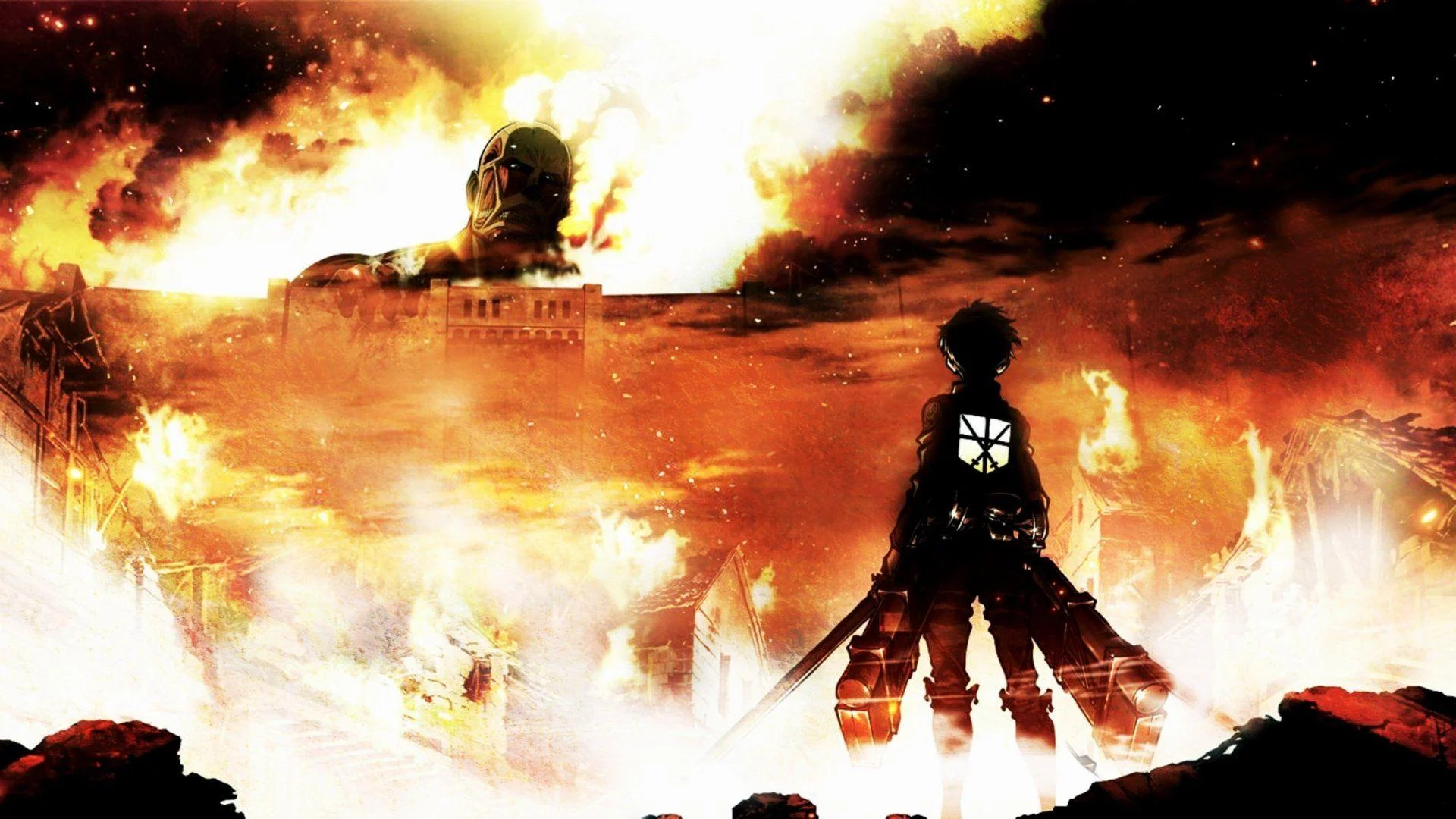
Attack on Titan
In a world where humanity cowers behind towering walls to survive the man-eating giants known as Titans, Eren Yeager vows revenge after watching his mother devoured. His journey from victim to soldier to world-changing radical reshapes everything he once fought to protect.

Hunter x Hunter
Twelve-year-old Gon Freecss sets out to become a Hunter — an elite licensed professional — in order to find his father Ging, the world's greatest Hunter. His journey through the gruelling Hunter Exam and beyond exposes a world far darker and more complex than he imagined.
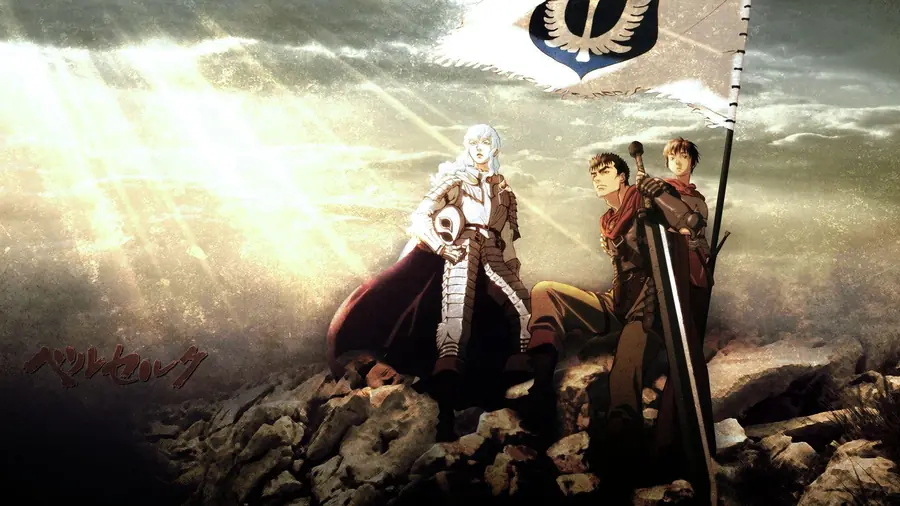
Berserk
A dark and brutal medieval fantasy following Guts on his journey of revenge, featuring complex characters and stunning artwork.
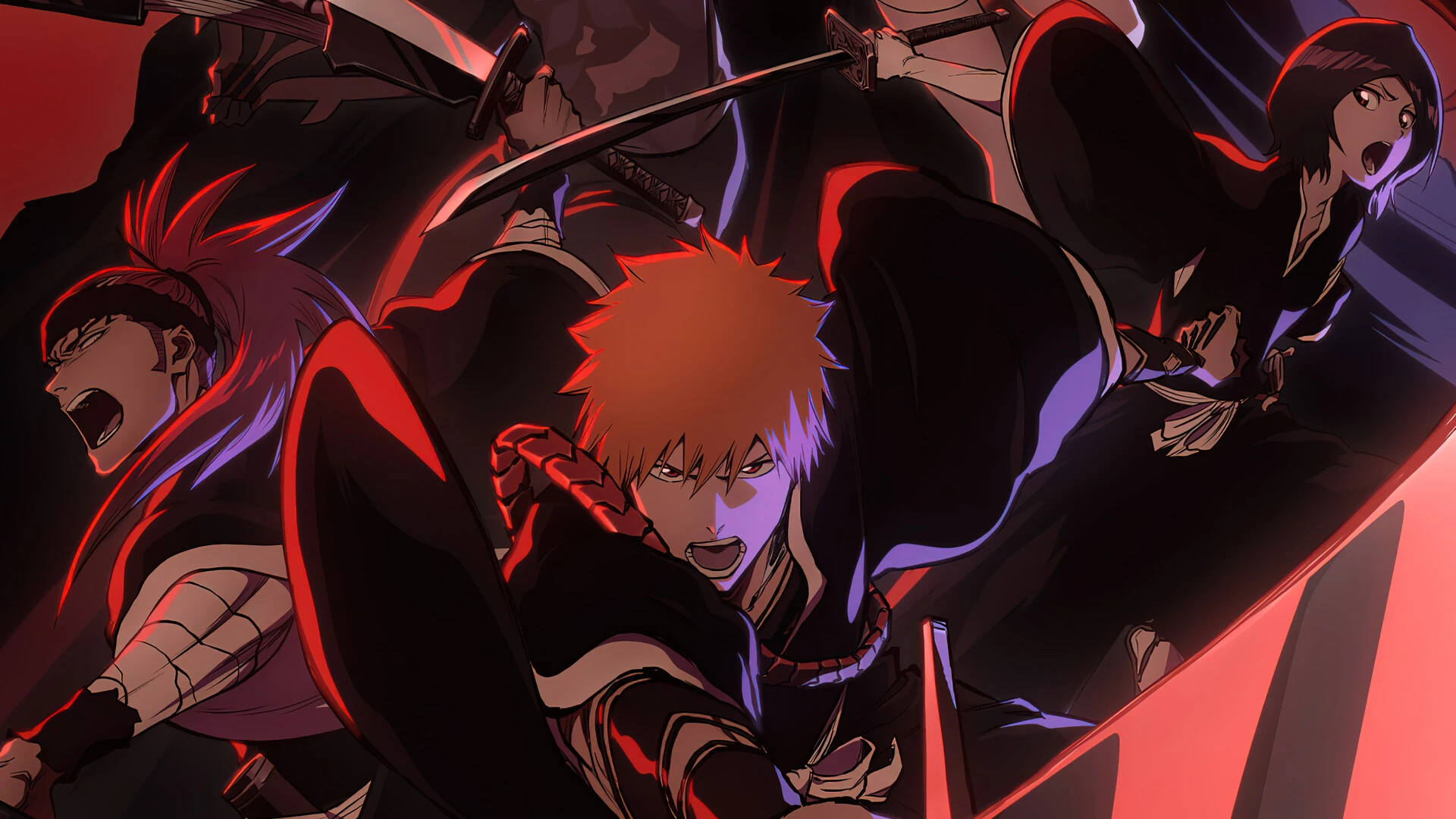
Bleach
The story of Ichigo Kurosaki, a teenager who gains the powers of a Soul Reaper — a death personification — and uses them to protect the living and the dead from evil spirits called Hollows, while uncovering a vast conspiracy that threatens both the human world and the afterlife.