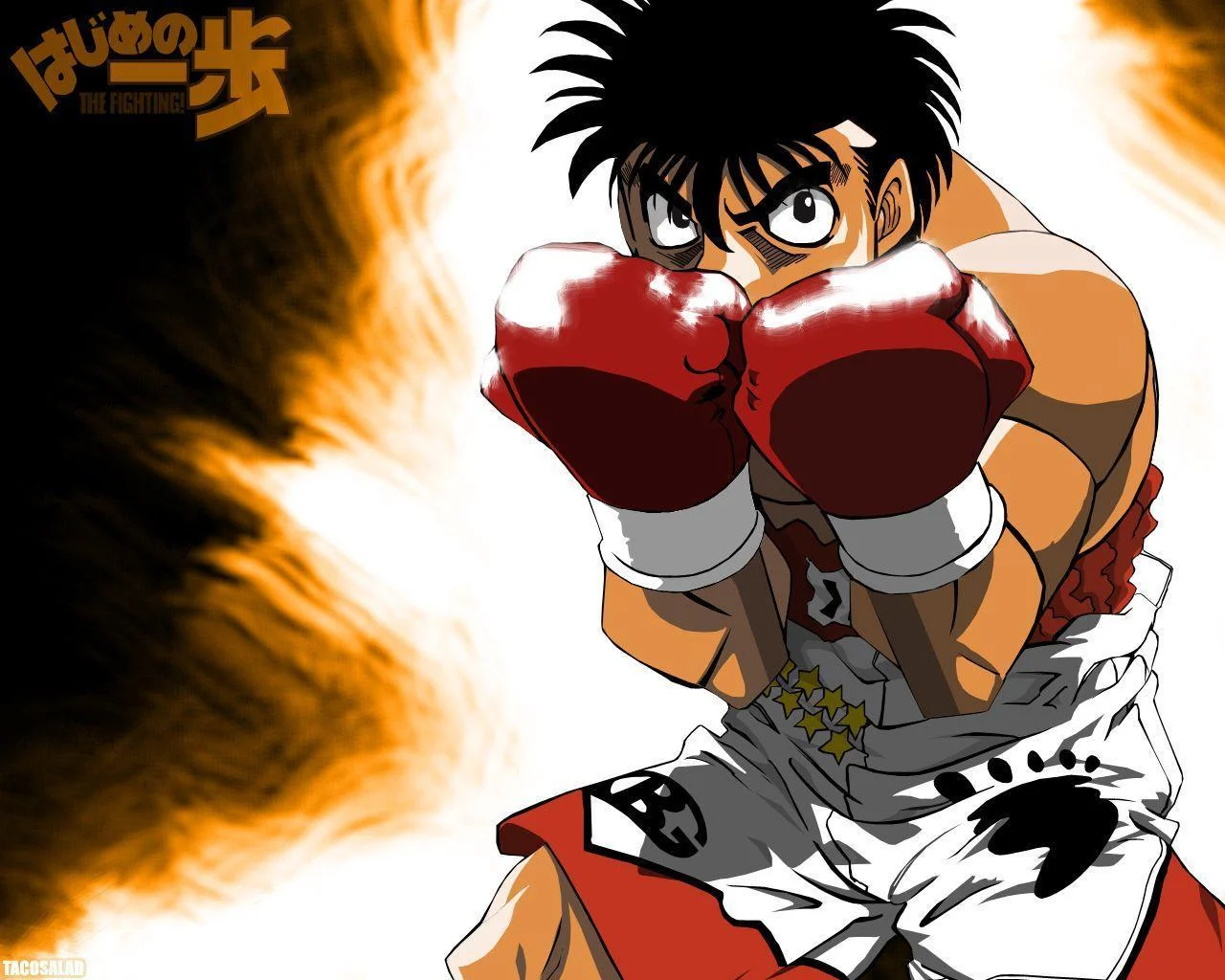
Hajime no Ippo
A long-running shonen boxing sports manga following Makunouchi Ippo's journey from bullied teenager toward professional boxer, exploring boxing's technical depths and life-changing personal transformation
All Hajime no Ippo Story Arcs in Order
| # | Arc |
|---|---|
| 1 | Debut/Training Arc |
| 2 | Rookie King Arc |
| 3 | Featherweight Arc |
| 4 | Mashiba Arc |
| 5 | Void Arc |
| 6 | Rocky Battle Arc |
| 7 | World Stage Arc |
The Boxer Who Couldn’t Take a Punch
Hajime no Ippo is boxing stripped to its philosophical core. George Morikawa’s masterpiece transforms a simple premise—a bullied teenager discovers boxing—into an exploration of self-discovery, effort versus natural talent, and what it truly means to become excellent at something. The series spans over 140 volumes and more than three decades of real publication time, yet it never loses sight of what makes boxing compelling: the human body pushed to absolute limits, the psychology of competition, and the profound personal transformation that comes from pursuing something genuinely difficult.
What makes Ippo transcendent is that it’s not really about boxing at all. It’s about how ordinary people discover dignity, purpose, and strength through honest effort. Every punch lands with visceral weight because every punch represents Ippo’s attempt to escape his past, to prove something about himself, to grow into someone worthy of respect. The manga refuses easy victories and cheap inspirations; when Ippo loses, he loses badly, and those losses cut deeper than any triumph.
Series Overview: The Long Road to Mastery
Hajime no Ippo began serialization in 1989 in Weekly Shonen Jump, eventually moving to various Jump publications before finding its long-term home at Kodansha. Creator George Morikawa, himself a boxing enthusiast, brought meticulous technical knowledge to every fight sequence. The series distinguished itself immediately through refusal to embrace shonen clichés—there’s no hidden power to unlock, no secret technique waiting for the protagonist, no destiny written in the stars. Instead, Ippo succeeds through grinding effort, accumulated experience, and continuous technical refinement.
Compared to contemporaries like Slam Dunk or Rurouni Kenshin, Hajime no Ippo prioritizes boxing realism over fantastical action. The manga exists in a world where medical considerations matter, where weight classes represent genuine limitations, where fighters age and deteriorate despite dedication. This commitment to authenticity creates stakes that feel genuinely earned rather than manufactured. Ippo’s victories matter because losing was always possible.
The series’ longevity stems from Morikawa’s structure: rather than building toward a single championship climax, he constructs multiple arcs, each complete yet feeding naturally into the next. The Rookie King Tournament, the featherweight championship pursuit, the Mashiba conflict, the Void Arc’s existential crisis, the Rocky Battle comeback—each arc explores different facets of boxing and personal development. Even at 140+ volumes, the series maintains remarkable narrative momentum because the underlying questions evolve rather than repeat.
Story and Themes: Boxing as Self-Becoming
The narrative architecture rests upon a deceptively simple foundation: Ippo discovers boxing not through dreams of championship glory but through wanting to stop being bullied. This grounded motivation creates psychological authenticity that most shonen protagonists never achieve. Ippo doesn’t dream of being the strongest; he dreams of not being weak. That distinction matters profoundly.
The central thematic concern involves boxing as transformation. Morikawa repeatedly explores how commitment to rigorous discipline reshapes personality, self-conception, and social relationships. Ippo enters boxing as a quiet, insecure teenager; boxing becomes the vehicle through which he develops confidence, dignity, and self-respect. The manga suggests that genuine personal growth requires confronting genuine difficulty—no shortcuts, no substitute.
Running throughout is the tension between natural talent and cultivated skill. Ippo possesses no exceptional athleticism; his frame is small for his weight class, his natural hand speed is merely adequate, his boxing IQ develops through hard experience rather than intuitive understanding. Yet through dedicated training, accumulated knowledge, and psychological resilience, he competes at the highest levels. Rivals like Miyata possess superior technical ability yet face Ippo’s superior work ethic and psychological toughness. The series refuses to privilege either talent or effort absolutely—excellence emerges through both working in concert.
The Void Arc represents the series’ thematic apex, moving beyond surface-level boxing narrative toward existential questions. After years of victories and growth, Ippo confronts inexplicable doubt: he’s successful by every objective measure, yet success feels hollow. The arc explores that competition ultimately proves unsustainable as a life foundation—boxers age, reflexes deteriorate, physical recovery slows. Genuine meaning emerges only when boxing becomes vehicle for personal development rather than standing alone as life’s purpose.
Characters and Relationships: The Pressure Fighter vs. The Perfectionist
Makunouchi Ippo’s defining characteristic is his pressure fighting style: aggressive pursuit, powerful combinations, and psychological determination. This approach reflects his personality—direct, earnest, lacking pretense. His boxing mimics his character: no flourishes, no wasted motion, simple efficiency executed with complete commitment.
His rival Ichiro Miyata represents the philosophical opposite: technically precise, orthodox, strategically sophisticated. Their rivalry proves one of manga’s most elegant explorations of stylistic opposition. Neither approach proves universally superior; matchups determine outcomes. Ippo’s pressure overwhelms some opponents while leaving him vulnerable against Miyata’s superior distance management. Their relationship transcends antagonism, becoming mutual respect between practitioners advancing the sport through different methodologies.
Coach Genji Kamogawa functions as philosophical center—the mentor who demands excellence through uncomfortable growth. His strict training methods initially challenge Ippo, yet recognition emerges that discomfort produces genuine development. Kamogawa’s legacy involves multiple champions shaped through his gym; his character suggests that exceptional coaching requires understanding individual psychology while maintaining consistent standards.
The gym community—Takamura, Aoki, Kimura—creates support structure enabling sustained effort. Particularly Takamura’s mentorship combines technical guidance with philosophical perspective. Unlike mentors who offer easy encouragement, Takamura challenges Ippo to recognize his limitations while pushing toward growth. Their friendship, anchored in mutual boxing respect, provides emotional foundation sustaining Ippo through inevitable setbacks.
Secondary rivalries carry equal weight. Sendo Takeshi (Naniwa Tiger) represents the challenger constantly improving, pushing Ippo toward continued development. Date Eiji’s OPBF championship possession creates concrete goal while demonstrating that Ippo remains several steps below genuine championship contention. Later arcs introduce international opponents like Volg Zangief, expanding the competitive landscape beyond domestic Japanese boxing.
Kumi Mashiba introduces romantic complication without ever reducing the narrative to simple love story. Her relationship with Ippo creates personal stakes alongside professional conflicts—his ongoing rivalry with her brother Ryo Mashiba gains emotional resonance through genuine personal connection.
Art Style and Boxing Mechanics: Anatomy as Character
Morikawa’s visual approach revolutionized sports manga. Every punch sequence involves meticulous anatomical accuracy—body rotation, weight transfer, foot positioning receive equivalent emphasis to impact. Fight choreography unfolds with genuine spatial logic; readers can actually understand why certain combinations work, how distance management determines effectiveness, why positioning matters.
The manga’s approach to depicting pain and physical damage creates genuine stakes. Unlike shonen spectacle where injuries require miraculous recovery, Hajime no Ippo treats boxing’s physical toll seriously. Low-blow damage accumulates; concussions carry neurological consequences; overtraining produces real deterioration. This commitment to consequence makes victories feel genuine rather than narrative formality.
Morikawa’s character expressions communicate psychology with remarkable economy. A fighter’s face in close-up reveals confidence, doubt, determination, resignation. Ippo’s eyes during moments of crisis or breakthrough carry profound emotional weight. The manga demonstrates that boxing success involves psychological warfare as much as technical execution—the boxer able to maintain composure and determination often outlasts the more technically gifted opponent.
Panel composition emphasizes psychological states through spatial arrangement. Dominant fighters occupy larger panel space; desperate boxers appear compressed, crowded. Timing in panel progression creates pacing that mirrors actual boxing rhythm. Morikawa rarely employs excessive visual effects or dramatic backgrounds; the focus remains relentlessly on human bodies, human effort, human will.
Legacy and Influence: Redefining Sports Manga
Hajime no Ippo fundamentally altered sports manga expectations. Pre-Ippo, series like Slam Dunk gained success through shonen tropes applied to sports contexts. Morikawa proved that rigorous attention to actual sport mechanics combined with psychological authenticity could sustain narrative across decades. The series established that sports manga need not sacrifice storytelling for spectacle; in fact, rigorous grounding enhances rather than diminishes dramatic impact.
The manga’s influence extends beyond boxing narratives. Series like Haikyuu, Blue Lock, and Jujutsu Kaisen inherited Ippo’s approach to combining technical realism with emotional authenticity. The emphasis on effort, continuous development, and psychological resilience became foundational for successful modern shonen series.
Readers seeking similar narratives should explore Slam Dunk for different sports context with equal character focus, Ashita no Nadeshiko for female-focused sports drama, or Blue Lock for contemporary sports manga evolution. International readers frequently cite Hajime no Ippo as gateway to manga fandom because the universal themes transcend cultural specificity—everyone understands struggle, improvement, and self-doubt.
The anime adaptations, while incomplete, remain highly regarded. Madhouse’s production across three seasons captures the manga’s tone and boxing choreography remarkably well, though the manga’s visual sophistication inevitably surpasses animation quality. The anime’s incompleteness paradoxically serves the manga, as ongoing serialization means fans must return to source material to continue the story.
Frequently Asked Questions
Is Hajime no Ippo finished?
No—the series remains ongoing as of 2026. George Morikawa continues serialization in Weekly Champion magazine, with no announced conclusion date. The series’ indefinite continuation reflects its thematic foundation: genuine boxing practitioners pursue excellence perpetually rather than seeking final completion. Over 140 volumes have been published, with translations continuing in English through Kodansha Comics.
How many volumes will the series eventually have?
Unknown. Morikawa has never announced a target completion point. The series’ structure permits indefinite continuation—new opponents emerge, new challenges arise, character development continues naturally. Some fans speculate completion may coincide with Ippo’s retirement, yet even that timing remains unconfirmed. The manga prioritizes narrative authenticity over predetermined length.
Is there a complete anime adaptation?
Partially. Madhouse produced three seasons (75 episodes total) adapting roughly the first 50+ volumes. The anime concludes mid-story with no definite endpoint, leaving substantial manga content unadapted. No announcement regarding continuation exists. Fans typically recommend reading manga for complete story access, as the animation quality, while respectable, cannot capture Morikawa’s visual sophistication.
Is Hajime no Ippo worth reading in 2026?
Absolutely. The series’ themes—pursuing excellence through effort, confronting self-doubt, finding dignity through commitment—remain timelessly relevant. The boxing itself never becomes dated because Morikawa emphasizes fundamental technique over trendy applications. The character relationships feel genuine rather than manipulative. Unlike series requiring completion to appreciate, Hajime no Ippo rewards reading at any point in its serialization; early arcs remain compelling regardless of ongoing continuation.
Where can I read Hajime no Ippo?
English translations are published by Kodansha Comics in both digital and physical formats. The series is widely available through major retailers including Amazon, bookstores, and digital platforms including Kindle and ComiXology. Japanese language scans circulate online, though official translation quality is superior. The anime streams on various platforms including Netflix in different regions. For most accessible entry, Kodansha’s official English translations provide optimal reading experience.
Publication and Adaptations
George Morikawa launched Hajime no Ippo in Kodansha’s Weekly Shōnen Magazine in October 1989, and the series remains in active serialization as of 2025, making it one of the longest-running active manga in Japanese publishing history. The compiled tankōbon edition reached 142 volumes by mid-2025, with chapter count exceeding 1,460. Total worldwide circulation surpassed 100 million copies in 2018, joining the elite tier of manga to reach the 100-million milestone, and continued growing in subsequent years. The series has not been licensed for English print release in its entirety—Kodansha USA released only volumes 1-4 before discontinuing the line—making digital fan translations the primary route for international readers, despite Kodansha making selected volumes available through ComiXology and Kindle in recent years.
The Madhouse anime adaptation produced three television series and three theatrical specials between 2000 and 2014. The original Hajime no Ippo (Fighting Spirit, 2000-2002) ran 75 episodes adapting through the early Japan featherweight title bouts. Hajime no Ippo: New Challenger (2009) covered 26 episodes spanning the Sendō rematch through the OPBF defenses. Hajime no Ippo: Rising (2013-2014) provided a final 25 episodes. The Mashiba vs. Kimura special (2003) and Champion Road OVA (2003) supplemented the first season. Despite the manga’s continuation, no further anime adaptation has been announced as of 2025, leaving the anime over 100 volumes behind the manga’s current state.
The franchise expanded into video games with multiple PlayStation, Wii, and PlayStation 3 titles, most notably Hajime no Ippo: The Fighting! for Wii (2007) which sold over 200,000 copies domestically. A live-action television drama starring Yuta Hiraoka aired in 2012-2013 across two seasons, focusing on the early manga arcs. The series received the 1991 Kodansha Manga Award in the shōnen category and has appeared regularly in Japanese magazine reader polls for favorite long-running series.
Cultural Impact and Legacy
Hajime no Ippo is widely regarded as the most respected boxing manga ever produced and one of the defining sports manga of all time. The series has substantially elevated public interest in professional boxing in Japan, with multiple real-world Japanese boxers including Naoya Inoue and Ryōta Murata citing the series as a primary inspiration for taking up the sport. Naoya Inoue has appeared in promotional collaborations with Kodansha tied to Hajime no Ippo milestones. Several real Japanese boxing trainers and gym owners have publicly identified the manga’s depiction of Kamogawa Gym as influencing their own training philosophies.
George Morikawa’s commitment to technical accuracy is unusual within sports manga. The author maintains relationships with active and retired Japanese boxers, attends professional bouts regularly, and has trained personally to understand the techniques he depicts. This commitment shows in the manga’s depiction of training routines, defensive techniques, and tactical adjustments that frequently match real professional boxing instruction. The series has been used informally by some Japanese amateur boxing coaches as supplementary teaching material for younger students.
Frequently Asked Questions
Is Hajime no Ippo finished? No. The series remains in active serialization in Weekly Shōnen Magazine as of 2025, with George Morikawa continuing to produce new chapters after over 35 years of publication.
How many volumes are there? The compiled manga reached 142 tankōbon volumes by mid-2025, with the count continuing to grow at approximately 3-4 volumes per year.
Will the anime continue? No new anime adaptation has been announced as of 2025. Madhouse last produced animation in 2014, leaving the anime over 100 volumes behind the manga’s current state. Fan campaigns have repeatedly requested continuation.
Is an English translation available? Only volumes 1-4 received English print release through Kodansha USA before the line was discontinued. Selected digital chapters appear on ComiXology and Kindle. Most international readers rely on fan translations.
What is the recommended reading order? Start with volume 1 of the manga or the original 2000 anime series. Both follow the same starting point. Read or watch in publication order without skipping arcs.
Hajime no Ippo Arc Guides
Debut/Training Arc
Ippo discovers boxing through Kamogawa Gym, transforming from bullied teenager toward determined boxer while developing fundamental techniques and understanding boxing's philosophical foundation.
Chapters 1-65Rookie King Arc
Ippo competes in the Rookie King Tournament pursuing the championship while encountering powerful opponents whose diverse boxing styles teach him that boxing encompasses infinite variation and tactical complexity.
Chapters 66-185Featherweight Arc
Ippo pursues professional boxing championship in the featherweight division, encountering technically superior opponents requiring deeper understanding of boxing's psychological and tactical dimensions.
Chapters 186-315Mashiba Arc
Ippo confronts Ryo Mashiba, a devastating southpaw fighter employing dangerous low-blow techniques, forcing Ippo toward recognizing that boxing success involves not merely technical mastery but ethical commitment and physical integrity.
Chapters 316-415Void Arc
Ippo experiences competitive plateau where victories prove increasingly elusive and motivations become unclear, forcing existential confrontation regarding his boxing purpose and personal identity beyond competition.
Chapters 416-555Rocky Battle Arc
Ippo pursues comeback toward championship aspirations, confronting a new generation of powerful fighters while rediscovering his boxing purpose and genuine motivation beneath competitive ambition.
Chapters 556-695World Stage Arc
Ippo pursues international competition exploring world championship possibilities while confronting that boxing encompasses global perspective requiring understanding opponents from diverse backgrounds and fighting philosophies.
Chapters 696-currentAnime Adaptation
Full guideHajime no Ippo Merchandise
Read manga free with Amazon Prime
30-day free trial: free shipping, Prime Reading, Kindle, Prime Video and more.
Affiliate link. 30-day free trial for new members. Then $14.99/month — cancel anytime.
FAQ: Hajime no Ippo
You May Also Like
All manga
A Silent Voice
A poignant standalone drama by Yoshitoki Oima following Shoya Ishida, a former bully who seeks atonement by reconnecting with Shoko Nishimiya, the deaf classmate he tormented in elementary school. The series explores guilt, redemption, communication and the difficult path toward forgiveness.
Blue Box
An ongoing shonen sports romance manga by Kouji Miura about a badminton player and his crush, a basketball team ace, who unexpectedly begin living together while pursuing their athletic dreams.
Blue Lock
A revolutionary sports manga about soccer that redefines the sport through individual genius and tactical brilliance.
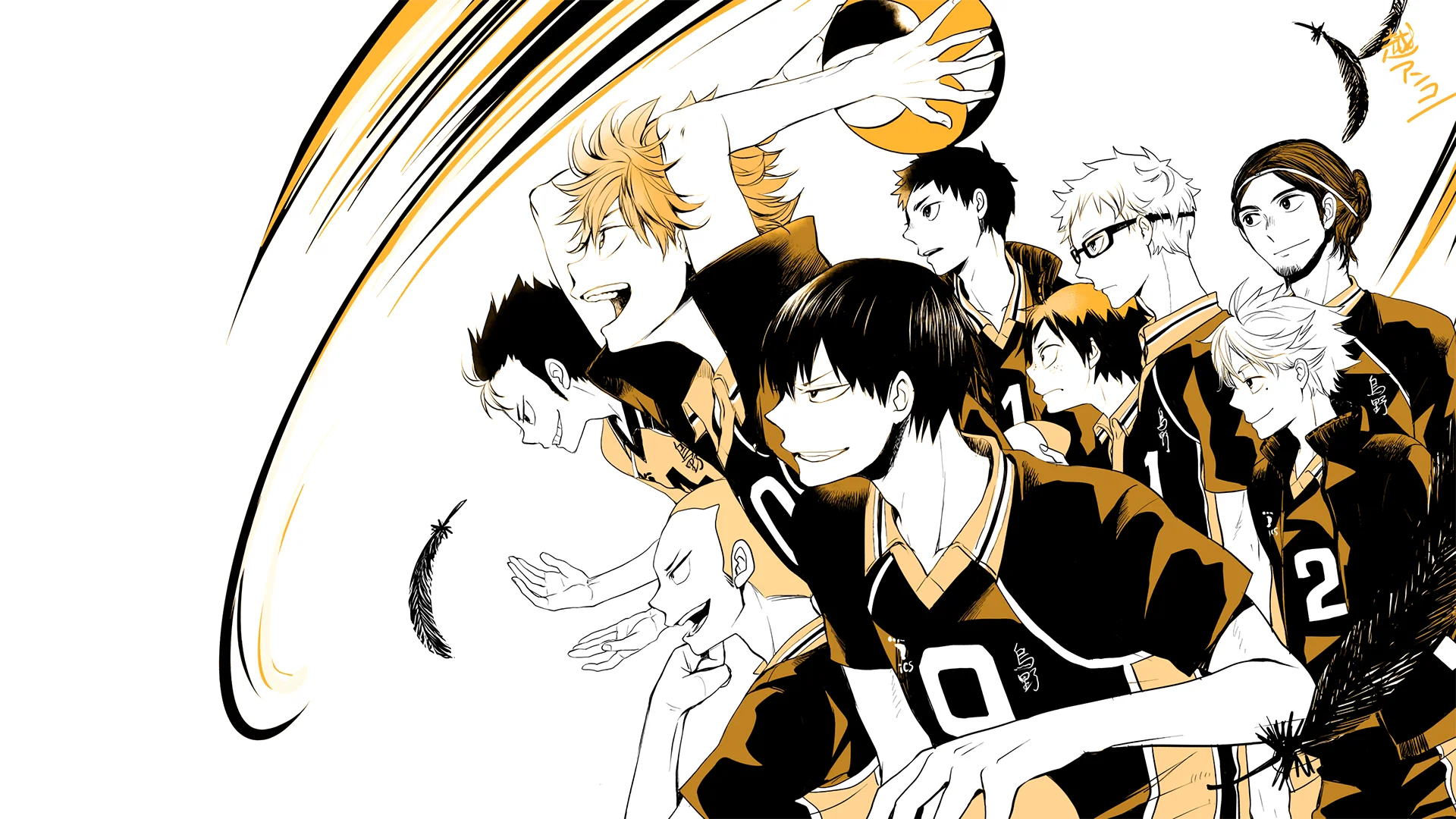
Haikyu!!
A completed shonen sports manga following Karasuno High School's journey to become a volleyball powerhouse through teamwork, determination, and rivalry
Related Articles
All articles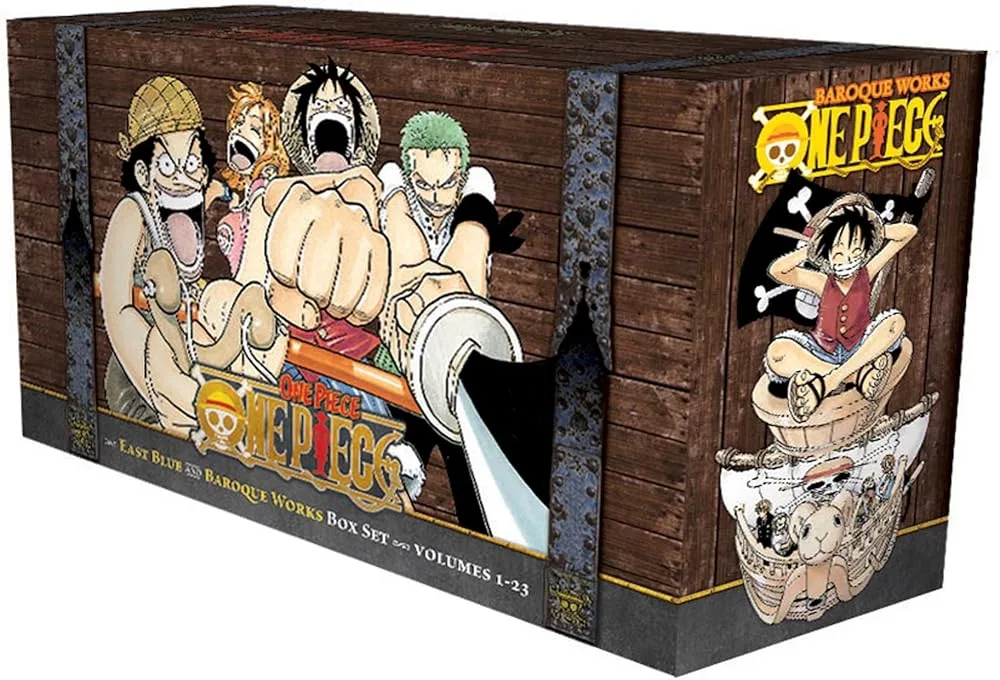
Top 16 Best Shonen Manga of All Time (2026)
The best shonen manga ever made, ranked. Legendary battle epics, underdog heroes, and the series that defined the genre — plus the box sets worth owning.

Best Manga by Genre: The Ultimate 2026 Reading Guide (Shonen, Shojo, Seinen, Josei)
Comprehensive manga genre guide featuring best series by demographic and genre. From action shonen to mature josei, find your next read organized by taste and preference.
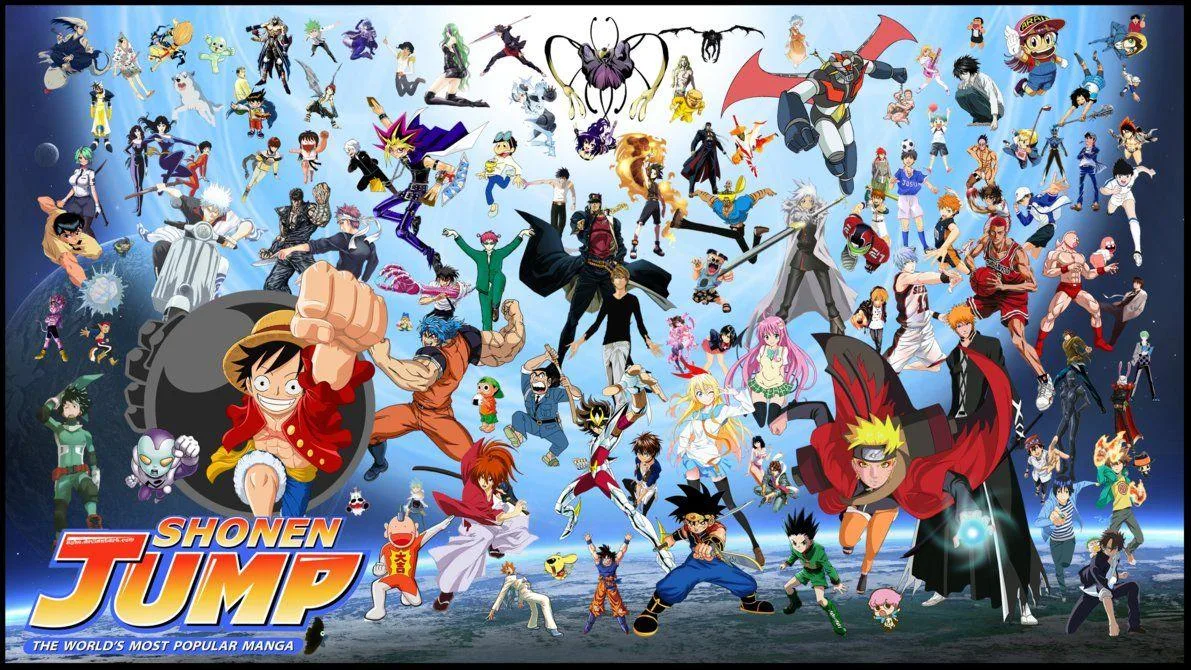
Weekly Shonen Jump Explained: How the World's Biggest Manga Magazine Works
Everything you need to know about Weekly Shonen Jump — history, ranking system, how manga gets serialized and canceled, famous series, and how to read it in English.