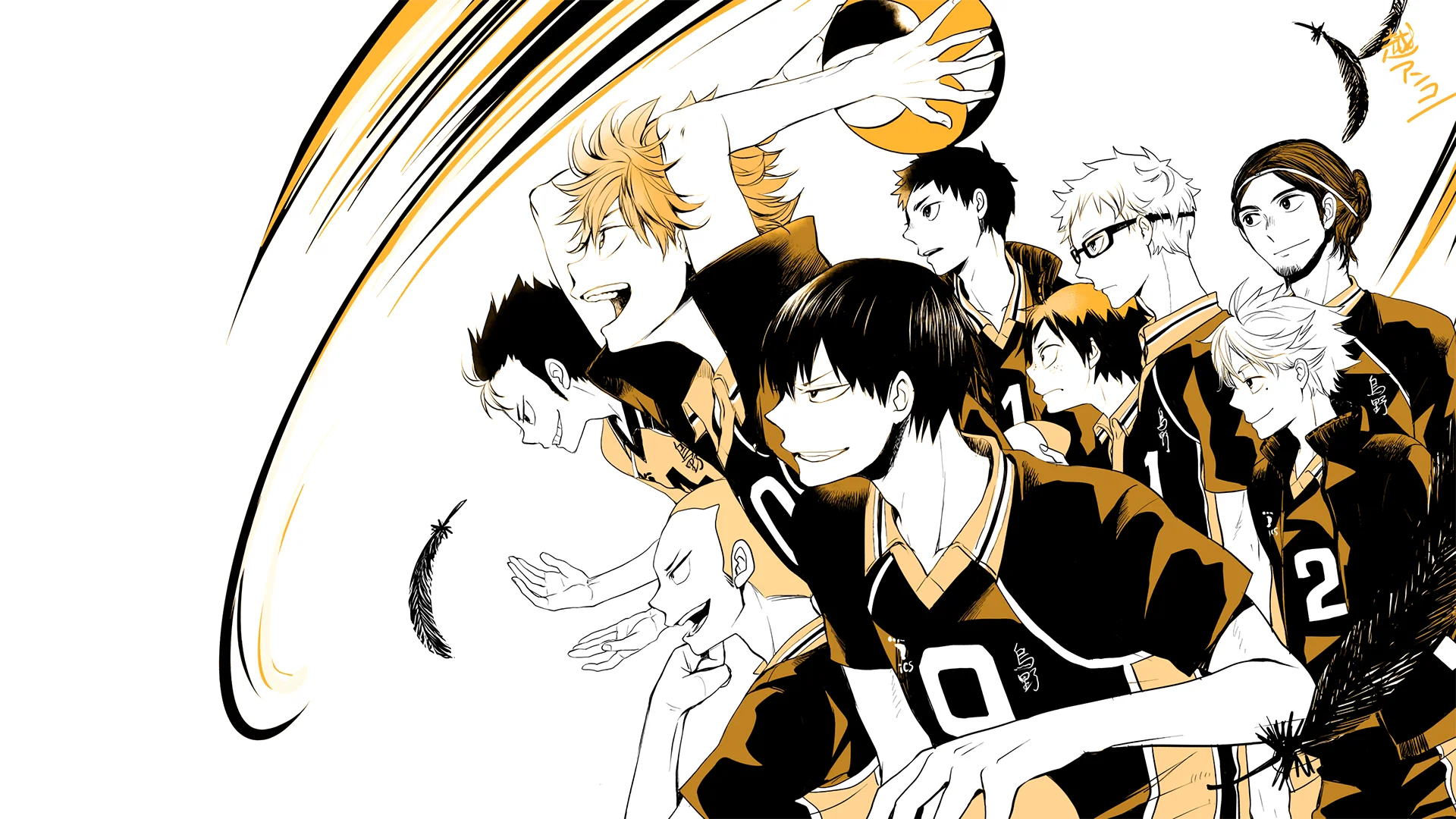
Haikyu!!
A completed shonen sports manga following Karasuno High School's journey to become a volleyball powerhouse through teamwork, determination, and rivalry
All Haikyu!! Story Arcs in Order
| # | Arc |
|---|---|
| 1 | Karasuno Revival Arc |
| 2 | Interhigh Tournament Arc |
| 3 | Spring High Preliminary Arc |
| 4 | Nationals Arc |
| 5 | Final Arc |
The Manga That Made Volleyball Sacred
Haikyu!! by Haruichi Furudate ran in Weekly Shonen Jump from 2012 to 2020, producing 45 volumes of some of the most kinetic, emotionally resonant sports manga ever published. In a genre crowded with underdog narratives, Furudate achieved something rare: he made volleyball — a sport largely absent from manga shelves — feel as mythic and urgent as any martial art, and he did it by refusing to treat opponents as mere obstacles. Every team Karasuno faces has a soul, a history, and a reason to win. That generosity of spirit is what elevates Haikyu!! from a good sports manga into a genuinely great one.
The series arrives at the perfect intersection of technical authenticity and emotional hyperbole. Furudate spent years researching the sport, and the result is a manga where every serve, receive, and quick attack is drawn with anatomical precision — yet those same movements become the medium for conveying pure, almost overwhelming feeling. A single volleyball hanging at the peak of its arc can carry the weight of three years of training, every failure, every sunrise practice session. That fusion is Haikyu!!‘s fundamental achievement.
The Gymnasium as Sacred Space
Karasuno High School is a mid-tier school in Miyagi Prefecture, once feared across the region but now a forgotten name — the “fallen crows.” When Shoyo Hinata arrives as a first-year student, desperate to play the sport that obsessed him since childhood, he finds a club in quiet decline. What follows is not simply a sporting revival but a reconstruction of identity, both individual and collective. The gymnasium becomes the series’ sacred space, the place where characters discover who they are under pressure.
The world of Haikyu!! extends well beyond Karasuno’s walls. Furudate populates the volleyball landscape with teams that feel like fully realized civilizations — Nekoma’s patient, cat-like defensive philosophy; Fukurodani’s explosive ace-driven chaos; Shiratorizawa’s uncompromising power; Aoba Josai’s polished technical mastery. Each school has distinct aesthetics, strategies, and emotional identities. Matches between these teams feel like clashes of worldview, not merely athletic contests, and that richness transforms even losses into meaningful narrative events.
Main Characters
Shoyo Hinata — The Little Giant in the Making
Shoyo Hinata is one of the most effective shonen protagonists in recent memory precisely because his defining trait is not power but speed and instinct. At 162 centimeters, he should be invisible in elite volleyball, yet his explosive vertical jump and preternatural court sense make him a constant, terrifying threat. His dream is simple and enormous in equal measure: he wants to become like the “Little Giant,” the small player he once watched dominate an entire national tournament on a tiny television screen. That childhood vision anchors everything he does.
What makes Hinata remarkable is the quality of his attention. He watches, absorbs, and learns at a rate that consistently startles the people around him. But he is not a cool genius — he is impulsive, enthusiastic to the point of embarrassment, and frequently overwhelmed by his own excitement. Furudate uses those traits to generate enormous warmth. When Hinata succeeds, it never feels inevitable; every spike, every diving receive is hard-won, and readers feel each one in their chests. His growth across 45 volumes is painstaking, credible, and deeply satisfying.
Tobio Kageyama — The King Learns to Serve
Tobio Kageyama arrives at Karasuno carrying a reputation and a wound. Nicknamed the “King of the Court” during middle school, he was a setter of extraordinary ability whose perfectionism and emotional rigidity drove his own teammates to request he be benched. That rejection reforged him. At Karasuno, paired with Hinata’s erratic genius, Kageyama discovers that the greatest setting is not about precision for its own sake but about making every toss a gift perfectly shaped for the person receiving it.
His rivalry with Aoba Josai’s Toru Oikawa is among the most carefully written competitive relationships in sports manga. Oikawa represents the path not taken — exhaustive technical refinement without the corresponding emotional transformation Kageyama undergoes. Their dynamic never collapses into simple hero-versus-villain framing; Oikawa is brilliant, principled, and entirely worthy of respect. That complexity forces Kageyama — and the reader — to understand that there are multiple valid ways to pursue excellence, and that choosing one does not diminish the others.
Kei Tsukishima — The Skeptic Who Found His Reason
Tsukishima is the series’ most intellectually interesting character arc. He joins volleyball without passion, viewing enthusiasm as a kind of vulnerability, and his sarcasm provides early comic relief. But Furudate is patient with him. The gradual discovery of Tsukishima’s genuine engagement with blocking — the chess-match quality of reading an opponent’s approach, positioning, and timing — becomes one of the series’ most quietly moving threads.
His breakthrough moment, a single blocks sequence in a high-stakes match, is celebrated by fans as one of the manga’s emotional peaks. It works because it has been built over dozens of chapters of seemingly detached observation. The scene earns its intensity by demonstrating that even reluctant participants can find the thing that lights them up from the inside, and that finding it changes everything.
The Supporting Cast: Bench, Rivals, and Rivals Who Become More
Haikyu!!‘s supporting ensemble is unusually deep for the genre. Captain Daichi Sawamura functions as moral bedrock — steady, responsible, occasionally terrifying — while vice-captain and setter Sugawara Koshi demonstrates how much meaning a player can find in a reduced role when the team’s success becomes personal. Libero Yu Nishinoya (technically from Nekoma in the groups data, but Karasuno’s Noya is a separate character) brings anarchic energy and the series’ most spectacular defensive sequences.
Beyond Karasuno, Furudate gives rivals full interior lives. Nekoma’s Kenma Kozume — quiet, analytical, phone-addicted off the court — becomes one of the manga’s most beloved characters despite appearing infrequently. Fukurodani’s Bokuto Koutaro is a force of nature whose emotional volatility makes him simultaneously hilarious and heartbreaking. These characters exist to play against Karasuno, yes, but they also exist for themselves, pursuing their own dreams through the same sacred sport.
Themes: Losing, Growing, and the Dignity of the Opponent
The central philosophical contribution of Haikyu!! is its insistence that defeat is not failure but information. When Karasuno loses to Shiratorizawa in the Interhigh, it would be easy to frame that loss as temporary setback on the road to inevitable triumph. Furudate refuses that framing. The loss is real, it hurts, and the lessons it teaches are specific and hard-won. The series argues consistently that meaningful growth requires accepting limitation honestly rather than treating every obstacle as a stepping stone to be cleared.
This philosophy extends to how the manga depicts opponents. No team in Haikyu!! is a simple villain. Even Ushijima Wakatoshi of Shiratorizawa — physically dominant, seemingly cold, philosophically opposed to Karasuno’s approach — is drawn with deep respect for his convictions and his dedication. Furudate seems to genuinely believe that everyone who has committed years of their life to mastering a skill deserves to be seen clearly, and that seeing them clearly is itself a form of honor. It is a moral stance that elevates the entire series.
Why This Manga Stands Apart
Sports manga has a long and distinguished history in Japan, but Haikyu!! occupies a specific niche within it: it is the series most interested in the interior weather of athletic competition. Furudate draws internal states — the moment before a serve, the half-second of recognition when a block is set — with the same density of attention he brings to external action. Readers do not just watch characters play volleyball; they inhabit the cognitive and emotional experience of playing it.
The series is also notable for its visual intelligence. Furudate’s panel composition during matches shifts registers fluidly: tight close-ups of hands and eyes, sprawling double-page spreads of full-court action, abstract sequences where physical bodies dissolve into pure geometric force. These shifts are never arbitrary; they map the interior experience of the game onto the external event, so that the two become inseparable. It is technically demanding work, executed with remarkable consistency across eight years of weekly publication.
Publication History
Haikyu!! began serialization in Weekly Shonen Jump on February 20, 2012, and concluded on July 20, 2020, spanning 402 chapters collected into 45 tankōbon volumes. Haruichi Furudate won the Shonen Jump manga award multiple times during the run, and the series consistently ranked among the top titles in the magazine’s reader surveys. The anime adaptation by Production I.G ran across four seasons from 2014 to 2020, introducing the series to international audiences and generating substantial crossover popularity. As of 2026, the franchise remains active through merchandise, theatrical films covering the manga’s final arc, and ongoing international readership. The manga’s decision to complete the Karasuno story in high school and then flash forward to professional careers was widely praised as a narratively courageous choice.
Related Series
Readers who love Haikyu!! for its sports craft and ensemble depth may also enjoy the biographical articles on its creator — see Haruichi Furudate for background on his approach to research and character design. For manga exploring similar themes of teamwork and athletic growth, the site also covers Eyeshield 21 and Kuroko’s Basketball, both of which share Haikyu!!‘s interest in using sport as a lens for examining human character under pressure.
Frequently Asked Questions
What is Haikyu!! about? Haikyu!! follows Shoyo Hinata, a determined middle schooler who dreams of becoming a volleyball player despite being too short for the sport. He joins Karasuno High School’s volleyball club and forms an unexpected partnership with setter Tobio Kageyama, working together to resurrect the team’s fallen reputation and pursue nationals glory. The series chronicles the team’s growth through fierce rivalries, devastating losses, and the discovery that volleyball is fundamentally about understanding your teammates and opponents deeply.
How many volumes does Haikyu!! have and is it complete? Haikyu!! has 45 volumes and is fully completed. The manga ran in Weekly Shonen Jump from 2012 to 2020, concluding with 402 chapters collected into tankōbon volumes. The story provides a complete narrative arc from Karasuno’s revival through the national tournament, including a flash-forward to professional volleyball careers, offering full closure and satisfaction.
Does Haikyu!! have an anime adaptation? Yes, Production I.G produced four seasons of anime from 2014 to 2020, covering substantial portions of the manga’s narrative. The anime is highly praised for exceptional visual choreography during volleyball matches and faithful adaptation of the series’ emotional core. A theatrical film covering the manga’s final arc was also produced, introducing the series to even wider international audiences. The manga provides additional detail and secondary character development beyond what the anime shows.
What makes Haikyu!! different from other sports manga? Haikyu!! distinguishes itself through its meticulous attention to the psychological and emotional interior of athletic competition. Rather than treating opponents as obstacles to overcome, every team receives full character development, distinct philosophies, and genuine respect. The series argues that defeat is information rather than failure, exploring how meaningful growth requires accepting limitations honestly. Technically, the manga demonstrates exceptional visual intelligence in depicting both internal emotional states and external athletic action.
Is Haikyu!! appropriate for all readers? Haikyu!! is a sports manga best suited for readers who enjoy character-driven narratives with ensemble casts and emotional depth. While generally appropriate for teenage readers and up, it contains occasional violence within sports context (aggressive blocks, collisions) and intense emotional situations. The series rewards patient readers willing to invest in understanding multiple teams and perspectives. No explicit content concerns make it accessible to most audiences. You can purchase Haikyu!! on Amazon to experience this beloved completed series.
Haikyu!! Arc Guides
Karasuno Revival Arc
Shoyo Hinata joins Karasuno's volleyball club and forms an unlikely partnership with setter Tobio Kageyama, reviving the team's dormant dreams of volleyball glory.
Chapters 1-45Interhigh Tournament Arc
Karasuno competes in the prestigious Interhigh Tournament, facing formidable opponents including the powerhouse Shiratorizawa Academy while building team strength and experiencing crucial defeat.
Chapters 46-152Spring High Preliminary Arc
Karasuno faces intense competition in the Spring High Tournament preliminaries, confronting talented teams including Fukurodani Academy while pushing beyond their previous limitations.
Chapters 153-247Nationals Arc
Karasuno advances to the National Tournament and faces Japan's elite volleyball programs in an epic competition determining the nation's volleyball champions.
Chapters 248-339Final Arc
Hinata and Kageyama pursue professional volleyball careers, with Hinata eventually reaching international competition and achieving his ultimate volleyball aspirations.
Chapters 340-402Anime Adaptation
Full guideFAQ: Haikyu!!
You May Also Like
All manga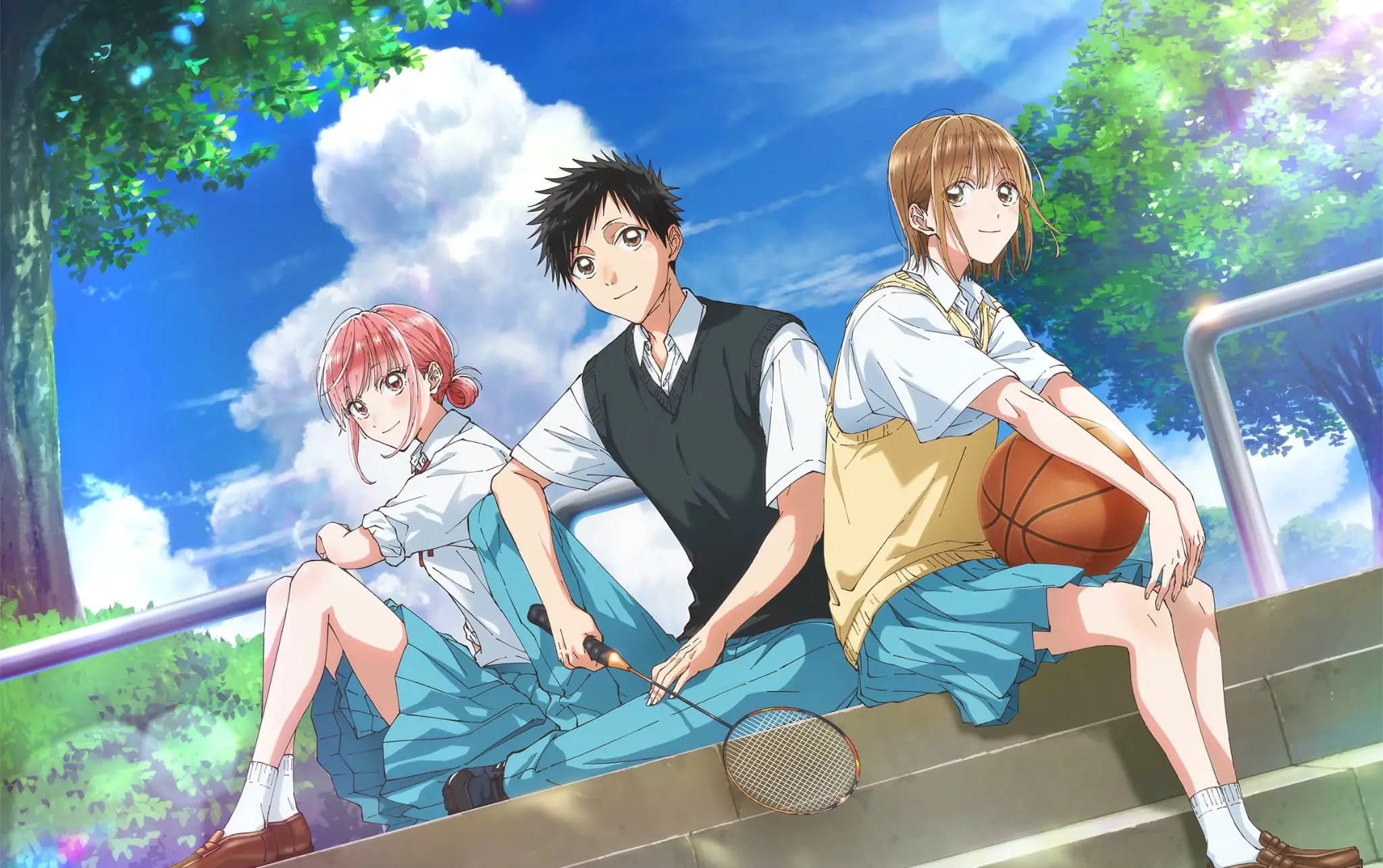
Blue Box
An ongoing shonen sports romance manga by Kouji Miura about a badminton player and his crush, a basketball team ace, who unexpectedly begin living together while pursuing their athletic dreams.
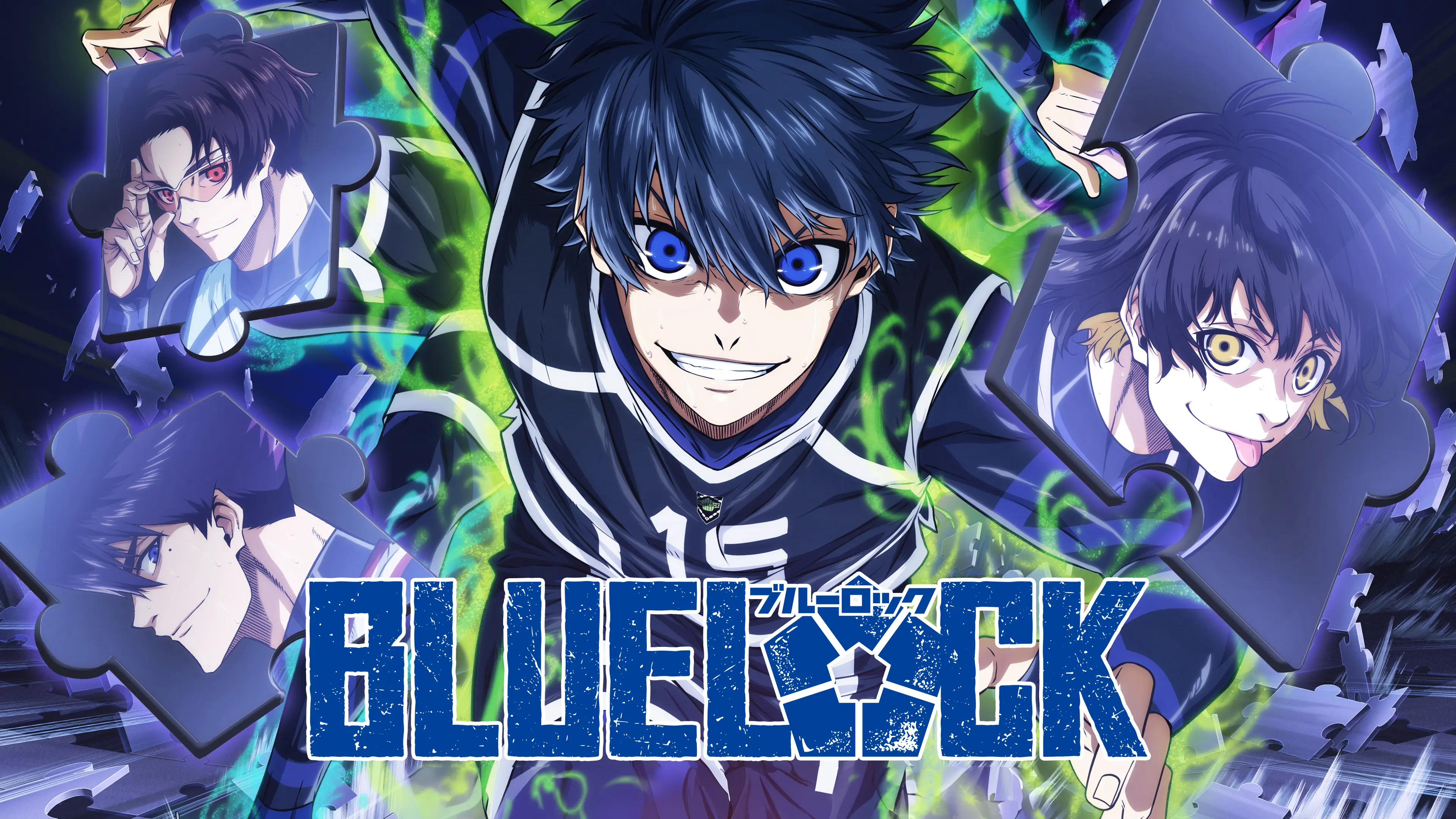
Blue Lock
A revolutionary sports manga about soccer that redefines the sport through individual genius and tactical brilliance.
Hajime no Ippo
A long-running shonen boxing sports manga following Makunouchi Ippo's journey from bullied teenager toward professional boxer, exploring boxing's technical depths and life-changing personal transformation
Slam Dunk
A revolutionary sports manga about a delinquent who discovers basketball and transforms himself through the sport.
Related Articles
All articles
Best Manga by Genre: The Ultimate 2026 Reading Guide (Shonen, Shojo, Seinen, Josei)
Comprehensive manga genre guide featuring best series by demographic and genre. From action shonen to mature josei, find your next read organized by taste and preference.
Weekly Shonen Jump Explained: How the World's Biggest Manga Magazine Works
Everything you need to know about Weekly Shonen Jump — history, ranking system, how manga gets serialized and canceled, famous series, and how to read it in English.
Best Sports Manga of All Time: Top 15 Series You Need to Read
The greatest sports manga ever created, from Haikyu!! to Slam Dunk to Medalist. Essential series that use athletic competition to explore the deepest human themes.