20th Century Boys
A sprawling mystery-thriller manga spanning decades, following childhood friends confronting a prophecy they created.
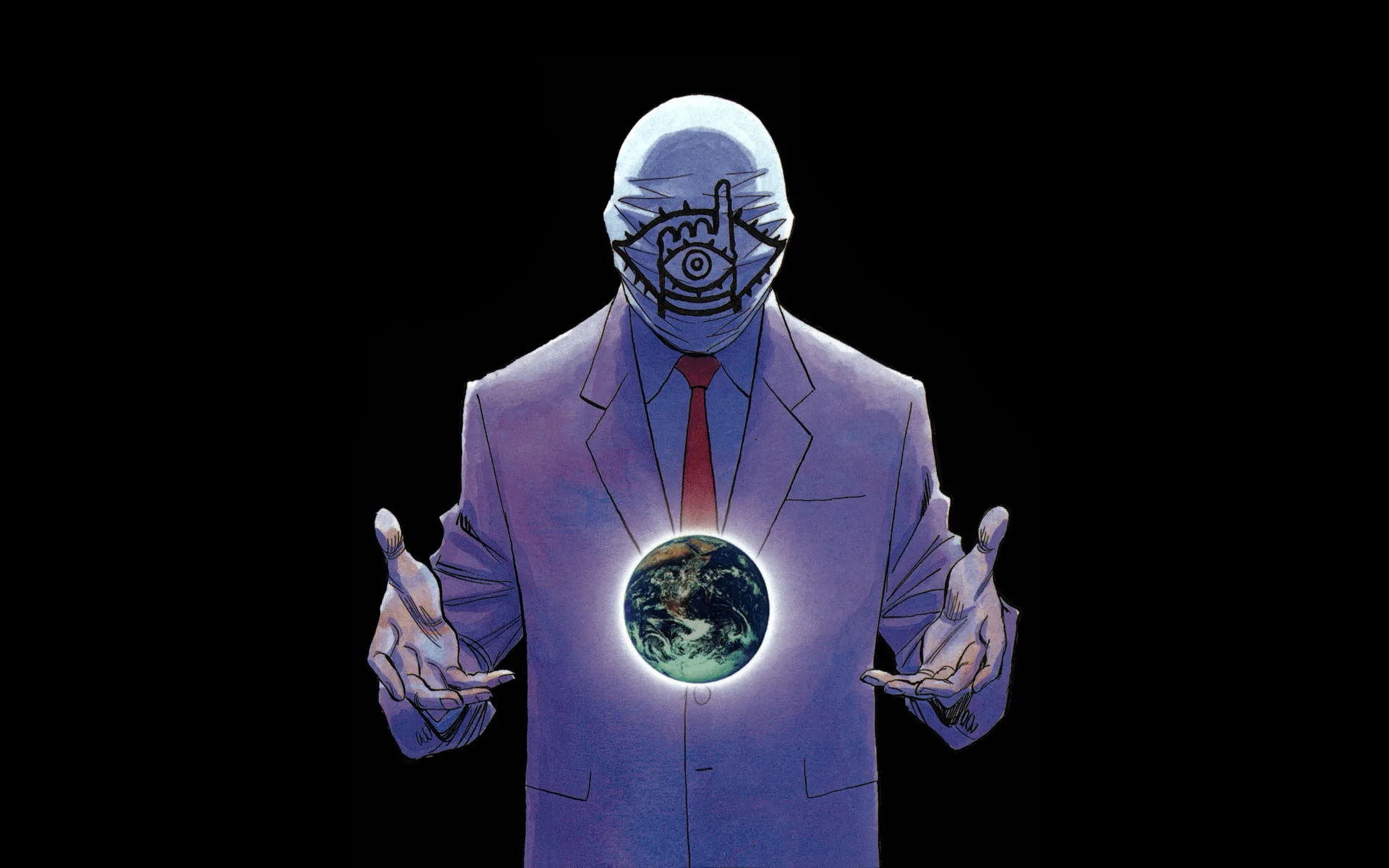
All 20th Century Boys Story Arcs in Order
| # | Arc |
|---|---|
| 1 | The Book of Prophecy Arc |
| 2 | The Friends Rise Arc |
| 3 | Bloody New Year's Eve Arc |
| 4 | The New Book of Prophecy Arc |
| 5 | Final Confrontation Arc |
The Prophecy That Became Real
20th Century Boys is one of the greatest achievements in manga’s long history, and that claim is not an exaggeration. Created by Naoki Urasawa and serialized in Shogakukan’s Big Comic Spirits from 1999 to 2006 across twenty-two volumes (with a two-volume sequel, 21st Century Boys, completing the story), it belongs to a small group of works that demonstrate the full range of what sequential art can do as a narrative form. It is a mystery, a thriller, a social portrait of postwar Japan, a study of how childhood shapes adult identity, and one of the most emotionally resonant explorations of friendship and memory that any medium has produced.
The series won the Eisner Award for Best U.S. Edition of International Material in 2009, among numerous other honors, and its reputation has only grown in the decades since completion. New readers approaching it now will find it as urgent and surprising as readers who followed it in weekly installments did — perhaps more so, because the series can now be read with full knowledge of how masterfully everything connects. Urasawa planted his foundations years before readers could see what he was building on them, and retrospective reading reveals a structural achievement that ranks among the most sophisticated in the medium.
The Premise
In the late 1960s, a group of children in a suburban Tokyo neighborhood built a hideout in an empty lot, as children do. Inside it, they created what they called the “Book of Prophecy” — a written account of a fantasy scenario in which a secret society of evil scientists planned to destroy the world, complete with a hero who would rise to stop them. The book was a game, a collective imagination project born from their shared enthusiasm for science fiction and tokusatsu television. Nobody expected it to matter.
Decades later, in the late 1990s, those same children have grown into ordinary adults scattered across different lives. Kenji Endo manages a convenience store, caring for his infant niece after his sister’s disappearance. Then strange things begin happening: a series of mysterious deaths, a new religious cult rapidly gaining influence and political power, a figure in a strange mask called “Friend” appearing at the center of both. And the cult’s apocalyptic timeline, and the symbol it uses as its emblem, match the Book of Prophecy exactly.
Someone has been using that childhood fantasy as a script — building a real criminal organization around it, recruiting followers, funding technology, planning attacks that correspond to what a group of children wrote down as the outline of a story they never meant to tell. Kenji and the scattered remnants of the old gang must reassemble across decades and continents to understand who Friend is, why they chose this particular fiction as their manifesto, and whether the final pages of the prophecy — the ones describing how the world ends — can be stopped in time.
Main Characters
Kenji Endo
Kenji is one of manga’s most compelling protagonists precisely because he is not heroic in any conventional sense. He is a middle-aged convenience store manager who inherited his parents’ shop and his sister’s child and has spent most of his adult life making modest, responsible, unglamorous choices. His most dramatic gesture of rebellion was wanting to be in a band as a teenager. He is ordinary in ways that the story treats with complete seriousness, because the series understands that ordinary people confronting extraordinary circumstances is a more interesting subject than exceptional people doing it.
His arc is about the weight of responsibility: for his niece, for the friends of his childhood who trusted the world they shared, for a prophecy that has turned into something that kills people. He doesn’t become physically powerful or tactically brilliant. He becomes someone who keeps showing up because he is the only person who remembers what the Book of Prophecy actually said, and because he cannot stop himself from caring about what happens to the people in his orbit. That obstinate, unglamorous care is the emotional engine of the entire series.
Friend
The identity of Friend — the masked figure at the center of everything — is the central mystery of 20th Century Boys and one of the most carefully constructed reveals in manga history. To say more would be to diminish the experience of reading. What can be said is that Urasawa builds the mystery with extraordinary patience and fairness: every clue is present, the solution is logical, and the emotional weight of the revelation extends far beyond the puzzle’s solution into something genuinely affecting about friendship, resentment, and what happens to children who feel invisible.
Friend is not a villain in the conventional sense. The series invests enough in understanding what made Friend what they became that the reader arrives at the reveal with complicated feelings — not absolution, but comprehension. That complexity is one of the achievements that distinguishes 20th Century Boys from lesser mystery narratives.
Otcho, Maruo, and the Others
The childhood gang that formed around Kenji’s hideout scattered into very different adult lives. Otcho, the most competent and physically capable of the group, disappeared entirely and must be found before his skills and knowledge can be brought to bear. Maruo became a professional family man whose encounter with the cult in its early stages gives the narrative crucial early information. Yukiji is a former police officer with a personal stake in the mystery that runs deep beneath her professional exterior. Each character carries a piece of the picture that only makes sense alongside the others, and their reunions — across years and continents and very different life trajectories — are among the most emotionally resonant sequences in the series.
The teenage girl Kanna, Kenji’s niece, becomes increasingly central as the narrative moves forward in time and the perspective shifts toward the next generation — the children who must live in the world the original gang failed to fully protect. Her arc provides the series with one of its most important structural moves: the question of what the next generation owes the one that failed them, and how inherited burdens are carried forward or laid down.
Story and Themes
The central thematic inquiry of 20th Century Boys is deceptively straightforward: what do childhood stories do to us when we’re no longer children? The gang’s Book of Prophecy was innocent — the ordinary creative product of children who loved science fiction and wanted to feel like the heroes of their own narrative. The horror of the series emerges from what happens when someone takes that innocence seriously, strips it of its innocence, and builds a real ideology and a real organizational structure around it. The things that felt heroic in the imagination of a ten-year-old are genuinely terrifying when implemented with resources and intention by an adult.
This connects to the series’ sustained meditation on nostalgia. Urasawa is deeply interested in the Japan that his characters grew up in — the 1960s and 70s, the era of high economic growth and cultural transformation, when tokusatsu heroes and rock music from the West shaped the imaginations of a generation. The series depicts that period with affection and specificity, but it is not naive about it. Nostalgia in 20th Century Boys is shown to be a powerful and manipulable force: something that can be weaponized, that can be used to make people feel that they are participating in the mythology of their own childhood when they are actually being exploited. Friend’s power, ultimately, is nostalgia exploited at scale.
The friendship at the center of the story is not idealized. These are people who drifted apart, who made choices they’re not proud of, who let years pass without contact. Their reunion is not a comfortable homecoming. It is complicated, sometimes painful, marked by the distance of time and the differences that distance produces. But the series argues — without sentimental shortcut — that the bonds formed in childhood around shared imagination and genuine play have a particular kind of durability. They cannot be simply erased. They remain as both resource and responsibility, and the characters must decide what to do with that fact.
Urasawa also engages directly with how cults function — the mechanisms of belief, the manufactured community they offer, the way they exploit the human need for meaning and belonging. Friend’s organization is depicted with enough sociological accuracy to be genuinely instructive alongside being genuinely frightening, and the series’ treatment of how ordinary people get drawn into extraordinary belief systems is one of its most important and enduring contributions.
Why This Manga Stands Out
20th Century Boys stands out for the scope and integrity of its ambition. Very few works of serialized fiction — in any medium — successfully sustain a narrative this complex across this many volumes without losing coherence, betraying their characters, or relying on increasingly arbitrary plot mechanics to maintain momentum. Urasawa maintains all three across seven years of weekly serialization: the plot connects, the characters remain psychologically consistent across decades of depicted time, and the mystery pays off with genuine emotional and intellectual satisfaction.
The artwork deserves particular attention. Urasawa is one of the most technically accomplished cartoonists working in any tradition, and his work on 20th Century Boys represents his most sustained achievement. His ability to depict the same characters convincingly across fifty years of aging is remarkable in its specificity — this is not generic aging but the specific changes in specific faces produced by specific lives lived. His period reconstruction of the 1960s and 70s is meticulous. His crowd scenes feel genuinely populated. And his facial expression work — the subtle shifts in characters’ faces that communicate what they cannot bring themselves to say — is unmatched in the medium.
The series also rewards rereading in ways that most narratives simply cannot. Because Urasawa planted his foreshadowing so carefully and so far in advance, readers who know the solution to the central mystery will find the early volumes transformed. Scenes that seemed innocent or peripheral reveal themselves to have been load-bearing from the beginning. The experience of rereading with full knowledge is one of the most intellectually satisfying things serialized fiction can offer, and 20th Century Boys delivers it completely.
Publication and Adaptations
20th Century Boys ran in Big Comic Spirits from September 1999 to December 2006 across twenty-two volumes, followed by a two-volume conclusion titled 21st Century Boys published in 2007. Viz Media published the English-language edition in a single trim format, making the series accessible to international readers. The translation was well received, though some cultural references specific to 1960s and 70s Japanese pop culture required footnotes for non-Japanese readers.
A live-action film trilogy, directed by Yukihiko Tsutsumi with a budget of around 6 billion yen, adapted the series across three films released in 2008 and 2009. The trilogy was a substantial commercial success in Japan and remains the most ambitious live-action manga adaptation attempted in terms of narrative scope. International distribution through home video allowed global audiences to access the adaptation, though the films necessarily condensed and simplified the source material’s more complex threads.
The series belongs to a tradition of manga that treats its readers as adults capable of engaging with ambiguity, complexity, and narrative structures that do not resolve cleanly or comfortingly. Reading it alongside Urasawa’s other major works — Monster, Pluto, Billy Bat — reveals an artist consistently interested in how human beings become capable of extraordinary things, whether those things are heroic or monstrous, and in the social and psychological forces that determine which direction that capacity goes. 20th Century Boys is the fullest expression of those preoccupations, and it remains one of the few works in any medium that consistently exceeds what readers believe it is capable of being.
Related Series
Readers who respond to 20th Century Boys’ genre-bending mystery and its meditation on childhood, memory, and identity will find natural entry points in Urasawa’s other major works, particularly Monster, which shares the thriller structure and sophisticated moral complexity, and Pluto, his reimagining of Astro Boy that brings comparable emotional depth to science fiction. For mystery manga with different aesthetics but comparable structural ambition, Urasawa’s own Billy Bat continues the exploration of how stories and symbols shape reality across historical timescales, while Vagabond demonstrates what manga can achieve in character-driven historical epic at comparable length and ambition.
Frequently Asked Questions
Is 20th Century Boys finished?
Yes, 20th Century Boys is completed. The main series ran from 1999 to 2006 across 22 volumes, concluding with a definitive ending. There’s also a 2-volume continuation called “21st Century Boys” that provides additional closure to the story.
How many volumes does 20th Century Boys have?
20th Century Boys consists of 22 volumes for the main series, plus 2 additional volumes for the “21st Century Boys” continuation. This totals 24 volumes of content, making it a substantial manga epic spanning decades of storytelling.
Is there an anime adaptation?
20th Century Boys does not have a traditional anime series. However, it received three live-action films (2008-2009) directed by Yukihiko Tsutsumi that adapt the manga’s story for cinema. These films are the primary visual adaptation of Naoki Urasawa’s work.
What age rating does 20th Century Boys have?
20th Century Boys is rated 18+ due to mature thriller content. The series contains conspiracy, violence, psychological manipulation, and dark themes. It’s designed for adult readers who can handle complex, morally ambiguous narratives and disturbing content.
Where can I buy 20th Century Boys?
20th Century Boys is available through major retailers including Amazon. You can find both the original 22-volume series and the 21st Century Boys continuation in English translation. The complete set is also sometimes sold as a box collection. Check Amazon for current pricing and availability.
20th Century Boys Arc Guides
The Book of Prophecy Arc
Kenji discovers an old notebook from childhood containing predictions that are mysteriously coming true in present-day Japan.
The Friends Rise Arc
Kenji and childhood friends reunite and begin investigating the prophecy book's origins and current manifestations while a mysterious organization called "Friend" gains power.
Bloody New Year's Eve Arc
A catastrophic terrorist attack occurs during New Year celebrations, killing many and serving as turning point that escalates conflict dramatically.
The New Book of Prophecy Arc
Discovery of second prophecy book reveals that future events extend beyond original predictions, forcing characters to confront even more disturbing implications.
Final Confrontation Arc
Kenji and friends face direct confrontation with "Friend" organization in climactic battle determining humanity's fate and resolving the prophecy's meaning.
20th Century Boys Merchandise
Read manga free with Amazon Prime
30-day free trial: free shipping, Prime Reading, Kindle, Prime Video and more.
Affiliate link. 30-day free trial for new members. Then $14.99/month — cancel anytime.
FAQ: 20th Century Boys
You May Also Like
All manga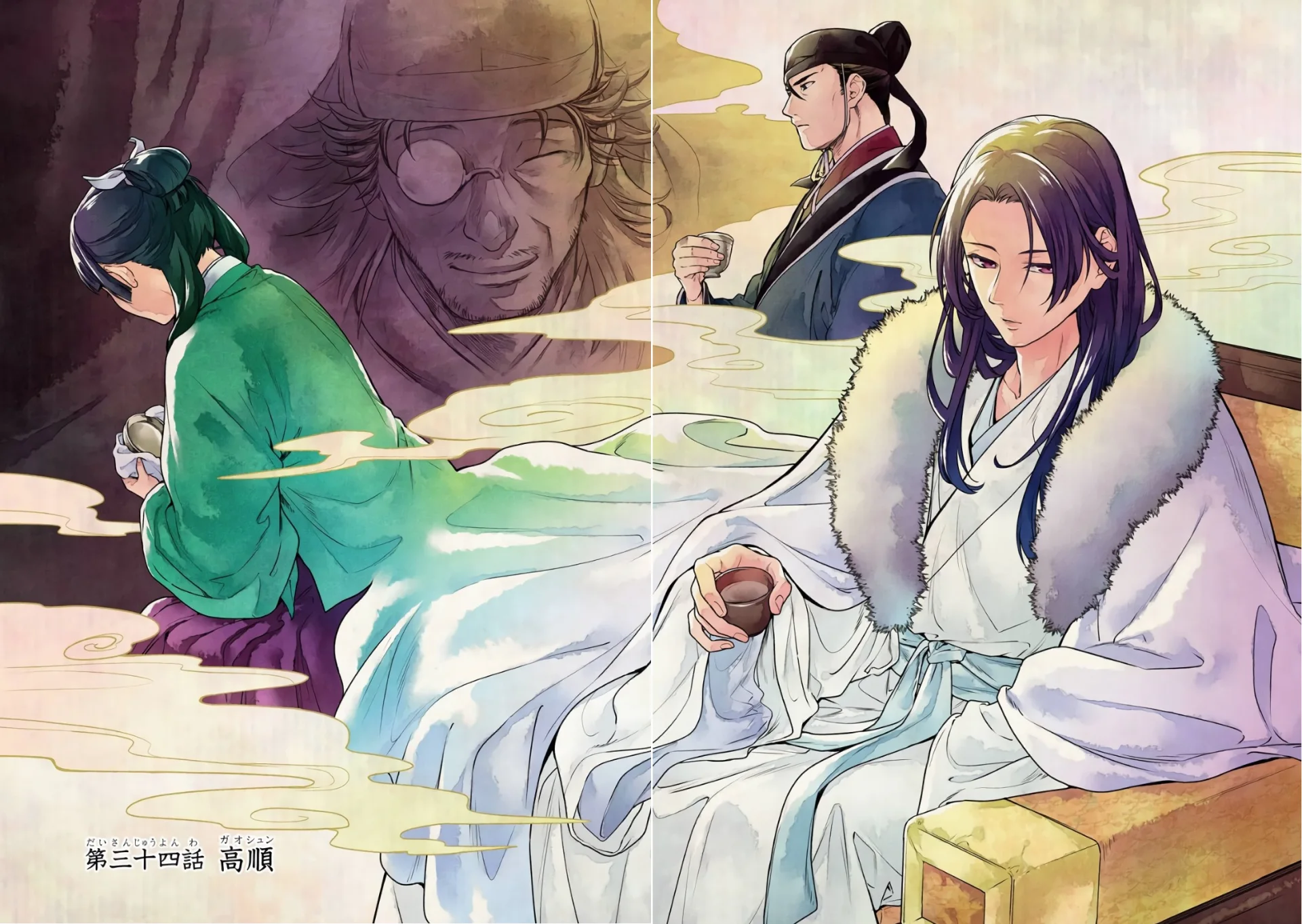
The Apothecary Diaries
An ongoing seinen mystery manga by Natsu Hyuuga and Nekokurage following Maomao, an apothecary's daughter, as she solves imperial court mysteries using her pharmaceutical expertise in a historical Chinese setting.
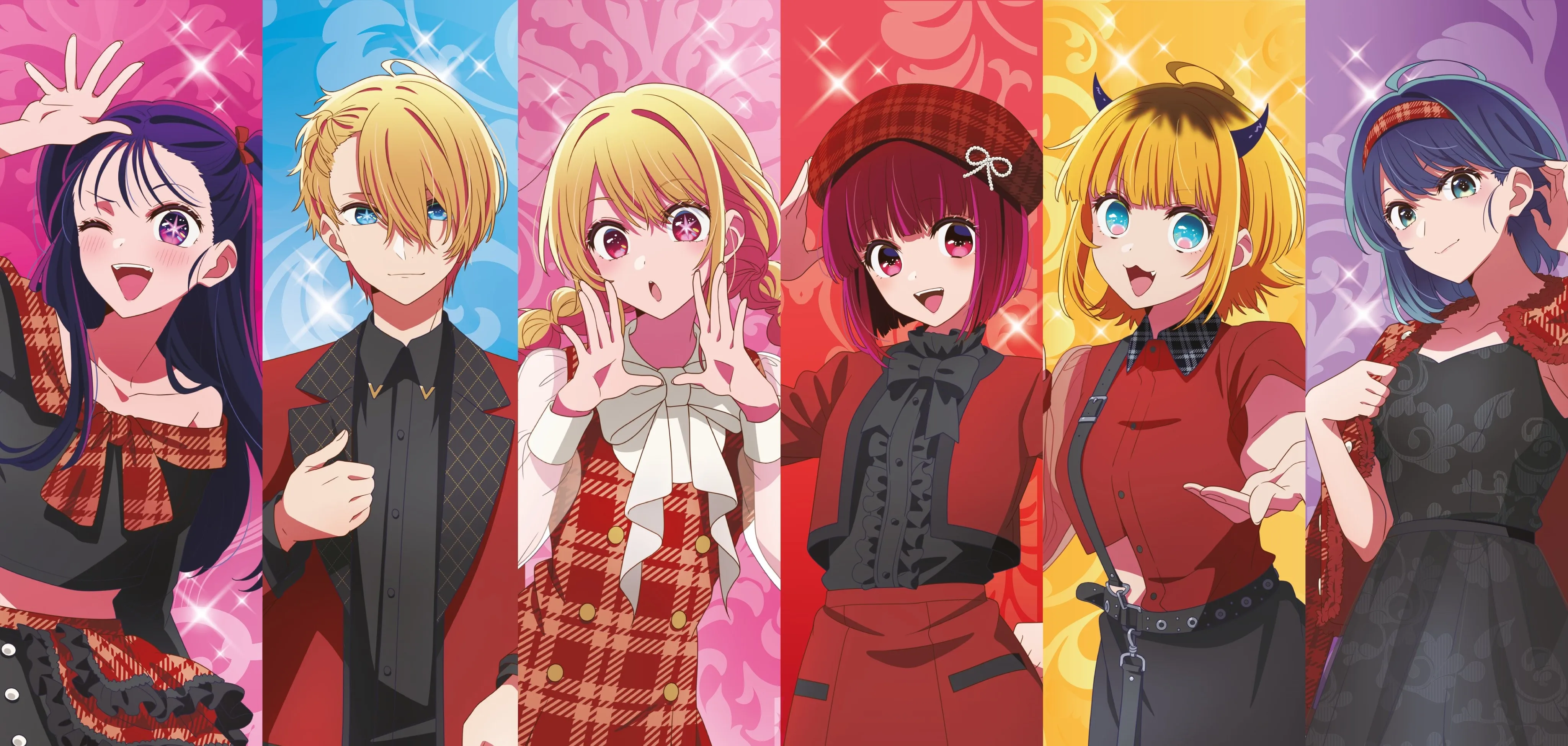
Oshi no Ko
A completed seinen drama-mystery manga by Aka Akasaka and Mengo Yokoyari following twin siblings reincarnated as the children of their favorite idol, who must uncover the mystery of their mother's murder.
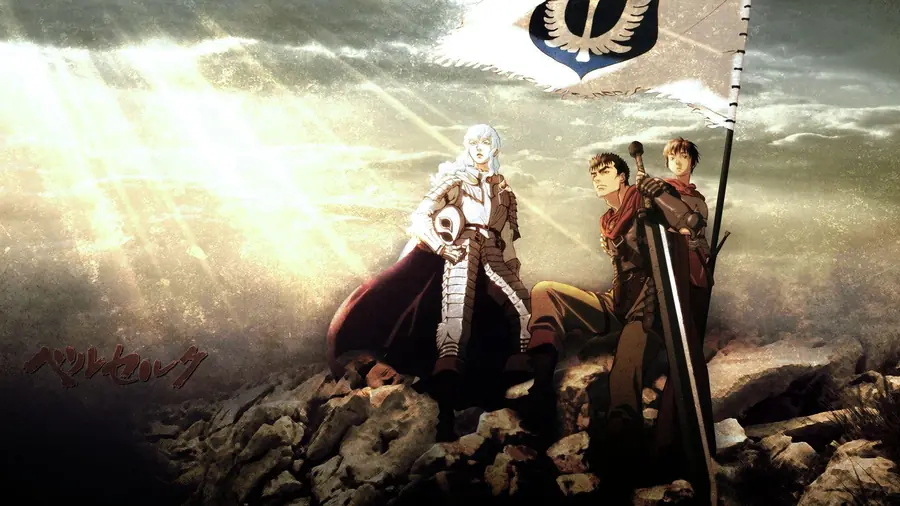
Berserk
A dark and brutal medieval fantasy following Guts on his journey of revenge, featuring complex characters and stunning artwork.
Bocchi the Rock!
A charming comedy-music manga about a shy introverted girl discovering confidence and friendship through rock band experiences.
Related Articles
All articles
Best Manga by Genre: The Ultimate 2026 Reading Guide (Shonen, Shojo, Seinen, Josei)
Comprehensive manga genre guide featuring best series by demographic and genre. From action shonen to mature josei, find your next read organized by taste and preference.
Top 20 Best Seinen Manga of All Time
Explore the greatest seinen manga crafted for adult audiences with mature themes, complex narratives, and artistic excellence.

Shonen vs Seinen Manga: What's the Difference and Which Should You Read?
Understand the key differences between Shonen and Seinen manga. Compare themes, art styles, storytelling approaches with examples of each.