What Is Manga? Reading Order and Choosing a First Series
Understand manga, practise reading order with a diagram and choose a first series based on your interests and its edition.
Manga is the Japanese word for comics. Outside Japan, it usually means comics published in Japan. It is a medium, not one genre: a manga can be an adventure, a romance, a sports story or a thriller.
If you are choosing your first book, start with its premise and edition rather than a popularity ranking. If you already have a volume, check its reading direction before starting.
Manga, anime and other comics: the practical difference
| You have… | What to do |
|---|---|
| A Japanese manga volume | Check the publisher’s reading instructions; many editions read right to left |
| An anime adaptation | Watch it as animation; its episodes do not necessarily match manga chapters one for one |
| A digital comic | Follow the platform’s layout: page-based and vertical-scroll comics work differently |
| A collected edition | Check which original chapters or volumes it contains before comparing book counts |
“Comics” is the broad medium that includes manga. Manga is not always black and white, and comic traditions cannot be reduced to one drawing style. Publication country, language and format are different questions.
Audiences are different from genres
Labels such as shonen, shojo, seinen and josei describe publishing audiences. Adventure, horror, romance and science fiction describe genres. A shonen title can therefore also be a thriller.
Those labels are not a substitute for an edition’s age rating or content information. Check the publisher’s description if violence or other mature themes matter to your choice.
A chapter is one instalment. A tankōbon is a collected volume. An omnibus can collect several original volumes into one physical book: fewer books does not mean a shorter story.
How to read a manga page
For a right-to-left edition, begin at the top right and move through the panels toward the left, then down to the next row. Read the speech balloons in their intended order as well. Check the book’s instructions; translations and digital editions can use other layouts.
Practise with this original five-panel schematic: 1 → 2 → 3 → 4 → 5. Panel 3 spans the middle of the page, so it is read after both top panels and before the bottom pair.
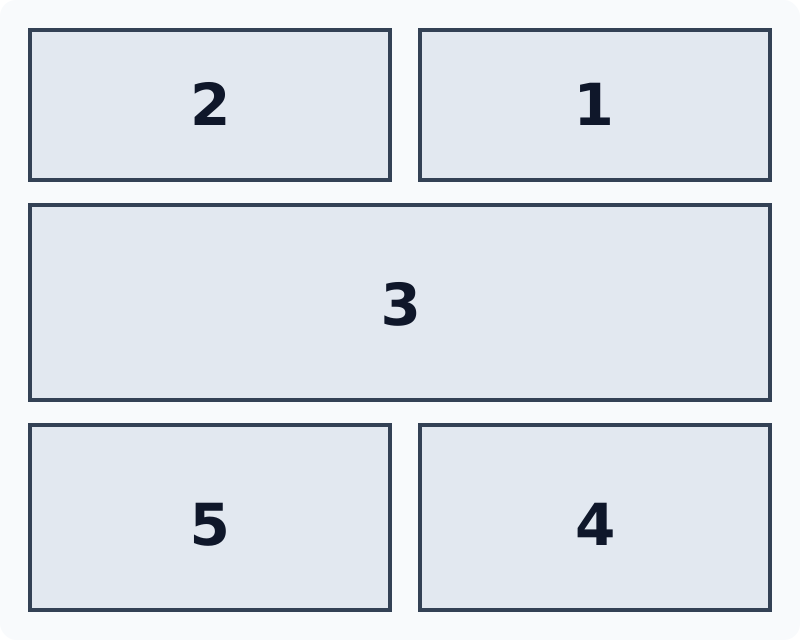
Within a panel, follow the dialogue and action together. If a composition is unclear, check the gaps between panels and the characters’ movement. For a worked script and an illustrated page, try our four-page manga story exercise.
Choose a first series by the experience you want
| If you want… | Try… | Consider before buying |
|---|---|---|
| Suspense and questions about power | Death Note | The premise involves killing; check the rating of your edition |
| A long, completed ninja adventure | Naruto | The original series has 72 volumes; try volume one first |
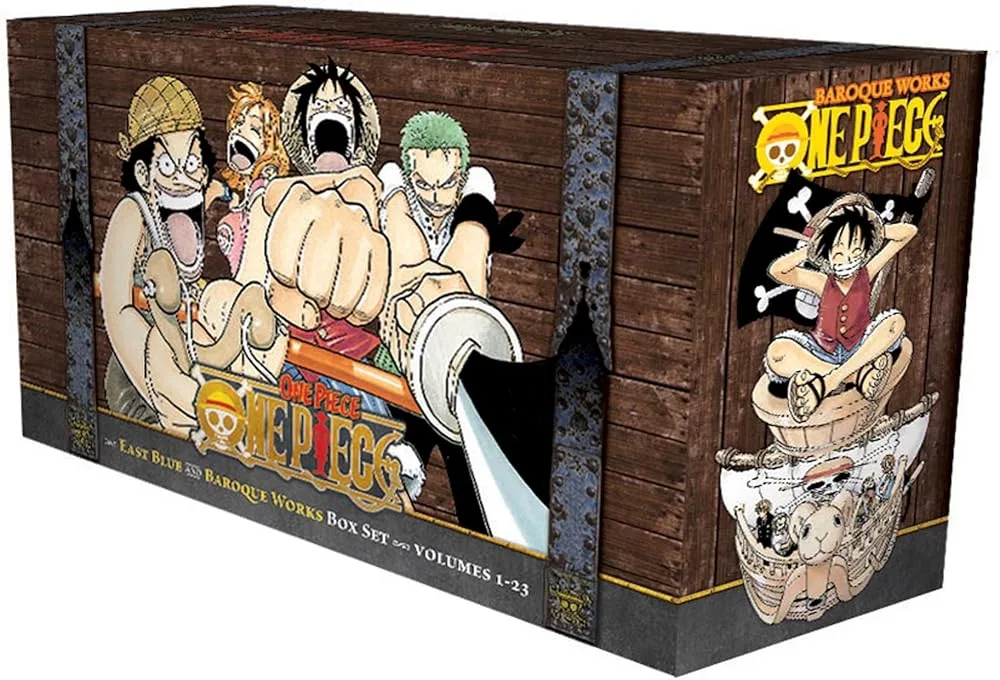
| An ongoing pirate adventure | One Piece | You can start with chapter one without buying a large collection |
These are editorial suggestions for different interests, not a universal ranking. Read an official sample, decide whether you enjoy the pacing, and then check the edition available in your country. VIZ provides official Death Note and Naruto chapter pages in English; access varies by territory.
Explore the people and history behind the pages
A manga can be written and drawn by one creator or made through a collaboration. The role of its creator is explained in what is a mangaka. For the historical context, our manga timeline separates early uses of the word from modern publishing.
Return to the manga guides to choose your next question.
FAQ
Sources and verification
References consulted to verify the main factual claims in this article.
- Manga research guide and reference bibliography — National Diet Library of Japan
- Media Arts Database: manga records — Agency for Cultural Affairs, Japan
- Official Death Note samples — VIZ Media
- Official Naruto samples — VIZ Media
Related Articles
What Is a Mangaka? Meaning, Roles and a First Practice
Learn what a mangaka does, how writers and artists can share the work, and how to turn a short idea into your first comic.
History of Manga: A Timeline from Hokusai to Digital Publishing
Follow manga history through dated examples. Distinguish Hokusai’s sketchbooks, Tezuka’s postwar works and today’s digital publishing.