Weekly Shonen Jump Explained: How the World's Biggest Manga Magazine Works
Everything you need to know about Weekly Shonen Jump — history, ranking system, how manga gets serialized and canceled, famous series, and how to read it in English.
Weekly Shonen Jump Explained: How the World’s Biggest Manga Magazine Works
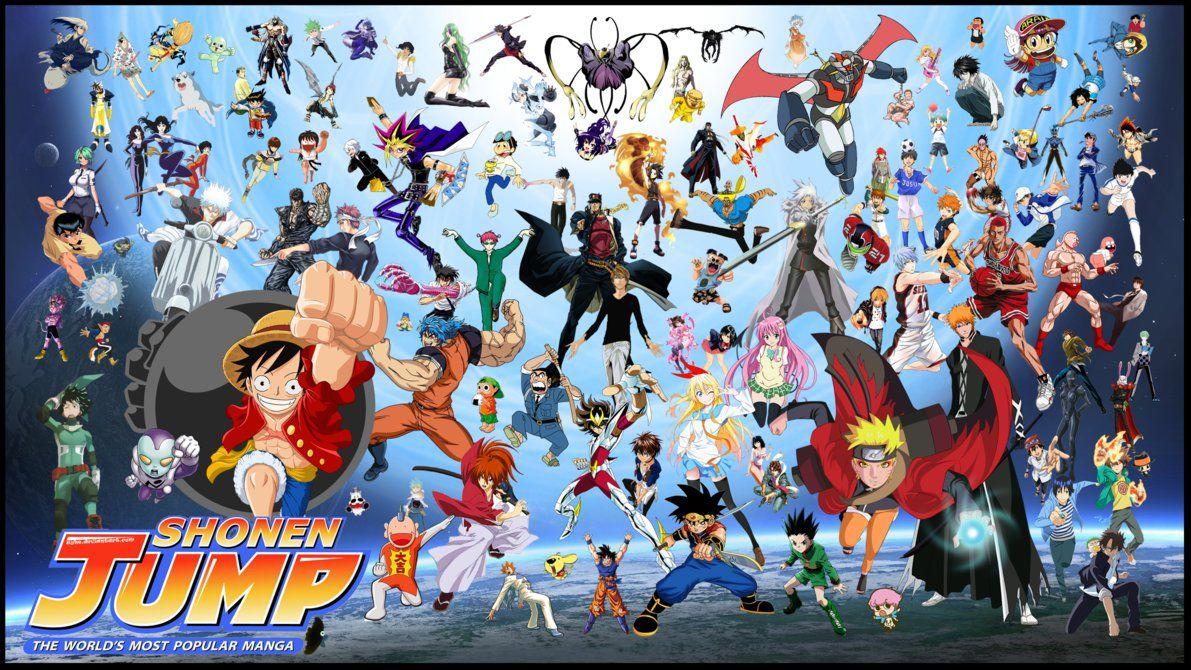
Every manga you love probably started in the same place. One Piece, Naruto, Dragon Ball, Demon Slayer, Jujutsu Kaisen, My Hero Academia — they all launched in Weekly Shonen Jump. This one magazine has shaped how the entire world reads and thinks about manga for over five decades. But how does it actually work? How do manga get in, stay in, and get kicked out?
This guide explains everything: the history, the brutal ranking system, the serialization process, and how you can read it today in English or Spanish.
⚡ TL;DR — Everything you need to know about Weekly Shonen Jump — history, ranking system, how manga gets serialized and canceled, famous series, and how to read it in English.
What Is Weekly Shonen Jump?
Weekly Shonen Jump (週刊少年ジャンプ, Shūkan Shōnen Janpu) is a weekly manga anthology magazine published in Japan by Shueisha. “Shonen” means boy — the magazine targets male readers aged 12 to 18, though its actual readership spans all ages and genders worldwide.
The first issue hit newsstands on July 11, 1968. Since then, it has sold over 7.5 billion copies, making it the best-selling manga magazine in history. At its peak in 1995, a single weekly issue sold 6.53 million copies — a record no comic publication in any country has ever matched.
Every Monday (or sometimes Sunday, depending on holidays), a new issue drops in Japan. Each issue is roughly 450-500 pages thick, printed on cheap recycled paper, and costs around ¥300 (about $2). It contains one chapter from each manga currently serialized in the magazine — typically 18-22 series running simultaneously.
The magazine is designed to be disposable. Japanese readers buy it, read it on the train or during lunch, and throw it away. The individual manga chapters are later collected into tankōbon volumes (the books you see on shelves), which is where most of the revenue comes from.
The Three Pillars of Shonen Jump
Shueisha has built Weekly Shonen Jump around three editorial principles that every manga in the magazine must embody. These are not official rules written in a manual — they are the cultural DNA of the magazine, passed down through editors for decades.
Friendship (友情, yūjō): The protagonist builds bonds and fights alongside allies. Teamwork matters as much as individual strength.
Effort (努力, doryoku): Success comes through hard work and training, not just innate talent. The hero earns their victories.
Victory (勝利, shōri): The protagonist ultimately overcomes challenges and wins. Shonen Jump stories are fundamentally optimistic.
These three principles explain why Shonen Jump manga feel different from series in other magazines. The heroes train harder, the friendships run deeper, and the victories feel earned. From Goku training under 100x gravity to Naruto mastering the Rasengan through sheer persistence to Luffy risking everything for his crew — every iconic Shonen Jump moment traces back to these pillars.
How Does a Manga Get Serialized in Shonen Jump?
Getting a manga into Weekly Shonen Jump is one of the hardest achievements in the entire manga industry. There are two main paths:
Path 1: Manga Awards
Shueisha runs several manga competitions throughout the year, most notably the Tezuka Award (for story-driven manga) and the Akatsuka Award (for comedy manga), both named after legendary mangaka. Young artists submit one-shot manga stories (complete short stories, usually 30-50 pages). Winners and runners-up get published in the magazine as one-shots and catch the attention of editors.
Eiichiro Oda won a Tezuka Award at age 17, years before One Piece began. Tatsuki Fujimoto first gained recognition through similar competitions.
Path 2: Editor Scouting and Pitching
Many mangaka get their start by being assigned an editor at Shueisha. The aspiring artist works with their editor to develop a one-shot manga that gets published in a special issue. If the one-shot generates strong reader response, the editor pitches it for full serialization at an editorial meeting.
The editorial meeting is where the fate of every new manga is decided. The editor-in-chief and senior editors review proposed series and vote on which ones get a serialization slot. Only a handful of new series launch each year, while dozens of pitches are rejected.
The First Three Chapters
Once a manga is approved for serialization, the first three chapters are critical. The editor and mangaka carefully plan these chapters to hook readers immediately — because the ranking system starts measuring reader response almost right away. Many manga that became massive hits had deliberately explosive opening chapters designed to survive those first crucial weeks.
The Ranking System: Survive or Die
This is the heart of Weekly Shonen Jump — and the reason it produces so many hits. The magazine runs on a ruthless popularity ranking system that gives readers direct power over which manga survive.
How Reader Surveys Work
Every issue includes a postcard-sized reader survey. Readers fill in their three favorite series from that week’s issue, along with basic demographic information. These postcards are collected, tabulated, and used to rank every series in the magazine.
In the digital age, online surveys supplement the physical postcards, but the system remains fundamentally the same: readers vote, and their votes determine rankings.
The Table of Contents IS the Ranking
Here is the key insight most casual readers miss: the order of manga in the magazine’s table of contents reflects their ranking. Series at the front of the magazine are the most popular. Series at the back are in danger.
When fans discuss “ToC rankings” (Table of Contents), they are analyzing where each series appeared in the magazine that week — because position directly correlates with survey popularity.
The 8-Week Delay
There is an important wrinkle: rankings in any given issue reflect survey results from approximately 8 weeks earlier. This delay exists because of the time needed to collect and process surveys, plus the lead time for printing. So when you see a series drop to the back of the magazine, that decline in popularity actually started two months ago.
Exceptions to Rankings
Not every series in the table of contents is ranked by surveys. The following are placed by editors regardless of survey results:
- Series with color pages (a special honor given to popular or milestone chapters)
- New series with fewer than 8 chapters (they need time to build an audience)
- A series publishing its final chapter
- One-shots and special guest chapters
When analyzing rankings, fans subtract these unranked entries to get the “true” ranking of each series.
The Cancellation Axe
This is where the system gets brutal. Every 10-12 issues (roughly every quarter), Shueisha cancels the 2-3 lowest-performing series and replaces them with new serializations. A manga that consistently ranks in the bottom third of the magazine is living on borrowed time.
Some numbers to appreciate the difficulty: surviving even one full year of serialization in Weekly Shonen Jump is a significant achievement. Many manga are canceled within 20-30 chapters. The series you see running for hundreds of chapters — One Piece at 1,100+, Naruto at 700, Bleach at 686 — are the extreme survivors of a process that kills most of their competition.
There are rare exceptions. A manga with poor survey rankings but strong volume sales (tankōbon) may be spared cancellation. Editors recognize that some manga appeal more to dedicated buyers than casual weekly readers.
The Weekly Schedule: A Mangaka’s Life
Creating a chapter every week for years — sometimes decades — is one of the most physically and mentally demanding jobs in creative media. Here is what the typical weekly schedule looks like for a manga serialized in Shonen Jump:
Day 1 (Monday/Tuesday): The mangaka and their editor discuss the upcoming chapter. They outline the story beats, page count, and key scenes. The editor provides feedback and suggests changes.
Day 2-3: Rough sketches (name/ネーム). The mangaka draws rough page layouts showing panel composition, character placement, and dialogue. The editor reviews and approves.
Day 4-5: Penciling and inking. The mangaka (with assistants for backgrounds, screentones, and detail work) draws the final pages. This is the most time-intensive phase.
Day 6: Final touches, corrections, and submission to Shueisha.
Day 7: Rest day — in theory. Many mangaka work through it.
This cycle repeats every single week. Eiichiro Oda has maintained this schedule for One Piece since 1997 — nearly 30 years. The physical toll is well-documented: many mangaka develop chronic back problems, vision issues, and sleep disorders. Kentaro Miura of Berserk fame and Yoshihiro Togashi of Hunter x Hunter are among the most prominent examples of creators whose health has been deeply affected by the relentless schedule.
In recent years, Shueisha has begun allowing more frequent breaks for mangaka health. Many current serializations take planned breaks every 3-4 weeks.
Famous Series That Launched in Weekly Shonen Jump
The magazine’s alumni list reads like a hall of fame of the entire manga medium:
| Decade | Notable Series | Author |
|---|---|---|
| 1970s | Kochikame (longest-running: 1976-2016) | Osamu Akimoto |
| 1980s | Dragon Ball | Akira Toriyama |
| 1980s | JoJo’s Bizarre Adventure | Hirohiko Araki |
| 1990s | One Piece (ongoing since 1997) | Eiichiro Oda |
| 1990s | Naruto | Masashi Kishimoto |
| 1990s | Hunter x Hunter | Yoshihiro Togashi |
| 1990s | Slam Dunk | Takehiko Inoue |
| 2000s | Bleach | Tite Kubo |
| 2000s | Death Note | Takeshi Obata (art) |
| 2010s | My Hero Academia | Kohei Horikoshi |
| 2010s | Demon Slayer | Koyoharu Gotouge |
| 2020s | Jujutsu Kaisen | Gege Akutami |
| 2020s | Chainsaw Man | Tatsuki Fujimoto |
| 2020s | Sakamoto Days | Yuto Suzuki |
| 2020s | Kagurabachi | Takeru Hokazono |
The current lineup (as of early 2026) includes One Piece, Sakamoto Days, Kagurabachi, Blue Box, and other strong titles that continue the magazine’s dominance.
How to Read Weekly Shonen Jump in English
You have two legitimate options:
Manga Plus by Shueisha (Free)
Manga Plus (mangaplus.shueisha.co.jp) is Shueisha’s own free platform. It publishes the latest chapter of every Weekly Shonen Jump series simultaneously with the Japanese release — meaning you can read new chapters the same day they come out in Japan. The first three chapters and the latest three chapters of each series are always free.
Available in English and Spanish, plus several other languages. No account required for basic access.
Shonen Jump / VIZ Media ($2.99/month)
The VIZ Shonen Jump subscription gives you access to the entire digital vault — over 10,000 chapters across hundreds of series, current and completed. At $2.99/month (or $1.99 in some regions), it is one of the best deals in manga. You get the latest chapters simultaneously with Japan, plus the full back catalog.
Available as a website and mobile app (iOS and Android).
Which Should You Choose?
If you only follow a few current series, Manga Plus is sufficient — and free. If you want to binge completed series like Naruto, Dragon Ball Z, or Death Note from chapter one, the VIZ subscription is worth it.
Shonen Jump vs. Other Manga Magazines
Weekly Shonen Jump is the biggest, but it is not the only manga magazine. Here is how it compares to its main competitors:
| Magazine | Publisher | Target | Notable Series | Frequency |
|---|---|---|---|---|
| Weekly Shonen Jump | Shueisha | Boys 12-18 | One Piece, JJK, Sakamoto Days | Weekly |
| Weekly Shonen Magazine | Kodansha | Boys 12-18 | Attack on Titan, Blue Lock, Fairy Tail | Weekly |
| Weekly Shonen Sunday | Shogakukan | Boys 12-18 | Detective Conan, InuYasha | Weekly |
| Monthly Shonen Jump (Jump SQ) | Shueisha | Boys 12-18 | Boruto, Blue Exorcist | Monthly |
| Young Jump | Shueisha | Young adults 18-30 | Tokyo Ghoul, Oshi no Ko, Kaguya-sama | Weekly |
| Big Comic Spirits | Shogakukan | Adults | Frieren | Weekly |
The key difference is the ranking system. While other magazines also use reader surveys, none apply them as aggressively as Weekly Shonen Jump. This “survival of the fittest” approach is widely credited as the reason Jump consistently produces more global hits than its competitors.
Why Does Weekly Shonen Jump Matter?
Weekly Shonen Jump is not just a magazine — it is the engine that powers the global manga and anime industry. The vast majority of the world’s best-selling manga originated in its pages. When a series succeeds in Jump, it typically receives an anime adaptation, merchandise, video games, and international licensing that generates billions of dollars.
For aspiring mangaka, getting serialized in Weekly Shonen Jump remains the ultimate goal. It means your work will be read by millions, and if it survives the ranking system, it has a real chance of becoming a cultural phenomenon.
For readers, understanding how Jump works deepens your appreciation of the manga you love. Every series that reaches 100 chapters has survived a gauntlet designed to kill it. The manga on your shelf are not just good stories — they are survivors.
Keep Exploring
If the series mentioned in this guide caught your interest, explore their full profiles on our site: manga series directory. For the creators behind these legendary works, visit our mangaka biographies section.
Want to start your own manga journey? Our guide on how to become a mangaka covers the path from beginner to published creator, and our best manga for beginners list will help you discover where to start reading.
Related Articles

How to Get Your Manga Published in Japan: The Realistic Guide
Learn the realistic path to getting manga published in Japan. Understand magazine submissions, editorial meetings, the serialization process, and alternatives.
Best Naruto Arcs Ranked (2026): From Chunin Exams to Pain
Complete ranking of the best Naruto arcs from Chunin Exams to the Pain arc. Discover which Naruto Shippuden arcs defined the series and why they matter.
Chainsaw Man Complete Guide: Manga, Story & Characters (2026)
The complete Chainsaw Man guide covering the manga's story, characters, themes, and why Tatsuki Fujimoto's dark shonen masterpiece is revolutionary. Everything you need to know about Denji, Power, Makima, and Part 2.