A Silent Voice Manga
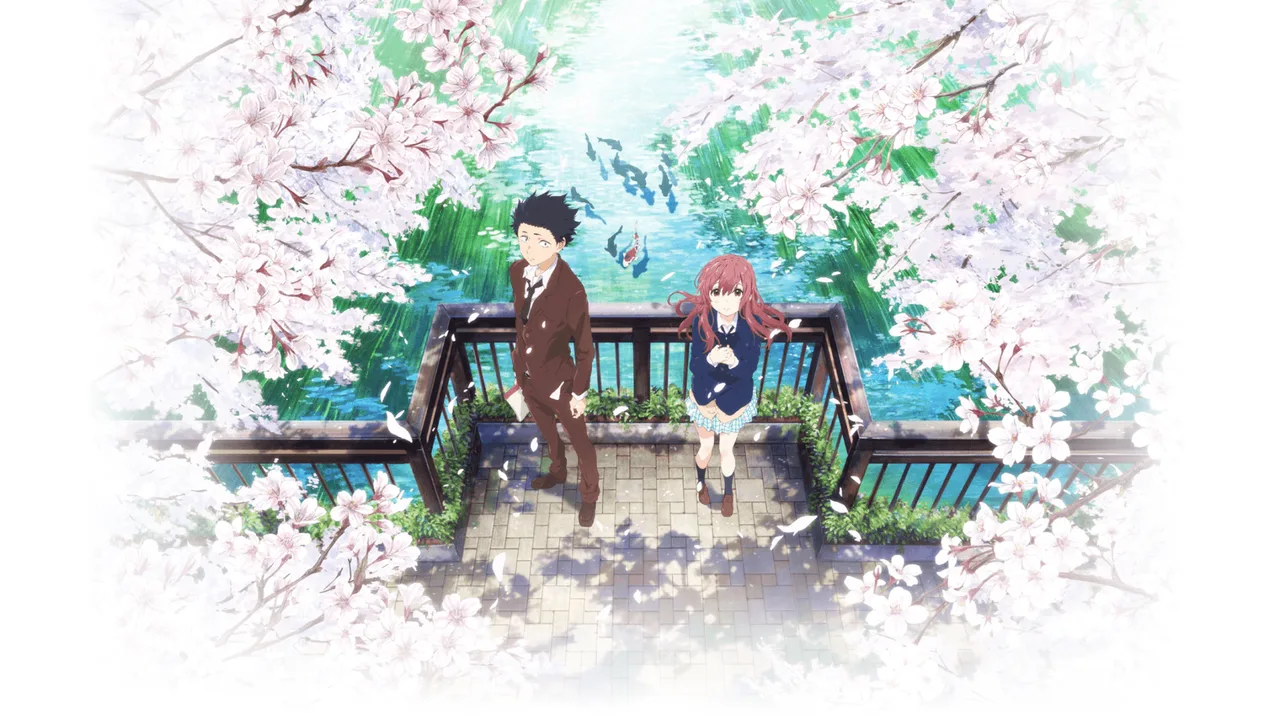
A poignant standalone drama by Yoshitoki Oima following Shoya Ishida, a former bully who seeks atonement by reconnecting with Shoko Nishimiya, the deaf classmate he tormented in elementary school. The series explores guilt, redemption, communication and the difficult path toward forgiveness.
Start A Silent Voice: Volume 1
The recommended place to begin the series
All A Silent Voice Story Arcs in Order
| # | Arc |
|---|---|
| 1 | Elementary School Bullying |
| 2 | Isolation and Reunion |
| 3 | Rebuilding Bonds |
| 4 | Crisis and Forgiveness |
A Manga About the Failure, and Recovery, of Communication
A Silent Voice (Koe no Katachi) by Yoshitoki Oima is one of the most emotionally exacting works in modern manga, a seven-volume drama that takes a subject most stories handle with sentimentality — bullying, disability, the possibility of forgiveness — and refuses every easy comfort it might offer. It begins with a protagonist who is not a victim but a perpetrator, asks whether such a person can earn the right to keep living, and answers only with difficulty. Serialized in Kodansha’s Weekly Shonen Magazine between 2013 and 2014, the series became a cultural touchstone, partly because of its unflinching honesty and partly because it treats deafness, depression and suicidal ideation as realities to be understood rather than plot devices to be exploited.
The premise is deceptively simple. A deaf girl, Shoko Nishimiya, transfers into a sixth-grade class and is bullied relentlessly by a restless boy named Shoya Ishida. When the adults finally intervene, the same classmates who laughed along turn on Shoya, and he spends his adolescence as an outcast carrying the weight of what he did. Years later, having taught himself sign language, he seeks Shoko out — not to be forgiven, exactly, but to settle a debt before ending his own life. What follows is neither a romance nor a redemption fantasy but something rarer: a careful study of how damaged people try, and repeatedly fail, and try again, to reach one another.
The Subject of Deafness and the Limits of Language
The Japanese title, Koe no Katachi, translates literally as “the shape of a voice,” and the manga is organized around the question of what a voice is and how it can be heard. Shoko communicates through a notebook, through sign language, through written messages and imperfect speech, and the central irony of the series is that the hearing characters — fluent, unimpaired, surrounded by easy words — are the ones who consistently fail to communicate anything true. Their language is full and their honesty is empty. Oima researched deaf experience and sign language for the work, and the depiction of Shoko’s world is rendered with unusual specificity: the labor of lip-reading, the social exhaustion, the way a disability becomes a pretext for others to behave at their worst.
This attention to the texture of deafness gives the manga its moral seriousness. Shoko is never reduced to an object of pity or an inspirational symbol. She is a full person with her own destructive impulses — chiefly a reflexive self-blame so total that it nearly kills her and badly wounds those who love her. By refusing to make her a saint, Oima keeps the story honest. The barrier between Shoko and the world is real, but it is not the only barrier in the book; everyone in A Silent Voice is, in some way, unable to say what they mean.
Main Characters
Shoya Ishida — The Perpetrator Who Has to Keep Living
Shoya is one of the most unusual protagonists in shonen-adjacent manga because the story begins by establishing him as genuinely culpable. His childhood cruelty is not a misunderstanding to be cleared up; it is real harm, rendered without softening. The genius of his arc is that the manga then asks the reader to follow him anyway, to sit with the discomfort of caring about someone who did something unforgivable. His perception of crosses over the faces of others — a visual metaphor for his inability to look anyone in the eye — is one of the most effective images in the series, and its gradual disappearance maps his slow return to human connection.
Shoko Nishimiya — Kindness as a Form of Self-Erasure
Shoko’s relentless gentleness is, the manga gradually reveals, a kind of pathology. Having been taught by circumstance that her existence causes problems, she apologizes for everything, absorbs every conflict as her own fault, and ultimately concludes that the people around her would be better off without her. Her attempted suicide during the fireworks festival is the emotional fulcrum of the entire work, and the manga is careful to show that her self-erasure is not noble but harmful — that disappearing oneself is a way of wounding the people who love you. Her halting movement toward believing she deserves to live runs parallel to Shoya’s, and neither can complete the journey alone.
Yuzuru, Nagatsuka, Ueno and the Weight of the Group
Around the two leads, Oima assembles a cast in which no one is purely good or bad. Yuzuru, Shoko’s fiercely protective younger sister, carries an adult-sized fear of loss and photographs dying things to inure herself to grief. Tomohiro Nagatsuka offers Shoya the uncomplicated friendship he has never had. Naoka Ueno gives voice to the unrepentant cruelty most characters keep hidden, refusing the tidy arc of remorse. Miki Kawai perfects the art of recasting herself as a blameless bystander. Together they form a friend group whose every interaction is freighted with unspoken history, and the manga’s refusal to resolve their tensions cleanly is precisely what makes them feel real.
Themes: Atonement Without Absolution
A Silent Voice is fundamentally about whether atonement is possible, and its answer is deliberately unsatisfying in the best way. Forgiveness in this manga is never granted as a single, redemptive event. Shoya does not apologize and become clean; Shoko does not forgive and become whole. Instead the work insists that atonement is a continuous practice, an ongoing obligation rather than a debt that can be paid off. The crosses fall from the faces around Shoya not because he has been absolved but because he has slowly relearned how to be present with other people.
Running alongside this is a sustained meditation on suicide and the value of continuing to live. Both leads contemplate ending their lives, and the manga treats this with neither melodrama nor moralizing. It simply demonstrates, through accumulated scenes, what is lost when a person disappears and what is possible when they stay. The fireworks-festival sequence and Shoya’s coma force every character — and the reader — to confront the real cost of self-destruction, not as an abstraction but as a hole left in the lives of others.
Why This Manga Stands Apart
What separates A Silent Voice from the large body of manga that touch on bullying is its refusal of the redemptive shortcut. Most stories about a reformed bully arrange events so the reader can comfortably forgive him; Oima withholds that comfort, keeping Shoya’s guilt present and unresolved long after a lesser work would have wrapped it up. The result is a manga that respects the seriousness of harm, treats disability with research and care rather than sentiment, and trusts readers to hold contradictory feelings — sympathy for a perpetrator, frustration with a victim’s self-blame — without collapsing them into a simple verdict.
It is also formally precise. Oima’s paneling externalizes interior states with remarkable economy, from the crosses over faces to the way Shoko’s silence is given visual weight on the page. Few manga make loneliness this legible.
The Film Adaptation
In 2016, Kyoto Animation released a feature film adaptation directed by Naoko Yamada, condensing the seven volumes into a single 130-minute drama. Faced with the impossible task of compressing an intricate ensemble story, the film narrows its focus to the Shoya–Shoko relationship and uses Yamada’s signature restraint — long silences, attention to hands and feet, an evocative score by Kensuke Ushio — to carry the emotional weight that the manga distributes across its larger cast. The film was both a critical success and a substantial box-office hit, and it introduced the story to a global audience, becoming for many viewers their entry point into Oima’s work. While it necessarily streamlines subplots involving Ueno, Kawai and Mashiba, it preserves the manga’s core insistence that forgiveness is difficult, gradual and never guaranteed.
Publication History
A Silent Voice originated as a one-shot by Yoshitoki Oima that won a newcomer manga award, though its publication was initially delayed over concerns about its sensitive depiction of deafness; the one-shot finally appeared in 2011. Reader response was strong enough that Kodansha greenlit a full serialization, which ran in Weekly Shonen Magazine from 2013 to 2014 and was collected into seven tankobon volumes. The series was published in English by Kodansha Comics and has remained consistently in print, frequently cited on lists of essential standalone manga. Oima went on to create the acclaimed fantasy series To Your Eternity, but A Silent Voice remains the work most associated with her name.
Related Series
Readers moved by A Silent Voice’s emotional precision often connect with Nana, Ai Yazawa’s unflinching drama about flawed people who understand each other and still cannot save one another, and with Fruits Basket, which similarly treats childhood trauma and the slow work of healing with real tenderness. Those drawn to its quiet, contemplative register may appreciate Frieren: Beyond Journey’s End and Vinland Saga, each a story about a damaged person learning, over time, how to live with what they have done.
Frequently Asked Questions
Is A Silent Voice a completed manga?
Yes. A Silent Voice is a completed, standalone series of seven volumes, serialized in Weekly Shonen Magazine from 2013 to 2014. Unlike many long-running manga, it tells a single self-contained story with a definitive ending, which makes it an accessible entry point for newer readers.
Should I read the manga or watch the film first?
Both are excellent. The 2016 Kyoto Animation film, directed by Naoko Yamada, is a faithful and beautifully crafted adaptation, but it necessarily condenses the story and reduces the roles of several supporting characters. The manga offers the fuller version of the ensemble and the more gradual, detailed development of its themes. Many readers watch the film first and then read the manga for greater depth.
What mature themes does A Silent Voice deal with?
The series deals directly with bullying, disability and deafness, depression, suicidal ideation and the difficult process of atonement. It handles these subjects with care rather than sensationalism, but they are central to the story, and the manga is best suited to teen and adult readers prepared for genuinely heavy emotional material.
Is A Silent Voice based on a true story?
No, it is a work of fiction. However, author Yoshitoki Oima researched deaf experience and sign language to portray Shoko’s world with accuracy, and the realism of that portrayal is one of the reasons the series is so widely respected.
Where can I buy A Silent Voice?
The complete seven-volume series is available in English from Kodansha Comics in both physical and digital editions, and is easy to find through major retailers. Check Amazon for current availability of individual volumes or the complete set.
A Silent Voice Arc Guides
Elementary School Bullying
The opening section recounts the past: how Shoya Ishida led the bullying of Shoko Nishimiya, a deaf transfer student, and how the situation collapsed onto him.
Isolation and Reunion
Years later, an isolated and suicidal Shoya, who has learned sign language, seeks out Shoko to apologize, beginning his fragile attempt at atonement.
Rebuilding Bonds
Shoya cautiously reconnects with old classmates and builds new friendships, navigating unresolved guilt, awkward reunions and the resurfacing of past resentments.
Crisis and Forgiveness
A devastating crisis involving Shoko forces every character to confront their guilt, leading toward a fragile, hard-won path of healing and self-acceptance.
Movies
All moviesA Silent Voice Merchandise
Read manga free with Amazon Prime
30-day free trial: free shipping, Prime Reading, Kindle, Prime Video and more.
Affiliate link. 30-day free trial for new members. Then $14.99/month — cancel anytime.
FAQ: A Silent Voice
You May Also Like
All manga
Blue Box
An ongoing shonen sports romance manga by Kouji Miura about a badminton player and his crush, a basketball team ace, who unexpectedly begin living together while pursuing their athletic dreams.

Blue Period
An ongoing seinen coming of age manga by Tsubasa Yamaguchi about Yatora Yaguchi, a high school student who discovers a passion for painting and aims to enter the prestigious Tokyo University of the Arts.

Fruits Basket
Discover the Sohma family curse as Tohru works to break the zodiac spell while forming deep bonds with its members.

Hajime no Ippo
A long-running shonen boxing sports manga following Makunouchi Ippo's journey from bullied teenager toward professional boxer, exploring boxing's technical depths and life-changing personal transformation
Related Articles
All articles
Top 16 Best Shonen Manga of All Time (2026)
The best shonen manga ever made, ranked. Legendary battle epics, underdog heroes, and the series that defined the genre — plus the box sets worth owning.

Best Manga by Genre: The Ultimate 2026 Reading Guide (Shonen, Shojo, Seinen, Josei)
Comprehensive manga genre guide featuring best series by demographic and genre. From action shonen to mature josei, find your next read organized by taste and preference.
Weekly Shonen Jump Explained: How the World's Biggest Manga Magazine Works
Everything you need to know about Weekly Shonen Jump — history, ranking system, how manga gets serialized and canceled, famous series, and how to read it in English.