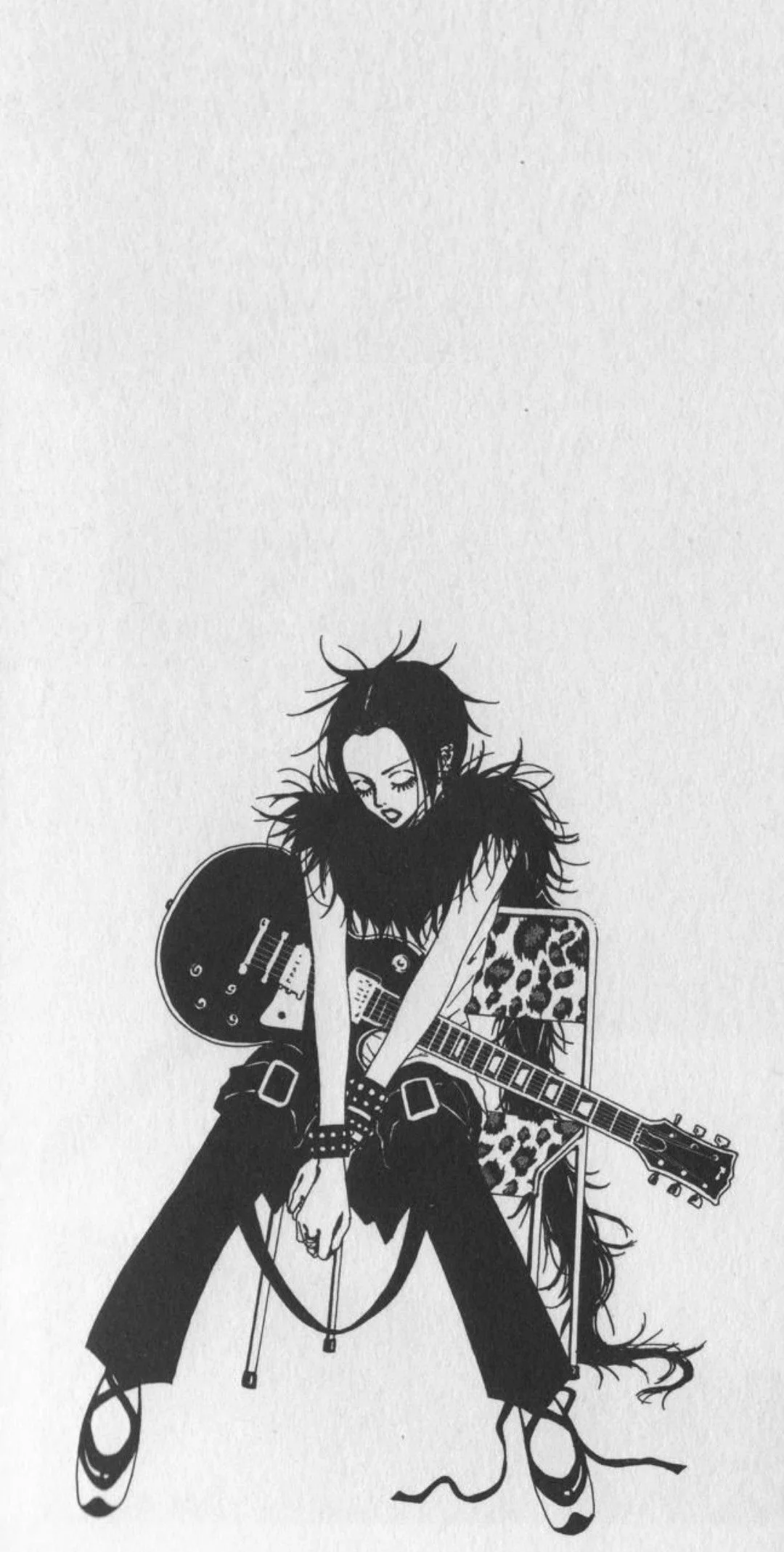
Nana
A josei/shojo romance drama manga following two girls named Nana whose contrasting personalities and dreams intersect in Tokyo, exploring friendship, love, ambition, and personal tragedy
All Nana Story Arcs in Order
| # | Arc |
|---|---|
| 1 | Meeting in Tokyo Arc |
| 2 | Trapnest & BLAST Arc |
| 3 | Triangle Arc |
| 4 | Final Arc |
Two Women, One Name, and Everything That Costs
Nana by Ai Yazawa is one of the most emotionally honest manga ever published, a work that refuses the clean resolutions its genre traditionally promises and instead insists on the full, unruly weight of being young and alive in a city that doesn’t particularly care whether you succeed or break. Running in Cookie magazine from 2000 to 2009, when the series entered its ongoing hiatus due to Yazawa’s serious illness, Nana achieved something remarkable: it built a readership that has continued to grow for over two decades because the story remains unfinished, and because what exists is devastating in the best possible way. The 21 volumes on record represent one of the great truncated masterworks of contemporary manga.
The premise announces itself with elegant simplicity. Two women, both named Nana, meet by chance on a train to Tokyo. They end up roommates. Everything that follows is a consequence of that meeting and of who each of them is beneath the surface. Yazawa has described the manga as being fundamentally about female friendship — the Nanas’ relationship is the emotional spine of the entire work — but it is also about ambition, about the cost of dreams, about love that is real and still insufficient, and about how people can understand each other completely and still be unable to save each other.
The World of the Tokyo Music Scene
Nana is set in a version of Tokyo’s independent music world in the early 2000s, a milieu Yazawa renders with extraordinary specificity. Venues, record labels, the economics of band life, the particular way fame changes relationships — all of it is rendered with the eye of someone who has spent time in those rooms and knows how the air smells. The music in Nana matters; BLAST and Trapnest are not generic “bands” but represent genuinely different philosophies of what music is for.
BLAST embodies punk’s original promise: authentic expression without compromise, the belief that artistic integrity is worth more than commercial success. Trapnest represents the other path — polished, popular, financially stable, and haunted by what was surrendered to get there. The tension between these two bands maps onto the central conflict of the series, between the version of yourself that keeps faith with its original vision and the version that makes the accommodations necessary to survive. Neither manga nor series resolves this tension, because it cannot be resolved; it can only be lived with.
Main Characters
Nana Osaki — The Armor and What’s Underneath
Nana Osaki arrives on the page fully formed: leather jacket, dramatic eye makeup, cigarette, and the kind of contained anger that reads as confidence until you learn to look more carefully. She is a punk vocalist with real talent and a philosophy of self-sufficiency that she maintains with fierce discipline. To meet her is to feel immediately that she has decided who she is and will not be moved. That certainty is a performance, of course, and Yazawa is exquisitely patient in its dismantling.
The story of Nana Osaki is the story of someone whose protective structure — built from early abandonment, from learning too young that needing people leads to pain — meets the two things it cannot withstand: genuine friendship with Hachi and the resumption of her relationship with Ren Honjo. Both create needs she cannot simply refuse. Her love for Ren is not a choice; it is a fact of her nature. Her friendship with Hachi is the first relationship in which she is truly known. Yazawa uses both to reveal the person beneath the armor, and that person is as vulnerable and as deserving of love as anyone else in the story.
Nana Komatsu (Hachi) — The Romantic Who Wants What She Wants
Nana Komatsu, nicknamed “Hachi” by Nana Osaki in a moment of early affection, is the manga’s other center of gravity, and she is far more difficult to love simply. She is romantic to the point of self-destruction, she often treats her own desires as justifications for behavior she knows is harmful, and her emotional dependency is not merely a character flaw but the organizing principle of her psychology. Yazawa draws her without flattery and without condemnation, which requires considerable craft.
What makes Hachi work as a character is her total self-awareness paired with her total inability to act on that awareness. She knows, on some level, that Takumi is bad for her. She knows that she is using Nobuo as an emotional placeholder. She knows that her need for romantic validation exceeds anything any actual person can provide. Knowing these things changes nothing about what she does. This gap between understanding and behavior is one of the most truthful things in the manga, and it is what makes Hachi recognizable to readers who are nothing like her: everyone has a version of this experience, of seeing clearly and choosing badly anyway.
Ren Honjo — The Musician Who Cannot Stay
Ren Honjo is the bassist of BLAST and the love of Nana Osaki’s life, and he represents something the manga is particularly interested in: the talented, charismatic person whose commitment to their art makes sustained intimacy structurally impossible. He is not a villain. He loves Nana Osaki. He simply loves music in a way that pre-exists and supersedes everything else, including her. When Trapnest offers professional advancement that requires his departure from their shared life, he goes.
The tragedy of Ren is that he is not wrong to go. The manga refuses to frame his choices as simple betrayal. He is following the current of his own nature, as people do, and the damage done to Nana Osaki is not the result of cruelty but of incompatibility between two people whose needs cannot simultaneously be met. That refusal to assign clean moral roles — the person who leaves is not the villain, the person left is not a victim — is characteristic of Yazawa’s approach throughout the series, and it is what gives the emotional devastation of those later chapters its particular weight.
Takumi Ichinose — The Damage That Looks Like Desire
Takumi Ichinose is the bassist of Trapnest, beautiful, successful, and utterly corrosive to Nana Komatsu’s wellbeing. Their relationship is not a romance that goes wrong; it is a power imbalance that was always structured to produce the outcome it produces. Takumi maintains emotional control, withholds and grants affection according to his own convenience, and understands exactly how to keep Hachi in a state of anxious need. He does not do this because he is evil; he does it because it is how he relates to people, because the alternative — genuine vulnerability — is a risk he does not make.
Yazawa’s handling of Takumi is one of the series’ most sophisticated achievements. He is given sufficient complexity that reducing him to antagonist feels inaccurate, yet the harm he causes Hachi is rendered with total clarity. The manga asks readers to hold both things: he is a real person with his own history and limitations, and he is destroying someone. Both are true. The difficulty of that dual recognition is part of what Nana is about.
The Band Members: Nobu, Shin, and Yasu
Nobuo “Nobu” Terashima, guitarist of BLAST, is perhaps the series’ greatest example of “the right person at the wrong time.” His genuine care for Hachi, his honesty, his emotional availability — all the qualities Takumi lacks — are present and real, and entirely insufficient. Hachi cannot receive what he offers because she is oriented toward a different kind of need. The pathos of Nobu is quiet and persistent throughout his appearances.
Shin, the youngest member of BLAST, brings a different kind of vulnerability to the ensemble: he is a teenager navigating a world for which he is not quite prepared, and his friendship with the Nanas has a protective quality that moves in unexpected directions. Yasu, the band’s drummer, functions as the group’s adult conscience — steady, clear-eyed, the person who understands most of what is happening and chooses carefully which of it to say aloud.
Themes: The Cost of Dreams and the Love That Cannot Be Enough
The central question Nana asks is one it never fully answers: how much do you sacrifice for the thing you love most, and is the sacrifice worth it? For Nana Osaki, the thing she loves most is music, and her commitment to BLAST’s artistic integrity costs her Ren, costs her stability, and eventually costs her the life she thought she was building. For Hachi, the thing she loves most is love itself — the idea of romantic completion — and her pursuit of that ideal costs her several real connections in favor of an imagined one.
The friendship between the two Nanas is where the series locates its most reliable form of grace. Their relationship is not without complications, misunderstandings, or moments of genuine failure. But it is the place in the narrative where both characters are most fully seen and most genuinely valued. Yazawa seems to believe — and the manga argues implicitly — that this kind of friendship, love without possession or performance, is rarer and more nourishing than romantic love, and that most people fail to recognize its value until they have spent years seeking satisfaction from sources less capable of providing it.
Why This Manga Stands Apart
Ai Yazawa is one of the few manga artists who can be described as a genuine stylist in the literary sense: her visual language — the line weight, the fashion, the exquisite attention to the material culture of her characters’ lives — is so distinctive that a single panel is immediately identifiable as hers. But style in Nana is never decorative. The attention to how the apartment looks, what the characters are wearing, which records are on the shelves — all of it is load-bearing characterization, telling readers who these people are through the accumulation of specific, loving detail.
What ultimately distinguishes Nana from other josei manga of its era is its refusal to provide the emotional resolutions it tantalizes readers with. The genre’s conventions suggest that suffering leads somewhere, that love eventually arrives at something settled. Nana systematically undermines those conventions, not out of nihilism but out of fidelity to how lives actually work. The series respects its characters too much to rescue them cheaply. That respect is felt on every page, and it is why readers who encountered the manga in their twenties often return to it in their thirties and find it has changed in their hands.
Publication History
Nana began serialization in Cookie magazine, published by Shueisha, in May 2000. The series ran for 21 volumes through 2009, when Ai Yazawa suffered a serious illness that required an extended period of recovery and treatment. The manga has been on indefinite hiatus since then, and as of 2026, no resumption date has been announced. The anime adaptation by Madhouse aired in 2006 and 2007, covering 47 episodes before concluding without a complete ending. Yazawa has expressed a desire to return to the series, and the dedicated international readership continues to hope for a conclusion. The hiatus itself has become part of the manga’s cultural presence: the incompleteness of the story mirrors the themes of incompleteness and unresolved longing that run through its pages, which some readers find appropriate and others find agonizing, often simultaneously.
Related Series
Fans of Nana’s emotional depth and attention to female interiority should explore Ai Yazawa’s earlier work Paradise Kiss, which shares the series’ fashion-forward aesthetic and interest in the collision between ambition and love. For other josei manga exploring similar territory of women navigating Tokyo and adult life, the site also covers Honey and Clover and Solanin, each of which carries some of Nana’s bittersweet quality, if not quite its intensity.
Frequently Asked Questions
Is Nana finished?
Nana is currently on hiatus, not completed. The series started in 2000 and ran until 2009, at which point author Ai Yazawa paused it due to health issues. As of 2026, the series remains suspended with 21 volumes published, leaving the story unresolved.
How many volumes does Nana have?
Nana has 21 published volumes, but the series is incomplete due to the ongoing hiatus. The story ends mid-arc without a proper conclusion, leaving many plot threads unresolved. Fans have waited over 15 years for the series to resume, with no official announcement of its return.
Is there an anime adaptation?
Yes, Nana has an anime adaptation that aired in 2006-2007 produced by Madhouse. The anime ran for 47 episodes and covers the early to middle portions of the manga story. While the anime has more closure than the manga, it also doesn’t provide complete resolution to all storylines.
What age rating does Nana have?
Nana is rated 16+ for mature themes. The series contains sexual content, drug use references, adult relationships, and psychological drama. It’s intended for older teens and adults interested in character-driven romance and coming-of-age narratives exploring complex life situations.
Where can I buy Nana?
Nana is available through major retailers including Amazon. All 21 published volumes are available in English translation in both physical and digital formats. However, be aware that the series is incomplete. Check Amazon for current availability of individual volumes or box set options.
Nana Arc Guides
Meeting in Tokyo Arc
Nana Osaki and Nana Komatsu meet on the train to Tokyo, forming instant connection despite their contrasting personalities and dreams as they navigate their separate paths in the city.
Chapters 1-25Trapnest & BLAST Arc
Nana Osaki's band BLAST competes with popular band Trapnest while romantic entanglement between Nana Osaki, Ren Honjo, and band member pressures develops complex relationship dynamics within professional music contexts.
Chapters 26-75Triangle Arc
Romantic triangles intensify as Nana Osaki navigates her relationship with Ren while Nana Komatsu's involvement with multiple men creates emotional chaos and relationship instability affecting both protagonists' lives.
Chapters 76-130Final Arc
The arc remains incomplete due to series hiatus, but addresses escalating consequences of romantic entanglement, professional pressures, and personal trauma with tragic implications and uncertain resolution.
Chapters 131-149Anime Adaptation
Full guideNana Merchandise
Read manga free with Amazon Prime
30-day free trial: free shipping, Prime Reading, Kindle, Prime Video and more.
Affiliate link. 30-day free trial for new members. Then $14.99/month — cancel anytime.
FAQ: Nana
You May Also Like
All manga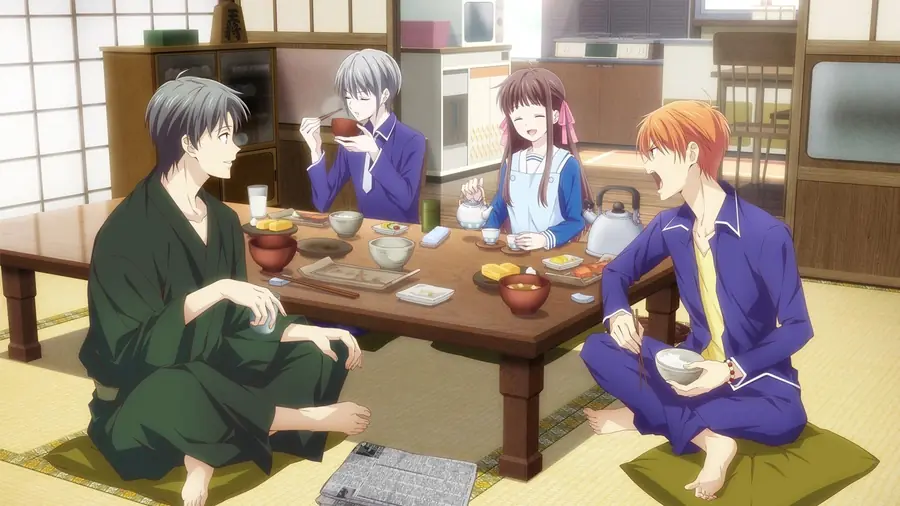
Fruits Basket
Discover the Sohma family curse as Tohru works to break the zodiac spell while forming deep bonds with its members.
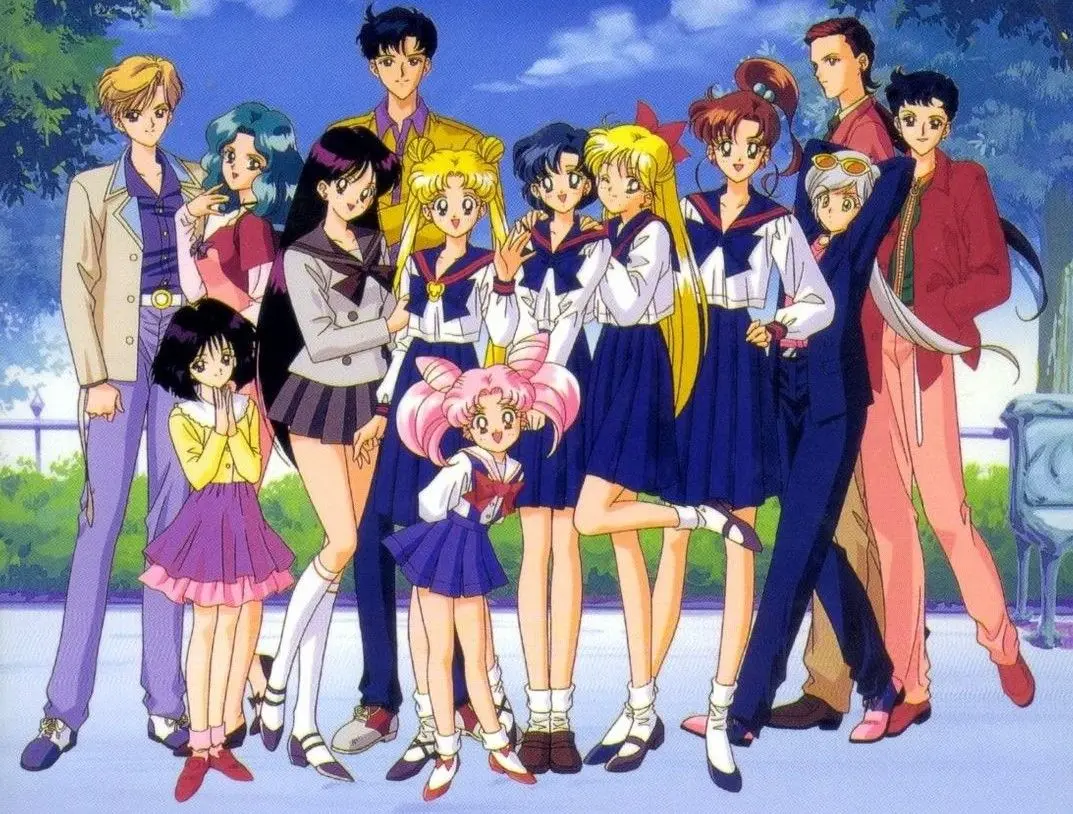
Bishoujo Senshi Sailor Moon
A revolutionary magical girl manga where a girl discovers she is part of an elite warrior group protecting Earth from dark forces.
The Apothecary Diaries
An ongoing seinen mystery manga by Natsu Hyuuga and Nekokurage following Maomao, an apothecary's daughter, as she solves imperial court mysteries using her pharmaceutical expertise in a historical Chinese setting.
Blue Box
An ongoing shonen sports romance manga by Kouji Miura about a badminton player and his crush, a basketball team ace, who unexpectedly begin living together while pursuing their athletic dreams.
Related Articles
All articles
Best Josei Manga: 16 Essential Series for Adult Women Readers
The best josei manga ever written — mature romance, workplace drama, and complex relationships that shojo never explores. Essential reading for adult manga fans.
Best Manga by Genre: The Ultimate 2026 Reading Guide (Shonen, Shojo, Seinen, Josei)
Comprehensive manga genre guide featuring best series by demographic and genre. From action shonen to mature josei, find your next read organized by taste and preference.

Top 20 Best Romance Manga of All Time
Discover the greatest romance manga featuring heartfelt love stories, emotional depth, and beautiful character development.