Hunter x Hunter Complete Guide (2026): Arcs, Characters & Hiatus
The complete Hunter x Hunter guide covering every arc, major characters, the legendary Chimera Ant arc, power system, and Togashi's hiatus history updated for 2026.
The Journey Begins: Understanding Hunter x Hunter’s Complex World
Yoshihiro Togashi’s Hunter x Hunter stands as one of the most intellectually challenging and emotionally rewarding manga series ever created. Since its debut in 1998, the series has captivated millions of readers worldwide with its intricate power systems, complex character relationships, and storytelling that refuses to follow conventional shonen formulas. What began as a seemingly straightforward adventure about a boy trying to become a Hunter evolved into something far more ambitious—a meditation on friendship, ambition, morality, and what it truly means to grow up.
The series has unfortunately become as famous for its ongoing hiatus as for its narrative brilliance. Since 2018, Hunter x Hunter has remained in a state of limbo, with author Yoshihiro Togashi dealing with health issues that have prevented him from continuing the story. This incomplete status has only heightened the legendary status of the series’ later arcs, particularly the Chimera Ant arc, which many consider the greatest arc in all of manga. For new readers approaching the series, understanding its structure, major arcs, and current status is essential for setting proper expectations.
⚡ TL;DR — The complete Hunter x Hunter guide covering every arc, major characters, the legendary Chimera Ant arc, power system, and Togashi’s hiatus history updated for 2026.
Quick Reference: Hunter x Hunter Essential Info
| Element | Details |
|---|---|
| Author | Yoshihiro Togashi |
| Status | On indefinite hiatus since 2018 (Ch. 390) |
| Total Chapters (Published) | 390 chapters |
| Main Arcs | 7 major arcs published |
| Power System | Nen (life energy manipulation) |
| Anime Adaptation | Hunter x Hunter (2011) - Ends at Chimera Ant arc |
| Target Demographic | Shounen (teen boys), appeals to all ages |
| Best Arc (Consensus) | Chimera Ant arc (Chapters 226-318) |
What Is Hunter x Hunter? The Premise That Started It All
Hunter x Hunter follows Gon Freecss, a twelve-year-old boy who discovers that his father Ging, whom he believed dead, is actually alive and working as a professional Hunter—a licensed individual with special privileges and access to restricted areas. Determined to find his father and understand what makes being a Hunter so important, Gon leaves his home on Whale Island and travels to the city of Zaban to take the Hunter Examination, an incredibly difficult test that would grant him a Hunter License.
This deceptively simple premise serves as the gateway to an increasingly complex narrative about ambition, friendship, and the price of pursuing one’s dreams. The early chapters feel like a traditional coming-of-age adventure, but Togashi gradually reveals layers of depth beneath the surface. What seemed like a straightforward goal—become a Hunter, find your father—becomes something far more morally ambiguous as Gon discovers uncomfortable truths about his father, his friends, and himself.
The genius of Hunter x Hunter’s premise is that it provides structure while allowing the story to explore virtually any setting or concept. Hunters have licenses to do things normal people cannot—explore dangerous territories, access restricted information, hunt rare creatures. This justifies moving from lush jungles to luxury auction houses to isolated islands to entire ant kingdoms. The Hunter concept is flexible enough to accommodate everything the series wants to explore.
The Four Pillars: Main Characters That Define the Series
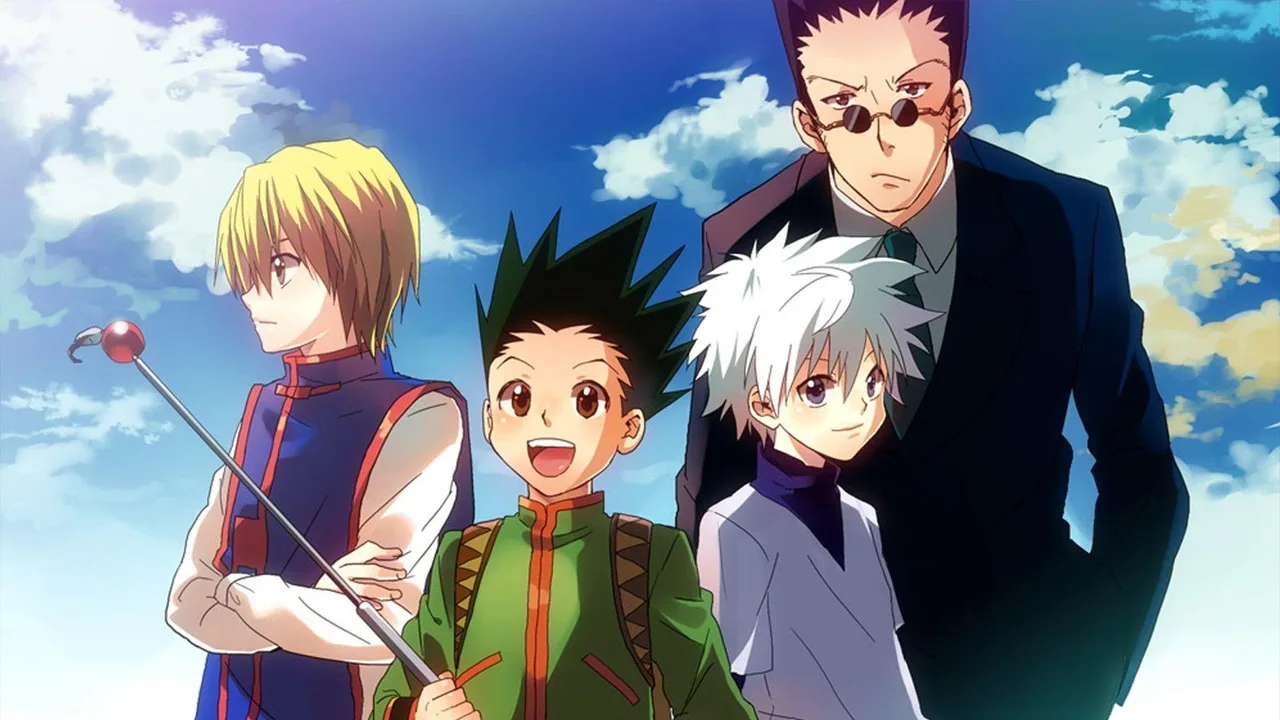
The four main protagonists form the emotional core of Hunter x Hunter. Their relationships with each other and their individual character arcs drive the entire narrative forward, making them far more than just a typical shonen team.
Gon Freecss is the protagonist, a seemingly simple-minded but genuinely kind-hearted boy driven by desire to find his father and understand his world. What makes Gon compelling is that he’s not particularly talented or genius-level intelligent compared to other hunters in the series. His strength comes from determination, adaptability, and an almost superhuman ability to form genuine connections with people. As the series progresses, readers discover that Gon’s innocence masks complexity—he can be ruthlessly pragmatic when necessary, willing to make difficult sacrifices for his goals.
Killua Zoldyck is a former child assassin from the infamous Zoldyck family, trained from birth to be the perfect killer. Initially, Killua seems designed to be the cool, aloof rival character, but his relationship with Gon transcends typical anime dynamics. Killua genuinely cares about Gon, and watching him struggle between his assassin training and his desire to be a normal boy forms one of the series’ most poignant character arcs. His growth from obedient weapon to someone capable of choosing his own path represents the series’ themes about breaking predetermined destinies.
Kurapika comes from the Kurta Clan, a group nearly entirely eliminated by the Phantom Troupe, a dangerous band of thieves and murderers. Kurapika’s sole motivation is revenge against the Troupe, making him a character driven by darkness and loss. The contrast between Kurapika’s cheerful appearance and his internal emotional turmoil creates complex character dynamics with Gon and Killua, who don’t fully understand his capacity for vengeance. Kurapika represents the darker implications of the series’ world.
Leorio Paradinight joins the group to become a doctor and earn money for medical school. He seems like comic relief initially, but Togashi uses Leorio to ground the series in genuine human concerns—money, education, helping others. While the other three hunters pursue abstract goals (becoming hunters, finding fathers, seeking revenge), Leorio wants to help people directly. This contrast enriches the group dynamic significantly.
The Nen System: Understanding Hunter x Hunter’s Power Framework
Nen is Hunter x Hunter’s power system, representing the ability to control and manipulate one’s aura—the life energy that emanates from all living things. Learning to use Nen is what separates powerful Hunters from ordinary people. The system’s elegance lies in its logical structure and how it constrains character abilities in meaningful ways, preventing the power creep that plagues many long-running series.
The fundamental principle of Nen is that all users have aura, but they must learn to emit (project aura outward), transmute (change aura’s properties), manipulate (control aura with precision), and enhance (amplify aura’s effects). Most people specialize in specific categories. The four main categories determine how users develop their personal Hatsu (unique Nen ability).
Enhancement users naturally amplify their aura’s effects, making them stronger, faster, or more durable. Enhancers are typically straightforward fighters who excel at direct combat. Emission users project aura away from their bodies, allowing them to attack from distance or create projectiles. Transmission users can alter how aura functions when transferred between people. Manipulation users control objects or effects with precision, making them capable of creative ability designs.
What makes Nen brilliant is that weakness and strength are relative. An Enhancement specialist might overpower a Transmission specialist in direct combat, but that Transmission specialist could control the Enhancer’s own aura against them. This creates rock-paper-scissors style matchups where victory isn’t guaranteed by power level but by matchup compatibility and creative ability use. A character with lower overall power can defeat someone stronger if their Nen ability specifically counters their opponent’s approach.
The system also includes restrictions and oaths. If a Nen user places a restriction on their ability (limiting its use in specific ways), they gain a corresponding increase in power. A character might swear that their ability only works against people who’ve sworn to the same oath, gaining massive power increases as compensation. This mechanic allows weaker characters to create powerful abilities by accepting limitations, creating narrative justification for why characters of varying power levels remain relevant.
Arc 1: Hunter Examination (Chapters 1-75)
The Hunter Examination arc establishes Hunter x Hunter’s tone and introduces the main cast. Gon travels to take the Hunter Examination, where he meets Killua, Kurapika, and Leorio. The arc functions as both introduction and character establishment, showing how these four very different people form bonds despite their different motivations.
The arc’s genius is that it never feels like a simple tournament. The examination includes multiple tests of different types—physical challenges, intelligence tests, survival situations—that reveal character. Characters like Hisoka, a powerful Hunter with concerning motivations, are introduced without explicit power level explanations. Instead, readers gradually understand Hisoka’s nature through his actions. The arc ends with the examination’s conclusion and the revelation that not all applicants are who they seem.
Arc 2: Zoldyck Family (Chapters 76-96)
The Zoldyck Family arc shifts focus to Killua, exploring his family and the assassin training that shaped him. When Killua’s father forbids him from pursuing the Hunter lifestyle, Gon and friends must visit the Zoldyck mansion to retrieve him. The arc deepens Killua’s character significantly, showing his internal conflict between family obligation and personal desire.
This arc introduces the concept that the series’ world contains hidden depths—the Hunter world isn’t simple, and powerful organizations operate behind the scenes. The Zoldyck family’s capabilities dwarf most hunters encountered previously, establishing that the series’ scope expands significantly beyond initial understanding.
Arc 3: Heavens Arena (Chapters 97-185)
The Heavens Arena arc marks Hunter x Hunter’s transition into more complex storytelling. The protagonists enter a tower where fighters battle to climb ranks, earning money and experience. This arc introduces Nen formally, showing how the power system defines combat at higher levels. Characters previously defeated through normal strength suddenly become competitive when they learn Nen.
The arc features several crucial character moments. Gon and Killua’s training, their individual matches with experienced fighters, and their battles against each other explore both combat and character. By the arc’s end, the group has grown significantly in power and understanding. Hisoka’s reappearance as a consistent presence establishes him as crucial to the series’ future.
Arc 4: Yorknew City (Chapters 186-225)
The Yorknew City arc fundamentally shifts Hunter x Hunter’s genre and tone. The group travels to a major city for an auction, where they encounter the Phantom Troupe—the villainous group responsible for massacring Kurapika’s clan. The arc becomes a crime thriller, focusing on the Phantom Troupe’s activities, mafia dynamics, and complex power politics.
This arc introduces dozens of important characters and concepts that reverberate throughout the series. The Phantom Troupe members are portrayed as sympathetic despite their crimes—they have relationships, reasoning, and depth that complicates simple good-versus-evil narratives. The arc establishes that major characters can die permanently, raising genuine stakes. By the arc’s conclusion, relationships have fundamentally changed, and the group understands the series’ world is far darker than initially apparent.
Arc 5: Chimera Ant (Chapters 226-318) — Manga’s Greatest Arc
The Chimera Ant arc represents the absolute peak of Hunter x Hunter and many consider it the greatest arc in all of manga. This arc spans over 90 chapters and tells the story of the Chimera Ant species—creatures with the ability to consume other animals and gain their traits. A Queen Chimera Ant washes ashore in a populated nation and begins bearing children—the Royal Guards and the King.
What makes this arc extraordinary is its philosophical and emotional depth. The narrative shifts perspective multiple times, showing events from different characters’ viewpoints. Readers understand the Chimera Ants’ motivations, sympathize with them despite their threat to humanity, and struggle with moral questions about whether beings can transcend their nature and programming. The arc explores whether the King, created to be the ultimate predator, can develop genuine emotions and relationships.
The character development across this arc is unmatched. Gon’s arc culminates in a decision that costs him everything—literally. His willingness to sacrifice his future for immediate power represents the series’ ultimate exploration of his character. Killua faces his final test regarding his predetermined nature. Kurapika pursues his revenge against impossible odds. The arc’s emotional weight carries stakes that feel genuinely permanent.
The Chimera Ant arc also contains some of the series’ most intelligent writing. Characters solve problems through strategy rather than raw power. The royal guards’ abilities are conceptually complex, requiring creative tactical approaches rather than simple power scaling. A single battle between Netero (the hunter association chairman) and the King spans multiple chapters and explores philosophical questions about strength, sacrifice, and the meaning of victory.
Arc 6: Election (Chapters 319-338)
The Election arc follows the Chimera Ant resolution, focusing on the Hunter Association’s leadership election after the previous chairman’s death. This arc seems smaller in scope than the previous arc but explores important character dynamics and consequences of the Chimera Ant invasion.
The arc humanizes characters previously seen only in action contexts. Watching different characters vote based on their values and relationships reveals character depth. While shorter and less action-focused than previous arcs, the Election arc provides essential narrative closure and demonstrates the series’ world continuing beyond the protagonists.
Arc 7: Succession War (Chapters 339-390+)
The Succession War arc, the current and unfinished storyline, begins with the revelation that the Kakin Empire’s royal family is traveling to the Dark Continent, with the succession to be determined through a tournament involving Nen-based battles. The arc is notably different in structure—it focuses less on the main four protagonists and more on numerous secondary and tertiary characters, exploring the depth of Togashi’s world-building.
The Succession War features over thirty named characters with complex motivations, relationships, and Nen abilities. The arc’s structure resembles a detailed political thriller more than traditional shonen adventure. Power dynamics shift constantly as characters form alliances, betray each other, and pursue individual goals. Without the Chimera Ant arc’s clear protagonist focus, the Succession War presents unprecedented narrative complexity.
The arc’s pacing reflects its scope—individual chapters reveal nuanced details about character relationships and ability mechanics rather than moving rapidly through dramatic confrontations. This deliberate pacing, combined with the hiatus, has made the Succession War arc the subject of intense speculation among fans.
Yoshihiro Togashi and the Hiatus: Understanding the Real Story
Yoshihiro Togashi is one of manga’s most celebrated creators, having also written YuYu Hakusho, another monumentally influential series. Togashi’s health issues, particularly chronic back pain and other physical ailments, have been intermittent obstacles to his work for decades. In 2018, Togashi ceased publication of Hunter x Hunter, with brief announcements indicating health-related reasons.
Since 2018, Togashi has provided occasional updates through social media, sharing illustrations and notes about his health and the series’ future. However, no official return date has been announced. The hiatus has extended to eight years as of 2026, raising questions about whether the series will ever resume and, if it does, what form it will take.
For fans, the hiatus is deeply frustrating, yet Togashi’s health must be prioritized. The manga industry’s notoriously demanding work schedules have caused health crises for numerous creators. Togashi’s decision to prioritize recovery over continuing to publish represents a reasonable boundary, even if it means readers may never see the Succession War arc’s conclusion.
Manga vs Anime: Which Should You Experience First?
The Hunter x Hunter 2011 anime adaptation is widely considered one of the best anime ever created. Studio Madhouse’s adaptation faithfully translates the manga while adding excellent animation, compelling voice acting, and musical scoring that enhances emotional moments. For newcomers, watching the anime provides an excellent introduction to the series.
However, the anime ends after the Chimera Ant arc, leaving the Succession War arc (chapters 339-390) exclusively in the manga. Readers who complete the anime will need to switch to manga to continue the story. The manga’s pacing, while sometimes slower than anime, allows for deeper exploration of minor character details that the anime adaptation condenses.
For dedicated fans, experiencing both is ideal—the anime for its visual and audio storytelling, the manga for its complete narrative and intricate detail. Newcomers might start with the anime to understand the series before diving into the manga’s unfinished story.
Why Hunter x Hunter Matters: Legacy and Influence
Hunter x Hunter represents what thoughtful shonen manga can achieve. Rather than defaulting to simple power escalation and tournament structures, Togashi consistently subverts expectations. Arc conclusions don’t resolve all conflicts—the Phantom Troupe survives to become more dangerous rather than defeated. Characters suffer permanent consequences—Gon loses his Nen, fundamentally changing his future. The series refuses formulaic endings.
The Chimera Ant arc’s critical acclaim has influenced subsequent manga creators. Works like Jujutsu Kaisen and My Hero Academia reflect lessons learned from Hunter x Hunter’s sophisticated character and power system design. The series proved that shonen manga could contain genuine philosophical depth without sacrificing entertainment value.
Frequently Asked Questions
When is Hunter x Hunter coming back from hiatus?
As of 2026, Hunter x Hunter remains on indefinite hiatus. Author Yoshihiro Togashi has provided no official return date. The manga last published chapter 390 in 2018. While Togashi has occasionally posted updates on his health, no confirmed timeline for the series’ resumption has been announced. Fans should manage expectations appropriately.
Is the Chimera Ant arc really the best manga arc ever?
The Chimera Ant arc is widely considered one of manga’s greatest arcs, featuring some of the most intelligent writing in the medium. Its character development, moral complexity, and philosophical depth set it apart. However, whether it’s the absolute best is subjective—many fans find Soul Society, other Bleach arcs, or other series’ arcs equally compelling depending on personal preferences.
Do I need to watch the anime or read the manga?
Both are excellent. The manga is the original source material and contains all content through chapter 390. The Hunter x Hunter 2011 anime adaptation faithfully translates the manga with exceptional animation. The anime ends at the Chimera Ant arc’s conclusion, leaving the Succession War arc manga-only for those wanting to continue.
What are the main characters in Hunter x Hunter?
The four main protagonists are Gon Freecss (the protagonist), Killua Zoldyck (Gon’s best friend and former assassin), Kurapika (revenge-driven Kurta clan survivor), and Leorio (aspiring doctor). These four form the core cast, though Togashi introduces many important supporting characters throughout the series, particularly in later arcs.
What is Nen in Hunter x Hunter?
Nen is Hunter x Hunter’s power system, the ability to control and manipulate one’s life energy (aura). It involves learning to emit, manipulate, and shape your aura through four main categories: Enhancement, Emission, Transmission, and Manipulation. Complex Nen abilities (Hatsu) form the foundation of combat in the series, with restrictions and oaths providing power increases.
Experience Hunter x Hunter Today
The journey to becoming a Hunter awaits. Start with Hunter x Hunter’s manga or experience the anime adaptation for a visual feast. Either way, prepare for one of manga and anime’s most intellectually rewarding adventures.
For more details on character development and power system analysis, explore deeper dives into specific arcs and character journeys on Mangaka.online.
Updated March 2026: Hunter x Hunter remains on hiatus with no official return date announced. The series through chapter 390 remains complete and available for new readers to enjoy.
FAQ
Related Articles
Hunter x Hunter Volume 39 Confirmed: Togashi's Manga Returns After 22 Months
Hunter x Hunter Volume 39 hits shelves July 3, 2026, ending a 22-month wait. Here's the release date, what chapters it collects, and where the manga goes next.
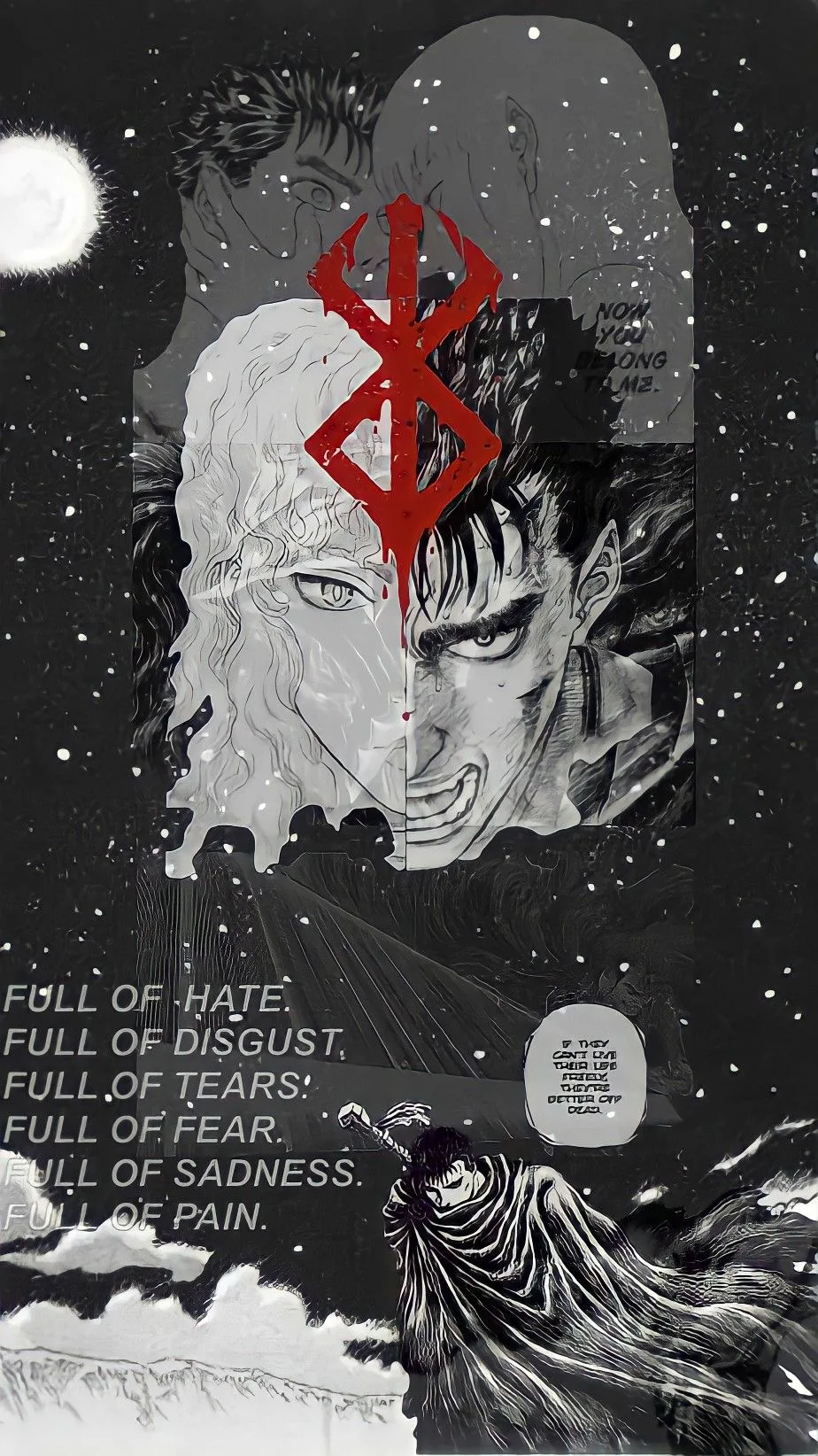
Berserk Manga Reading Order (2026): Complete Guide & Arcs
The complete Berserk reading order and arc guide. From Black Swordsman to Fantasia — how to read Kentaro Miura's masterpiece and what happens after his passing.
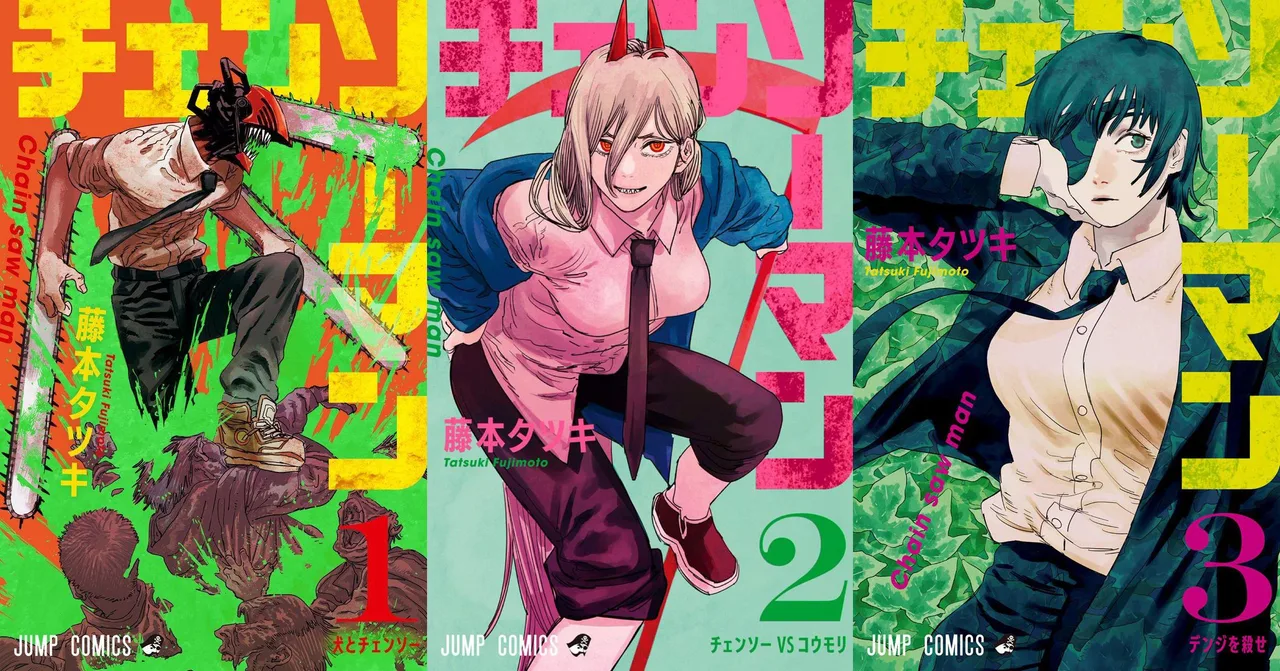
Chainsaw Man Complete Guide: Manga, Story & Characters (2026)
The complete Chainsaw Man guide covering the manga's story, characters, themes, and why Tatsuki Fujimoto's dark shonen masterpiece is revolutionary. Everything you need to know about Denji, Power, Makima, and Part 2.