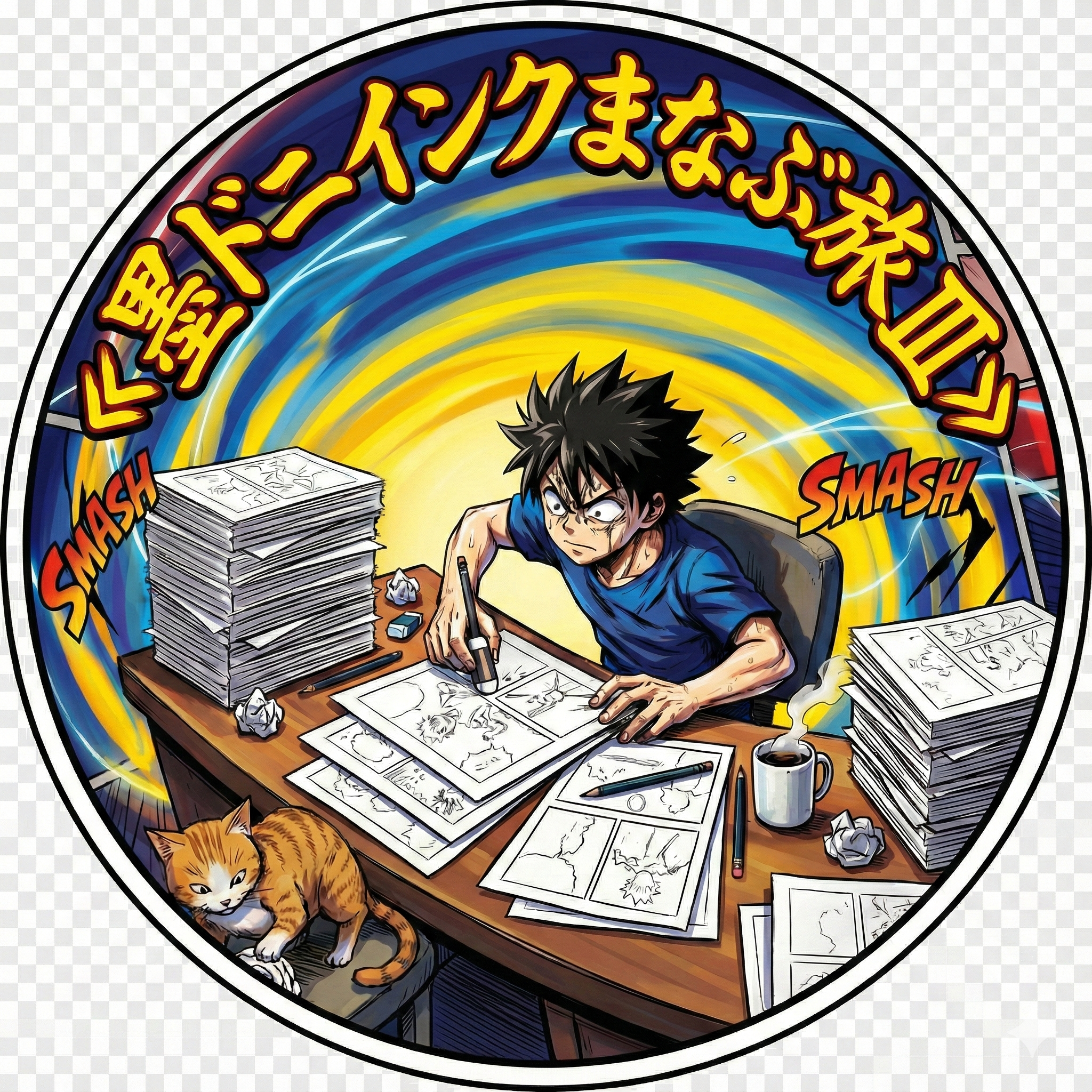
Mangaka Mental Health: The Hidden Crisis Behind Your Favorite Manga
Explore the brutal working conditions, health crises, and mental health challenges faced by mangaka. From 15-hour days to famous creator health crises.
⚡ TL;DR — Explore the brutal working conditions, health crises, and mental health challenges faced by mangaka. From 15-hour days to famous creator health crises.
The Reality Behind the Pages: What Mangaka Really Go Through
Every week, millions of readers across the globe eagerly await the latest chapters of their favorite manga. But behind those beautifully illustrated pages lies a reality that few fans understand: the mangaka—the artists and writers who create these stories—often sacrifice their health, happiness, and years of their lives to deliver the content we love.
The image of the struggling manga artist is deeply romanticized in Japanese pop culture. We celebrate their dedication, admire their passion, and frame their exhaustion as proof of commitment to their craft. But what if that narrative is actively harming an entire generation of creators?
The truth is far darker than most readers realize. The current manga industry operates on a business model that treats human creators as disposable resources, burning through talent at an alarming rate. This is not speculation—it’s documented reality, reflected in the health crises of legendary mangaka and the systemic conditions that make sustainable creative work nearly impossible.
The Brutal Economics of Serialization
The financial structure of manga serialization creates a perfect storm of insecurity and overwork. Let’s break down the numbers.
A weekly serialization in a major magazine like Weekly Shonen Jump requires 15-20 new pages every single week. A monthly series demands 40-45 pages monthly. For a mangaka working alone or with a small team of assistants, this translates to an relentless production schedule with no downtime—not weekends, not holidays, not when you’re sick.
The income structure makes this system even more predatory. New mangaka earn approximately ¥5,000-15,000 per page in serialization fees from their publisher—roughly $35-100 per page at current exchange rates. For a 20-page weekly chapter, that’s perhaps ¥100,000-300,000 per week, or $700-2,000. Before taxes, assistant payments, and rent.
Here’s the catch: royalties (the money from actual book sales) only kick in after extremely high sales thresholds, and only if your series makes the jump to tankōbon publication. Many serialized series never recoup enough in royalties to matter. The pressure to maintain sales and stay off the cancellation chopping block forces mangaka to compromise on health and safety.
The assistant system compounds this crisis. Professional mangaka hire assistants to handle backgrounds, screentones, and other time-consuming elements. But assistants are typically paid ¥1,000-3,000 per hour ($7-20), work 12-14 hour shifts with no job security, and their employment is entirely dependent on their mangaka’s serialization status. If a series gets cancelled, assistants lose their income overnight. Many young artists work as assistants for years, enduring brutal conditions, hoping to eventually become serialized mangaka themselves.
This is the machine: unsustainable hours, unstable income, pressure to perform every single week, and junior creators trapped in a precarious system with no safety net.
Famous Cases of Mangaka Health Crises
The stories of individual mangaka who collapsed under this system are not anomalies—they’re warnings.
Yoshihiro Togashi (Hunter x Hunter) remains the most visible example of industry-wide burnout. Togashi has dealt with severe back and spinal problems for decades, allegedly resulting from his hunched posture over drawing tables during the grueling production schedule of Hunter x Hunter. These health issues have caused multiple years-long hiatuses throughout the series’ run since 2006. Readers know to expect gaps—long stretches where no chapters appear. Togashi has continued working despite genuine physical pain because the series demands it, and his fans have learned to wait.
Kentaro Miura (Berserk) represents a more tragic outcome. Miura worked on Berserk—an extraordinarily detailed manga with intricate backgrounds and complex panel layouts—for nearly three decades. His meticulous artistic process demanded 12-16 hour workdays regularly. In May 2021, at just 54 years old, Miura died of aortic dissection, a sudden and catastrophic heart condition. While no official statement directly linked his death to overwork, the timeline and conditions of his work are telling: he had been working on Berserk with minimal breaks for most of his adult life.
Inio Asano (Goodnight Punpun, Solanin) has been remarkably open about depression and creative exhaustion. Asano took a three-year hiatus after completing Solanin, explicitly citing mental health reasons. He later described the serialization process as psychologically devastating. His willingness to discuss these issues publicly makes him rare—most mangaka suffer in silence.
Nobuhiro Watsuki (Rurouni Kenshin) had his series suspended and faced legal consequences in 2017, but even before that, the intense production schedule of Rurouni Kenshin during the late 1990s took its toll.
Rumiko Takahashi (Ranma ½, InuYasha), by contrast, has maintained a reputation for relatively sustainable working practices. Her efficiency and ability to manage a large team without completely destroying her health makes her an exception—and proves that alternative approaches exist, even if they’re rare.
The silence around mental health in Japanese professional environments means we’ll never know the full extent of depression, anxiety, and psychological damage experienced by mangaka. But the pattern is unmistakable: the industry structure breaks creators.
The Weekly Shonen Jump Pressure Cooker
Weekly Shonen Jump is the most prestigious but also most brutal publication in the manga industry. Serialization in Jump means access to millions of readers and genuine fame—but it also means weekly deadlines with no flexibility and a constant threat of cancellation.
The magazine’s popularity poll system creates constant anxiety. Reader votes directly influence which series get continued prominence and which get axed. For a mangaka, this means weeks where your series might be ranked in the bottom half, signaling to both readers and editors that cancellation could be imminent. This feedback loop creates psychological pressure that manifests in two ways: some mangaka push themselves harder trying to spike interest, while others experience crushing anxiety about their job security.
Cancellation itself is traumatic—not just for income reasons, but because of what it represents. A cancelled series in Jump is a public failure, and the mangaka’s next opportunity depends heavily on the success of their previous work. This creates a vicious cycle where new series get progressively less support, and creators can’t recover from a single failed serialization.
The relationship between mangaka and editor also shapes this pressure cooker environment. In theory, editors function as guides and support systems. In practice, many editors are primarily focused on sales metrics and pushing for more sensational content. The quality of this relationship varies dramatically. Some mangaka have editors who genuinely mentor and protect them; others deal with editors who push for increasingly risky content or unsustainable schedules to maximize sales.
The Physical Toll: Hand, Eyes, and Posture
Beyond the schedule, manga creation inflicts documented physical damage on creators’ bodies.
Repetitive strain injuries (RSI) are endemic among mangaka. Inking and drawing for 12-16 hours daily causes carpal tunnel syndrome, tendinitis, and chronic wrist pain. Many veteran mangaka report persistent hand problems that never fully resolve, even after stopping work. The physical act of holding a pen or stylus under pressure for hours, combined with the tension of high-stakes deadlines, creates injuries that compound over years.
Vision problems are equally common. Staring at drawing surfaces or screens in poorly lit studios for extended periods causes eye strain, myopia progression, and in some cases, permanent vision damage. Many older mangaka wear glasses or have undergone corrective surgery.
Posture is perhaps the most visible issue—the hunched-over position required for traditional manga creation damages the spine, neck, and shoulders. This explains Togashi’s chronic back problems and why so many veteran mangaka move stiffly or suffer from chronic pain.
The shift toward digital manga creation (tablets, drawing software) has improved some aspects of ergonomics—digital artists can adjust screen angles and take frequent position breaks more easily. But the underlying schedule problem remains the same: the hours are still unsustainable, whether you’re drawing on paper or a Wacom tablet.
The Psychological Impact
The mental health toll extends far beyond the physical. The structure of serialization creates a unique form of psychological pressure that’s difficult for outsiders to understand.
Impostor syndrome haunts many mangaka, especially early in serialization. The fear that you’re not good enough, that readers will discover your work is mediocre, that you’ll be cancelled—this creates constant background anxiety. Each reader comment, each sales report, each interaction with an editor becomes laden with significance.
Social isolation follows naturally from the schedule. A mangaka working 15 hours daily, 7 days a week has no time for social relationships. Friendships fade, romantic relationships suffer, and many mangaka become increasingly isolated. Some cope by building a small team of close assistants who become their primary social contact. Others work almost completely alone, compounding the isolation.
The paradox at the heart of manga creation is that passion and industrial production are fundamentally incompatible. A mangaka begins their journey because they love creating stories and art. But the serialization system transforms this passion into obligation. The creative joy gets buried under deadlines, sales pressure, and physical exhaustion. Many long-term mangaka report losing the pleasure they once felt from creating manga.
Depression and anxiety are widespread but rarely discussed openly. The combination of isolation, uncertainty, physical exhaustion, and constant evaluation creates ideal conditions for mental health crises. Yet the industry culture treats mental health struggles as personal weakness rather than systemic problems.
What’s Changing: Reform and New Models
Not everything is bleak. There are signs of change, though progress is glacially slow.
Digital platforms like Webtoon Canvas and Pixiv offer new models where creators can post on flexible schedules—sometimes weekly, sometimes with gaps—without the same cancellation threats. Readers adjust their expectations, and the creator maintains more control over their pace. This has enabled a new generation of mangaka to build audiences without completely destroying their health.
Monthly serialization options from publishers like Kadokawa (Young Ace) and others provide slightly more breathing room than weekly magazines. A 40-45 page monthly deadline is still brutal, but it’s marginally more sustainable than weekly pressure.
Industry conversations about reform are happening, particularly around working hours, artist compensation, and copyright ownership. The Japan Cartoonists Association (JCA) has raised these issues publicly, though the major publishers (Shueisha, Kodansha) have been slow to implement meaningful change.
Some younger publishers and platforms are experimenting with alternative models entirely: fixed salaries instead of per-page fees, 9-5 work hours, mental health resources, and more stable employment.
Advice for Aspiring Manga Creators: Protect Yourself
If you dream of becoming a mangaka, the path is still possible—but only if you approach it strategically.
Set realistic expectations. The industry will not hand you success or protect your health. You must be the one to establish boundaries. If you decide to pursue serialization, understand that it will demand everything from you. Plan accordingly.
Build financial reserves before going professional. Ideally, save 1-2 years of living expenses. This gives you a buffer to survive early serialization, series cancellations, and gaps between projects. Without this safety net, you’ll be forced into desperation-driven decisions.
Consider starting on digital platforms first. Build an audience and establish your voice on Webtoon Canvas, Pixiv, or similar sites where you control your schedule. Prove your capability and build a fan base before attempting traditional serialization. This gives you negotiating power and reduces the desperation factor.
Don’t romanticize suffering. The “suffer for your art” narrative is a tool used to justify exploitative conditions. Artists don’t create better work when they’re broken. You’ll create better, more authentic work when you’re healthy, rested, and mentally balanced.
Build community. Connect with other creators, build support systems, find mentors, and don’t isolate yourself. The industry encourages isolation; actively resist it.
Know when to quit. If serialization is destroying your health or happiness, it’s okay to stop. There are other ways to create and share your work. Your life matters more than any manga series.
The future of manga depends on whether the industry will reform or whether creators will continue voting with their feet, abandoning traditional paths for more sustainable alternatives. Until that changes, the responsibility falls on individual creators to protect themselves.
Your favorite manga exists because someone sacrificed their health to create it. The least you can do as a reader is acknowledge that sacrifice and support industry reform that protects future creators.
Internal References:
Related Articles
15 Female Mangaka You Should Know: Groundbreaking Women in Manga
Discover 15 influential female mangaka who shaped the manga industry. From Sailor Moon to Demon Slayer, explore the pioneering women creators behind your favorite series and their lasting impact on manga.

Manga Industry Statistics 2026: Market Size, Revenue, and Global Trends
Comprehensive breakdown of the global manga industry in 2026. Market size, revenue statistics, international growth, digital trends, and creator economics.
Manga Industry Statistics and Market Data: The Complete 2025 Report
Comprehensive manga industry statistics for 2025. Market size, sales figures, digital growth, top publishers, and global expansion data.