Manga Inking Techniques: Pen, Brush and Digital
March 15, 2026 · 10 min read · By Mangaka.online Editorial
Why Inking Matters: The Bridge Between Sketch and Final Art
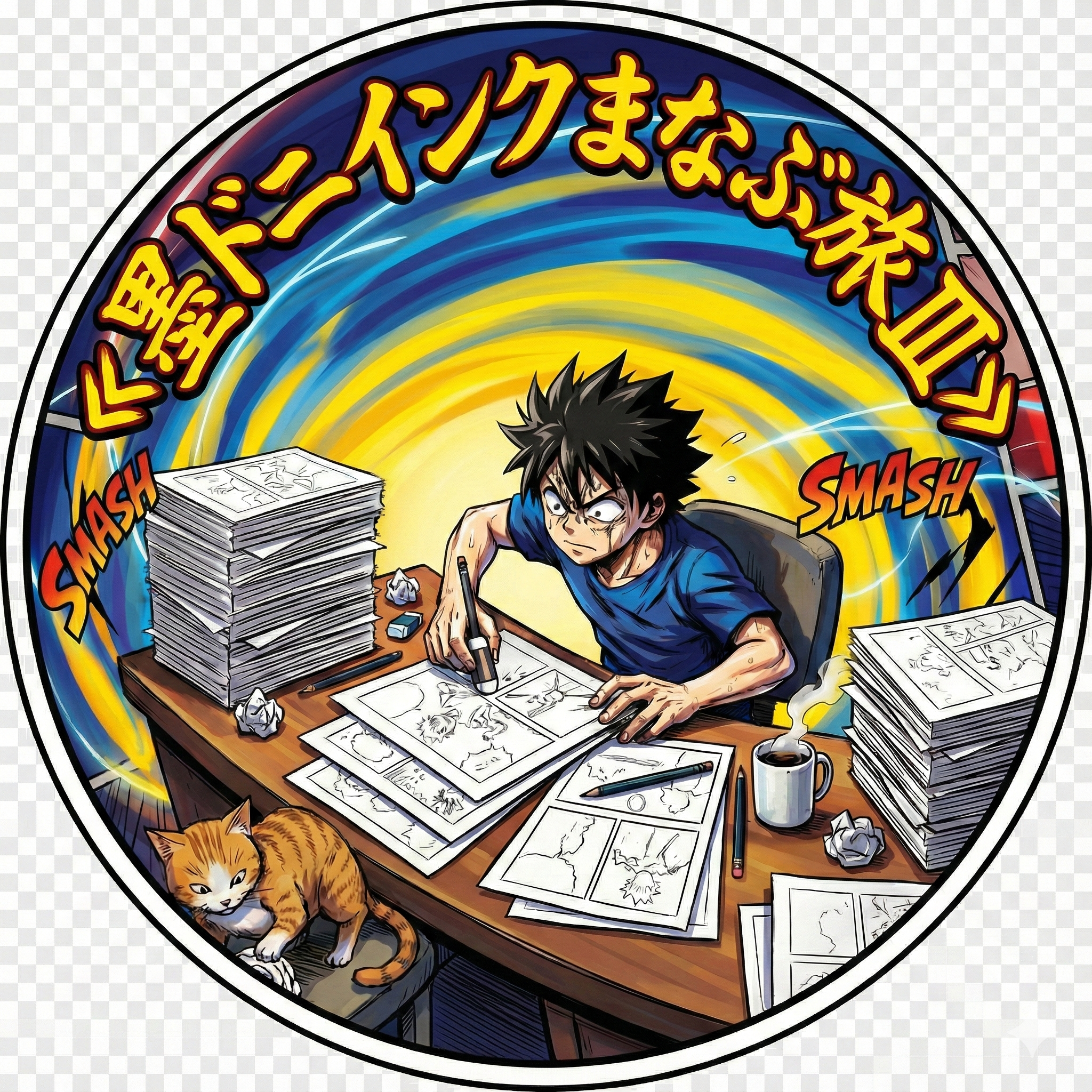
If pencilling is the creative foundation of manga, inking is the performance. It’s where your pencil sketches transform into bold, confident linework that communicates emotion, movement, and style. A well-inked manga page can make a rough pencil sketch sing; poor inking can undermine even beautiful pencilwork.
Inking requires different skills than pencilling. While pencilling is about construction and exploration, inking is about commitment, decisiveness, and technical control. Every inked line is visible and permanent (or requires laborious correction). This immediacy demands both technical mastery and artistic confidence.
Professional mangakas approach inking with reverence. They understand that inking isn’t merely tracing—it’s interpreting the pencil sketch, making decisions about line weight, adding expressive details, and transforming a sketch into a finished artwork. Many readers’ first impression of your manga is determined not by your pencilwork, but by your inking quality.
This guide covers both traditional inking (which remains the standard for printed manga serialization) and digital inking (increasingly common and offering unique advantages for modern creators).
Traditional vs. Digital Inking: Choosing Your Medium
Before diving into technique, understand the trade-offs between traditional and digital approaches.
Traditional Inking Advantages
Permanence and intention: Every stroke is final. This forces deliberation and builds confidence through commitment.
Tactile feedback: The physical resistance of pen on paper, the weight of the tool, the texture of the paper surface—these provide real-time feedback that’s difficult to replicate digitally.
Scanning workflow: Traditional inks scan beautifully and require only basic adjustments in Photoshop. The result is clean, high-contrast linework perfect for print.
Industry standard for serialization: Most Japanese manga publishers still prefer traditionally inked artwork for serialization. It demonstrates technical mastery expected of professionals.
No technical distractions: You’re not managing layers, brushes, or digital settings—just drawing.
Traditional Inking Disadvantages
Permanence is also a liability: Mistakes are difficult to fix. Correction fluid (white-out) can work for small errors but looks obvious in prints.
Steeper learning curve: Controlling ink flow, nib flexibility, and pressure requires extensive practice.
Physical space requirements: You need a dedicated workspace, proper lighting, and significant supplies.
Time-consuming: Inking a full page traditionally takes 3-8 hours depending on complexity.
Digital Inking Advantages
Unlimited corrections: Make mistakes without consequences. Undo is your friend.
Faster workflow: With practice, digital inking is 30-50% faster than traditional inking.
Non-destructive editing: Work in layers, adjust strokes after creation, try multiple versions instantly.
Built-in tools: Access unlimited brush styles, pattern fills, and special effects instantly.
Easier to share: Export directly to formats suitable for web or print.
Lower barrier to entry: Lower upfront cost (one tablet vs. ongoing supplies).
Digital Inking Disadvantages
Less tactile feedback: The disconnect between hand and screen takes time to adjust to (especially with pen tablets without screens).
Learning curve for software: Managing layers, brushes, and settings introduces complexity.
Hardware dependency: Quality requires a decent drawing tablet.
Display calibration: Slight color/contrast differences between screen and print can surprise you.
Less industry credibility: Some traditional publishers still undervalue digital submissions (though this is rapidly changing).
Which Should You Choose?
Choose traditional if: You want to develop foundational control, you’re pursuing traditional Japanese manga serialization, you prefer a tactile experience, or you want to eliminate technical distractions.
Choose digital if: You want faster workflow, you value the ability to revise extensively, you’re creating manga for web publication, or you have limited physical space.
Choose both: Many professionals ink traditionally for pages they’ll print and use digital for web-exclusive content or rapid iterations.
Traditional Inking Tools and Supplies
If you choose traditional inking, understanding your tools is essential. Each tool has distinct characteristics that affect the final result.
G-Nibs and Flexible Pen Tools
The G-nib (also called a G-pen) is the workhorse of manga inking. It’s a pointed, flexible metal nib that produces variable line width based on pressure applied and angle held. The most respected brands are Tachikawa and Nikko.
How G-nibs work: As you increase pressure, the nib flexes and spreads, creating thicker lines. Drawing at different angles with a G-nib produces different line widths—this angle sensitivity is essential to manga’s expressive linework.
G-nib technique:
- Hold the pen at a 45-degree angle to the paper
- Use light pressure for thin lines
- Increase pressure for thick lines
- Maintain consistent angle for uniform line variation
- Curves and strokes at different angles naturally vary in width
- The characteristic “thicking and thinning” of manga lines comes from proper G-nib use
The G-nib is unforgiving—it requires confident, flowing strokes. Hesitant or shaky lines become visible in the final art. This is why inking with G-nibs is considered a skill marker—it demonstrates technical control.
Maru Nibs and Fine Detail
The Maru nib (circle nib) is a small, stiff circular nib that produces uniform line width. Perfect for fine details, backgrounds, small text, and clean geometric lines.
Maru nibs are less expressive than G-nibs but offer consistency and control for intricate work. Professional mangakas often use both—G-nib for character work and expressive lines, Maru nib for details and backgrounds.
Brush Pens and Ink Brushes
Brush pens (felt-tipped pens that mimic brushes) offer a middle ground between pens and traditional brushes. They’re faster than brushes, more forgiving than G-nibs, but slightly less expressive. Brands like Pentel and Tombow produce excellent manga brush pens.
Traditional ink brushes require the most skill but offer the most expressive potential. Used primarily for bold outlines, thick shadows, and backgrounds. Japanese brushes (made from natural hair like goat or horse hair) are preferred, though synthetic brushes work for students.
India Ink and Paper
India ink is the standard medium. Waterproof black India ink (brands like Kuretake or Deleter No.4) scans clearly and resists correction fluid. Non-waterproof inks can smudge and aren’t recommended for professional work.
Manga paper is specialized paper designed for inking. Deleter manga paper (Type A and Type B) is the professional standard in Japan. It has a slightly rough texture that grips ink perfectly, pre-printed panel borders, and sizing optimized for G-nib work. Manga paper comes in B4 size (the standard for Japanese serialization) and A4 (common for Western submissions).
If professional manga paper is unavailable or expensive, bristol board (smooth illustration board) works as a substitute, though it doesn’t have the specialized texture of manga paper.
Support Tools
- Metal ruler: For straight lines and backgrounds
- Rapidograph or technical pens: For perfectly straight, uniform lines
- Correction fluid (white-out): For minor fixes
- Scratch tools: For scraping off wet ink
- Light box: Essential for transferring pencil sketches to final paper
Line Weight: The Foundation of Expressive Inking
Line weight refers to the varying thickness of lines throughout your artwork. Manga’s distinctive visual language depends heavily on sophisticated line weight variation.
Why Line Weight Matters
Line weight achieves multiple effects:
Visual hierarchy: Thicker lines on focal points (character faces) draw attention. Thinner lines on background details push them back.
Emotional expression: Sharp, thick lines suggest intensity or power. Thin, delicate lines suggest fragility or subtlety.
Form and dimension: Thicker lines on silhouette edges create separation from the background. Varying internal lines suggest surface contours.
Speed and movement: Quick, confident thick lines suggest action. Fine, delicate lines suggest care or precision.
Line Weight Principles
Establish your base line weight: This is the thickness of your standard outline. For face features, you might use a fine line (approximately 0.5mm). For character silhouettes, you might use a thicker base (approximately 1-2mm).
Vary from the base: Once you establish a base, create variation:
- Edges facing light are thinner than edges in shadow
- Focal point lines are thicker than background lines
- Important characters have thicker outlines than secondary characters
- Foreground elements have thicker lines than background
Use thick lines strategically: Thick lines demand attention. Use them only where you want focus:
- Character faces (especially eyes and mouth)
- Hands in action
- Focal points of the composition
- Sharp emotional moments
Fade lines by touch: Rather than ending a line abruptly, some lines fade away (taper to nothing). This creates a more organic, less harsh appearance.
Don’t vary randomly: Every line weight variation should serve a purpose. Inconsistent line weight feels amateurish.
Speed Lines and Motion Effects
Speed lines (also called motion lines or feathering) are the iconic visual language of action in manga. They’re stylized lines that follow the direction of movement, suggesting speed and dynamism.
Speed Line Technique
Speed lines work through visual psychology: lines converging toward a vanishing point suggest movement toward that point. Lines flowing away from a figure suggest movement away.
Creating speed lines:
- Draw multiple parallel or nearly-parallel lines in the direction of movement
- Make lines taper as they recede into the distance
- Use thicker lines closer to the action, thinner lines farther away
- Add slight curves rather than perfectly straight lines (curves feel more organic)
- Space lines consistently (irregularly spaced lines feel chaotic)
- Typically use 3-7 lines per speed line effect (more feels cluttered)
Speed lines work best when:
- They frame the moving object (lines flow around the moving figure)
- They originate from the figure’s trajectory point
- They’re used sparingly (every action pose has speed lines, but static scenes are clean)
- They follow a clear, readable direction
Speed Line Variations
Radial speed lines: Lines radiating outward from a central point (explosion, impact, sudden appearance). Creates a sense of explosive energy.
Horizontal speed lines: Traditional side-to-side movement. Most common and easiest to read.
Rotational speed lines: Curved lines suggesting rotational movement (spinning, drilling attacks).
Feathering: Extremely fine, soft lines rather than bold speed lines. Creates a sense of wind or subtle motion rather than explosive speed.
Speed lines are so integral to manga’s visual language that learning to draw them confidently is essential. Spend time drawing speed lines in isolation—practice creating consistent, readable, aesthetically pleasing motion effects.
Hatching and Cross-Hatching for Shading
While screentone creates tonal ranges in professional manga, hatching—drawing parallel lines to suggest shadow and dimension—remains essential for:
- Creating texture
- Suggesting form without relying on tone
- Adding artistic flair and personality
- Creating unique artistic styles
Hatching Principles
Follow the form: Lines should curve and flow with the surface they’re shading. On a rounded cheek, lines should curve gently following the cheek’s contour.
Maintain consistent spacing: The distance between lines determines the darkness. Closely spaced lines = darker, widely spaced = lighter.
Apply gradually: Build darkness through multiple layers. This prevents muddy, harsh shadows.
Use directional logic: Lines in different areas can follow different directions (head has one direction, neck has another) but should read as unified, not chaotic.
Leave highlights clear: The brightest areas should remain completely white. This creates luminosity and prevents flat appearance.
Cross-Hatching and Layering
Cross-hatching (adding a second layer of lines perpendicular to the first) darkens areas dramatically. Use sparingly:
- Reserve cross-hatching for deepest shadows
- Keep cross-hatching angles to approximately 90 degrees (perpendicular)
- Too much cross-hatching makes pages look muddy and cluttered
- Professional manga often uses hatching without cross-hatching for cleaner appearance
Digital Inking Workflow
If you choose digital inking, the workflow differs significantly from traditional methods.
Setting Up Clip Studio Paint for Inking
Clip Studio Paint is the industry standard for digital manga creation. When setting up for inking:
Create a new layer above your pencil layer specifically for inks. This allows non-destructive editing and easy adjustment of ink opacity.
Choose appropriate brushes: Clip Studio Paint includes numerous manga-specific inking brushes. The “Pen” and “G-pen” brushes simulate traditional tools. Experiment to find brushes that match your visual preferences.
Adjust brush settings: Pressure sensitivity is crucial. Make sure your tablet’s pressure curve is calibrated so that light pressure produces thin lines and heavy pressure produces thick lines.
Hide or reduce pencil layer opacity while inking. You can reference it but avoid inking over faint lines.
Digital Inking Techniques
Digital inking offers unique advantages:
Infinite undo: Make bold strokes confidently, knowing you can undo if needed.
Stroke adjustment: Many digital brushes allow post-stroke adjustment (thickness, opacity) even after the stroke is complete.
Layer-based effects: Create screentone, effects, and corrections on separate layers without affecting inked lines.
Speed: With practice, digital inking is faster than traditional inking.
Common Digital Inking Mistakes
Over-reliance on undo: It’s tempting to make hesitant strokes and undo mistakes. This produces timid, uncertain linework. Push yourself to make committed strokes like traditional inking.
Brush selection paralysis: Too many brush choices leads to indecision. Pick 2-3 brushes (similar to traditional approach: a main pen, a fine nib, a brush) and master them.
Ignoring line weight: Digital tools make it easy to create uniform line weight. Remember to vary it intentionally.
Over-processing: Digital tools enable excessive filtering, effects, and corrections. Resist the urge. Strong, confident inking needs minimal post-processing.
From Pencils to Inks: The Complete Traditional Workflow
Understanding the complete workflow helps you ink more efficiently:
Transfer the pencil sketch to final paper. Use a light box with the sketch placed on top of the final paper, allowing you to trace the key outlines lightly in pencil.
Start with large shapes: Ink the character silhouettes and major background elements first. This establishes the composition and ensures everything fits properly.
Add detailed features: Once large shapes are inked, add facial features, clothing details, and fine linework.
Create value separation: Use varying line weights to create visual hierarchy between foreground and background elements.
Add textures and patterns: Hatching, speed lines, and detailed background elements come last.
Final check: Once ink is completely dry, carefully erase all remaining pencil marks.
Scan: Use a high-resolution scanner (at least 600 DPI) to digitally capture the inked artwork. This digital file can be adjusted in Photoshop (levels, contrast, cropping) before final submission.
Common Inking Mistakes to Avoid
Shaky, uncertain lines: Hesitation creates visible shakiness. Practice until your hand is confident, then commit to strokes.
Inconsistent line weight: Line weight should vary intentionally, not randomly. Inconsistency reads as amateurish.
Inking every detail equally: This creates visual noise. Selective detail (more detail on focal points) is more sophisticated.
Over-hatching: Dense cross-hatching on every shadow makes pages muddy. Leave white space. Embrace simplicity.
Poor line quality: Ink runs, uncontrolled nib transitions, or scratchy lines immediately undermine the final artwork. Maintain your tools and practice fundamental stroke control.
Continuing Your Manga Journey
Now that you understand inking techniques, you’re ready to tackle the complete visual development of your manga:
- Manga Drawing Fundamentals: Review anatomy and perspective to ensure your inking supports solid structure
- How to Tone Manga: Learn how screentone complements your inking to create complete artwork
- Tools for Aspiring Mangakas: Detailed recommendations for inking pens, brushes, and digital tools
Remember that inking mastery comes through thousands of hours of practice. Professional mangakas ink dozens of pages every week, building and maintaining their technical skill through constant repetition. Your early inking will likely feel clumsy and uncertain. This is normal. Every mistake teaches valuable lessons about pressure control, nib handling, and composition. Embrace the learning process, and your inking will gradually improve toward professional quality.
Return to Become a Mangaka Hub to explore all resources for manga creators, or dive deeper into other manga creation techniques.
Frequently Asked Questions
What pen do most professional mangakas use?
Most traditional mangakas use G-nibs (Tachikawa or Nikko brand) for flexible line variation, plus a Maru (circle) nib for fine detail work.
Can I ink manga digitally instead of traditionally?
Absolutely. Most modern mangakas use Clip Studio Paint with pressure-sensitive brushes. Digital inking is faster for revisions and corrections.
What ink is best for manga?
Waterproof black India ink (like Kuretake or Deleter No.4) is the industry standard. It scans perfectly and resists water-based erasing.
Recommended Tools
All tools →Copic Multiliner SP Set
The refillable professional-grade fineliners used by studio manga artists. Ultra-consistent line width, archival ink.
Refillable · Professional grade
Sakura Pigma Micron 6-Pack
The go-to set for manga inking. Pigment-based ink that doesn't bleed, won't fade, and ranges from ultra-fine to bold.
0.2mm–0.8mm variety pack

Manga in Theory and Practice
The JoJo creator reveals his creative process — how to build tension, construct iconic characters, and master the flow of panels.
By Hirohiko Araki · JoJo creator
Amazon affiliate links — we may earn a small commission at no extra cost to you.
Related Articles

How to Draw Manga Characters from Scratch: The Complete Guide
Learn to draw manga characters step by step. Master proportions, facial features, hair styles, poses, and expressions with our comprehensive drawing guide.

Manga Inking Techniques: Pen, Brush, and Digital Methods Explained
Learn professional manga inking techniques. Master G-pen, maru pen, brush inking, and digital inking workflows used by real mangaka.

How to Improve Your Manga Drawing Skills: Complete Artist Guide
Master manga drawing techniques with our comprehensive guide. Learn anatomy, drawing from life, character design, and advanced artistic methods.