Best Shojo Manga of All Time: 18 Essential Series
The greatest shojo manga ever published, from timeless classics to modern masterpieces. Essential reading for any manga fan regardless of age or gender.
Shojo manga — manga marketed primarily toward young women and girls — has produced some of the most emotionally sophisticated, artistically distinctive, and narratively inventive works in the history of the medium. Dismissing shojo as simply romance comics for girls represents a fundamental misunderstanding of a genre that regularly explores themes of identity, ambition, friendship, trauma, and the complexity of human connection with more depth than most mainstream media.
The best shojo manga transcend demographic labels entirely. These are stories that resonate with readers of any age or gender because they are fundamentally concerned with the things that matter most in human life: relationships, growth, loss, and the search for one’s place in the world.
What Defines Great Shojo Manga?
Shojo manga is visually distinctive, often featuring elaborate panel compositions, expressive character designs with large emotive eyes, floral and geometric background decorations, and layouts that prioritize emotional atmosphere over physical action. The best shojo artists are masters of using visual language to communicate internal emotional states.
Thematically, shojo spans an enormous range. While romance is central to many series, the genre also contains sports stories, fantasy epics, historical dramas, supernatural thrillers, and slice-of-life narratives that focus more on friendship and personal growth than romantic attachment. The unifying thread is an emphasis on emotional and relational complexity over plot-driven action.
1. Sailor Moon by Naoko Takeuchi
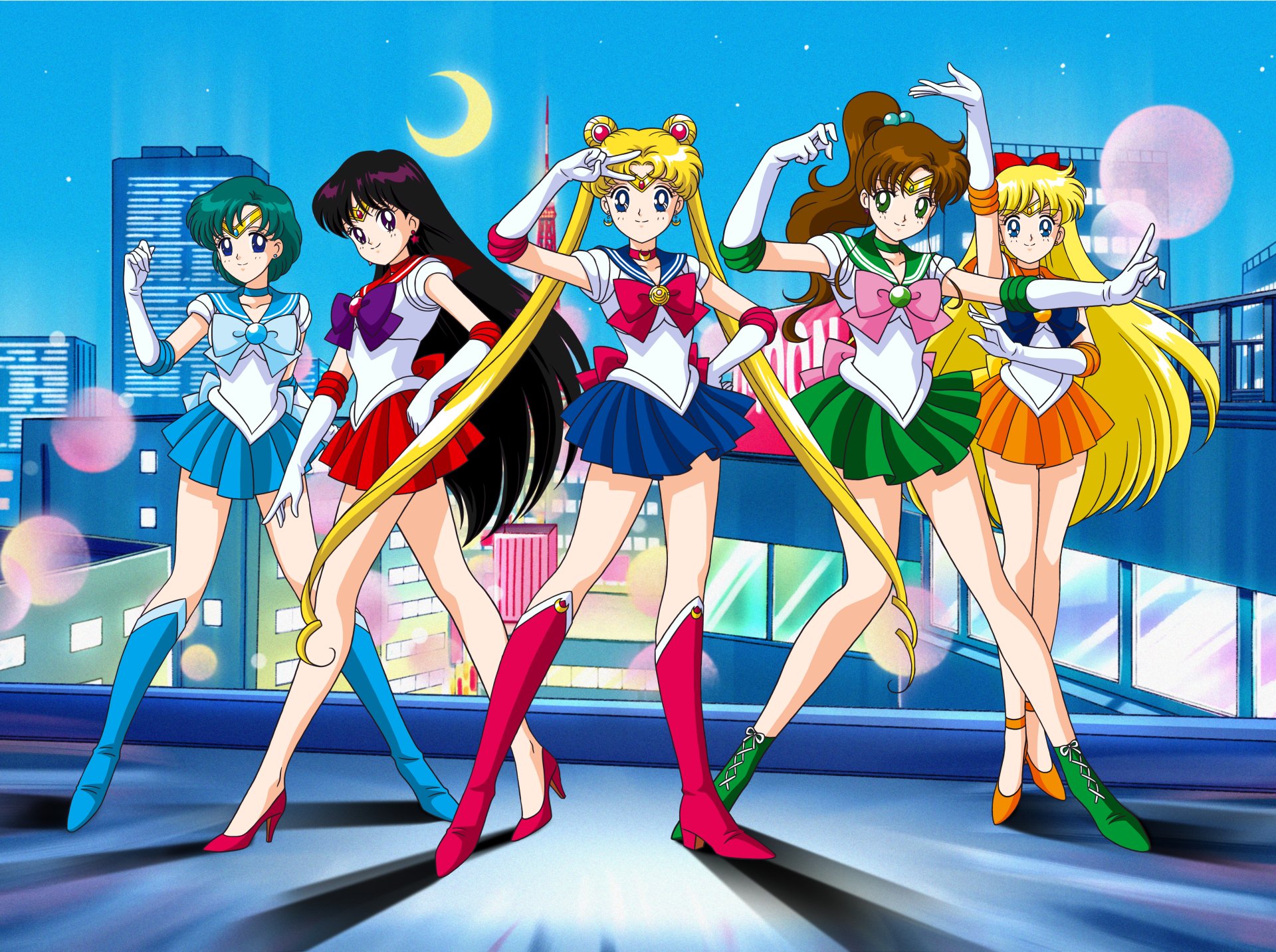
No discussion of shojo manga can begin anywhere but Sailor Moon. Naoko Takeuchi’s story of Usagi Tsukino, a clumsy teenage girl who transforms into the warrior Sailor Moon, defined magical girl manga for decades and remains culturally foundational. First serialized from 1991 to 1997, Sailor Moon combined action, romance, cosmic mythology, and an ensemble cast of warrior heroines in a way that had simply never been done before.
Beyond its cultural impact, Sailor Moon holds up remarkably well as a story. The Sailor Guardians are genuinely distinct characters with their own personalities, struggles, and growth arcs. The central romance between Usagi and Mamoru, while initially antagonistic, develops into one of manga’s great love stories. The cosmic scale of the finale, with its exploration of fate, sacrifice, and the nature of love, gives the series a genuine sense of epic grandeur.
2. Fruits Basket by Natsuki Takaya
Fruits Basket is widely considered one of the greatest shojo manga ever created, and its reputation is fully deserved. The story of Tohru Honda, an orphaned girl who discovers the Sohma family’s secret curse — members transform into animals of the Chinese zodiac when embraced by members of the opposite sex — begins as a charming supernatural romantic comedy and gradually evolves into a profound exploration of trauma, healing, family dysfunction, and the possibility of genuine human connection.
Natsuki Takaya’s writing reaches extraordinary depths in the later volumes. The backstory of Akito Sohma, the family’s cruel and enigmatic head, is one of the most tragic and complex character studies in manga. The series asks difficult questions about whether people can change, whether love is sufficient to overcome trauma, and what genuine acceptance looks like. The 2019 remake anime brought the complete story to a new generation of readers who are rediscovering why this series is considered essential.
3. Nana by Ai Yazawa
Ai Yazawa’s Nana stands apart from most shojo manga in its refusal to offer easy emotional resolutions. Following two young women both named Nana who become roommates in Tokyo, the series documents their very different pursuits of love, career, and identity against the backdrop of the Japanese music industry in the early 2000s.
Yazawa writes adult romantic relationships with a psychological honesty that is rare in manga aimed at younger audiences. Love in Nana is complicated, self-destructive, exhilarating, and ultimately insufficient to sustain certain connections. The character of Nana Osaki, with her punk exterior and profound emotional vulnerability, is one of manga’s greatest protagonists. Unfortunately the series has been on hiatus since 2009 due to Yazawa’s illness, but the existing volumes remain essential reading.
4. Cardcaptor Sakura by CLAMP
CLAMP’s Cardcaptor Sakura is among the most beloved magical girl manga ever created. Following Sakura Kinomoto as she accidentally releases a set of magical cards and must capture them all, the series manages to feel simultaneously innocent and emotionally sophisticated. The character relationships — particularly between Sakura and Syaoran — develop with patience and genuine feeling.
CLAMP’s artwork is extraordinary throughout, with elaborate costume designs, expressive character work, and a warm, luminous visual style that perfectly complements the story’s tone. The sequel series, Clear Card, continues the story with the same quality.
5. Ouran High School Host Club by Bisco Hatori
Ouran High School Host Club is one of the great shojo comedies, a series acutely aware of genre conventions and willing to both celebrate and gently satirize them. Haruhi Fujioka, a scholarship student at an elite academy, accidentally breaks an expensive vase and is forced to work as a host alongside the school’s most beautiful boys to repay the debt.
What elevates Ouran beyond its premise is Hatori’s genuine affection for her characters. Each member of the Host Club develops beyond their initial archetype, and the series uses its comedy to make genuinely incisive observations about class, performance, and authenticity. The central relationship between Haruhi and Tamaki is handled with more emotional intelligence than most romantic narratives manage.
6. Skip and Loafer by Misaki Takatoshi
Among contemporary shojo series, Skip and Loafer stands out for its unusual warmth and genuine optimism. Following Mitsumi, an ambitious rural girl who moves to Tokyo for high school, the series is fundamentally about the experience of finding one’s people in a new and overwhelming environment.
What makes Skip and Loafer special is how genuinely kind it is. The characters navigate misunderstandings and conflicts without cruelty, and the series models healthy interpersonal communication in ways that feel aspirational rather than unrealistic. The artwork is expressive and distinctive, and the cast is one of the most likeable in recent manga.
7. Ao Haru Ride by Io Sakisaka
Io Sakisaka’s work consistently produces some of the best romantic storytelling in contemporary shojo, and Ao Haru Ride represents her finest achievement. The reunion of Futaba and Kou, childhood friends who drift apart and rediscover each other in high school, is handled with exceptional emotional precision.
The series is particularly strong in its treatment of how people change over time, how past connections simultaneously survive and transform through separation, and how much courage genuine emotional openness requires. Sakisaka never lets either protagonist off easy, demanding growth and honesty from both of them in ways that feel genuinely earned.
8. A Silent Voice by Yoshitoki Oima
While technically a shonen series, A Silent Voice exemplifies everything that makes the emotional core of shojo manga resonant. The story of Shoya Kida, a former bully who seeks redemption by reconnecting with Shoko Nishimiya, the deaf girl he tormented in elementary school, is one of the most emotionally demanding reads in manga.
Yoshitoki Oima’s art beautifully captures the difficulty of genuine communication and connection, often using visual metaphors to represent Shoya’s social anxiety. The series confronts bullying, disability, suicide, and isolation without exploitation, demanding that both its characters and readers engage seriously with difficult subjects.
9. Kimi ni Todoke by Karuho Shiina
Kimi ni Todoke is a gentle, beautiful series about Sawako Kuronuma, a girl whose resemblance to the horror film character Sadako has made her an object of fear and isolation, and her gradual emergence into genuine friendship and romance through her connection with the popular and kind Shota Kazehaya.
The series excels at depicting the specific terror of social vulnerability, the way small moments of genuine acceptance can feel transformative, and the difficulty of believing that one deserves affection. Sawako’s growth across the series is depicted with extraordinary care and warmth.
10. My Love Story!! by Kazune Kawahara and Aruko
My Love Story!! inverts virtually every shojo romantic convention by making its male lead Takeo — a massive, physically imposing boy who is universally assumed to be scary — the series’ emotional center. Takeo’s earnestness, genuine heroism, and the depth of his feelings for the delicate Yamato make him one of the most endearing protagonists in the genre.
The series celebrates the idea that genuine goodness and sincerity are the most attractive qualities a person can have, and it does so without a hint of irony or cynicism. It is consistently joyful reading.
11. From Me to You (Kimi ni Todoke) Adjacent: Snow White with the Red Hair
Sorata Akiduki’s fantasy romance follows Shirayuki, a herbalist who flees her country to escape an unwanted royal marriage and finds herself entangled with a neighboring prince. What could be a straightforward romance is elevated by Shirayuki’s genuine competence and ambition: she is a protagonist with professional goals and the determination to achieve them on her own terms.
12. Fullmoon by Arina Tanemura
For readers interested in exploring shojo’s emotional extremes, Arina Tanemura’s Fullmoon is essential. A young singer dying of cancer who is given the chance to become the idol she always dreamed of being, with a deadline set by the shinigami who have come to collect her soul. Beautiful, heartbreaking, and ultimately hopeful.
Other Essential Shojo
Maid Sama offers a charming inversion of expectations with its capable female lead. His and Her Circumstances (Kare Kano) is the Hideaki Anno-adjacent series that tackles perfectionism and academic pressure with psychological depth. Absolute Boyfriend is a darker, more emotionally complex Arina Tanemura work. Vampire Knight delivers gothic romance with genuine craft. Sand Chronicles is Hinako Ashihara’s masterful examination of loss and growth set across years of its protagonist’s life.
Why Shojo Manga Matters
The sustained quality of shojo manga across decades reflects the genre’s willingness to take emotional and psychological complexity seriously as subjects worthy of artistic attention. At its best, shojo manga produces works that help readers understand their own feelings, model healthy and unhealthy relationship dynamics with honesty, and demonstrate that stories centered on connection and feeling can achieve genuine artistic greatness.
For any reader who has never explored shojo manga, Fruits Basket and Sailor Moon represent the most essential entry points. Both are complete, both are available in excellent English translations, and both demonstrate why this genre has shaped global popular culture in ways its detractors rarely acknowledge.
Related Articles

Top 20 Best Romance Manga of All Time
Discover the greatest romance manga featuring heartfelt love stories, emotional depth, and beautiful character development.

Top 25 Best Completed Manga Series of All Time
Discover the greatest finished manga series across all genres with satisfying conclusions and complete narratives.

Top 20 Best Horror Manga of All Time
Discover the scariest and most disturbing horror manga ever created. From psychological terrors to body horror classics.