Best Psychological Manga That Will Blow Your Mind: Top 15
The best psychological manga ever created, from Death Note to Oyasumi Punpun. Mind-bending series that challenge your perception, morality, and understanding of the human mind.
Psychological manga explores the inner workings of the human mind with an intensity and complexity that few other storytelling mediums can match. The best series in this category are not merely suspenseful or dark — they actively engage readers in questions about identity, morality, perception, and sanity that continue to resonate long after the final page.
Unlike straightforward thrillers or horror, true psychological manga treats the human mind as its primary subject. The external events of the plot often matter less than their effect on the characters’ internal states, and the most effective series create genuine uncertainty about what is real, what is right, and what kind of person the reader themselves might be under different circumstances.
1. Death Note by Tsugumi Ohba and Takeshi Obata
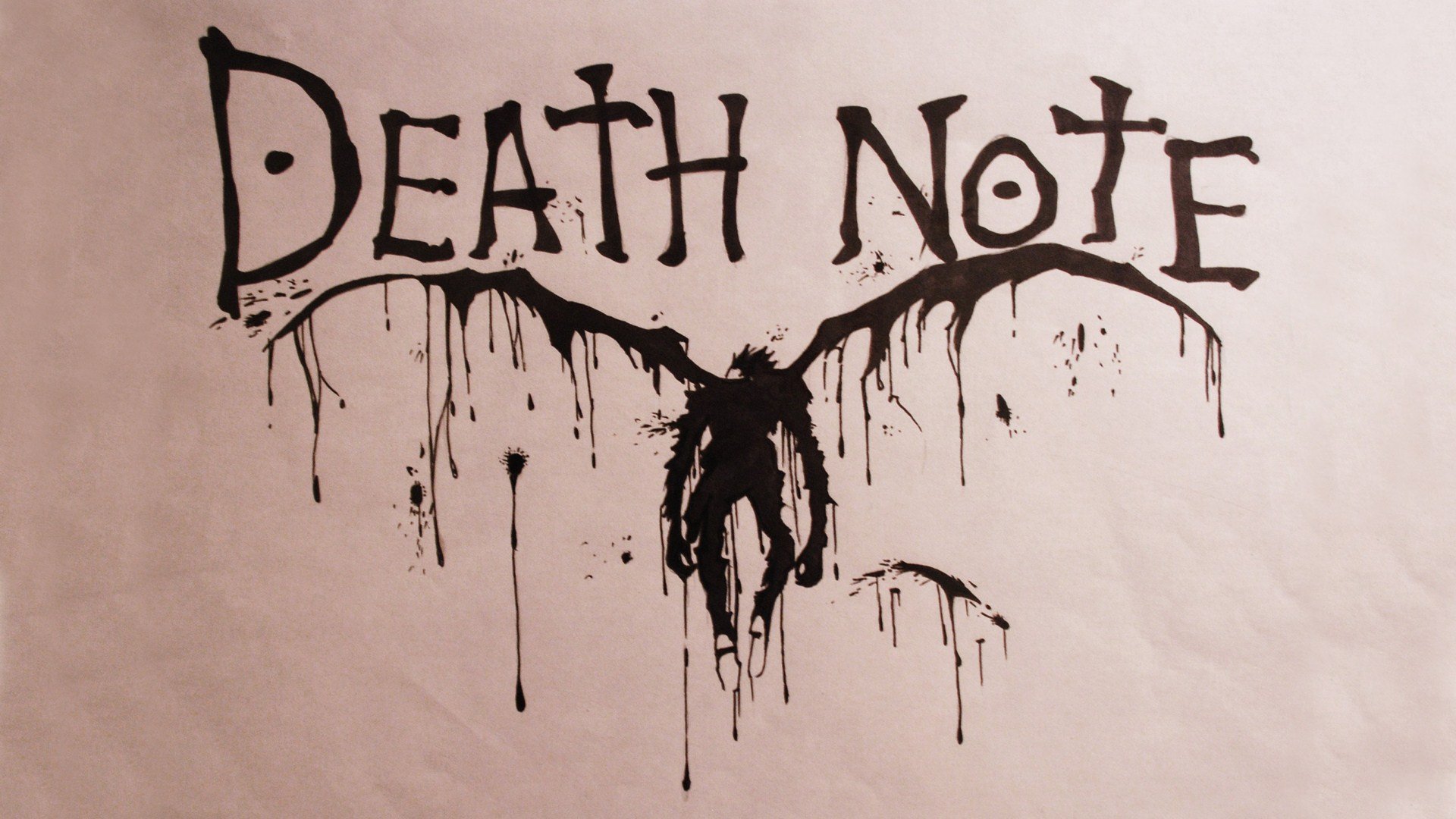
Death Note remains the standard against which all psychological thriller manga is measured. The premise — a high school student discovers a supernatural notebook that kills anyone whose name he writes in it — is deceptively simple, but the execution by Tsugumi Ohba and Takeshi Obata creates one of manga’s most sophisticated cat-and-mouse games.
Light Yagami, who adopts the alias Kira, begins as a genuinely compelling figure: intelligent, principled in his own way, and confronting real questions about justice and human nature. The series refuses to make his gradual corruption easy to watch, demanding that readers engage with how someone convinced of their own righteousness becomes capable of monstrous acts.
The introduction of L — Light’s brilliant detective nemesis — creates a central duality that drives the series’ most compelling sequences. The mental chess matches between these two extraordinary minds, conducted through layers of deception and genuine intelligence, are among the most satisfying intellectual entertainment in manga.
The artwork by Takeshi Obata is perfectly calibrated to the material: clean, precise, with character expressions that communicate layers of concealed intention. The visual language of Death Note — its use of shadow and light, its detailed environments, its design of the death gods — is as carefully considered as anything in the medium.
2. Monster by Naoki Urasawa
Naoki Urasawa is arguably the greatest psychological manga artist working, and Monster represents his masterwork. The story begins simply: a gifted surgeon saves the life of a young boy instead of a politician, following his medical ethics. Years later, the surgeon discovers that the boy has grown into a serial killer, and the decision to save him may have unleashed something genuinely monstrous on the world.
What follows is a sprawling, meticulously plotted thriller that spans Germany, the Czech Republic, and multiple decades. Urasawa’s genius lies in his humanization of every character, including the most disturbing. Monster asks difficult questions about the nature of evil — whether it is something created by circumstance and trauma or something that exists independently of its origins — and refuses to offer simple answers.
The antagonist Johan Liebert is one of manga’s most terrifying and compelling villains, presented with such psychological depth that readers simultaneously understand and are horrified by him. The supporting cast is equally impressive, with dozens of characters who feel fully realized despite limited page time.
3. Berserk by Kentaro Miura
While primarily a dark fantasy, Berserk’s psychological dimensions are central to its status as a masterwork. Guts, the series’ protagonist, is one of manga’s most psychologically complex characters — a man whose capacity for violence was shaped by trauma so extreme that it challenges the reader’s ability to assign moral categories to him.
The Eclipse sequence and its aftermath fundamentally alter the series’ psychological register. From that point, Berserk becomes as much a story about surviving trauma, the weight of the past, and the possibility of genuine human connection under extreme psychological damage as it is about supernatural conflict.
Miura’s artwork reaches its peak in sequences that depict Guts’ psychological state directly — hallucinations, memory intrusions, the Beast of Darkness that represents his most destructive impulses. These sequences are among the most visually inventive and psychologically sophisticated in manga.
4. Goodnight Punpun by Inio Asano
Goodnight Punpun is one of the most psychologically intense and emotionally demanding manga ever created. The story of Punpun Onodera, depicted as a cartoonish abstract figure in an otherwise realistic world, tracks his development from childhood through young adulthood as he navigates family dysfunction, obsessive love, depression, and the gap between aspiration and reality.
Inio Asano’s approach is uncompromising. Punpun’s psychological deterioration is depicted with clinical precision that never tips into exploitation, and the series’ willingness to depict mental illness, suicidal ideation, and the specific way that early trauma reshapes adult personality is unprecedented in manga.
The contrast between Punpun’s simple visual representation and the detailed realistic world around him is a brilliant formal choice that externalizes his psychological disconnection from reality. This is not comfortable reading, but it is among the most honest and psychologically truthful manga ever created.
5. 20th Century Boys by Naoki Urasawa
20th Century Boys is Urasawa’s other masterwork, a genre-blending conspiracy thriller that spans decades and involves an enormous cast connected by a shared childhood experience. The central mystery — who is the Friend, and what is the connection between a childhood doomsday scenario and real-world catastrophe — unravels with exceptional craft across the entire series.
What distinguishes 20th Century Boys as psychological manga is its preoccupation with memory: how it is distorted by time, how collective memory shapes identity, and how the stories we tell about ourselves as children persist as both resource and trap in adult life.
6. Parasyte by Hitoshi Iwaaki
Parasyte explores human identity through a biological horror premise: alien parasites have invaded Earth and taken over human hosts, but the parasite that attempts to take over high schooler Shinichi’s brain ends up in his hand instead. The series follows Shinichi’s increasingly complex relationship with his parasite Migi and the fundamental questions this raises about what constitutes humanity.
As Shinichi inevitably changes through his exposure to Migi and to violence, Parasyte becomes a profound examination of what human values actually are when stripped of their social reinforcement. The series asks whether empathy, love, and moral consideration are fundamental to humanity or simply useful evolutionary adaptations.
7. I Am a Hero by Kengo Hanazawa
Kengo Hanazawa’s zombie apocalypse manga is remarkable primarily for its psychological honesty about its protagonist. Hideo Suzuki, a failed manga artist who dreams of success while working as an assistant, is one of the most psychologically realistic protagonists in manga — the kind of person whose neuroses and self-deceptions are recognizable precisely because they are so ordinary.
The series uses the apocalypse as an extreme extension of the ordinary psychological pressures of adult failure, inadequacy, and the confrontation with one’s own limitations. Hideo’s response to catastrophe reveals both his genuine strengths and the ways in which his psychological damage has always constrained him.
8. The Promised Neverland by Kaiu Shirai and Posuka Demizu
The Promised Neverland opens with one of the most effective premise reveals in recent manga, and the first arc — in which orphaned children discover the true nature of their situation and plan their escape — is a masterclass in tension, strategic thinking, and the psychology of survival under existential pressure.
Emma, Norman, and Ray represent three very different responses to impossible circumstances, and their dynamics drive the series’ best sequences. The series loses some psychological consistency in its later arcs, but the first arc alone justifies the series’ enormous reputation.
9. Uzumaki by Junji Ito
Junji Ito is the master of psychological body horror, and Uzumaki is his masterpiece. The story of a town consumed by a supernatural obsession with spiral shapes operates simultaneously as literal horror and as metaphor for the way psychological fixation distorts perception and ultimately destroys the people it consumes.
Ito’s genius lies in his ability to make the psychological and the physical horror inseparable. The spiral doesn’t just infect the town’s bodies; it corrupts its inhabitants’ minds, making them complicit in their own destruction. The final sections of Uzumaki reach a state of cosmic horror that makes the reader genuinely uncertain about the nature of reality.
10. Chainsaw Man by Tatsuki Fujimoto
Tatsuki Fujimoto is one of the most psychologically interesting manga artists working today, and Chainsaw Man demonstrates his complete control over reader expectations. The series sets up conventional genre frameworks — shonen action, supernatural horror, tragic hero narrative — and then systematically dismantles them through psychological realism.
Denji, the series’ protagonist, is one of manga’s most psychologically honest depictions of a genuinely damaged young man: someone whose desires are simple, whose emotional intelligence is limited, and who is nevertheless sympathetic because the conditions that shaped him are so clearly unjust. The series’ willingness to treat Denji’s psychological limitations as genuine constraints rather than obstacles to be overcome distinguishes it from most manga.
11. March Comes in Like a Lion by Chica Umino
March Comes in Like a Lion is perhaps the most psychologically gentle entry on this list, but its exploration of depression, social anxiety, isolation, and recovery is more carefully observed than almost anything else in manga. Rei Kiriyama, a professional shogi player who struggles with profound psychological isolation, is written with a clinical empathy that avoids both romanticization and condescension.
The series demonstrates that psychological manga does not require extremity to be profound. Rei’s small victories and gradual opening to genuine human connection are as emotionally affecting as any of the more dramatically intense entries on this list.
12. Pluto by Naoki Urasawa
Urasawa’s reimagining of a classic Astro Boy story as a sophisticated psychological thriller explores what consciousness, emotion, and human dignity mean when experienced by artificial intelligence. The series raises questions about whether the psychological experiences of artificial beings deserve the same moral consideration as those of humans.
13. Homunculus by Hideo Yamamoto
Homunculus follows a man who undergoes an experimental brain surgery and begins to perceive physical manifestations of people’s psychological traumas. The series uses this premise to explore how psychological damage shapes physical self-perception and interpersonal dynamics in ways that are occasionally exploitative but consistently fascinating.
14. Liar Game by Shinobu Kaitani
Liar Game is a pure psychological thriller built around elaborate game scenarios involving deception, game theory, and social psychology. The series is less interested in character depth than in the intellectual pleasure of watching carefully designed psychological traps unfold. For readers who enjoy the strategic dimensions of psychological conflict, it is enormously satisfying.
15. Flowers of Evil by Shuzo Oshimi
Flowers of Evil is one of the most uncomfortable manga to read, and intentionally so. The story of Takao Kasuga, a boy who becomes entangled with the disturbing Sawa Nakamura, explores the specific psychological damage of adolescent shame, the eroticization of transgression, and the way genuine psychological disturbance can feel liberating to people who have always performed normalcy.
Reading Psychological Manga
These series reward slow, attentive reading. The best psychological manga operates on multiple levels simultaneously, with every panel choice, page composition, and character expression contributing to the psychological effect. Rereading after the full series is complete is frequently revelatory, revealing foreshadowing and character details that only become meaningful with hindsight.
For new readers, Death Note and Monster are the clearest entry points — both are complete, widely available, and deliver their psychological pleasures efficiently. For experienced manga readers ready for something more challenging, Goodnight Punpun and March Comes in Like a Lion offer depths that few other series reach.
Related Articles

Top 20 Best Horror Manga of All Time
Discover the scariest and most disturbing horror manga ever created. From psychological terrors to body horror classics.

Top 25 Best Completed Manga Series of All Time
Discover the greatest finished manga series across all genres with satisfying conclusions and complete narratives.

Top 15 Best Isekai Manga of All Time
Discover the best isekai manga with transported heroes, fantasy worlds, and epic adventures across parallel dimensions.