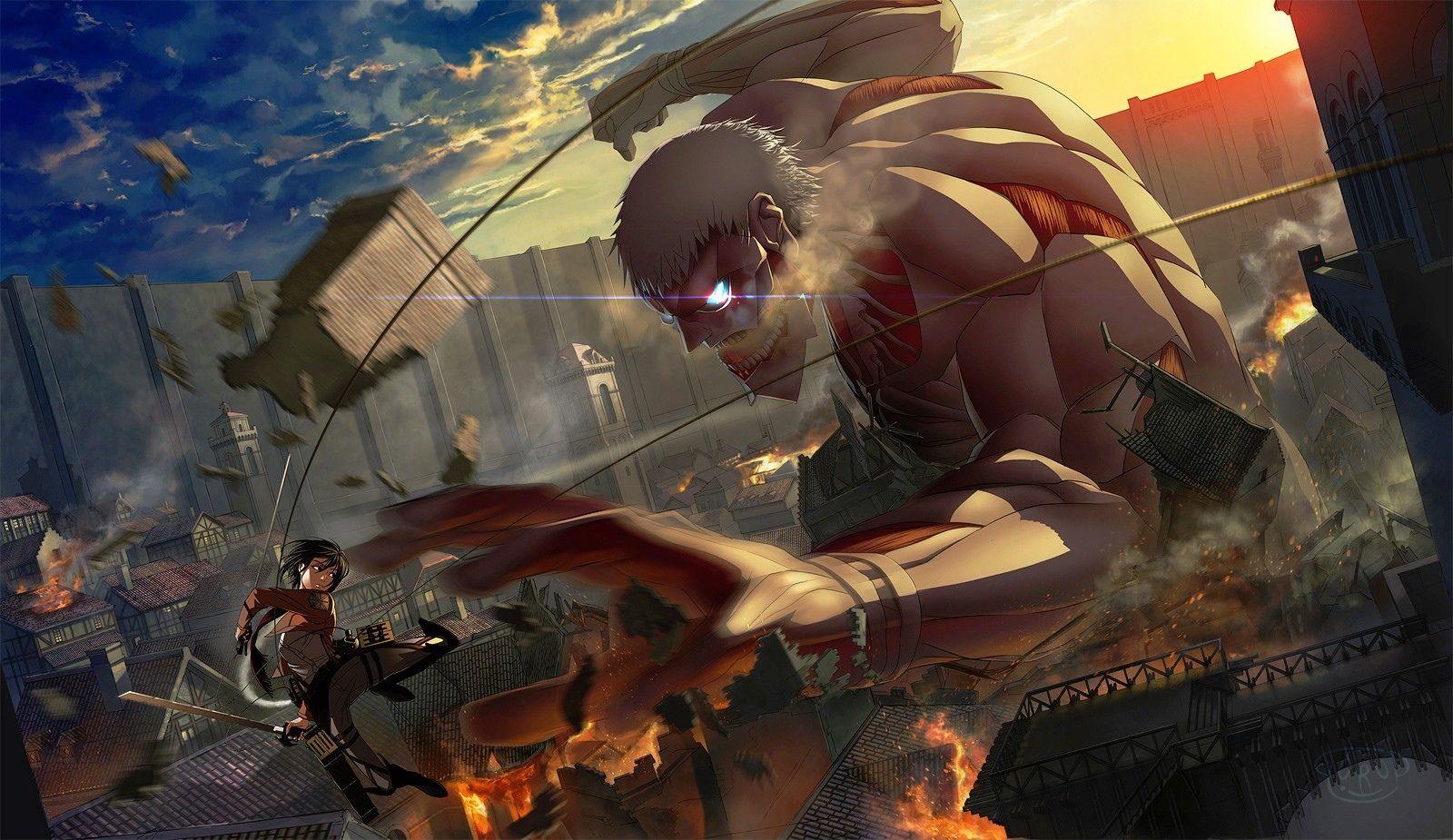
The Psychology of Attack on Titan: A Deep Dive into Its Complex Characters
Explore the psychological depths of Attack on Titan characters. From Eren's trauma to Reiner's dissociation, understand what makes these characters unforgettable.
Attack on Titan transcends typical anime narrative through its exploration of psychological realism. While most series prioritize spectacular action or clear moral frameworks, Hajime Isayama constructs psychological architecture making characters fascinating precisely because they’re psychologically realistic—flawed, traumatized, self-deceiving, and consistently disappointing their own ideals. The series’ true genius emerges not from Titan battles but from understanding why intelligent people commit atrocities, how trauma perpetuates cycles, and whether freedom justifies terrible costs.
The psychological depth of Attack on Titan explains its massive cultural impact. Readers engage with characters wrestling with existential questions, moral ambiguity, and psychological patterns they recognize within themselves. The series transforms anime from entertainment into psychological study, making it essential viewing for anyone interested in how trauma shapes decision-making and creates intergenerational conflict.
⚡ TL;DR — Explore the psychological depths of Attack on Titan characters. From Eren
Eren Yeager: From Idealistic Boy to Radical Freedomseeker
Eren begins Attack on Titan as sympathetic protagonist—traumatized boy burning with righteous purpose after witnessing his mother’s consumption by Titans. His absolute conviction that exterminating Titans represents justice creates narrative momentum. However, the series gradually reveals Eren’s idealism conceals deeper psychological patterns: black-and-white thinking, inability to accept limited agency, and willingness to inflict suffering in pursuit of abstract principles.
The turning point occurs when Eren discovers that Titans are humans, that his enemies experience normal human emotions, and that his fight against oppression mirrors oppressions elsewhere. Rather than integrating this complexity, Eren doubles down on absolute solutions. The psychology here is devastatingly realistic—confronted with moral nuance threatening his foundational narratives, he rejects complexity in favor of increasingly extreme positions.
What makes Eren’s psychology fascinating is recognizing him as product of circumstances and choices simultaneously. His trauma is genuine, his powerlessness real, his desire for freedom legitimate—yet his response represents pathological escalation rather than healthy adaptation. The series suggests that Eren’s greatest enemy isn’t external opposition but his own psychological patterns perpetuating destructive cycles.
Eren’s trajectory toward the Rumbling represents consequentialist ethics collapsing under psychological pressure. He genuinely believes eliminating external threats justifies any internal cost. This represents cognitive distortion common in trauma survivors—the belief that suffering imposed on others somehow justifies personal suffering or prevents future suffering. The Rumbling emerges not from calculated strategy but from psychological break with reality and desperate attempt to regain control through maximum destruction.
The series never fully excuses Eren’s choices, nor does it suggest his trauma automatically justifies genocide. Instead, it explores the intersection of genuine suffering and psychological distortion, demonstrating how trauma survivors can simultaneously deserve compassion and be held accountable for terrible actions. This nuance represents rare psychological sophistication in manga.
Mikasa Ackerman: Trauma Bonding and Identity Formation
Mikasa’s psychology centers on attachment theory and trauma bonding. Her attachment to Eren doesn’t emerge from romantic cliché but from deep psychological survival mechanism—Eren represents the person who saved her when she experienced profound helplessness. Her psychological identity becomes intertwined with his survival, creating obsessive attachment characterized by psychological dependence disguised as loyalty.
The series explores Mikasa’s attachment patterns with increasing sophistication. She experiences separation anxiety at Eren’s absence, fights destructively when he’s threatened, and struggles with independent agency when not oriented toward protecting him. These represent recognized attachment patterns in trauma survivors, particularly those experiencing early-life powerlessness followed by rescue.
What makes Mikasa’s character psychologically compelling is the series’ refusal to romanticize her attachment. Rather than portraying obsessive devotion as beautiful love, the narrative gradually reveals how Mikasa’s psychological development was arrested by trauma. Her inability to envision identity beyond protecting Eren represents psychological stagnation requiring active intervention to overcome.
Mikasa’s arc involves gradual psychological individuation—recognizing that healthy relationships require maintaining separate identity and goals rather than complete psychological fusion. Her struggle to acknowledge desire beyond Eren represents realistic challenge for trauma survivors whose identity became constructed around caregiver or protector relationship.
The series demonstrates that Mikasa’s attachment, while understandable, becomes progressively unhealthy. Her willingness to repeatedly engage in lethal action despite moral reservations, driven primarily by protecting Eren, illustrates how trauma bonding can override individual moral frameworks. The psychological realism here—that love and attachment can coexist with psychological dysfunction—generates complex emotional resonance.
Armin Arlert: The Intellectual’s Burden
Armin represents a specific psychological archetype—intellectually brilliant but physically vulnerable individual whose survival depends on perceived usefulness to group. His psychology develops around utilizing intelligence to compensate for physical limitations, creating personality oriented toward problem-solving through thought rather than action.
The series explores Armin’s psychological burden when intellectual solutions prove insufficient. His recognition that wars require strategic thinking involving sacrifice and moral compromise generates profound moral injury. He experiences what psychologists call “moral injury”—psychological damage resulting from perpetrating, witnessing, or failing to prevent actions violating one’s moral code.
Armin’s psychological trajectory involves gradual rationalization of increasingly questionable decisions. He employs utilitarian reasoning—justifying individual deaths as necessary for collective survival. However, the series demonstrates that this intellectual framework, while strategically sound, generates psychological toll. Armin remains haunted by deaths he strategically calculated as necessary sacrifices.
What makes Armin psychologically fascinating is his representation of “good person” making terrible choices. Unlike Eren, who rationalizes through ideological absolutism, Armin uses sophisticated reasoning to justify moral compromises. The series suggests this might be equally psychologically destructive—Armin maintains self-image as good person while orchestrating deaths, creating cognitive dissonance requiring continual psychological work to sustain.
The series explores how intelligent people develop elaborate psychological justifications for actions they would condemn in others. Armin’s intellectual sophistication becomes liability rather than asset—enabling rationalization of increasing moral flexibility. This psychological realism regarding how intelligent people deceive themselves generates character depth transcending typical protagonist frameworks.
Reiner Braun: Dissociation as Survival Mechanism
Reiner Braun represents perhaps Attack on Titan’s most psychologically sophisticated character study. His identity fragmentation—oscillating between “Warrior Reiner” and “Soldier Reiner”—demonstrates dissociative response to childhood trauma and ongoing moral conflict. Unlike abstract trauma responses, Reiner manifests specific dissociative pattern where different psychological identities express different values, motivations, and self-perceptions.
Reiner’s trauma originates in childhood exploitation. He’s conscripted as child soldier by Marleyan government, indoctrinated with propaganda identifying him as elite warrior, and deployed in mission requiring colossal deception against people he comes to care about. This combination of childhood exploitation, identity imposed by authority figures, and ongoing deception creates psychology perfectly suited for dissociation.
The “Warrior Reiner” represents internalized Marleyan ideology—belief in righteous purpose, acceptance of duty regardless of personal cost, and willingness to perpetrate violence for collective good. This identity provides psychological protection through meaning-making—violence becomes noble sacrifice rather than betrayal.
The “Soldier Reiner” represents psychological identity formed through authentic relationships and direct observation of humanity he’s targeting. This identity experiences remorse, questions propaganda, and recognizes moral complexity his “Warrior” identity suppresses. The oscillation between identities allows Reiner to perpetrate terrible actions while maintaining self-concept as good person—each identity compartmentalized from the other.
The series demonstrates that Reiner’s dissociation represents realistic trauma response rather than pathological failure. Given impossible circumstances—childhood exploitation by authority figures, competing loyalties to military unit and adopted community, continual self-deception requirement—dissociation functions as survival mechanism. His fragmented identity allows psychological survival in situation requiring psychological fragmentation.
What renders Reiner psychologically unforgettable is the series’ refusal to suggest recovery is simple. Unlike protagonists who overcome trauma through supportive relationships, Reiner’s case suggests some psychological damage creates permanent fragmentation. The genuine affection he develops toward members of Survey Corps doesn’t heal dissociation but intensifies conflict between identities, making psychological survival increasingly difficult.
Reiner ultimately demonstrates suicidal ideation—not through explicit statements but through repeated engagement in situations likely to result in death. His psychological state represents ultimate failure of dissociation strategy: when compartmentalization becomes impossible, death becomes preferable alternative to psychological integration that would require acknowledging terrible things he’s committed.
Levi Ackerman: Hypervigilance and Survival Adaptation
Levi’s psychology centers on trauma resulting from extreme deprivation and loss. His childhood in underground city streets created environment where constant vigilance represented survival necessity. This hypervigilance—neurological state of heightened threat-awareness—becomes foundational to Levi’s adult psychology and decision-making patterns.
The series explores how Levi’s attachment patterns reflect childhood trauma. His relationships characteristically involve protective dedication to others while maintaining emotional distance. His attachment to Erwin Smith, while possessing strong loyalty, never develops toward emotional intimacy—consistent with avoidant attachment style developed through early-life experiences where emotional vulnerability represented liability.
Levi’s psychology demonstrates how trauma creates specific personality patterns. His perfectionism regarding combat technique represents channeling of anxiety into controllable domain. His difficulty forming reciprocal relationships reflects learned pattern that others represent threats requiring management rather than sources of genuine connection. His willingness to engage lethal action with limited emotional response reflects psychological numbing—common trauma outcome where emotion becomes suppressed to maintain functionality.
The series demonstrates Levi’s psychological growth through graduated relationship changes. His increasing willingness to prioritize individual relationships over organizational loyalty suggests psychology capable of adaptation despite early trauma. However, the series also suggests this growth remains incomplete—Levi’s difficulty expressing emotion or forming reciprocal attachment reflects lasting impact of early deprivation.
Levi’s character represents how trauma creates specific adaptive patterns serving survival in dangerous environments but creating dysfunction in healthy relationships. His hypervigilance, useful for combat situations, generates anxiety in peaceful contexts. His emotional distance, protective during childhood vulnerability, becomes liability preventing deep connection as adult. The series explores this tragedy of adaptation—psychological patterns that saved Levi’s life prevent him from fully living.
Hange Zoë: Obsessive Intellectualism as Coping Mechanism
Hange’s psychology reveals itself through obsessive focus on Titan research. While initially appearing as simple scientific enthusiasm, the series suggests Hange’s intense focus on intellectual problems represents psychological defense against grief and existential horror. Her obsession with understanding Titans functions as compartmentalization mechanism—by focusing on intellectual problems, she avoids confronting horrifying implications for humanity.
Hange’s character demonstrates how intelligent people utilize sophisticated thinking as psychological defense. Rather than acknowledging despair at humanity’s existential crisis, she channels emotion into research. This provides psychological protection through meaning-making—if Titans can be understood, then deaths might serve purpose of increasing knowledge.
The series explores tension between Hange’s intellectual passion and emotional numbing. She maintains friendships and demonstrates loyalty while simultaneously maintaining psychological distance through focus on intellectual interests. This represents psychological pattern common in trauma survivors whose primary coping mechanism involves intellectual analysis rather than emotional processing.
What makes Hange psychologically interesting is the series’ refusal to condemn this adaptation pattern. Rather than suggesting her obsessive focus represents pathology, the series demonstrates how intellectual passion creates meaning and connection in existentially horrifying circumstances. For individuals unable to process trauma through emotion, intellectual pursuit can represent legitimate coping mechanism.
The Marleyan Child Soldiers: Systemic Abuse and Psychological Exploitation
Beyond individual character psychology, Attack on Titan examines systemic psychological abuse. The Marleyan child soldier program represents psychological exploitation at institutional level—children conscripted, indoctrinated with propaganda, and deployed in situations requiring emotional compartmentalization and moral compromise.
The series explores how institutional abuse creates specific psychological patterns across individuals. Reiner, Bertholdt, Annie, and Pieck all experience similar trauma frameworks—childhood exploitation, identity imposed by authority, competing loyalties, and ongoing deception. Yet the series demonstrates how identical circumstances create different psychological adaptations: Reiner through dissociation, Bertholdt through anxiety and depression, Annie through emotional numbing, Pieck through functional adaptation maintaining surface equilibrium.
This multiplicity of responses represents psychological realism—trauma doesn’t create uniform outcomes but rather reveals individual differences in adaptive capacity and psychological constitution. The series uses character diversity to explore how human psychology contains immense variability in response to identical circumstances.
The systemic examination of child soldier psychology generates profound critique of militarization and institutional abuse. Rather than glorifying warriors, the series demonstrates costs of exploiting children for military purposes. The psychological patterns evident in Marleyan soldiers represent realistic consequences of systematic child abuse undertaken at state institutional level.
Generational Trauma and the Cycle of Hatred
Attack on Titan’s ultimate exploration involves how trauma perpetuates across generations. The series demonstrates that cycles of violence, oppression, and retaliation persist not through individual evil but through trauma perpetuation—each generation inheriting psychological patterns and unresolved conflicts from predecessors.
The psychological mechanism underlying generational trauma involves identity formation within conflict frameworks. Children born into oppressor and oppressed positions internalize narratives justifying violence, develop in-group loyalty overriding individual morality, and experience trauma preventing empathy with opposing groups. These patterns persist because psychological structures supporting them feel normal rather than pathological.
The series demonstrates that breaking generational cycles requires psychological breakthrough transcending inherited frameworks. Characters capable of recognizing common humanity across conflict lines—Arwin and Erwin’s understanding of Marleyan soldiers as products of circumstances, Levi and Eren’s moments of empathic recognition—represent psychological maturity transcending trauma-perpetuation patterns. However, the series also suggests these moments remain fragile and exceptional rather than representing reliable path toward reconciliation.
Freedom and Determinism: The Tragedy of Choice
Attack on Titan’s central thematic question—what constitutes freedom, and whether freedom justifies any costs—represents philosophical inquiry grounded in psychological realism. The series explores how trauma creates specific psychological patterns feeling like authentic choice while actually representing constrained options dictated by trauma history.
Eren’s conviction that his choices represent authentic freedom disguises how trauma and psychological patterns actually constrain his options. His obsession with freedom reflects not unconstrained choice but rather pathological reaction to early helplessness. Psychological research suggests trauma survivors often develop absolute conviction regarding agency precisely because early trauma created complete helplessness. Eren’s psychological pattern represents common trauma consequence—not philosophical proof of freedom but symptom of psychological damage.
The series uses individual character psychology to explore collective political questions. The freedom that Eren pursues through genocidal elimination parallels freedom movements throughout history—movements generating genuinely passionate followers while perpetrating atrocities. The psychological realism suggests that subjective conviction regarding righteous purpose doesn’t align with objective harm—people engaging horrific violence typically experience absolute conviction in righteousness.
Conclusion: Psychology as Narrative Foundation
Attack on Titan’s ultimate achievement involves constructing narrative where psychology becomes central rather than peripheral. The series demonstrates that understanding characters requires understanding psychological patterns, trauma effects, coping mechanisms, and how psychological adaptation creates both human growth and destructive limitation.
The psychological realism distinguishing Attack on Titan from most anime emerges from refusal to simplify character motivation through ideological absolute positions or romantic idealization. Instead, characters remain psychologically complex—capable of love and cruelty simultaneously, intelligently employing reasoning toward unjust conclusions, adapting through trauma while remaining fundamentally shaped by trauma.
For readers seeking entertainment, this psychological complexity creates emotional resonance transcending plot mechanics. The characters matter not because they’re heroic but because they’re human—recognizable in their failures, comprehensible in their self-deceptions, tragic in their inability to escape patterns created before their autonomy emerged.
The series’ ultimate assertion involves psychological realism as superior to both moral absolutes and complete relativism. Characters aren’t simply good or evil but rather products of circumstances making difficult choices within constrained options. Understanding their psychology means neither excusing terrible actions nor dismissing them as simple evil—instead, achieving mature perspective acknowledging agency and constraint simultaneously.
For anyone serious about psychological sophistication in narrative, Attack on Titan remains essential study in how manga can achieve literary depth through character-centered psychological exploration.
Related Articles
Ranking the 20 Greatest Manga Villains of All Time
Discover what makes manga's greatest villains compelling, from philosophical antagonists to complex anti-heroes.
Jujutsu Kaisen Manga Ending Explained: What Really Happened
Complete breakdown of Jujutsu Kaisen's controversial ending. Sukuna's death, Yuji's future, Gojo's fate, and what Modulo means for the series.
15 Best Manga Adapted to Anime: When Animation Did the Source Material Justice
Explore 15 of the finest manga-to-anime adaptations. Ranked by faithfulness, visual quality, and overall impact—from perfect adaptations to cautionary tales.